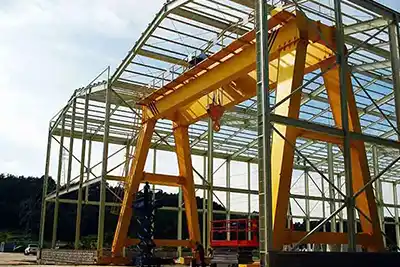
Outdoor Truss Girder Gantry Crane Solutions – East Asia Shipyards
Outdoor Truss Girder Gantry Crane Solutions for Shipyards in East Asia
A Structured Outline for Shipyard Procurement Teams & Marine Engineering Buyers
Introduction
Truss girder gantry cranes are a common sight in shipyards across East Asia, from the busy shipbuilding hubs of China and South Korea to the growing facilities in Vietnam and the Philippines. These cranes are not just another piece of equipment—they are the backbone of large-scale block assembly, hull handling, and module transportation in outdoor shipyard environments.
Shipyards in this region face unique challenges. The coastal climate brings high humidity, salty air, and occasional typhoons. Large vessels and steel structures require cranes that can span wide yards while lifting heavy loads safely and efficiently. In this context, truss girder gantry cranes have proven themselves as the practical solution for many shipyard operators.
Advantages of Truss Girder Gantry Cranes over Box-Girder Cranes
Truss girder designs offer a number of practical benefits that make them well-suited to coastal shipyards:
- Wind resistance: The open-frame structure allows wind to pass through, reducing the overall pressure on the crane. This makes it more stable during strong coastal winds and typhoons, which is a major concern in East Asian shipyards.
- Long-span capability: Truss girders are lighter than solid box girders, allowing for longer spans without significantly increasing the load on rails and foundations. This is essential in large block assembly areas where spans can exceed 100 meters.
- Cost efficiency: Because truss girders use less steel than box girders, fabrication and transportation costs are lower. They are easier to assemble on-site, which can save time and reduce disruption to shipyard operations.
- Ease of maintenance: Open truss structures allow for easier access to components, inspections, and repairs. In outdoor environments, where salt and moisture accelerate corrosion, this is a practical advantage.
Key Performance Needs
When choosing a truss girder gantry crane for a shipyard, there are several performance criteria that matter most:
- Corrosion resistance: Marine-grade coatings, galvanizing, and sealed components help cranes withstand salty, humid conditions over years of operation.
- Long-span coverage: Truss girders can cover large yards without the need for intermediate supports, making them ideal for block assembly, steel plate handling, and hull section movement.
- Stability under high winds: Typhoon-level wind resistance is a must. Cranes are designed with rail clamps, storm locks, and structural reinforcements to prevent tipping or sway.
- Cost efficiency over the lifecycle: Initial costs are just one part of the picture. A truss girder crane’s durability and lower maintenance requirements reduce long-term operational expenses.
In short, for East Asian shipyards dealing with outdoor, large-span operations, truss girder gantry cranes combine practical performance, reliability, and efficiency in a way that traditional box-girder cranes often cannot match. They may not look flashy, but when you see them in action moving massive hull blocks safely in windy coastal conditions, it’s clear why they are the preferred choice.
Shipyard Characteristics in East Asia (Typical Scales & Layouts)
Shipyards in East Asia vary greatly in size, layout, and lifting requirements. Understanding the typical scale and structure of these yards is essential when selecting the right truss girder gantry crane. Each type of shipyard presents unique challenges, from very large national facilities to smaller repair yards.
These are the major shipbuilding hubs, handling large commercial vessels, container ships, and naval projects.
- Typical site length: 1–3 km along the coastline.
- Outdoor block assembly areas: 80–150 m spans, allowing simultaneous construction of multiple hull blocks.
- Dry docks: 20–80 m spans, often requiring cranes that can move large hull sections safely into place.
- Heavy load requirements: Some areas demand lifting capacities of 100–600 tons. While truss girder cranes may not handle the absolute heaviest blocks, they are ideal for medium-weight tasks, steel plate handling, and auxiliary operations.
In these yards, truss gantry cranes are usually deployed in block assembly zones, steel storage areas, and module transfer paths. They provide long-span coverage without putting excessive weight on foundations, which is critical when operating along reclaimed coastal land.
These shipyards focus on regional commercial shipping, smaller cargo vessels, and modular construction.
- Yard width: 40–90 m, allowing multiple assembly lines side by side.
- Assembly line spans: 30–60 m, often matching truss girder crane capacities.
- Lifting needs: 20–80 tons for block handling and steel module transportation.
- Construction focus: Modular steel structures are increasingly common, which requires flexible crane positioning and moderate spans.
Truss gantry cranes here strike a balance between lifting capacity, span, and cost, making them practical for handling medium-weight sections efficiently without over-investing in heavy-duty equipment.
These yards handle vessel repair, engine replacement, pipe assembly, and retrofit projects.
- Narrower slipways: 20–40 m spans, typical for coastal repair docks.
- Outdoor repair areas: 20–50 m, often constrained by existing infrastructure.
- Typical lifting needs: 5–50 tons, including pipe racks, engines, small hull sections, and prefabricated modules.
For repair yards, truss girder cranes are valued for their compact footprint, easy maintenance, and wind resistance. They provide precise lifting in confined spaces without the high structural cost of heavy-duty box-girder cranes.
In summary, East Asian shipyards vary from giant national yards requiring ultra-long spans to small repair facilities with moderate lifting needs. Truss girder gantry cranes are adaptable across these environments, offering practical span coverage, reasonable lifting capacity, and resilience to coastal conditions.
Why Truss Girder Gantry Cranes Are Ideal for Shipyards
Truss girder gantry cranes are widely used in East Asian shipyards for good reasons. They combine practical engineering, cost efficiency, and durability, especially in coastal environments where winds, salt, and heavy loads are constant challenges. Let's break down the key reasons why these cranes are often the first choice for shipyard operators.
Shipyards along the East Asian coast often face strong seasonal winds and even typhoons. The open-frame truss design allows wind to pass through the structure, significantly reducing pressure on the crane.
- Reduces wind load by 30–50% compared to solid box girders.
- Minimizes crane sway during operation, increasing safety when moving large blocks or steel modules.
- Ensures stability even in typhoon-prone regions, a major consideration for coastal shipyards.
This design means the crane can operate safely without needing overly heavy foundations, which is both cost-effective and practical for large outdoor yards.
Truss girders are lighter than box girders, making them ideal for long-span applications. In shipyards, spans often range from 60 to 150 meters to cover block assembly areas and steel storage yards.
- Reduced overall weight lessens the load on rails and foundations, avoiding costly structural reinforcement.
- Allows longer spans without intermediate supports, which is essential for moving large hull sections efficiently.
- Easier installation and alignment compared to heavier box-girder designs.
This combination of light weight and long-span capability ensures that the crane can cover large outdoor areas without compromising safety or performance.
Practical cost considerations are always a factor for shipyards, especially when multiple cranes are required across a large facility. Truss girder cranes offer significant cost advantages:
- Lower steel consumption reduces material costs.
- Lower fabrication costs due to simpler welding and assembly processes.
- Easier transportation and installation, which reduces both shipping costs and on-site labor.
Overall, the lifecycle cost is often lower than a comparable box-girder crane, especially in medium-duty, long-span applications.
Shipyard cranes must withstand salty air, heavy rain, and fluctuating temperatures. Truss girder designs are well-suited to these outdoor conditions:
- Anti-corrosion marine coatings protect steel surfaces from rust and degradation over time.
- Open-frame design promotes drainage, reducing water pooling and surface corrosion.
- Minimal surface retention of saltwater, which helps extend the life of structural components.
These practical design features mean that truss girder cranes are not only durable but also easier to maintain in harsh coastal environments.
In short, truss girder gantry cranes provide a balance of wind resistance, long-span coverage, cost efficiency, and durability in outdoor shipyard settings. They are particularly effective for coastal yards in East Asia, where typhoons, salt air, and heavy steel modules are everyday realities.
Typical Types of Truss Girder Gantry Cranes for Shipyards
Truss girder gantry cranes come in a variety of configurations, each suited for specific applications within a shipyard. From light-duty pipe shops to large-span hull assembly areas, the right type of crane ensures safe, efficient, and cost-effective operations. Below is a detailed breakdown of the most common types used in East Asian shipyards.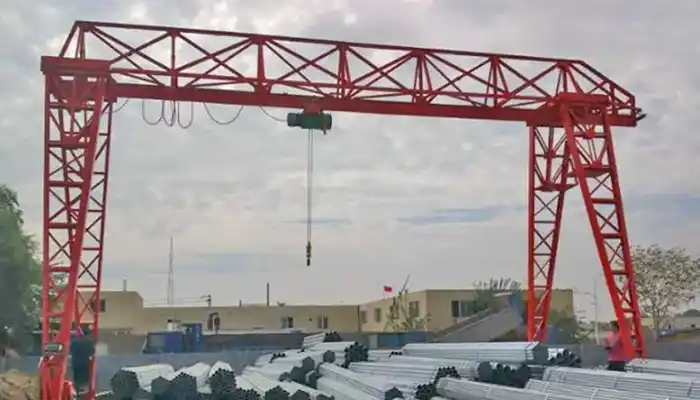
single girder truss gantry crane for sale
These cranes are designed for smaller loads and compact spaces where flexibility and cost-efficiency are important. They are ideal for support areas that do not handle full hull blocks but still require precise lifting.
Typical applications:
- Pipe shops: Lifting, positioning, and moving pipe racks and assemblies.
- Spare parts areas: Handling engines, pumps, and other medium-weight components.
- Light steel structure fabrication: Moving beams, smaller frames, and prefabricated modules.
Key specifications and features:
- Lifting capacity: 5–20 tons.
- Typical span: 20–40 m.
- Structure: Usually single girder truss design.
- Hoist system: Simple wire rope or chain trolley.
- Advantages: Cost-effective, easy to install, and requires minimal foundation reinforcement.
- Practical note: Often used in yards where multiple light-duty cranes work in parallel to support fabrication and repair tasks.
Medium-duty cranes are the workhorses of many shipyards. They can handle larger blocks, modules, and steel assemblies, making them indispensable for ship assembly and outfitting operations.
Typical applications:
- Block handling: Moving mid-size hull sections between assembly areas.
- Outfitting areas: Transporting components such as decks, cabins, and machinery modules.
- Component transfer: Loading/unloading steel plates and structural parts from storage yards.
Key specifications and features:
- Lifting capacity: 20–50 tons.
- Typical span: 30–70 m.
- Structure: Often double-girder truss design for additional strength.
- Hoist system: Single or twin trolleys with smooth frequency-controlled operation.
- Advantages: Reliable for medium-heavy tasks, provides long-span coverage, and balances structural cost with operational efficiency.
- Practical note: Medium-duty truss cranes are the most common choice for shipyards handling both fabrication and assembly operations.
These cranes are designed for the heaviest and largest operations in shipyards, covering ultra-long spans while reducing structural weight. They are essential for pre-erection areas and large assembly zones.
Typical applications:
- Large assemblies: Hull sections, superstructures, and modular units.
- Pre-erection areas: Moving blocks into position before joining or welding.
- Steel plate yards: Transporting massive steel sheets and pre-assembled sections.
Key specifications and features:
- Lifting capacity: 50–200 tons.
- Typical span: 80–150 m.
- Structure: Dual-girder or double-trolley truss design to handle long spans with reduced weight.
- Hoist system: Synchronized dual hoists for heavy and wide loads.
- Advantages: Provides ultra-long span coverage without excessively heavy girders, reducing load on foundations and rails.
- Practical note: These cranes are critical for shipyards producing large vessels, where traditional box-girder cranes would be too heavy or costly.
Semi-gantry cranes are a hybrid solution, combining rail-mounted and free-standing elements, ideal for constrained shipyard layouts.
Typical applications:
- Narrow waterfront spaces: Limited dockside areas where full gantry rails cannot be installed.
- Transfer lanes: Moving medium loads from storage areas to slipways or assembly zones.
Key specifications and features:
- Lifting capacity: Usually 10–50 tons.
- Typical span: 20–60 m.
- Structure: One side supported on rails, one side on trackless legs.
- Advantages: Flexible installation, can operate in areas with limited rail infrastructure, cost-effective alternative to full gantry cranes.
- Practical note: Semi-gantry cranes are often used in secondary yards or repair docks where space is restricted.
These are large-capacity cranes designed for specialized lifting operations where full Goliath cranes are too heavy or expensive. They provide high lifting capacity with truss design efficiency.
Typical applications:
- Medium-heavy block lifting: Hull sections that exceed the range of medium-duty cranes but don't require ultra-heavy Goliath cranes.
- Outfitting and pre-assembly: Lifting steel modules or machinery into place.
Key specifications and features:
- Lifting capacity: 30–150 tons.
- Typical span: 60–120 m.
- Structure: Double-girder truss with optional dual trolleys.
- Advantages: Reduces structural weight compared to full Goliath cranes, easier foundation requirements, suitable for medium-heavy shipyard operations.
- Practical note: Often a cost-effective solution for shipyards needing high-capacity lifts without the footprint or expense of a traditional Goliath crane.
Truss girder gantry cranes provide flexible solutions for every part of a shipyard, from light-duty pipe shops to large block assembly zones. Choosing the right type depends on lifting capacity, span, and operational environment, as well as the space available in the yard. With proper selection, these cranes improve efficiency, reduce maintenance challenges, and optimize shipyard workflow.
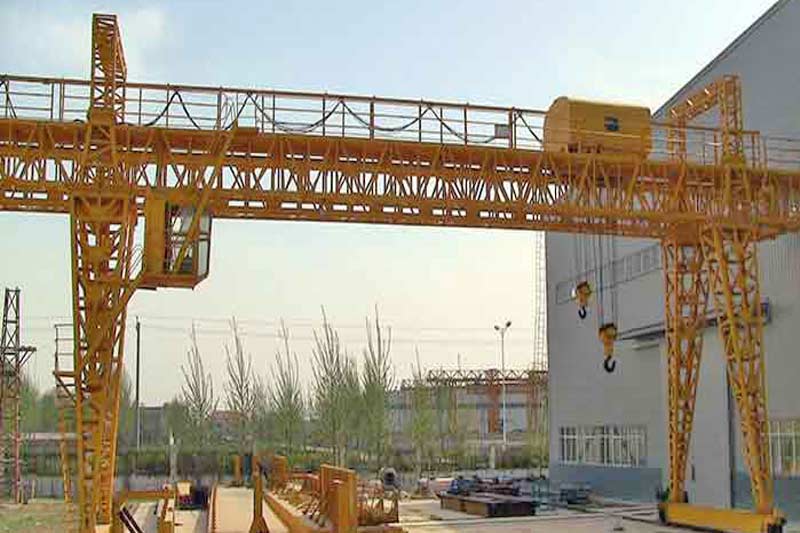 double girder truss girder gantry crane for sale
Technical Specifications for Shipyard Truss Gantry Cranes
Selecting the right truss girder gantry crane goes beyond lifting capacity and span. Shipyard cranes operate in harsh coastal environments and handle heavy steel modules, so the technical specifications must meet strict standards. This section breaks down the key technical elements that buyers should consider.
The backbone of any truss girder crane is its structure. For shipyard use, strength and durability are critical.
- High-strength steel: Q345B or Q355B steel is commonly used for main girders and supporting structures. These grades provide excellent load-bearing capacity while maintaining flexibility for long spans.
- Marine-grade paint (C5M protection): Applied to all exposed surfaces, this coating protects against saltwater corrosion, high humidity, and UV exposure.
- Welding and testing: Full-penetration welds ensure structural integrity. Non-destructive testing (NDT) is standard to detect hidden defects before installation.
Practical note: A well-designed truss structure reduces overall weight, improves wind resistance, and makes long-span coverage possible without overloading rails or foundations.
Hoists are the heart of the crane. Choosing the right system affects both safety and operational efficiency.
- Wire rope hoists: Common for medium to heavy loads, providing precise control and long service life.
- Frequency inverter drives: Allow smooth acceleration and deceleration, reducing sway and minimizing impact on loads.
- Twin-hoist synchronization (optional): Enables coordinated lifting of very wide or heavy modules, critical for hull sections or large assemblies.
Practical note: For shipyards, smooth and accurate hoisting is essential to prevent damage to prefabricated blocks and ensure worker safety.
Safe and reliable movement along the yard is as important as lifting capacity.
- Anti-skid wheels: Provide traction on rails in wet or slippery conditions.
- Heavy-duty rail clamps: Secure the crane during strong winds or typhoon conditions.
- Storm locks and ground anchors: Additional safety features that immobilize the crane when not in use during extreme weather.
Practical note: Travel mechanisms must be matched to rail alignment, yard slope, and foundation strength to maintain operational safety over years of use.
Shipyard cranes face harsh coastal environments every day, making protection against corrosion and water damage a must.
- Galvanized connectors and fittings: Prevent rust at critical joints.
- Sealed electrical cabinets: Protect control systems from humidity and salt spray.
- Waterproof motors and limit switches: Ensure reliable operation during rain and in high-humidity conditions.
Practical note: Regular inspections and maintenance of protective coatings and seals extend crane life and reduce unexpected downtime.
Modern truss girder cranes offer multiple control options to meet operational needs.
- Cabin control: Traditional operator cabin provides direct line of sight, ideal for precision lifts in assembly areas.
- Remote control: Useful for maintenance areas or when visibility is restricted.
- Combined control: Allows switching between cabin and remote operation for complex block assembly tasks.
Practical note: Flexible control modes improve productivity and safety, particularly when handling heavy or oversized modules.
In summary, structural strength, reliable hoisting, precise travel, corrosion protection, and flexible control are the core technical requirements for truss girder gantry cranes in East Asian shipyards. Proper attention to these specifications ensures long-term reliability, operational safety, and smooth workflow across large outdoor assembly areas.
Common Shipyard Applications for Truss Gantry Cranes
Truss girder gantry cranes are versatile machines that serve multiple functions across a shipyard. Their design allows them to operate efficiently in large outdoor areas, handle a wide range of loads, and adapt to specific operational needs. Below are the most common applications in shipyards, with practical details on lifting capacity, span, and workflow considerations.
Steel plates are the building blocks of ship structures, and moving them safely is a daily operation in shipyards.
- Lifting capacity: 10–30 tons, depending on plate thickness and bundle size.
- Typical span: 30–60 m, sufficient to cover storage yards and assembly lanes.
Practical considerations:
- Ensure the hoist has smooth control to prevent plate sway.
- Use magnetic or clamp attachments for safe gripping.
- Regularly inspect cranes for corrosion when handling steel in outdoor conditions.
Steel plate handling is often the first step in block construction, and efficient movement reduces bottlenecks in fabrication and assembly areas.
Sections or hull blocks are pre-assembled units that require careful lifting and positioning.
- Lifting capacity: 20–100 tons, depending on block size.
- Typical span: 40–100 m, covering assembly zones and transfer paths.
Practical considerations:
- Use twin hoists or synchronized lifting for wide blocks.
- Ensure rail alignment and crane stability to prevent tipping.
- Blocks should be lifted gradually and positioned precisely to minimize rework.
Truss gantry cranes allow large sections to move from fabrication yards to pre-erection areas efficiently, keeping production flow smooth.
The hull assembly yard is the heart of a shipyard, where medium to large blocks come together to form the ship's structure.
- Lifting capacity: 50–200 tons (medium blocks).
- Typical span: 80–150 m to cover long assembly lines and dry docks.
Practical considerations:
- Dual-girder or double-trolley cranes are preferred for stability and precise movement.
- Cranes must handle synchronized lifting for large modules to avoid structural damage.
- Storm locks and foundation reinforcements are critical for coastal yards exposed to high winds.
These cranes are essential for assembling hull blocks safely and efficiently, minimizing downtime and labor-intensive repositioning.
Storage yards for components, materials, and equipment need light to medium lifting solutions.
- Lifting capacity: 5–20 tons.
- Typical span: 20–40 m, suitable for compact outdoor storage areas.
Practical considerations:
- Single-girder truss cranes often suffice for repeated lifting of smaller items.
- Easy access to multiple storage lanes helps streamline logistics.
- Lightweight truss design reduces foundation requirements and simplifies installation.
Efficient storage handling ensures that components are ready for fabrication or assembly without delays.
Pipe fabrication is common in shipyards for plumbing, exhaust, and mechanical systems.
- Lifting capacity: 5–10 tons.
- Typical span: 15–30 m, covering workshop or fabrication bays.
Practical considerations:
- Cranes should provide smooth, precise control to handle long, heavy pipes safely.
- Easy maneuverability is critical in confined shop areas.
- Maintenance of hoists and corrosion protection is important due to frequent handling of steel pipes.
Light-duty truss gantry cranes in pipe shops help improve efficiency and reduce manual labor, while keeping the workflow safe and organized.
In summary, truss girder gantry cranes are adaptable across every key shipyard operation, from moving raw steel plates to assembling hull blocks. Choosing the right crane type, span, and lifting capacity for each area ensures operational efficiency, safety, and long-term durability in challenging outdoor environments.
Customization Options for East Asian Shipyard Buyers
Shipyards in East Asia face unique operational and environmental challenges. From strong typhoons to long-span block assembly, standard truss gantry cranes may not always meet all requirements. Customization ensures cranes are tailored for safety, durability, and operational efficiency in local conditions.
- Reinforced truss structures to resist lateral wind forces.
- Heavy-duty rail clamps and storm locks to immobilize cranes during extreme weather.
- Optional ground anchors for additional stability.
Practical note: Investing in typhoon-resistant design prevents downtime, avoids damage to expensive blocks, and ensures safety for workers.
- Truss girder design reduces the overall weight compared to box girders.
- Dual-girder or double-trolley options can be configured to handle ultra-long spans.
- Cantilever extensions allow cranes to reach over existing structures or dry docks.
Practical note: Proper span configuration maximizes coverage without overloading foundations or rails.
- C5M marine-grade coating or hot-dip galvanizing for exposed steel.
- Anti-corrosion treatment on bolts, connectors, and trolley components.
- Regular inspection schedules to maintain protective layers.
Practical note: Corrosion protection extends service life and reduces maintenance costs.
- Twin-hoist synchronization systems coordinate lifting points.
- Reduces load imbalance on long modules or irregular-shaped sections.
- Optional intelligent control systems can adjust hoist speed for precision placement.
Practical note: Essential for large block assembly, pre-erection, and modular steel handling.
- Designed to handle overhanging loads without excessive stress on the truss.
- Can be combined with twin trolleys for balanced lifting.
- Adjustable cantilever lengths depending on block size and assembly line layout.
Practical note: Enables efficient handling of oversized hull blocks without repositioning cranes frequently.
- Sensors detect swing and automatically adjust trolley speed.
- Reduces manual corrections by operators, minimizing collision risk.
- Works in combination with frequency inverter hoists for smooth motion.
Practical note: Particularly useful in high-span assembly areas or when handling delicate equipment inside modules.
- Deep piling or concrete reinforcement beneath rails.
- Adjustable rail supports for uneven terrain.
- Integration with storm-lock systems to prevent displacement during high winds.
Practical note: Properly engineered foundations prevent structural deformation, reduce maintenance, and extend crane lifespan.
In summary, customized truss girder gantry cranes allow shipyards to handle long-span, heavy, and precise operations safely, even under coastal and typhoon-prone conditions. By combining structural, mechanical, and electronic upgrades, shipyards can optimize workflow, minimize downtime, and extend crane service life.
Buyer Checklist: What Shipyard Procurement Teams Must Confirm
Purchasing a truss girder gantry crane for a shipyard is a significant investment. Selecting the wrong crane can lead to operational delays, excessive maintenance, or safety hazards. A detailed buyer checklist ensures procurement teams make informed decisions and choose a crane that fits their yard's specific requirements.
- Short spans (20–40 m): Suitable for light-duty storage, pipe shops, or compact assembly areas.
- Medium spans (40–80 m): Ideal for block handling, component transfer, or outfitting zones.
- Long spans (80–120+ m): Required for hull assembly, pre-erection yards, or steel plate storage.
Practical note: Always measure the full operational area and consider future expansion to avoid oversizing or undersizing the crane.
- Determine the number of lifts per day and operating hours.
- Specify whether continuous operation or intermittent use is expected.
- Confirm duty classification (A3, A4, A5, etc.) to match production intensity.
Practical note: A crane designed for intermittent duty may fail prematurely under continuous heavy use.
- Identify maximum block, hull section, or module weight.
- Include allowances for rigging, spreader beams, or tandem lifting if applicable.
- Ensure crane capacity exceeds the maximum weight by 20–30% as a safety margin.
Practical note: Underestimating weight is a common mistake that leads to structural stress and shortened crane life.
- Assess local wind speeds and typhoon or monsoon risks.
- Confirm whether typhoon-grade design (Grade 10–12) is required.
- Consider exposure to salt spray, humidity, and rain when specifying structural coatings.
Practical note: Cranes with insufficient wind resistance are unsafe and prone to downtime during storms.
- C4 protection: Moderate coastal exposure.
- C5M protection: Severe marine environment.
- Hot-dip galvanizing: Optional for highly aggressive coastal or industrial conditions.
Practical note: Always match coating type to environmental conditions to reduce long-term maintenance costs.
- Confirm available voltage, phase, and frequency.
- Plan for cable routing along rails, with cable festoons or conductor bars.
- Ensure sufficient capacity for multiple hoists or tandem lifting operations.
Practical note: Inadequate power design can limit crane speed, lift capacity, or operational safety.
- Assess soil stability, particularly for reclaimed coastal land.
- Check feasibility of rail installation and alignment over long spans.
- Determine whether rail reinforcement, piling, or concrete supports are needed.
Practical note: Even the best crane will underperform if the rails or foundations are not properly engineered.
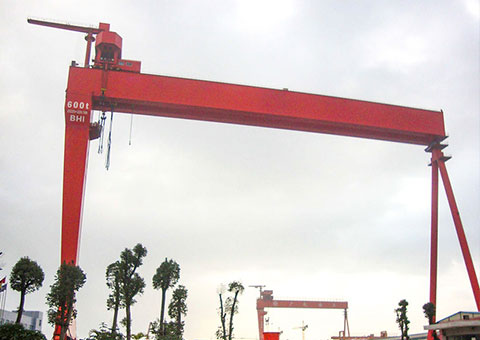
shipyard gantry crane for sale
Conclusion
Truss girder gantry cranes remain the preferred solution for shipyards across East Asia, offering a practical balance of cost, durability, and wind resistance. Their open-frame truss design makes them particularly well-suited for large-span operations in coastal environments where typhoons, high humidity, and salty air are everyday challenges.
By taking a buyer-focused approach, shipyards can ensure that cranes are properly sized, designed for local environmental conditions, and capable of handling maximum loads safely. From light-duty pipe shops to massive hull assembly areas, the right truss girder gantry crane optimizes workflow, reduces downtime, and delivers long-term operational reliability.
In short, investing in a well-specified truss girder crane is not just about lifting heavy blocks—it’s about supporting the entire shipyard’s productivity, safety, and efficiency for years to come.