Overhead Crane Buying Checklist: 9 Smart Questions for Buyers
Discover 9 essential questions every smart buyer asks before purchasing an overhead crane to ensure safety, value,& performance. Get your overhead crane!
Introduction
Why Buying an Overhead Crane Is a Major Investment for Your Facility
Purchasing an overhead crane is not something you do every day. It’s a big step that can impact your operations for years to come. Whether you run a manufacturing plant, warehouse, or construction site, the right overhead crane helps improve efficiency, safety, and productivity. On the other hand, choosing the wrong crane can lead to costly downtime, repairs, or even accidents.
Overhead cranes are built to handle heavy loads, move materials precisely, and withstand tough working conditions. Because of this, the upfront cost is often significant, but it’s really an investment in your business’s future. It’s worth taking your time to find the right match.
- Overhead cranes usually last many years with proper maintenance
- The crane’s capacity and features directly affect workflow speed
- A wrong choice can cause frequent breakdowns and expensive repairs
The Importance of Asking the Right Questions to Select the Best Overhead Crane
Not all overhead cranes are created equal, and every facility has unique needs. Asking the right questions before buying helps you avoid surprises later. You want to make sure the crane fits your space, meets your lifting needs, and is safe and easy to maintain.
Smart buyers dig into details like power supply compatibility, control options, and future maintenance. These factors might seem small but have a big impact on how smoothly your crane will run and how much it costs to own in the long run.
- Clarify lifting capacity and operational environment
- Understand installation requirements and timelines
- Learn about maintenance support and safety features

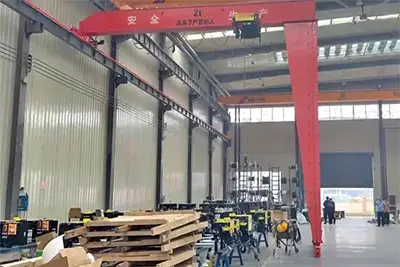
overhead crane for sale, 50 ton overhead crane project for your reference
How This Checklist Helps Smart Buyers Make Informed Decisions
This checklist is designed to guide you step-by-step through the key questions every crane buyer should ask. It’s based on real-world experience and covers the practical details that often get overlooked.
By following this guide, you can compare different options, communicate clearly with suppliers, and avoid hidden costs. You’ll gain confidence knowing you’ve covered the essentials, and your overhead crane will be a reliable tool that supports your daily work.
- A clear framework to evaluate overhead cranes from multiple angles
- Helps avoid costly mistakes in specification and installation
- Supports discussion with manufacturers for customized solutions
Determining the Maximum Load Your Overhead Crane Needs to Handle
One of the very first—and most important—questions to answer is: how much weight will your overhead crane need to lift? It’s tempting to just pick a crane based on the heaviest load you expect today, but it’s a bit more nuanced than that.
You want to carefully calculate the maximum load your crane will handle regularly. This includes not only the weight of the objects but also any lifting accessories like slings, hooks, or spreader beams. Getting this number right is crucial because the crane must be designed to safely manage that weight without strain.
- Check the heaviest single load your operation requires
- Include the weight of lifting gear and attachments
- Consider the total weight during lifting, including dynamic forces
Planning for Future Capacity Increases and Safety Margins
Your business isn’t static—it grows and changes. So, it’s smart to think ahead. Buying a crane just for today’s needs might save you money upfront, but if your loads get heavier down the road, you could find yourself stuck with a crane that doesn’t quite cut it.
Adding a safety margin above your current maximum load gives you room to grow and keeps your workers safer. A common practice is to select a crane with about 10-20% extra capacity above the expected maximum load. This helps cover unexpected overloads or minor miscalculations.
- Consider potential increases in production or load sizes
- Add a safety margin of 10-20% to your max load figure
- Avoid the temptation to “save” by under-sizing the crane
Avoiding Over- or Under-Specifying Crane Capacity
Choosing a crane that’s too small puts strain on the equipment and risks failure, but going too large isn’t always better either. Over-specifying means you’ll pay more upfront for a crane with higher capacity and heavier components than necessary, which can increase energy use and maintenance costs.
Striking the right balance ensures your overhead crane runs efficiently and economically. If you’re unsure, it’s always a good idea to consult with crane experts or suppliers who can help you assess your exact needs based on your materials and operation.
- Too small: Risk of breakdowns and safety hazards
- Too large: Unnecessary costs and higher energy consumption
- Aim for the best match between capacity and actual usage
Overview of Common Overhead Crane Types
There are several types of overhead cranes, each designed for different uses and environments. The two most common are single girder and double girder cranes, but depending on your needs, you might also consider specialized types like explosion-proof cranes or clean-room cranes.
- Single Girder Overhead Cranes: These have one main beam and are typically lighter, more cost-effective, and suited for moderate lifting capacities—usually up to 20 tons. They're ideal for workshops or factories with limited space and lighter loads.
- Double Girder Overhead Cranes: With two main beams, these cranes can handle heavier loads, often above 20 tons, and provide greater lifting height. They're sturdier, more stable, and better for larger facilities or demanding industrial operations.
- Explosion-Proof Overhead Cranes: Designed for hazardous environments where flammable gases or dust are present, these cranes have special electrical and mechanical features to prevent sparks and reduce risks.
- Specialized Cranes: Including clean-room cranes for sensitive manufacturing, or semi-gantry cranes for partial mobility.
Matching the Crane Type to Your Industry and Lifting Tasks
Your industry and the type of materials you handle play a big role in choosing the right overhead crane. For example, steel mills or heavy manufacturing plants usually need robust double girder cranes, while light assembly workshops might do just fine with single girder cranes.
Think about how often you lift heavy loads, how precise the movements need to be, and if the crane needs to operate in a controlled environment.
- Manufacturing: Often requires durable double girder cranes for heavy lifting
- Warehousing and logistics: Single girder cranes are usually sufficient
- Hazardous industries (chemical, oil & gas): Explosion-proof cranes are a must
- Cleanroom or electronics: Specialized cranes with non-contaminating materials
Considerations for Indoor Workshop or Outdoor Yard Use
Where your overhead crane will be installed matters too. Indoor workshops usually have space constraints like lower ceilings and less runway length. Here, single girder cranes or low-headroom designs help maximize space.
For outdoor yards or heavy industrial sites, cranes must be rugged and weather-resistant. They often require features like corrosion protection, waterproof controls, and stronger structural components to handle wind and rain.
- Indoor cranes need to fit within building height and space limits
- Outdoor cranes require weatherproofing and stronger structural design
- Consider local climate conditions and any special environmental factors
Space Limitations: Runway Length, Hook Height, Span, and Building Structure
Before you choose an overhead crane, it's important to carefully measure the space where it will operate. This includes the runway length (the distance the crane travels), the hook height (how high the crane can lift), and the span (the distance between runway rails). These dimensions directly affect what crane model will fit and work efficiently.
For example, if your building has a low ceiling, you might need a low-headroom crane designed to maximize lifting height without hitting the roof. Or if your facility has narrow aisles, the crane span must be tailored to avoid obstruction.
- Measure the length of the runway beams and check the rail spacing
- Confirm the maximum hook height required for lifting and clearance
- Take note of building obstructions like lights, sprinklers, or ductwork
Compatibility With Existing Crane Runway Systems or Facility Layout
If you already have a crane runway installed, it's essential to ensure your new overhead crane will fit and work smoothly on it. The runway rails need to be strong enough to support the crane's weight and the loads it will carry. Sometimes, runway reinforcement or modifications are necessary.
Also, consider the overall facility layout. The crane's movement should cover all the areas where loads need to be lifted and transported. A poorly planned layout can lead to inefficient workflows or require costly retrofits later.
- Check the load capacity of existing runway rails and supporting structures
- Confirm if runway modifications or reinforcements are needed
- Map out the crane's working area for optimal material flow
Installation Challenges and Foundation Requirements
Installing an overhead crane isn't just about placing it on rails. It often involves foundation work, especially for large cranes or those carrying heavy loads. The crane's supports or columns need a solid base to prevent shifting or vibration during operation.
Installation can also be affected by access limitations, weather, or downtime constraints in your facility. Planning for these challenges early will save time and cost.
- Assess foundation strength and whether new footings are required
- Plan crane delivery and installation logistics (crane size, site access)
- Consider scheduling installation during low production periods to minimize downtime
Electrical Compatibility and Power Source Details
One of the most practical things to check early on is whether the overhead crane's power requirements match your facility's electrical setup. Overhead cranes usually run on three-phase power, but voltage levels and frequency can vary by country or plant. Ensuring compatibility avoids costly rewiring or the need for transformers later.
Also, think about power availability at the crane's runway — will the power be delivered via festoon systems, conductor bars, or cable reels? Each option has its pros and cons for maintenance and reliability.
- Confirm your facility's voltage, phase, and frequency specifications
- Discuss power supply options with your crane supplier to fit your layout
- Consider energy efficiency and power consumption for operational cost savings
Control Options: Pendant Control, Radio Remote, Cabin Control
How you control your overhead crane impacts both safety and efficiency. The most common control methods include:
- Pendant Control: A wired handheld controller connected to the crane, simple and reliable for close-range operation.
- Radio Remote Control: Allows the operator to move freely around the work area, improving visibility and safety. Great for larger or more complex operations.
- Cabin Control: An operator sits inside a cabin mounted on the crane, ideal for heavy or precise lifting tasks where close supervision is needed.
Choosing the right control system depends on your operation size, working environment, and operator preferences.
- Pendant controls are cost-effective and good for smaller shops
- Radio remotes improve flexibility and operator safety
- Cabin controls provide better visibility but add cost and space needs
Automation and Safety Control Systems
Many modern overhead cranes come with automation options to improve productivity and reduce operator fatigue. These might include programmable limit switches, load monitoring systems, or semi-automatic positioning.
Safety is always top priority. Look for cranes equipped with overload protection, emergency stop buttons, anti-collision devices, and warning alarms. These systems help prevent accidents and equipment damage.
- Ask about programmable control features that match your workflow
- Ensure the crane has required safety devices compliant with local standards
- Consider training operators on using advanced control and safety systems
Routine Maintenance Schedules and Expected Costs
Keeping your overhead crane in good working condition means setting up a regular maintenance plan. Routine checks help spot wear and tear before it becomes a major problem, reducing downtime and expensive repairs.
Maintenance typically includes inspecting wire ropes, checking brakes, lubricating moving parts, and testing electrical systems. Depending on your usage frequency and environment, maintenance might be monthly, quarterly, or yearly.
- Plan for regular inspections of mechanical and electrical components
- Budget for routine lubrication, parts replacement, and labor costs
- Factor in any extra maintenance if the crane works in harsh conditions like dust, moisture, or chemicals
Availability of Spare Parts and Local Service Support
When your crane needs repairs, downtime can be costly. That's why having easy access to genuine spare parts and qualified service technicians is essential. Choose a supplier who stocks parts locally or can deliver quickly.
Local service support also means faster response times if you have an emergency or need technical assistance. Ask about service contracts or maintenance agreements that can keep your crane running smoothly.
- Confirm spare parts availability and average delivery time
- Check if local technicians are trained for your crane model
- Consider maintenance agreements that include inspections and emergency support
Manufacturer Warranty and Technical Support After Purchase
A good warranty gives you peace of mind and protection against manufacturing defects. Make sure you understand what's covered, for how long, and what's excluded.
Beyond warranty, ongoing technical support is valuable. The best manufacturers offer troubleshooting help, remote diagnostics, and training to keep your team confident in operating the crane.
- Review warranty terms carefully, including coverage duration
- Ask about technical support channels: phone, email, on-site visits
- Ensure training is available for operators and maintenance staff
Critical Safety Devices Such as Overload Protection, Emergency Stop, and Limit Switches
Safety can't be an afterthought when it comes to overhead cranes. Look for cranes equipped with key safety features designed to prevent accidents and protect both workers and equipment.
- Overload Protection: Prevents the crane from lifting loads beyond its capacity, avoiding damage or failure.
- Emergency Stop Buttons: Allow operators to immediately halt crane operations in case of danger.
- Limit Switches: Automatically stop the crane or trolley when reaching travel or lifting limits, preventing collisions or over-travel.
These systems act as safeguards, reducing the risk of costly downtime or injuries.
Compliance With Relevant Safety Standards (ISO, CE, OSHA)
Make sure your overhead crane meets all applicable safety regulations and standards. Certifications like ISO 9001, CE marking, or OSHA compliance show the crane has passed strict safety and quality inspections.
Following these standards is not just about legal compliance—it's about creating a safe workplace.
- Verify that the crane supplier provides documentation of safety certifications
- Check local regulations for specific safety requirements
- Use certified cranes to qualify for insurance and audits
Operator Training Requirements and Safety Best Practices
Even the safest crane needs skilled operators. Proper training helps prevent accidents caused by human error and ensures the crane is used efficiently.
Training should cover operating procedures, emergency protocols, and daily inspection routines. Some manufacturers or suppliers offer on-site or online training sessions.
- Require certified operator training before crane use
- Conduct regular refresher courses and safety drills
- Promote a culture of safety through clear communication and supervision
Supplier's Industry Reputation and Track Record in Overhead Crane Manufacturing
Not all crane suppliers are created equal. One of the smartest things a buyer can do is look into the reputation of the manufacturer. A company with years of experience in overhead crane manufacturing will understand the technical challenges and offer more reliable solutions.
It's worth asking: how long have they been in business? What industries do they serve? Have they handled projects similar to yours?
- Look for suppliers with 10+ years of crane manufacturing experience
- Choose a company with a solid history of delivering cranes for your industry
- Search for testimonials, project case studies, or online reviews
Certifications, Quality Assurance, and Client References
A trustworthy crane manufacturer should be able to show proof of product quality and safety. International certifications like ISO 9001, CE, or SGS inspection reports confirm that their cranes are built to strict standards. These certifications aren't just paperwork—they reflect the quality of the design, materials, and testing.
Client references are just as important. Ask for customer feedback, especially from companies in similar industries or countries.
- Confirm ISO, CE, and other relevant certifications are up to date
- Ask for recent client references or site photos of completed crane projects
- Check if third-party inspection reports are available on request
Experience With Custom Solutions and After-Sales Service
No two facilities are exactly alike. That's why it helps to work with a manufacturer that's skilled in customized overhead crane solutions. Whether it's a low-headroom workshop, a hazardous area, or special lifting equipment, a flexible supplier can adapt their crane system to fit.
Also, pay attention to after-sales support. Will they provide installation guidance? Do they offer technical support or replacement parts long after delivery?
- Ask if the supplier can customize span, lifting height, or hoist type
- Make sure they offer remote support, training, and spare parts service
- Check if they have a local partner or branch for faster service response
Comparing Upfront Purchase Price With Long-Term Operating Costs
It's easy to focus on the purchase price—but the true cost of an overhead crane is more than just the invoice amount. A lower-cost crane might save you money now but cost more in maintenance, energy, or lost time down the road.
Think in terms of years, not months. A crane that lasts 15–20 years with low downtime is often worth more than a cheaper option that breaks down every six months.
- Evaluate total life-cycle cost, not just purchase price
- Compare warranties, expected service intervals, and part replacement cycles
- Calculate how much downtime would cost your operation in lost output
Energy Consumption, Maintenance, and Downtime Impact on Costs
Some overhead cranes are more energy-efficient than others. Motors, frequency inverters, and smart controls can help lower electricity use, especially in high-duty applications. Over time, this adds up.
Also, don't forget the cost of regular maintenance and the impact of unexpected breakdowns. Downtime not only stops production—it can create safety issues and delay deliveries.
- Ask for technical specs on motor efficiency and energy usage
- Choose cranes with easy-to-maintain components and common spare parts
- Estimate annual maintenance costs and unplanned downtime risks
Financing and Leasing Options for Overhead Cranes
If your budget is tight or you prefer to manage cash flow more effectively, financing or leasing options can be helpful. Some suppliers offer payment terms, lease-to-own plans, or even equipment rental with a purchase option.
This can be especially useful for startups or businesses expanding into new markets.
- Inquire about financing plans or deferred payment options
- Consider leasing if the crane will be used short-term or in seasonal projects
- Make sure financing terms align with your project schedule and cash flow
Potential for Future Upgrades or Capacity Expansions
When buying an overhead crane, it's not just about what you need today. It's smart to think about where your business might be in five or ten years. If your production volume increases or you begin handling heavier materials, can the crane system grow with you?
Some overhead crane systems are easier to upgrade than others. For instance, it's possible to switch to a higher-capacity hoist, extend the runway, or even add a second hoist on the same bridge—but only if the structure was designed with future upgrades in mind.
- Ask whether the crane structure can support future load increases
- Check if the runway beams and supports are rated for additional capacity
- Make sure the crane layout leaves room for potential runway extensions or additions
Modular Design Features and Adaptability to Changing Production Needs
Facilities change. Production lines get moved. New machines are installed. A modular overhead crane system gives you the flexibility to adapt without major rebuilds. Some cranes are designed in sections that can be reconfigured or relocated more easily.
This is especially useful for growing factories, seasonal industries, or multi-purpose workshops where workflows change over time.
- Choose cranes with bolt-on components or standardized modules
- Look for designs that allow easy reconfiguration of trolley or hoist systems
- Consider cranes that are easy to disassemble and reinstall in another bay or location
Integration With Other Material Handling Equipment and Automation
Modern manufacturing increasingly relies on smart systems. If your overhead crane needs to work alongside conveyors, AGVs (automated guided vehicles), or robotic systems, integration becomes key.
Many advanced crane systems now come with automation-ready control units, sensors, and programmable logic. This allows cranes to be part of a broader material handling system or warehouse management platform.
- Ask about compatibility with automation systems like PLCs or ERP integration
- Consider sensors, anti-sway technology, or semi-automatic lifting options
- Check if the crane can share data with other smart equipment in your facility
Conclusion
Summary of the 9 Key Questions Every Smart Buyer Should Ask
Choosing the right overhead crane isn't just about selecting a model—it’s about making sure it fits your operation, budget, and long-term goals. Throughout this checklist, we’ve walked through the 9 essential questions smart buyers always ask:
- What lifting capacity is truly required?
- Which type of overhead crane suits your specific application?
- Are there dimensional or installation constraints to consider?
- What power and control systems are needed?
- What are the ongoing maintenance and service requirements?
- What safety features are built into the crane?
- Who is the manufacturer, and what is their track record?
- What is the total cost of ownership—not just the price tag?
- Can the crane system adapt to future changes or upgrades?
Asking these questions early helps you avoid the common mistakes that lead to downtime, added costs, or unsafe operations.
Encouragement to Carefully Evaluate All Technical and Financial Factors
Every overhead crane purchase is unique. That’s why it's important to look beyond brochures and price lists. Take time to evaluate the technical specifications, site conditions, power availability, and potential for future expansion. Don't forget to factor in operating costs, warranty terms, and service availability—it all adds up.
A little extra planning now can save you a lot of time, money, and stress later.
- Don’t rush the selection process—ask the right questions
- Involve both your technical team and finance department early
- Use this checklist to guide your internal discussion and supplier communication
Recommendation to Work With Experienced Overhead Crane Manufacturers for Tailored Solutions
No two facilities are exactly alike. That’s why working with an experienced overhead crane manufacturer who understands your industry, space constraints, and operational needs is worth every penny.
A knowledgeable supplier won’t just sell you a crane—they’ll help you design a solution that works, both today and in the years ahead.
- Choose a manufacturer with proven experience and solid references
- Look for the ability to provide custom designs and responsive after-sales support
- Request a detailed technical proposal tailored to your project, not just a catalog quote