Overhead Crane Capacities 1-320 Ton: Bridge Crane Buyer Must Know
Today, we’re diving into an important topic — overhead crane capacities. Whether you’re buying your first crane or upgrading your workshop, understanding crane capacity is key to making the right choice and working safely.
So, stick around as we break down what crane capacity really means, how it affects your crane selection, and everything you need to know to pick the right crane for your needs.
What Are Overhead Cranes?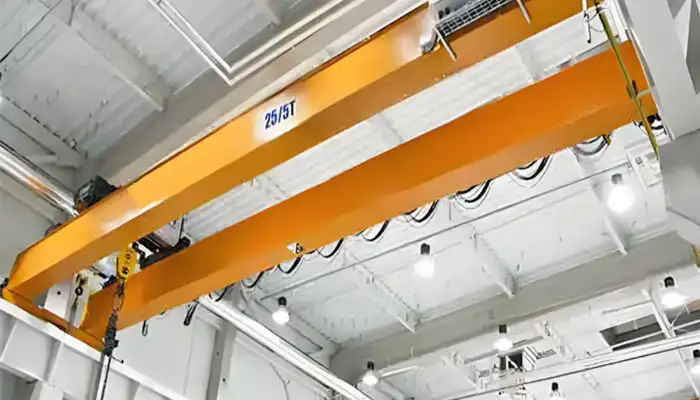
25 ton overhead crane for sale, check more on overhead crane tonnages and specifications
First up, what exactly are overhead cranes?
An overhead crane is a type of crane that runs on elevated rails, usually fixed to the building structure. They’re used to lift and move heavy loads horizontally within a workspace like factories, warehouses, or shipyards.
There are several types of overhead cranes, including:
- Single girder overhead crane cranes: These have one main beam and usually handle light to medium loads, typically from 1 to 20 tons. They’re compact and cost-effective.
- Double girder overhead cranes: With two main beams, these cranes can handle heavier loads—anywhere from 5 tons up to over 100 tons. They’re great for longer spans and heavy-duty applications.
- Top running cranes: These can lift very heavy loads, sometimes over 300 tons, and are common in large industrial facilities.
- Underrunning cranes: These hang from the runway beam and are used in areas with low headroom, usually up to 10 tons.
And there are specialized cranes like explosion-proof cranes for hazardous environments, magnetic cranes for steel handling, and grab bucket cranes for bulk materials.
Knowing the type and capacity range helps match your crane to your specific needs.
Overview of Overhead Crane Capacity- Buyer Guide
Key monents in the Video
- 0:00 - Intro - Overhead Crane Capacity Overview
- 0:27 - What is an overhead crane?
- 3:01 - 3 D presentations of different types of overhead cranes & capacity
Types of Overhead Crane Presented
- 0:51 - Single girder ovehead crane
- 1:02 -Double girder ovehead crane
- 1:13 -Top running ovehead crane
- 1:23 -Under running ovehead crane
- 1:31 -Magnetic ovehead crane
- 1:38 -Grab bucket ovehead crane
- 1:50 - Rated capacity of ovehead crane
- 2:36 -How crane capacity affected crane selections and safety
- 3:23 -Commom capacity and typical applications
- 3:29 -1-5 ton overhead crane
- 3:39 -10-20ton overhead crane
- 3:50 -50 ton and above overhead crane
- 4:54-Closing
Now, let’s talk about crane capacity.
Capacity means the maximum load the crane can safely lift. This isn’t just about the weight, but also how that weight is lifted — the height, the reach, and the speed.
Capacity ratings are usually given as:
- Rated load: The maximum load the crane is designed to lift safely.
- Actual load: The weight of the load you plan to lift.
It’s crucial to never exceed the rated load because that puts stress on the crane’s structure and components and can cause accidents.
Manufacturers provide load charts showing the maximum safe loads for different configurations — like at different lifting heights or boom extensions. Learning how to read these charts is a must for safe crane operation.
How Capacity Affects Selection and Safety
Choosing the right capacity matters a lot.
If your crane’s capacity is too small, you risk overloading, which can damage the crane or cause dangerous failures.
If it’s too large, you might be paying more upfront for capacity you don’t need, and the crane could be bulkier than your workspace allows.
Good crane design always includes a safety margin — typically, cranes are designed to handle more than their rated capacity, but operators should never push the limits.
Capacity also influences operational limits like how high the crane can lift, how far it can reach, and how fast it can operate safely.
Common Capacity Sizes and Applications
Let’s quickly review common overhead crane capacities and their typical uses:
- 1 to 5 tons: These are light-duty cranes used in workshops, small factories, or assembly lines. They’re great for handling tools, small equipment, or parts.
- 10 to 20 tons: Medium-duty cranes fit manufacturing plants, warehouses, and construction sites. They can handle heavier machinery, pallets, and mid-size loads.
- 50 tons and above: Heavy-duty cranes are common in steel mills, shipyards, and places handling really big machinery or materials.
Your choice depends on the heaviest load you expect to move regularly — always think about future needs too.
Maintenance and Inspection Tips Based on Capacity
Capacity also affects how you maintain and inspect your crane.
Higher capacity cranes usually have more complex components and heavier wear and tear.
Here are some quick tips:
- Follow the manufacturer’s maintenance schedule closely — higher capacity cranes often need more frequent inspections.
- Watch for common issues like worn cables, loose bolts, or damaged hooks.
- Regular load testing ensures the crane can still safely handle its rated capacity.
- Don’t skip professional inspections — they catch hidden problems before they become big safety risks.
Taking good care of your crane helps it last longer and keeps your workplace safe.
Conclusion
Alright, that’s our complete guide to overhead crane capacities. Knowing your crane’s capacity and how it fits your needs is the foundation of safe, efficient lifting operations.
If you found this helpful, please give us a like, subscribe, and hit the notification bell for more detailed crane tips. And if you have questions, drop them in the comments below — we’d love to help!