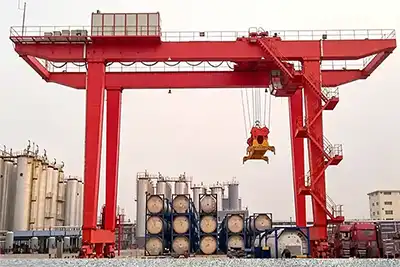
Underground Gantry Crane for Sale | TBM & Tunnel Types
Underground Gantry Crane for Sale: Types, TBM Integration & Buyer Selection Guide
A confined space gantry crane for sale is more than a standard lifting product—it is a project-specific tunnel lifting gantry system designed for TBM-driven excavation, segment installation, and spoil handling.
For buyers, the key decision is not just price or capacity but whether the underground lifting system crane can integrate with tunnel geometry, TBM workflow, and confined space constraints.
Key Buyer Takeaways
- Underground gantry cranes are engineered as tunnel construction gantry crane systems, not general-purpose equipment
- Correct selection directly impacts TBM cycle efficiency and tunnel progress speed
- Buyers must evaluate lifting capacity, tunnel clearance, and system integration, not only specifications
- Common purchasing mistake: underestimating TBM synchronization requirements
- Best results come from early coordination between EPC, procurement, and crane manufacturer
Quick FAQs: Tunnel Gantry Crane Buyer Guide
A: Choose a configuration that fits your tunnel's width, headroom, and TBM backup layout.
- Double girder cranes provide better stability for heavy loads and continuous operation.
- Enclosed hoists or dustproof designs protect against slurry, mud, and dust.
- Consider low-headroom options if tunnel clearance is limited.
A: Match the crane to the heaviest segment or spoil container plus operational safety margin.
- Subway tunnels typically need 10–16 ton cranes.
- TBM excavation zones often require 16–20 ton cranes.
- Mining or hydropower tunnels may need 20–32 ton cranes for heavy-duty operations.
A: The crane must align with TBM geometry and material flow to avoid interference.
- Check TBM backup envelope, conveyor positions, and slurry pipelines.
- Plan rail placement and crane travel to ensure smooth segment handling.
- Integration ensures continuous workflow without delays.
A: It depends on load, tunnel size, and duty cycle.
- Single girder cranes are suitable for light loads and compact tunnels.
- Double girder cranes offer higher stability for heavy or frequent lifts.
- Rail-mounted systems improve alignment and allow easier movement along the tunnel.
A: Evaluate load, frequency, and tunnel conditions carefully.
- Consider dynamic loads, not just maximum segment weight.
- Include environmental factors like humidity, water, and dust.
- Choose a design that meets both current needs and potential future load increases.
Underground Gantry Crane for Sale: What Buyers Are Actually Purchasing
When a buyer looks for an underground gantry crane for sale, they are rarely just thinking about the crane itself. In reality, they are purchasing a tunnel construction lifting system—a piece of equipment that directly affects how smooth the entire TBM workflow runs. From segment installation to muck removal, this crane becomes an integral part of the underground operation.
In practical terms, this is not just a machine you install and forget. Its design, configuration, and integration can impact tunnel logistics, safety, and overall project timeline.
Typical buyer search intent includes:
- “underground gantry crane for metro tunnel project” – buyers want a crane that fits tight subway tunnels and matches TBM segment sizes.
- “TBM tunnel segment lifting crane system” – looking for a system capable of moving precast segments from storage areas to the tunnel face efficiently.
- “confined space gantry crane for sale” – specifically searching for cranes that operate safely in restricted tunnel cross-sections.
- “rail-mounted tunnel lifting crane solution” – buyers interested in a crane that moves along rails for precise and repeated lifting operations.
Buying an underground gantry crane is a decision that carries operational consequences. The system you select directly affects:
- TBM segment handling efficiency – If the crane cycles too slowly or has limited reach, tunnel excavation can stall.
- Spoil and material logistics – Muck, pipes, or temporary supports need to move without blocking tunnel pathways. A misaligned crane can create bottlenecks.
- Safety in confined spaces – Low headroom, ventilation, and tight curves make the wrong crane design a potential hazard.
- Integration with existing underground infrastructure – The crane must work alongside conveyor lines, support systems, or temporary power supplies.
Practical notes for buyers:
- Verify tunnel dimensions and curve radii to ensure the crane can operate safely.
- Confirm lifting capacity includes peak loads plus a margin for heavy or irregular segments.
- Check if the crane is compatible with TBM logistics, including backup trailers or segment feeders.
- Evaluate environmental protection features: dust shields, humidity-resistant coatings, and low-maintenance hoists.
In industrial projects, selecting the correct confined space gantry crane is not just about cost—it's about keeping the tunnel construction flow steady, avoiding downtime, and maintaining worker safety. The right system allows TBM operations to continue without interruption, reducing risk of delays and extra labor costs.
What Is an Underground Construction Gantry Crane
An underground construction gantry crane, also commonly searched as a tunnel gantry crane, underground gantry crane, or confined space gantry crane for sale, is a rail-mounted or semi-gantry lifting system specifically designed for tunnel construction environments. It is built for working conditions where space is limited, visibility is restricted, and continuous material flow is required.
In practical engineering terms, this equipment is part of a tunnel lifting gantry system used inside TBM-driven projects. It is not a general workshop crane. The structure, travel system, and hoisting arrangement are all adapted to underground geometry and TBM workflow constraints.
For buyers evaluating an underground construction gantry crane for sale, the key point is how the system behaves inside a live tunnel construction line:
- It supports TBM tunnel construction and excavation operations, especially segment handling near the tunnel face
- It operates as a continuous underground lifting system crane, moving materials in a repeated, high-cycle workflow
- It is designed for confined tunnel conditions, where clearance height, width, and turning space are limited
- It is widely applied in metro subway tunnels, hydropower diversion tunnels, mining access tunnels, and railway tunnel projects
This type of crane is often confused with surface gantry systems, but the design purpose is different. In underground projects, the requirements are more restrictive and operational cycles are more continuous.
- Low headroom structure design for TBM backup zones and tight tunnel cross-sections
- Rail-mounted or semi-gantry travel systems for stable and repeatable movement along tunnel alignment
- Environmental adaptation, including resistance to dust, humidity, and long operating hours
- Integration-ready layout, allowing coordination with conveyor systems, segment delivery cars, and TBM support equipment
Most buyers searching for keywords like “tunnel gantry crane for sale” or “rail-mounted tunnel lifting crane solution” are working in one of the following environments:
- Metro and subway tunnel construction using TBM systems
- Hydropower diversion or water conveyance tunnel projects
- Underground mining excavation and support operations
- Railway tunnel construction and long-distance maintenance access
Each application requires a different configuration of underground gantry crane system, especially in terms of lifting capacity, span, and duty cycle.
From a procurement and engineering point of view, an underground gantry crane is not selected as a standalone machine. It is selected as part of the tunnel construction logistics system.
In real projects, it directly affects:
- How fast TBM segments are installed
- How smoothly spoil and materials are transported
- Whether underground workflow remains continuous or becomes intermittent
- How safely operators can work in confined tunnel conditions
A properly selected underground gantry crane system for TBM tunnels keeps the construction cycle stable. A poorly matched one often becomes a hidden bottleneck that slows the entire excavation process.
Why Underground Gantry Cranes Are Purchased (Not Just Specified)
When buyers look for an underground gantry crane for sale, they are not simply buying a lifting device. In industrial projects, these cranes become part of the tunnel construction logistics system, supporting multiple operational functions. Choosing the right system impacts efficiency, safety, and workflow continuity in TBM-driven tunnels, metro projects, hydropower, and mining applications.
In practical terms, buyers invest in this type of crane for three main purposes:
A primary function of a tunnel gantry crane / confined space gantry crane is the precise lifting and installation of precast tunnel segments.
- Allows controlled positioning of segments even in tight tunnel cross-sections
- Supports high-frequency TBM operations without slowing the excavation cycle
- Reduces the risk of misalignment or damage to segments during installation
In industrial tunnel projects, segment handling is often the bottleneck if the crane is undersized or lacks smooth integration with TBM logistics.
Beyond segment lifting, these cranes are critical for moving excavation material efficiently. A properly selected tunnel lifting gantry system can handle spoil, muck, and debris as part of a continuous underground workflow.
- Transfers excavation material through the tunnel logistics chain without interrupting TBM advance
- Integrates seamlessly with conveyor lines, rail muck cars, or temporary staging areas
- Prevents backlogs in confined tunnel spaces, reducing labor and downtime
For buyers, spoil handling capacity is just as important as segment lifting. Overlooking it can slow TBM cycles and increase operational costs.
Finally, an underground construction gantry crane supports the transport and installation of auxiliary equipment inside tunnels.
- Lifts and positions TBM components during maintenance or setup
- Installs pipes, ventilation ducts, cables, and other infrastructure
- Ensures safe material movement in confined and low-headroom environments
In practice, buyers often underestimate this function. A crane that handles segments but cannot move supporting equipment creates workflow interruptions and risks safety issues.
Practical Buyer Notes
When evaluating a confined space gantry crane for sale, buyers should check:
- Whether the crane handles peak segment weight and spoil load simultaneously
- Integration with TBM logistics, rail, or conveyor systems
- Clearance and operation in tight tunnel cross-sections
- Environmental features like dust protection, low-headroom design, and humidity resistance
In industrial tunnel projects, the right underground gantry crane system keeps excavation, segment installation, and material handling running smoothly. It is not just a specification—it is a practical tool for maintaining construction speed, worker safety, and project timelines.
Underground Gantry Crane Types for Sale (Buyer-Oriented Classification)
When buyers search for a tunnel gantry crane for sale, they are usually evaluating which type best fits their tunnel geometry, lifting requirements, and TBM workflow. Each crane type has practical applications and limitations in underground construction, and choosing the right one early can prevent operational bottlenecks.
Single Girder Confined Space Gantry Crane
Single girder designs are ideal for light-duty underground lifting systems, offering a practical and cost-effective solution for smaller tunnels.
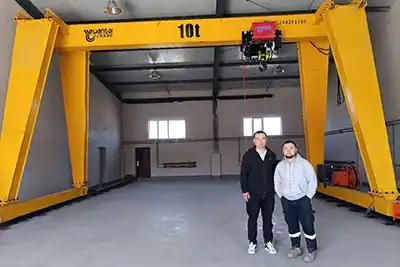
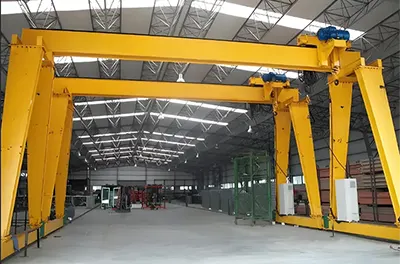
- Best for small to medium tunnel projects where loads are moderate
- Suitable for utility tunnels and auxiliary TBM support tasks
- Compact design allows operation in restricted cross-sections
- Lower installation and maintenance costs compared to double girder systems
Buyers often choose this type when peak loads do not exceed 10–16 tons, and high-frequency operation is not critical.
Double Girder TBM Tunnel Gantry Crane System
Double girder cranes are built for heavy-duty tunnel applications, handling larger segments and heavier equipment.
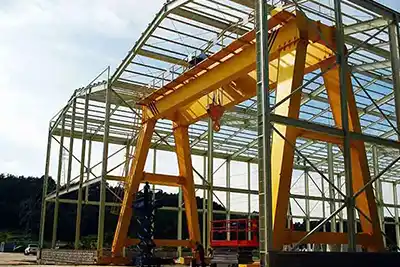

- Designed for segment lifting in metro, hydropower, and mining tunnels
- Provides high stability and safe handling for loads between 16–50 tons
- Suitable for projects where continuous TBM workflow requires reliable, repeated lifting
- Often integrated with rail-mounted or semi-gantry travel for long tunnels
This type is the go-to option for buyers prioritizing strength, safety, and high lifting capacity in industrial tunnel projects.
Mobile Low Headroom Gantry Cranes
A mobile low headroom gantry crane is designed for flexibility. Instead of fixed rails, it uses a self-propelled or wheeled structure, allowing it to move as the tunnel work progresses.
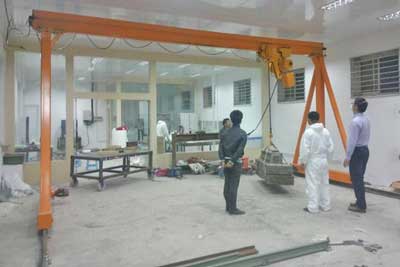
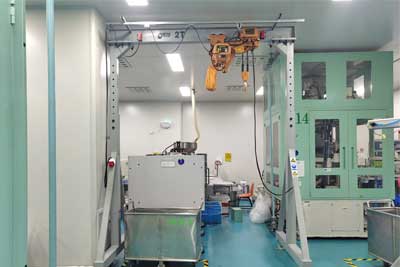 Aluminum gantry crane with low headroom chain hoist with capacity up to 10 ton for light loads and light duty material handling
 This is useful in construction environments where the working face keeps shifting, and the crane must follow the excavation progress.
- No fixed rail installation required
- Can be relocated along tunnel sections as needed
- Suitable for temporary lifting tasks and maintenance work
- Works well in variable underground construction layouts
Specialized Adaptations for Underground Conditions
Underground environments are harsh. Dust, moisture, limited ventilation, and sometimes gas exposure all affect crane performance. Because of this, low headroom gantry cranes are often customized with specific adaptations depending on the project.
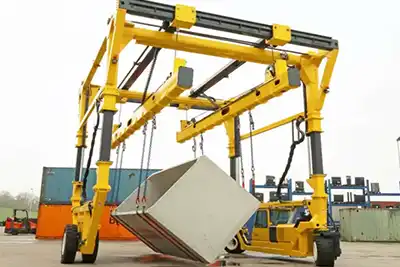
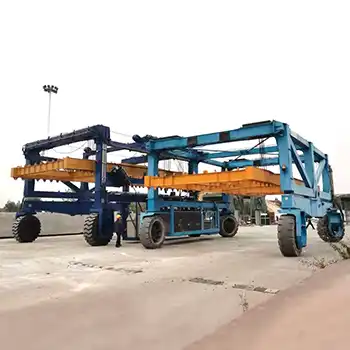 straddle carrier with low headroom design for confined space
 These adaptations are not optional in many cases—they are required for safe underground crane operation.
- Anti-corrosion coating for humid tunnel and mining environments
- Dust-proof sealing for high particulate conditions in excavation zones
- Explosion-proof hoist systems for coal mining or gas-sensitive tunnels
- Compact hoist design to maximize lifting height under strict headroom limits
Typical Capacities Buyers Should Expect for Underground Gantry Cranes
When purchasing an underground gantry crane for sale, understanding recommended capacities for different tunnel applications is critical. Capacity is not just about the heaviest load—the crane must also operate reliably during continuous TBM cycles, handle spoil, and support auxiliary equipment.
Below is a practical guide to what buyers typically consider when matching tunnel gantry crane systems to project needs:
Capacity Guide by Tunnel Application
| Tunnel Application | Recommended Capacity | Buyer Use Case |
|---|---|---|
| Utility tunnels | 5–10 ton | Light materials, tools, small auxiliary equipment |
| Metro TBM tunnels | 10–16 ton | Precast segment installation, TBM workflow support |
| Standard TBM excavation | 16–32 ton | Segment handling plus spoil and muck transportation |
| Hydropower tunnels | 32–50 ton | Heavy equipment, concrete forms, and large structures |
Practical Buyer Considerations
When evaluating tunnel gantry crane capacities, buyers should focus on real-world operational requirements:
- Peak vs continuous load: The crane must handle the heaviest segments and spoil plus additional safety margins
- Cycle speed compatibility: For TBM tunnels, lifting speed must match the TBM advance rate to avoid bottlenecks
- Environmental constraints: Dust, moisture, and low-clearance conditions can reduce effective capacity if not accounted for
- Integration with underground logistics: Consider whether the crane will feed conveyor lines, rail muck systems, or TBM segment feeders
In industrial tunnel projects, selecting the right capacity goes beyond numbers on a specification sheet. The underground gantry crane system must maintain continuous operation, support material flow, and adapt to tunnel-specific constraints. Choosing a crane that is underpowered or mismatched can slow the TBM cycle, create safety hazards, and increase project costs.
TBM Integration: Critical Buying Factor for Underground Gantry Crane Selection
When evaluating a tunnel gantry crane for sale, one of the most important technical and operational checks is TBM integration. A tunnel lifting gantry system is not operated in isolation. It must work in step with the TBM excavation rhythm, segment erection cycle, and underground logistics flow.
In practical tunnel construction, especially metro and hydropower projects, the crane is part of the production line. If it does not match TBM speed and layout, even a properly sized underground construction gantry crane will not perform effectively in real conditions.
To ensure smooth performance in underground projects, buyers should evaluate how the underground gantry crane system connects with TBM workflow in these key areas:
- Segment supply timing vs TBM erection cycle
The crane must deliver and position precast segments in sync with TBM installation speed. If lifting is slower than the TBM cycle, excavation pauses start to appear. - Spoil removal parallel flow system
In TBM tunneling, spoil handling runs continuously. The crane should coordinate with conveyor belts, rail muck cars, or transfer systems so excavation material does not accumulate in confined tunnel space. - Backup trailer clearance and rail alignment
Many TBM setups include backup gantries, pipelines, and service trailers. The crane travel path and rail system must avoid interference while still allowing full lifting coverage along the tunnel section. - Power supply and underground ventilation constraints
Underground environments are not stable working zones. Voltage limits, cable routing, humidity, and ventilation airflow can all affect crane operation. These must be confirmed during design, not after installation.
In many tunnel projects, the crane itself is not the problem—the mismatch with TBM workflow is.
Even when a confined space gantry crane has the correct capacity and span, poor integration can create real operational issues:
- Segment lifting becomes slower than TBM advance rate
- Spoil removal begins to block working space inside the tunnel
- Crane travel conflicts with backup equipment or conveyor lines
- Unexpected downtime occurs due to power or clearance limitations
In practice, this turns the crane into a hidden bottleneck inside the TBM system, reducing overall excavation efficiency.
Underground Construction Environments: Where These Cranes Are Used
When buying an underground gantry crane for sale, it's important to understand that different tunnel environments impose very different requirements. A crane that works well in a metro subway might not be suitable for a hydropower tunnel or a mining operation. Each project type affects crane configuration, duty cycle, and protective features.
- Used for TBM segment installation and logistics along long tunnel sections
- Often requires rail-mounted or low-headroom cranes to fit tight cross-sections
- Dust-proofing and precise travel control are critical to maintain continuous workflow
- Handles heavy equipment, concrete forms, and large pipe sections
- Double girder or high-capacity cranes are common for loads over 30 tons
- Corrosion resistance and water-proof coatings are essential due to high humidity
- Supports muck handling, ore container movement, and emergency lifting
- Cranes must withstand dusty, abrasive environments and irregular tunnel layouts
- Duty cycles are often high, requiring robust rail-mounted or semi-gantry designs
- Moves rail segments, sleepers, and maintenance machinery along tunnel alignment
- High-precision positioning and repetitive travel are required
- Integration with maintenance and TBM backup systems is key to avoid delays
Practical Buyer Notes
Each environment requires different crane configurations, especially regarding:
- Corrosion protection for humid or wet tunnels
- Dust and particle shielding in mining or TBM projects
- Duty cycles—continuous TBM operation vs intermittent material handling
Buyers must match crane type, lifting capacity, and protective features to the specific tunnel conditions rather than just the tunnel type name
In industrial projects, selecting the correct underground gantry crane system for the tunnel environment ensures safe, efficient, and uninterrupted operations, reducing downtime and maintenance needs.
What Buyers Should Evaluate Before Purchase
Before choosing a tunnel gantry crane, the first step is to match the equipment with real underground working conditions. In tunnel projects, there is no extra space or margin for mismatch, so every technical detail matters from the beginning.
Tunnel space is often limited, especially in subway construction and TBM-driven projects. The crane must fit within the available clearance without interfering with segment transport, ventilation ducts, or temporary structures.
- Confirm tunnel diameter and working headroom before selecting crane type
- Check side clearance for trolley movement and hoisting operation
- Consider compact designs when working in narrow subway tunnels or restricted excavation zones
Every lifting system in underground work is defined by the heaviest load it will handle. This is usually tunnel segments, TBM parts, or heavy construction materials.
- Typical ranges include 10 ton, 16 ton, 20 ton, and 32 ton configurations
- Always include safety margin for dynamic lifting conditions
- Consider future load changes during later construction stages
In TBM excavation projects, lifting is continuous and directly linked to excavation speed. If the crane cannot keep up, it becomes a bottleneck in the workflow.
- Match crane duty class with TBM production rate
- Ensure hoisting system supports frequent start-stop cycles
- Evaluate motor cooling and brake wear under continuous operation
The crane runway system is often overlooked, but it directly affects long-term stability and alignment. Underground rail conditions are rarely perfect, so installation flexibility matters.
- Check rail alignment tolerance and foundation strength
- Ensure compatibility with existing tunnel structure or segment supports
- Evaluate installation sequence with other tunnel systems
Not all tunnel projects are the same. Some require standard configurations, while others need fully engineered systems adapted to specific geological or construction conditions.
- Standard cranes may work for general subway sections
- Engineered systems are better for TBM, mining, or hydropower tunnels with complex environments
- Customization often includes sealing level, structure design, and control systems
Installation conditions in tunnels are often difficult, with limited space and strict schedules. Buyers should clearly define who is responsible for installation and commissioning.
- Confirm whether supplier provides on-site installation support
- Evaluate commissioning time and testing requirements underground
- Check compatibility with existing construction workflow
In underground environments, even small maintenance delays can stop the entire operation. Easy access to spare parts and service support is critical.
- Check availability of key wear parts such as motors, brakes, and seals
- Ensure electrical components can be replaced without complex dismantling
- Prefer designs that allow quick inspection of sealed systems
A lower purchase price does not always mean lower total cost. In tunnel operations, maintenance, downtime, and repair cycles often define the real cost over time.
- Consider energy efficiency and maintenance frequency
- Evaluate expected service life under humidity, dust, and slurry conditions
- Compare lifecycle cost, not just initial procurement price
Practical Summary for Buyers
In real tunnel projects, the right crane is not just about lifting capacity. It is about how well the system fits the tunnel, supports continuous excavation, and handles harsh underground conditions without frequent interruption. Careful evaluation of both technical and commercial factors helps ensure stable operation from installation to long-term use.
Common Buyer Mistakes When Purchasing Underground Gantry Cranes
Many buyers calculate crane capacity solely on the heaviest tunnel segment or material. In practice, continuous lifting cycles, dynamic loads, and acceleration forces add stress that static weight alone doesn't account for.
- Overlooking duty cycle may overload the crane during repeated lifts
- Dynamic lifting forces increase wear on motors, brakes, and structure
- Proper sizing should consider both maximum load and operational rhythm
Tunnel boring machines (TBMs) often have tight backup systems for conveyors, slurry pipelines, and auxiliary equipment. A crane that fits in theory may interfere with TBM components or limit maneuvering space.
- Failing to check tunnel cross-section and TBM envelope can block movement
- May require costly adjustments or crane redesign during construction
- Always align crane design with TBM layout and site geometry
Some buyers treat underground cranes like standard overhead cranes. Moisture, dust, slurry, and condensation in tunnels accelerate corrosion and damage electrical systems if protection is inadequate.
- Ignoring protective measures leads to frequent electrical failures and mechanical wear
- Shortens crane lifespan and increases maintenance costs
- Selecting anti-corrosion, waterproof, and dustproof features upfront prevents downtime
Underground crane projects are not the same as regular factory overhead cranes. Limited space, irregular tunnel surfaces, environmental exposure, and continuous duty cycles all require specialized design and engineering.
- Standard cranes may not fit restricted tunnels or handle wet, dusty conditions
- Can result in installation delays, frequent repairs, and safety risks
- Specialized tunnel gantry cranes improve reliability and operational efficiency
Successful tunnel crane procurement requires evaluating capacity, environmental protection, tunnel geometry, and duty cycle together. Treating it as a standard overhead crane purchase almost always leads to extra costs and project disruption.
Conclusion: Underground Gantry Crane as a Project-Driven Purchase
A tunnel gantry crane is more than just lifting equipment—it is a critical part of TBM logistics and overall underground construction workflow. Treating it as a core operational asset ensures that the crane supports project efficiency rather than becoming a bottleneck.
Key Considerations for Buyers
- Match crane design with TBM workflow
Ensure the crane’s capacity, duty cycle, and protection features align with the pace of tunnel boring and segment handling. - Select the correct underground gantry crane configuration
Decide between single or double girder, enclosed hoist, or dustproof and waterproof designs based on tunnel environment, load types, and space constraints. - Balance cost, safety, and operational continuity
Initial purchase price is important, but factoring in lifecycle reliability, maintenance needs, and protection against corrosion, dust, and water yields better long-term value.
Practical Project Outcomes
When selected and configured correctly, an underground gantry crane:
- Improves excavation speed by keeping material handling aligned with TBM advance
- Reduces downtime caused by electrical failures, corrosion, or wear
- Ensures consistent, safe, and reliable operation throughout the project lifecycle
In short, buyers who consider environmental exposure, operational requirements, and long-term maintenance from the outset gain cranes that truly support efficient and safe underground construction projects.