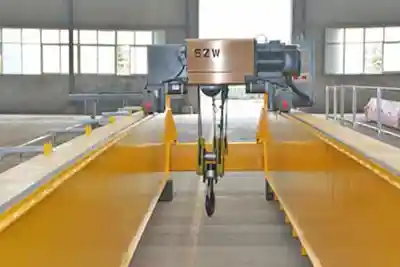
Planning to Buy an Overhead Crane in Egypt – Buyer Tips
Planning to Buy an Overhead Crane in Egypt? Key Market Insights and Buyer Tips
Egypt’s industrial and resource landscape is impressive. With vast reserves of oil, natural gas, phosphates, and iron, the country has built a diverse and relatively complete industrial system. These resources are not just economic figures—they create a continuous, real-world demand for lifting equipment across various industries.
Whether you’re managing a steel plant, a refinery, or a large textile factory, overhead cranes play a vital role in keeping operations safe and efficient. They are the backbone of material handling, helping move heavy or bulky items without slowing down production. Yuantai Crane offfere types of overhead cranes and gantry cranes of sale Egypt. If you have any need or inquiry, please feel free to contact us.
Why Overhead Cranes Are Essential in Egypt
- Oil & Gas Industry: Facilities handle flammable gases, steam, and heavy equipment, requiring explosion-proof and precise lifting solutions.
- Steel & Metallurgy: Moving ladles, coils, and structural steel safely demands high-capacity cranes designed for extreme conditions.
- Textiles & Manufacturing: Transporting raw cotton, yarn coils, fabric rolls, or chemicals efficiently improves workflow and safety.
- Large-Scale Projects: Construction sites, ports, and industrial plants all rely on cranes for heavy lifting and installation.
Purpose of This Guide
This article is crafted to help buyers:
- Understand the current demand for overhead cranes in Egypt.
- Learn about available supplier options, including local manufacturers and international imports.
- Get practical guidance on selecting cranes that match operational requirements.
- Make informed procurement decisions that balance cost, safety, and efficiency.
By reading this guide, buyers will gain a realistic view of Egypt’s overhead crane market, including what types of cranes work best in different industries, and how to plan purchases that ensure smooth operations without unnecessary delays or costs.
Overview of Egypt's Overhead Crane Market
Egypt's overhead crane market is shaped by the country's growing industrial base and its need for efficient material handling solutions. Across factories, refineries, ports, and construction sites, overhead cranes are essential tools that ensure heavy loads are moved safely and efficiently. For buyers, understanding the types of cranes available, the industries that rely on them, and the key market drivers is critical for making informed purchasing decisions.
- Single Girder Cranes: Ideal for light to medium-duty lifting, commonly used in workshops, textile plants, and small-scale manufacturing facilities.
- Double Girder Cranes: Designed for heavy-duty lifting, suitable for steel plants, large manufacturing operations, and warehouses handling bulky items.
- Gantry Cranes: Often used outdoors or in open industrial yards, for loading/unloading materials in ports, construction sites, and heavy industries.
- EOT (Electric Overhead Traveling) Cranes: Widely used in steel mills, refineries, and power plants for precise lifting of heavy equipment.
- Jib Cranes: Localized lifting solution, typically used in workshops or production lines for repetitive tasks or small areas.
Several factors are driving the demand for overhead cranes in Egypt:
- Industrial Growth: Expansion in sectors such as oil & gas, steel, textiles, and cement increases the need for reliable lifting equipment.
- Large-Scale Projects: Ongoing construction of industrial parks, refineries, and infrastructure projects requires cranes for installation and material handling.
- Infrastructure Development: Investments in ports, logistics hubs, and urban construction support demand for both indoor and outdoor lifting solutions.
- Oil & Gas: Cranes handle heavy equipment, explosion-proof lifting, and maintenance in refineries and gas plants.
- Steel: High-capacity cranes are essential for smelting, rolling, and moving steel coils and structural components.
- Textiles: Single and double girder cranes transport raw cotton, yarn coils, fabric rolls, and chemicals safely across production lines.
- Power & Energy: Cranes support the installation and maintenance of turbines, generators, and heavy components.
- Ports & Cement: Gantry cranes are critical for loading/unloading cargo and handling bulk cement or construction materials.
Main Industry Demand for Overhead Cranes
Egypt's overhead crane market is closely linked to the demands of its key industrial sectors. Each industry has unique lifting requirements, safety considerations, and operational challenges. Understanding these needs helps buyers select the right crane type, capacity, and features for their operations.
Egypt is a major oil and gas producer in Africa, with the sector accounting for a significant share of the national economy. In 2023, the country produced 29.8 million tons of oil and 57.1 billion cubic meters of natural gas, reflecting a robust and ongoing demand for industrial equipment.
In oil refineries, gas plants, and related facilities, materials and machinery must be moved carefully due to hazardous conditions. Explosion-proof cranes are often required in areas where flammable gases, steam, or combustible dust are present. Coker cranes are specifically used in refineries to handle hot coke safely, moving it from coke pits to crushers, hoppers, or conveyors.
Typical applications and crane requirements:
- Explosion-proof cranes for hazardous zones.
- Coker cranes for hot coke handling in refineries.
- Heavy-duty lifting for refinery maintenance and equipment installation.
Egypt hosts the largest cotton and textile industrial cluster in Africa, ranking as the second-largest industrial sector in the country. With over 7,000 textile enterprises and an added value of approximately 3% of GDP, the textile industry is a significant contributor to industrial activity.
Textile production involves moving raw materials such as cotton, yarn coils, fabric rolls, dyes, and chemicals across multiple workshops and production stages. Efficient overhead cranes improve material handling, reduce production delays, and enhance workplace safety.
Recommended crane types for textile operations:
- Single girder bridge cranes for light to medium loads.
- Double girder bridge cranes for heavier coils or bulk material handling.
Use cases:
- Transporting raw cotton to spinning workshops.
- Moving yarn coils and fabric rolls between production stages.
- Handling chemical containers and dye materials safely.
Egypt is the largest steel producer and consumer in Africa, with 10.4 million tons of steel produced in 2023. The industry also involves significant imports and exports, with a projected market size of USD 4.482 billion by 2033.
Steel production requires handling extremely heavy and high-temperature materials, including ladles, coils, and structural steel. Overhead cranes in this sector must provide high-strength lifting, precise control, and durability under harsh conditions.
Recommended crane types for steel operations:
- Double girder overhead cranes for general heavy lifting.
- Ladle handling cranes for molten metal transport.
- Electromagnetic cranes for coil and slab handling.
- Clamp cranes for secure gripping of structural steel.
Key use cases:
- Smelting and casting operations.
- Rolling and shaping steel components.
- Transporting hot ladles, steel coils, and structural steel within the plant.
Local Overhead Crane Suppliers in Egypt
When planning to buy an overhead crane in Egypt, understanding the local supplier landscape is crucial. Local suppliers not only provide equipment but also offer installation, maintenance, and after-sales support—factors that significantly impact the overall cost, efficiency, and reliability of crane operations.
Founded in 1983, MISR for Engineering Works has established itself as a trusted provider of overhead cranes in Egypt. The company serves as the exclusive agent for GH and HADEF brands, offering a range of high-quality lifting solutions. MISR operates two manufacturing facilities and holds ISO 9001 and OHSAS 18001 certifications, reflecting its commitment to quality and safety.
Products and services:
- Overhead cranes for workshops and industrial plants.
- Gantry cranes for outdoor or heavy-duty applications.
- Monorail and jib cranes for localized lifting tasks.
- Wire rope and chain hoists for different lifting capacities.
- Installation and technical support across multiple industrial sectors, including water treatment, shipyards, and metro construction.
Established in 2003, Egyptian Norwegian Cranes specializes in both electric and manual cranes. The company has decades of experience in crane manufacturing and distribution, serving industrial facilities such as steel plants, cement factories, and power plants.
Products and services:
- Single and double girder bridge cranes.
- Gantry cranes for heavy and outdoor lifting.
- Jib cranes and monorail cranes for workshops or production lines.
- Agency and distribution for European brands, including MISIA (Italy), U-MEGA (Taiwan), YALE (Germany), and MUNCK (Norway).
- Comprehensive installation, maintenance, and after-sales support.
Modern Trading Company operates in Cairo and represents Turkish Arnikon Engineering cranes. The company provides both standard lifting equipment and tailored solutions, making it suitable for buyers who require local fabrication or additional customization.
Products and services:
- Overhead cranes, gantry cranes, jib cranes, and crane kits.
- Spare parts and replacement components.
- Local steel structure fabrication, installation, and commissioning.
- Maintenance and technical support to ensure smooth operation across different industries.
Egypt Overhead Crane Imports Market
While Egypt has several local overhead crane suppliers, imported cranes still make up a significant portion of the market. International suppliers bring a variety of designs, capacities, and technologies that may not always be available locally. For buyers, understanding the origin, strengths, and limitations of imported cranes is essential when planning a purchase.
Top Import Suppliers
The majority of imported cranes in Egypt come from China, Italy, and Turkey. Each country offers distinct advantages, depending on the buyer’s needs, project scale, and timeline.
China: Largest Share and Wide Product Range
China is the dominant exporter of overhead cranes to Egypt, thanks to its large-scale production capabilities and cost-effective solutions. Chinese manufacturers provide a full spectrum of lifting equipment, from light-duty single girder cranes to heavy-duty double girder, metallurgical, and explosion-proof cranes.
Key advantages of Chinese cranes:
- Extensive product range: Suitable for industries like oil & gas, steel, textiles, cement, power, and ports.
- Cost-effective solutions: Competitive pricing without compromising basic reliability.
- Turnkey solutions: Complete lifting systems including cranes, hoists, and control systems.
- Strong local service presence: Many Chinese manufacturers have been expanding support under the Belt and Road Initiative, establishing partnerships, local offices, and service centers in Egypt.
The Belt and Road Initiative has enhanced delivery speed, spare parts availability, and on-site technical support, making Chinese cranes an increasingly practical choice for industrial buyers.
Turkey & Italy: Precision, Reliability, and Geographical Advantage
Turkey and Italy are also significant suppliers, benefiting from closer proximity to Egypt, which reduces shipping time and cost. Both countries offer high-quality cranes with certifications such as CE and ISO, meeting international standards for safety and reliability.
Advantages of Turkish cranes:
- Shorter delivery times due to geographic closeness.
- Broad range of cranes from single and double girder designs to gantry cranes.
- Increasingly mature manufacturing capabilities, including automation-ready cranes.
- Cost efficiency for medium to large projects.
Advantages of Italian cranes:
- High precision and advanced manufacturing techniques.
- Expertise in automation and advanced crane control systems.
- Strong reputation for durability and reliability in heavy-duty industrial applications.
- Well-established after-sales and technical support networks.
Practical Takeaways for Buyers
- Chinese cranes are best suited for buyers needing complete, cost-effective solutions, especially for multiple units or varied industrial applications.
- Turkish and Italian cranes are ideal for buyers prioritizing precision, faster delivery, and high-end technology, particularly in steel, oil & gas, or automated facilities.
- Consider local service, spare parts availability, certifications, and the ability to handle project-specific customization when comparing imports.
Key Buyer Considerations
Buying an overhead crane in Egypt is not just about choosing a machine that lifts heavy loads. It's about ensuring the crane fits your facility, workflow, budget, and safety requirements. Here are the key considerations every buyer should keep in mind:
Before contacting suppliers, take a close look at your operational needs. A clear understanding of requirements helps avoid overpaying for features you don't need—or underestimating what you actually require.
Factors to consider:
- Lifting capacity: Know the heaviest load your crane will handle, including future expansion plans.
- Span and hook height: Measure the width of your workspace and ceiling height to determine the crane's required span and lifting height.
- Operational frequency: Light-duty, medium-duty, or heavy-duty usage affects hoist type and motor specifications.
- Environmental conditions: Hazards such as flammable gases, high temperatures, or dust may require specialized cranes like explosion-proof or coker cranes.
Choosing the right type of crane ensures efficiency, safety, and longevity.
Options to evaluate:
- Single girder vs double girder: Single girder cranes are suitable for lighter loads, smaller workshops, and simpler operations, while double girder cranes handle heavier materials and longer spans.
- Specialized cranes: Explosion-proof cranes for hazardous zones; coker cranes for hot metal handling.
- Load handling tools: Electromagnetic cranes for steel or metal slabs; clamp cranes for secure gripping of structural steel or coils.
Your choice of supplier affects delivery times, installation quality, and ongoing support.
Key points to check:
- Local vs international suppliers—consider availability, logistics, and service support.
- Certifications such as ISO, CE, OHSAS that demonstrate quality and safety compliance.
- Installation services, operator training, and after-sales support.
- Reputation and experience in your specific industry.
The initial equipment price is only part of the total investment.
Costs to plan for:
- Equipment cost based on capacity, span, and customization.
- Shipping and import duties if buying from overseas suppliers.
- Installation and commissioning expenses.
- Maintenance, spare parts, and operational support to keep the crane running smoothly.
Overhead cranes operate in environments where accidents can be severe. Ensuring safety compliance protects both staff and equipment.
Safety considerations:
- Adherence to local regulatory standards and international codes.
- Operator training and certification requirements.
- Regular inspection and maintenance schedules, including hoist, trolley, bridge, and control system checks.
- Emergency stop devices, limit switches, and protective measures for high-risk operations.
Emerging Trends in Egypt's Crane Market
The overhead crane market in Egypt is evolving rapidly. Buyers today have more options than ever before, not just in lifting capacity but in technology, efficiency, and flexibility. Staying aware of emerging trends helps industrial buyers make smarter investments that last longer and operate more reliably.
Modern cranes are no longer just simple lifting machines. Automation and smart control systems are becoming increasingly common, especially in large factories, steel mills, and port operations.
Practical benefits:
- Remote operation: Operators can control cranes safely from a distance, reducing risk in hazardous areas.
- Precision lifting: Smart systems allow for accurate positioning of heavy loads, improving workflow and reducing material damage.
- Integration with production systems: Cranes can work seamlessly with ERP or logistics systems for better workflow efficiency.
Energy consumption is a growing concern for industrial operations. Manufacturers in Egypt are looking for cranes that reduce electricity use while maintaining performance.
Key points for buyers:
- Hoists with regenerative braking and efficient motors save energy and reduce operating costs.
- Environmentally friendly hoists can also help plants comply with local energy regulations.
- Long-term savings can be significant when upgrading older cranes to more energy-efficient models.
Industries in Egypt are expanding, and many buyers prefer cranes that can adapt to changing needs. Modular designs allow for future upgrades without replacing the entire system.
Benefits include:
- Easier relocation or expansion within the plant.
- Compatibility with multiple crane types or lifting devices.
- Reduced downtime during installation or facility changes.
Chinese crane manufacturers are strengthening their presence in Egypt through partnerships, local service centers, and support networks.
Impact on buyers:
- Faster delivery times and better spare parts availability.
- Access to a wide range of cranes, including light-duty, heavy-duty, metallurgical, and explosion-proof options.
- Local technical support and installation assistance, reducing dependence on distant international service providers.
Practical Tips for Buyers
Purchasing an overhead crane is a significant investment, and careful planning can save time, money, and potential operational headaches. Buyers in Egypt should follow a structured approach to ensure they select the right crane for their facility and workflow.
- Single Girder Cranes: Ideal for light to medium-duty lifting, commonly used in workshops, textile plants, and small-scale manufacturing facilities.
- Double Girder Cranes: Designed for heavy-duty lifting, suitable for steel plants, large manufacturing operations, and warehouses handling bulky items.
- Gantry Cranes: Often used outdoors or in open industrial yards, for loading/unloading materials in ports, construction sites, and heavy industries.
- EOT (Electric Overhead Traveling) Cranes: Widely used in steel mills, refineries, and power plants for precise lifting of heavy equipment.
- Jib Cranes: Localized lifting solution, typically used in workshops or production lines for repetitive tasks or small areas.
- Industrial Growth: Expansion in sectors such as oil & gas, steel, textiles, and cement increases the need for reliable lifting equipment.
- Large-Scale Projects: Ongoing construction of industrial parks, refineries, and infrastructure projects requires cranes for installation and material handling.
- Infrastructure Development: Investments in ports, logistics hubs, and urban construction support demand for both indoor and outdoor lifting solutions.
- Oil & Gas: Cranes handle heavy equipment, explosion-proof lifting, and maintenance in refineries and gas plants.
- Steel: High-capacity cranes are essential for smelting, rolling, and moving steel coils and structural components.
- Textiles: Single and double girder cranes transport raw cotton, yarn coils, fabric rolls, and chemicals safely across production lines.
- Power & Energy: Cranes support the installation and maintenance of turbines, generators, and heavy components.
- Ports & Cement: Gantry cranes are critical for loading/unloading cargo and handling bulk cement or construction materials.
Egypt is a major oil and gas producer in Africa, with the sector accounting for a significant share of the national economy. In 2023, the country produced 29.8 million tons of oil and 57.1 billion cubic meters of natural gas, reflecting a robust and ongoing demand for industrial equipment.
Explosion-proof cranes are often required in areas where flammable gases, steam, or combustible dust are present. Coker cranes are specifically used in refineries to handle hot coke safely.
Typical applications and crane requirements:
- Explosion-proof cranes for hazardous zones.
- Coker cranes for hot coke handling in refineries.
- Heavy-duty lifting for refinery maintenance and equipment installation.
Egypt hosts the largest cotton and textile industrial cluster in Africa, ranking as the second-largest industrial sector in the country. With over 7,000 textile enterprises and an added value of approximately 3% of GDP, the textile industry is a significant contributor to industrial activity.
Recommended crane types for textile operations:
- Single girder bridge cranes for light to medium loads.
- Double girder bridge cranes for heavier coils or bulk material handling.
Use cases:
- Transporting raw cotton to spinning workshops.
- Moving yarn coils and fabric rolls between production stages.
- Handling chemical containers and dye materials safely.
Egypt is the largest steel producer and consumer in Africa, with 10.4 million tons of steel produced in 2023. The industry also involves significant imports and exports, with a projected market size of USD 4.482 billion by 2033.
Recommended crane types for steel operations:
- Double girder overhead cranes for general heavy lifting.
- Ladle handling cranes for molten metal transport.
- Electromagnetic cranes for coil and slab handling.
- Clamp cranes for secure gripping of structural steel.
Key use cases:
- Smelting and casting operations.
- Rolling and shaping steel components.
- Transporting hot ladles, steel coils, and structural steel within the plant.
MISR for Engineering Works – Founded in 1983, exclusive agent for GH and HADEF, with ISO 9001 & OHSAS 18001 certifications. Offers overhead cranes, gantry cranes, monorail/jib cranes, hoists, installation & technical support.
Egyptian Norwegian Cranes – Established in 2003, specializing in electric/manual cranes. Offers single/double girder cranes, gantry, jib, monorail cranes, and European brand distribution (MISIA, U-MEGA, YALE, MUNCK), plus installation and maintenance.
Modern Trading Company – Represents Turkish Arnikon Engineering cranes, providing overhead, gantry, jib cranes, crane kits, spare parts, local steel fabrication, installation, and technical support.
1. Determine Your Requirements: Assess lifting capacity, span, hook height, operational frequency, and environmental hazards.
2. Crane Type Selection: Evaluate single vs double girder, specialized cranes (explosion-proof/coker), and load handling tools (electromagnetic/clamp cranes).
3. Supplier Evaluation: Check local vs international suppliers, certifications (ISO, CE, OHSAS), installation and after-sales support, and reputation in your industry.
4. Total Cost & Delivery: Include equipment price, shipping/import duties, installation/commissioning, and maintenance/spare parts.
5. Safety & Compliance: Follow regulatory standards, provide operator training, maintain regular inspections, and use emergency stop devices and limit switches.
Conclusion
Egypt’s overhead crane market is shaped by a combination of strong industrial demand, diverse supplier options, and evolving operational needs. Industries such as oil & gas, steel, textiles, and large-scale industrial projects require reliable and efficient cranes to handle heavy loads safely. For buyers, understanding the market and the specific requirements of each industry is essential for making informed decisions.
Careful planning is the foundation of a successful crane purchase. Buyers should evaluate lifting requirements, operational frequency, environmental conditions, and future expansion needs before selecting a crane. Equally important is supplier evaluation—choosing a manufacturer or distributor that provides certified, high-quality cranes with reliable installation and after-sales support can save significant time and cost in the long run.
Safety compliance should never be overlooked. Ensuring operators are trained, cranes are regularly maintained, and all regulatory standards are followed protects both personnel and equipment.
Key takeaways for buyers:
- Understand industry-specific crane requirements for oil & gas, steel, and textiles.
- Compare local and international suppliers, considering certifications, support, and delivery.
- Plan for long-term needs, including preventive maintenance and potential expansion.
- Prioritize safety and regulatory compliance throughout the crane’s operational life.