
Industrial Lifting Challenges & Gantry Crane Solutions
Common Industrial Lifting Challenges in South African Workshops and How Gantry Cranes Solve Them
Industrial workshops in South Africa—from steel fabrication and automotive repair to heavy machinery maintenance—face daily challenges when it comes to moving materials. Workers often need to lift, position, or transport heavy items quickly, but relying on forklifts, trolleys, or manual labor can slow things down and even create safety risks.
Common Lifting Challenges
Even in well-run workshops, certain issues keep coming up:
- Workflow bottlenecks: Limited equipment and shared lifting tools often cause delays. Materials aren’t always where they need to be, slowing down production.
- Heavy and bulky loads: Steel beams, engine parts, molds, or machinery components are difficult to handle without proper lifting equipment, raising the risk of accidents and damage.
- Limited space: Many workshops are compact or have low ceilings. Forklifts and trolleys can’t always move freely, making it hard to keep materials flowing efficiently.
Why Gantry Cranes Are a Practical Solution
Gantry cranes have become a reliable answer to these challenges. They can be adapted to fit different workshop sizes and layouts:
- Mobile cranes move easily between workstations.
- Semi-fixed or fixed cranes handle repetitive, heavy lifting tasks with precision.
- Adjustable span and height allow installation even in tight spaces.
In short, gantry cranes help workshops keep production moving, improve safety, and make the most of limited space—all without requiring major structural changes or complicated installation.
The Reality of Lifting Challenges in South African Workshops
In many South African workshops, lifting and moving materials is not as straightforward as it seems. From steel fabrication shops to automotive and machinery repair workshops, operators constantly face obstacles that slow down production and create safety risks. These challenges are often linked to workflow bottlenecks, heavy or bulky loads, and limited workspace.
Moving materials manually or using forklifts might seem sufficient at first, but it quickly becomes a bottleneck in busy workshops. Delays can occur when multiple teams share the same lifting equipment or when materials are not positioned efficiently for production. Poor planning in material flow often leads to downtime, extra handling, and wasted labor.
- Manual lifting and forklifts can't always keep up with fast-paced production.
- Sharing lifting equipment between work zones causes waiting times.
- Materials not organized according to workflow add unnecessary handling steps.
Workshops often deal with items that are too heavy, awkward, or irregularly shaped for forklifts or manual handling. Common examples include steel beams, engine blocks, large molds, or heavy machinery parts. Without the right equipment, lifting these loads increases the risk of accidents and product damage.
- Heavy loads require specialized lifting methods to avoid injuries.
- Irregular shapes make it difficult to secure items using standard tools.
- Improper handling can damage materials or machinery, increasing repair and replacement costs.
Many workshops in South Africa operate in tight or rented facilities where space is limited. Installing permanent overhead cranes may not be practical or financially feasible. In addition, congested layouts can make moving forklifts and trucks inside the workshop difficult, slowing down operations.
- Confined spaces limit the movement of forklifts and trolleys.
- Permanent crane installations may be too expensive or structurally challenging.
- Changing layouts or moving equipment becomes complicated in small workshops.
How Gantry Cranes Effectively Solve These Challenges
Gantry cranes have become a practical solution for workshops struggling with material handling. They are flexible, efficient, and safe, addressing common problems such as workflow bottlenecks, heavy loads, and limited space. Here's how they make a difference.
One of the biggest issues in workshops is keeping materials moving without delays. Mobile or semi-gantry cranes can travel between workstations freely, so workers don't have to wait for forklifts or shared lifting equipment. They allow materials to reach the right place at the right time, which keeps production flowing smoothly.
- Mobile or semi-gantry cranes reduce waiting time between workstations.
- Smooth horizontal and vertical movement eliminates workflow bottlenecks.
- Custom span and lifting height options allow integration into existing layouts without major building modifications.
Handling heavy or bulky materials is risky without the right equipment. Gantry cranes are designed to lift loads from 1 ton up to 20+ tons safely and steadily. With electric chain or wire rope hoists, operators can position loads precisely, reducing the chance of accidents or damage to products.
- Engineered for stable, controlled lifting of heavy loads.
- Electric hoists provide precise positioning for safer handling.
- Reduce risk of worker injuries and material damage compared with forklifts or manual methods.
Space constraints are a common problem, especially in smaller or rented workshops. Gantry cranes are versatile—they can be portable, adjustable, or semi-fixed—allowing them to operate under low ceilings or even outdoors. Unlike permanent overhead cranes, they don't require building-mounted runways or columns. This makes them ideal for workshops that change layouts frequently or relocate.
- Portable or adjustable cranes can fit in tight spaces or move outdoors when needed.
- No permanent infrastructure required, saving cost and installation time.
- Perfect for workshops with changing layouts or frequent relocations.
Types of Gantry Cranes Suitable for South African Workshops
Choosing the right type of gantry crane depends on the size of your workshop, the weight of the materials you handle, and how often you need to lift them. South African workshops can benefit from different designs depending on their specific needs.
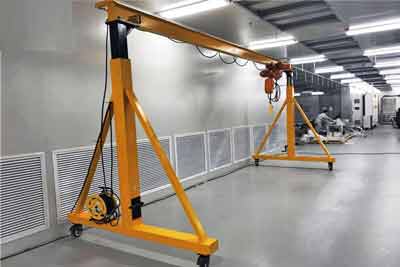
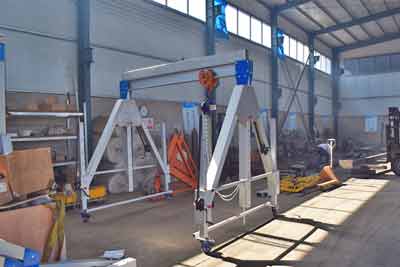
Portable Steel and Aluminum Gantry Cranes
Portable aluminum gantry cranes are lightweight, easy to move, and ideal for workshops that need flexibility. They are perfect for maintenance work, smaller workshops, or areas where lifting tasks are occasional. Operators can move them from one station to another without much effort, making them a practical choice for day-to-day operations.
- Lightweight and easy to transport.
- Adjustable height options for various lifting tasks.
- Ideal for small workshops, maintenance areas, or occasional lifting.
Semi-Gantry Cranes
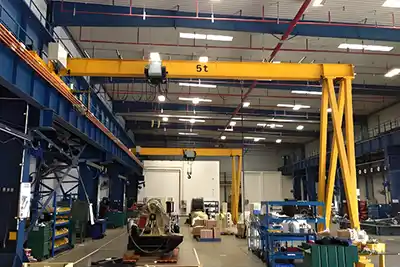
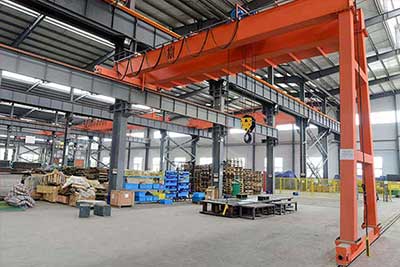
Fixed or semi-gantry cranes are designed for medium to heavy lifting. They are commonly used on production lines where repeated lifting of materials is required. Semi-gantry cranes can save space by using one leg on the ground and one on a runway beam, offering a good balance between stability and flexibility.
- Suitable for medium to heavy loads in production settings.
- Semi-gantry design can save floor space while providing stability.
- Reliable for repeated lifting tasks in busy workshops.
Double Girder Gantry Cranes
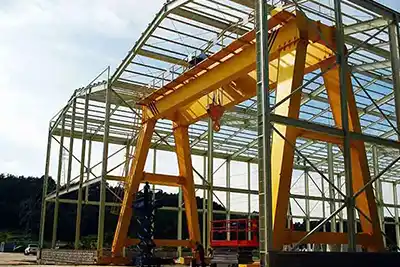
For large-scale workshops handling steel, heavy machinery, or large molds, double girder gantry cranes are the preferred option. These cranes can lift very heavy loads safely and cover wider spans. They are ideal for facilities where efficiency and safety are crucial for moving oversized materials.
- Handle large, heavy loads with stability.
- Cover wider spans for big workshops or production areas.
- Suitable for steel plants, heavy machinery workshops, and high-demand lifting operations.

Additional Benefits for Workshop Operators
Gantry cranes don't just solve lifting challenges—they offer several practical advantages that make them a smart investment for South African workshops. Beyond handling heavy loads and improving workflow, they bring flexibility, cost savings, and ease of use.
Installing a permanent overhead crane can be expensive and sometimes impractical, especially for smaller workshops. Gantry cranes provide a more affordable solution while delivering many of the same benefits. You get reliable lifting capacity without the high cost of building modifications or structural reinforcements.
- Lower upfront cost compared with permanent overhead cranes.
- Avoid major building alterations or runway installations.
- Provides lifting capability that suits the workshop's actual needs.
Gantry cranes are designed to be practical and easy to set up. Unlike fixed overhead cranes that may require beams, columns, or heavy foundation work, gantry cranes often need only minimal preparation. This allows workshops to get up and running faster, with less downtime.
- Fast setup reduces disruption to ongoing operations.
- Minimal civil or structural work required.
- Ideal for workshops with tight schedules or temporary operations.
Business needs can change—workshops expand, layouts are reconfigured, or temporary projects arise. Gantry cranes are easy to move or adjust, giving operators flexibility without the need for new equipment. Portable or semi-fixed cranes can be relocated indoors or outdoors as required.
- Move cranes to different areas as production needs change.
- Adjust height, span, or position without replacing equipment.
- Supports flexible workshop layouts and future growth.
Many South African workshops operate on either single-phase or three-phase electricity. Gantry cranes are designed to work efficiently with common power supplies, which reduces additional installation costs and ensures smooth operation.
- Works with standard workshop electricity setups.
- Avoids expensive electrical modifications.
- Ensures reliable performance without power-related interruptions.
Practical Tips for Buyers
Buying a gantry crane is a long-term investment for your workshop. Making the right choice ensures safety, efficiency, and flexibility for years to come. Here are some practical tips to guide buyers in South Africa.
Before choosing a crane, it's important to clearly understand what your workshop needs. Consider how often lifting will occur, the weight and size of the loads, and the working area available. This helps ensure that the crane is neither underpowered nor oversized for your operations.
- Determine lifting frequency: occasional vs. continuous use.
- Measure load weights and dimensions to match crane capacity.
- Evaluate available space, including height, span, and movement paths.
Working with a certified supplier ensures your crane meets South African safety regulations and industry standards. Certified suppliers can also provide expert advice on the best type of gantry crane for your workshop and offer installation, maintenance, and support services.
- Confirm supplier certification and compliance with local standards.
- Get expert recommendations on crane type, capacity, and features.
- Ask about maintenance support and spare parts availability.
Workshops grow and change over time. Choosing a crane with upgrade options can save money and reduce downtime in the future. Look for cranes that allow span extensions, motorized travel, or outdoor operation if needed later.
- Consider adjustable spans for changing workshop layouts.
- Evaluate motorized travel or hoist upgrades for heavier or more frequent lifting.
- Check if the crane can be relocated outdoors or to a new facility.
Conclusion
Gantry cranes have proven to be an effective solution for the common lifting challenges faced by South African workshops. They help eliminate workflow bottlenecks, safely handle heavy and bulky loads, and make the most of limited workshop space. By integrating a gantry crane into your operations, you can keep production moving smoothly while reducing the risk of accidents and material damage.
Investing in the right gantry crane not only improves efficiency and safety but also gives your workshop the flexibility to adapt to changing workloads and layouts. Whether you need a portable crane for occasional lifting or a heavy-duty double girder model for large-scale operations, the right crane can make a real difference in daily operations.
Call to Action: For a gantry crane designed specifically for your South African workshop, contact Yuantai Crane today. Our team can help you choose the best model, plan installation, and ensure your workshop operates safely and efficiently.