Egypt Overhead Crane Market 2025: Costs & Supplier Guide
Egypt’s Industrial and Infrastructure Landscape
Egypt has been steadily growing as a hub for industrial activity in the Middle East and North Africa. From steel mills and metal fabrication workshops to ports, logistics hubs, and manufacturing facilities, the demand for heavy lifting equipment is steadily increasing. Major infrastructure projects, including the expansion of the Suez Canal Economic Zone, new industrial parks, and construction of the new administrative capital, are putting more pressure on factories and workshops to move heavier loads efficiently.
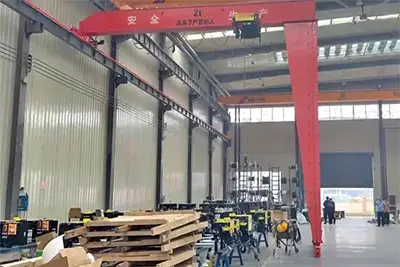
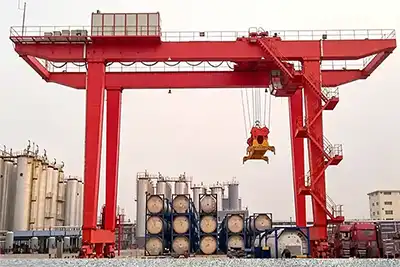
This growth creates a very practical need for overhead cranes in industrial operations. Whether you are handling steel coils, machinery components, or heavy fabricated structures, having the right crane setup can make daily operations smoother and safer. Check types of overhead cranes for sale Egypt and Yuantai crane projects in Egypt. 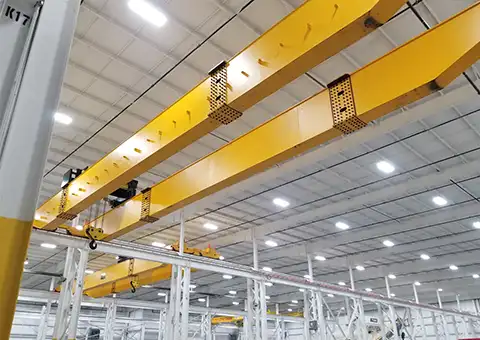
overhead crane for sale Egypt
Why the Overhead Crane Market in Egypt is Relevant Now
Overhead cranes are no longer just optional equipment—they are central to industrial efficiency in Egypt. Here’s why buyers should pay attention today:
- Steel Mills and Metal Workshops: Steel production is one of the largest industries in Egypt. Mills and fabrication shops need reliable cranes to handle ladles, billets, coils, and structural steel safely and efficiently.
- Growing Manufacturing Sector: Factories in textiles, plastics, and light machinery are increasingly investing in single or double girder cranes to streamline material handling.
- Infrastructure Expansion: With new construction projects and port development, industrial lifting requirements are more frequent, diverse, and heavier than ever.
- Modernization and Safety Standards: Older manual or chain hoist systems are being replaced with electric overhead cranes that comply with modern safety standards and allow higher productivity.
This makes the Egyptian overhead crane market very relevant, not only for imported full cranes but also for crane kits, which allow local fabrication teams to assemble the structure themselves while relying on imported hoists, trolleys, and electrical systems.
Scope of This Guide
This guide is written specifically for buyers who want a clear understanding of the market, without unnecessary fluff. It will focus on:
- Costs: What influences crane pricing in Egypt, including tonnage, span, lifting height, and environmental factors.
- Demand Drivers: Which industries and applications are creating the most need for overhead cranes and why.
- Supplier Options: Local versus imported suppliers, and what buyers need to check when sourcing equipment—especially when ordering crane kits without main girders or placing high-volume orders.
By the end of this guide, buyers will have a practical view of the Egyptian overhead crane market, understand which suppliers meet their specific needs, and know the key considerations for making cost-effective and safe crane purchases
Market Landscape in Egypt
The overhead crane market in Egypt is shaped by a combination of industrial growth, infrastructure projects, and a mix of local and imported suppliers. For buyers, understanding these factors is essential to making informed decisions.
Large infrastructure projects are increasing the need for overhead cranes:
- Suez Canal Economic Zone: Expanding industrial and port operations require cranes for moving steel, machinery, and containers efficiently.
- New Administrative Capital and Industrial Parks: Construction sites, factories, and warehouses all need reliable material handling solutions.
Practical insight for buyers: Projects near these areas often have easier logistics and faster delivery options from local suppliers.
Different industries have distinct lifting requirements:
- Steel Mills: Handle heavy steel coils, billets, and structural components. Require high-capacity, durable cranes, often double girder or top-running types.
- Textile Factories: Move large rolls of fabric or yarn across workshops. Typically use single girder cranes with moderate lifting capacity.
- Oil & Gas / Petrochemical Plants: Hazardous areas need explosion-proof cranes. Safety and reliability are critical.
Practical insight for buyers: Identify your industry's specific lifting needs before selecting a crane type; not all cranes are suitable for every application.
- Local Manufacturers: Provide standard crane models and fabrication services. Suitable for small to medium capacities and workshops.
- Imported Equipment: From countries like China, Italy, and Turkey. Offers higher capacity, advanced features, or automation.
- Hybrid Approach: Buyers often import hoists and trolleys while fabricating the main girders locally. This approach balances cost, customization, and delivery time.
Practical insight for buyers: Combining imported components with local fabrication can save money and reduce installation delays.
- Market Size: Estimated around USD 250 million.
- Growth Rate: Approximately 6.8% CAGR, reflecting steady industrial and infrastructure expansion.
- Import Pricing (2023): Average of USD 170,000 per unit for a fixed-support overhead travelling crane.
- Price factors to consider: Crane capacity (tonnage), Span and lifting height, Duty cycle (frequency of use), Special requirements (explosion-proof design, outdoor protection).
- Regional context: Egypt stands out in MENA for its heavy industry concentration, ongoing port expansions, and the availability of both local and imported crane options.
- Practical insight for buyers: Look beyond the purchase price. Consider service availability, maintenance, spare parts, and installation logistics to get the best long-term value.
Demand by Industry & Application
Egypt’s industrial sectors have very different lifting needs. Knowing these differences helps buyers choose the right crane type, capacity, and configuration.
Steel production in Egypt reached about 10.4 million tons in 2023. Steel mills and fabrication workshops handle heavy materials daily, requiring strong, durable cranes.
Typical Applications:
- Transporting molten ladles and billets
- Moving steel coils and plates
- Handling structural steel for assembly
Crane Requirements:
- Double-girder cranes for high load and long span
- Top-running design preferred for heavy-duty, continuous operations
Buyer Tips:
- For local fabrication of steel structures, consider crane kits without main girders.
- Source hoists, trolleys, and electrical components from a reliable supplier.
- Check duty cycle and safety features before purchase.
Egypt’s oil and gas sector requires specialized cranes in hazardous zones. Safety and compliance are critical.
Typical Applications:
- Lifting pumps, valves, and equipment in refineries
- Moving chemicals and hazardous loads in plants
Crane Requirements:
- Explosion-proof overhead cranes
- Configurations like two-hook double trolley systems for flexible load handling
- Duty cycle aligned with plant operations
Buyer Tips:
- Confirm explosion rating, hook configuration, and control system compliance.
- Ensure availability of maintenance and spare parts locally.
Textile manufacturing is a major sector in Egypt, requiring lighter-duty cranes to handle materials efficiently.
Typical Applications:
- Moving fabric rolls or yarn spools across workshops
- Loading and unloading materials in storage areas
Crane Requirements:
- Single-girder cranes with 2–5 ton capacity
- Compact design for smaller workshop layouts
Buyer Tips:
- Local fabrication of supporting structures can reduce costs.
- Choose crane kits that are simple to assemble and maintain.
Ports and logistics hubs increasingly rely on overhead and gantry cranes for material handling and cargo movement.
Typical Applications:
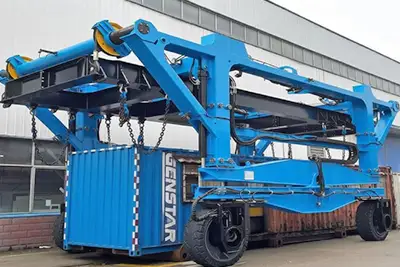
- Handling containers and heavy cargo in port yards
- Transporting machinery and materials in logistics hubs
Crane Requirements:
- Outdoor-rated cranes with corrosion protection for coastal environments
- Gantry or bridge cranes sized for yard spans and load requirements
Buyer Tips:
- Ensure hoist covers and electrical systems are suitable for outdoor use.
- Consider crane capacity, span, and travel range based on operational needs.
Cost & Pricing Considerations
Base Equipment Cost
- Example imported overhead crane price table (China to Egypt): e.g., 1 ton single girder $2,200–40,000; 20 ton $6,000–50,000 USD (note wide range).
- Average import price for fixed support overhead travelling cranes ~ USD 170k/unit in 2023.
- Prices vary majorly by capacity (tonnage), span length, lifting height, duty class, environment (indoor/outdoor).
Cost Drivers for Buyers
- Tonnage: higher capacity = more cost (steel, hoist, structure).
- Span and lifting height: larger spans or higher lifts increase cost.
- Duty cycle / work class: frequent usage or heavy duty (steel mills) means more robust components.
- Environment and special features: explosion‑proof, outdoor weather protection, coastal corrosion protection, remote/automation control.
- Local fabrication vs. full import: If buyer fabricates main girders locally (crane kit without main girders), cost savings possible; but quality and compatibility must be checked.
- Import tariffs, shipping, duties, logistics – relevant for US buyers sourcing from China to Egypt or shipping to Egypt. (You might mention the impact of tariffs in your brand context.)
- Installation, commissioning, after‑sales, spare parts: especially for remote or local fabrication setups.
Budgeting & Buyer Checklist
- Provide rough ballpark cost ranges for typical tonnages used in Egypt (e.g., 2‑5 ton for workshops, 10‑15 ton for steel/metal fabrication, 20 ton+ for heavy industry) — using available data plus your own pricing experience.
- Highlight extra costs: runway beam installation, building modifications, foundation, power supply, control systems.
- Suggest buyers include cost contingency for installation, training, and maintenance over lifetime.
Supplier & Sourcing Options for Buyers
Local Egyptian Suppliers
- Example: MISR for Engineering Works (est. 1983, Cairo) – overhead cranes, gantry cranes, hoists.
- Example: Egyptian Norwegian Cranes (est. 2003, Cairo) – electric/manual cranes, various types.
- Advantages for buyers: shorter lead time, local service and spare parts, local fabrication of steel structure.
- Limitations: may have less capacity for heavy duty/heavy span or advanced automation features – hence dual‑track local + imported.
Imported Suppliers / Countries
- China: major supplier to Egypt; ~60% of lifting machinery imports to Egypt from China.Strong cost‑competitiveness, wide range of capacity, good for crane kits/quantity.
- Italy, Turkey: European/OE suppliers – high precision, strong automation & quality. Advantage: brand prestige, advanced features; but higher cost, longer lead time, possible higher import duties.
For buyers who are importing to Egypt (or buying from China to ship to Egypt): check shipping logistics, customs, local regulations.
Supplier Selection Criteria (for your buyer audience)
- Technical capability: duty class, capacity, span, lifting height, frequency.
- Compliance: ISO, FEM, CE (though Egypt may have local regulations)
- After‑sales: spare parts, local service network, response time.
- Lead time & delivery: especially if you need multiple units or large quantities (your focus).
- Suitable packaging/transport for Egypt (climate, shipping, port handling)
- Compatibility with local fabrication: If you are supplying crane kits (without main girders), ensure local structural work matches design, drawings, welds, installation instructions.
- Total cost of ownership (TCO): maintenance, energy efficiency, retrofit potential.
- Experience in markets similar to Egypt (export track record)
Buyer‑Focused Considerations for Egypt Overhead Crane Purchases
For Crane Kit Buyers (without main girders)
- Emphasise: local fabrication of steel runway/mains girders gives flexibility, local cost savings.
- Suppliers should provide hoist trolleys, end‑carriages, electrical systems, control panel, support services.
- Ensure design interfaces with locally fabricated girders (bolt pattern, connection details).
- For outdoor use (e.g., yard, port): protective covers for hoist, corrosion protection, weatherproof electrical control — relevant to your product offering.
Technical Specifications to Verify
- Capacity (e.g., 5 ton, 10 ton, 15 ton overhead crane)
- Span & lifting height
- Duty class (M5, M6 etc)
- Power supply (380 V/50 Hz common in Egypt)
- Control mode: pendant, remote, cabin, automated system
- Special environment: explosion‑proof, coastal corrosion‑resistant, desert dust protection
- Safety features: overload protection, anti‑sway, limit switches, emergency stop.
- Maintenance access and spare parts availability.
Logistics & Installation in Egypt
- Check whether the buyer has local civil/structural work ready (runway beams, foundations) – highlight integration of crane kit supply and local fabrication.
- Timing: lead times for imported components, shipping to Egypt, customs clearance, installation & commissioning.
- Maintenance strategy: local service partner, training of operators/maintenance staff.
- Consider currency fluctuations, tariffs, import duty, shipping cost – especially relevant given US buyers sourcing from China into Egypt maybe impacted by tariffs (you previously noted).
Risks, Challenges & Mitigation for Buyers
Buying overhead cranes in Egypt comes with unique challenges that buyers need to be aware of. Understanding these risks and planning ahead can save time, cost, and operational headaches.
- The cost of imported cranes or components can vary significantly due to exchange rate changes.
- Import duties may also fluctuate, affecting overall project budgets.
Mitigation Tips:
- Factor in a contingency for currency and duty changes when planning your purchase.
- Consider sourcing components locally where feasible to reduce exposure to exchange rate volatility.
- The quality of runway beams, building structure, or workshop flooring directly affects crane performance.
- Poor foundations can reduce lifting safety and crane lifespan.
Mitigation Tips:
- Buyers with local fabrication capability can manufacture their own steel structures to meet crane requirements.
- Conduct a thorough inspection of installation sites before ordering.
- Local suppliers may lack experience with heavy-duty cranes or may have limited stock of spare parts.
- Imported suppliers can provide technical expertise but usually involve higher logistics costs and longer response times.
Mitigation Tips:
- Verify the supplier's experience with your specific crane type and load class.
- Check spare parts availability and after-sales support before placing an order.
- Imported components may face delays due to shipping, customs clearance, or production backlogs.
Mitigation Tips:
- Plan orders well in advance and include lead time in your project timeline.
- For critical components, consider dual sourcing—partly local, partly imported.
- Desert dust, coastal air corrosion, and outdoor exposure can accelerate wear and tear.
- Unprotected cranes require more frequent maintenance, increasing operational costs.
Mitigation Tips:
- Choose cranes with protective hoist covers and corrosion-resistant materials, especially for outdoor or coastal operations.
- Schedule regular preventive maintenance to extend crane lifespan.
- Local building codes and safety standards must be met.
- Non-compliant cranes can lead to fines or operational shutdowns.
Mitigation Tips:
- Ensure cranes comply with Egyptian standards and international safety certifications.
- Confirm that installation and operation plans align with local regulations.
- Large-quantity orders require suppliers with adequate manufacturing capacity and a reliable supply chain.
- Logistical planning is crucial to avoid delays in delivering multiple cranes.
Mitigation Tips:
- Verify the supplier's production and delivery capacity before placing high-volume orders.
- Discuss shipping, installation, and local support plans to ensure smooth rollout of multiple units.
Strategic Recommendations for Buyers
Making the right decision when buying overhead cranes in Egypt requires planning and a stepwise approach. Here’s a practical guide for buyers.
Light to Medium-Duty Cranes (2–10 ton)
- Look for simple or modular crane kits from local suppliers.
- Ask for kits without main girders so you can fabricate steel structures locally.
- Best for workshops, warehouses, or light industrial operations.
Heavy-Duty Cranes (15–20 ton, steel mill use)
- Source from trusted suppliers in China or Europe.
- Choose top-running double girder bridge cranes with high duty class or explosion-proof design.
- Ideal for continuous heavy lifting, steel fabrication, or high-load workshops.
- Protective covers for hoists, especially for outdoor or coastal environments.
- Simple assembly so local teams can install without highly skilled technicians.
- Capacity to handle large quantity orders reliably.
- Compatibility with locally fabricated steel structures.
- Design support and technical guidance.
- Local calibration, operator training, and commissioning support.
- Spare parts kits and long-term maintenance service.
Tip: Always ask for supplier references and examples of past projects in Egypt.
Include not only the purchase price but also:
- Delivery and shipping costs
- Installation and commissioning
- Spare parts inventory
- Ongoing maintenance over the crane's lifetime
This gives a more realistic picture of investment than focusing on upfront price alone.
- Start small: order one or two units to test supplier performance.
- Scale up: once satisfied with quality, delivery, and support, place larger orders.
- Negotiate key terms:
- Lead time and delivery schedules
- Warranty and service agreements
- Spare parts availability, especially for crane kits
Conclusion
The Egyptian overhead crane market is growing steadily, driven by industrial expansion, infrastructure projects, and increasing demand across steel, manufacturing, ports, and logistics sectors. For buyers, this presents opportunities—but also decisions that require careful planning.
Key Takeaways
- Market Growth: Industrial and infrastructure development continues to push demand for overhead cranes of all capacities.
- Cost Drivers: Capacity, span, duty class, and environmental factors (outdoor exposure, dust, corrosion) heavily influence crane costs.
- Local Fabrication Advantage: Buyers who fabricate steel structures locally and purchase crane kits without main girders can reduce costs, gain flexibility, and speed up installation.
- Supplier Selection Matters: Evaluate local versus imported suppliers based on cost-benefit tradeoffs, technical expertise, service support, and spare parts availability.
Strategic Buyer Mindset
- Perform due diligence before placing orders.
- Define specifications clearly: capacity, span, duty cycle, and environment.
- Consider total cost of ownership, including delivery, installation, commissioning, spare parts, and maintenance over the crane’s lifetime.
Call to Action
Buyers are encouraged to:
- Reach out to trusted suppliers, like Yuantai Crane, for a free quotation.
- Use the checklist provided in this guide when approaching suppliers to ensure all key factors are considered.
- Plan procurement strategically—start small, test supplier performance, then scale orders.
Appendix
The appendix provides quick references, tools, and templates to help buyers make informed decisions when procuring overhead cranes in Egypt.
1. Glossary of Key Terms
- Capacity (Tonnage): Maximum load the crane can lift safely.
- Span: Distance between the crane’s rails or runway beams.
- Duty Class: Classification of crane usage frequency and load cycle, affecting design and lifespan.
- Top-Running vs Under-Hung:
Top-Running: Crane runs on rails mounted on the top of the building or runway beams; suitable for heavy loads and long spans.Under-Hung: Crane hangs from the runway beams; ideal for lighter loads or limited ceiling height. - Single vs Double Girder:
Single Girder: Hoist travels on one beam; suitable for lighter loads.Double Girder: Two beams support the hoist; preferred for heavy loads and longer spans.
2. Quick Reference Table: Typical Tonnages & Applications
| Capacity | Common Applications in Egypt | Buyer Profile | Recommended Crane Type | Notes |
|---|---|---|---|---|
| 2 t | Textile, light workshops | Small factories, warehouses | Single girder | Simple layout, low ceiling |
| 3 t | Light machinery, textile | Medium workshops | Single girder | Moderate span |
| 5 t | Fabrication, warehousing | Small-to-medium workshops | Single or double girder | Versatile |
| 10 t | Heavy workshops, steel fabrication | Medium workshops, steel fabrication | Double girder | Can handle moderate duty cycle |
| 15 t | Steel mills, port operations | Heavy industry | Top-running double girder | High duty cycle, consider explosion-proof if needed |
| 20 t | Steel mills, large fabrication | Steel mills, industrial workshops | Top-running double girder | High-capacity, continuous operation |
3. Supplier Evaluation Checklist
When evaluating suppliers, consider:
- Experience with crane type and capacity required
- Technical support and design assistance
- Spare parts availability and delivery time
- Local service or training options
- Warranty terms and after-sales support
- Compliance with local Egyptian standards and safety regulations
- Ability to meet phased or bulk order requirements
4. Template Cost-Breakdown Sheet
Use this to compare total ownership cost for each crane option:
| Cost Component | Amount (USD) | Notes |
|---|---|---|
| Equipment Cost | Base crane price | |
| Shipping / Freight | International or local | |
| Import Duty / Taxes | Customs, tariffs | |
| Installation | Labor, tools, crane runway prep | |
| Training / Calibration | Operator training, commissioning | |
| Spare Parts Inventory | Recommended stock | |
| Maintenance / Service (lifetime) | Scheduled preventive maintenance | |
| Total Cost of Ownership | Sum of all above |