Outdoor Gantry Cranes with Truss Girder Design | Wind-Resistant
Introduction: Truss Girder Gantry Cranes
When it comes to handling heavy materials in outdoor industrial yards, the right crane can make all the difference. An outdoor gantry crane with a truss girder design is built specifically for open-air operations, where wind, weather, and long spans pose real challenges. Unlike standard cranes, these truss gantry cranes are engineered to withstand harsh environmental conditions while keeping the structure as light and practical as possible.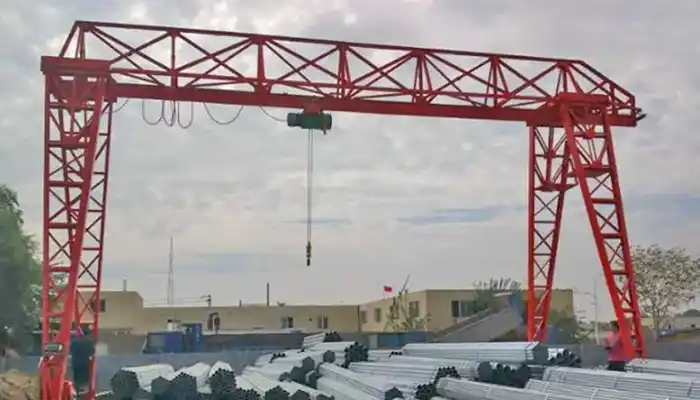
Truss gantry crane single girder design with capacity 1 ton to 20 ton
Why high wind resistance matters:
Industrial yards are often wide open with little protection from the elements. Strong winds can put tremendous stress on crane structures, rails, and hoisting mechanisms. A crane that isn’t designed to resist these forces risks downtime, costly repairs, and safety hazards for workers. That’s why choosing a high wind resistant gantry crane is critical for operations in coastal areas, desert sites, or other exposed locations.
The truss girder construction brings multiple practical advantages:
- Lightweight but strong: The open truss design reduces the overall weight of the crane while maintaining structural strength.
- Long-span capability: Truss girders can cover wider spans without sagging, making them ideal for large storage yards or shipyards.
- Cost-effective for outdoor operations: Less steel weight and simpler foundations lower the initial investment and ongoing maintenance costs.
For buyers, these cranes are not just sturdy—they are versatile and practical. They fit perfectly in:
- Steel fabrication and storage yards
- Shipyards and dockside facilities
- Precast concrete plants
- Open-air material handling zones
With a truss gantry crane, you get a solution that combines durability, efficiency, and safety. It’s a practical choice for yards where wind and weather are everyday challenges, and where reliable performance is a priority.
What Makes a Truss Gantry Crane Different?
A truss gantry crane might look similar to a standard crane at first glance, but the engineering behind it is what sets it apart. At the core is the double girder truss structure. Instead of solid box beams, the main girders are made of a lattice framework that distributes weight and resists bending. This design is paired with rigid end carriages, strong A-frame or portal legs, and a reliable wire rope hoist. Together, these elements create a crane that is stable, strong, and capable of handling heavy loads over long spans.
When compared to box-type gantry cranes, truss cranes have clear advantages, especially in outdoor yards exposed to wind:
- Lighter weight: The lattice structure reduces the overall mass, which means less stress on rails and foundations.
- Lower wind load: Open truss girders allow wind to pass through, reducing the force acting on the crane during storms or gusty conditions.
- Long-span suitability: Truss designs can cover wider areas without sagging, making them perfect for steel yards, shipyards, and large precast concrete facilities.
- Easier installation and maintenance: The modular nature of truss components simplifies assembly, inspection, and repair, saving time and cost.
Practical advantages of truss design for buyers and yard managers:
- Lower self-weight: Reduces foundation requirements and allows for faster installation.
- Reduced wind pressure: Keeps the crane stable during high winds, minimizing downtime and safety risks.
- Cost-effective: Requires less material for the same span compared to box girders, lowering upfront and maintenance costs.
- Simpler maintenance: Exposed structure makes it easier to inspect welds, bolts, and hoist mechanisms without disassembling large components.
In short, a double girder truss crane is a wind-proof industrial crane designed for real-world outdoor challenges. It balances strength, efficiency, and practical operation, making it a solid choice for yards where reliability and safety cannot be compromised.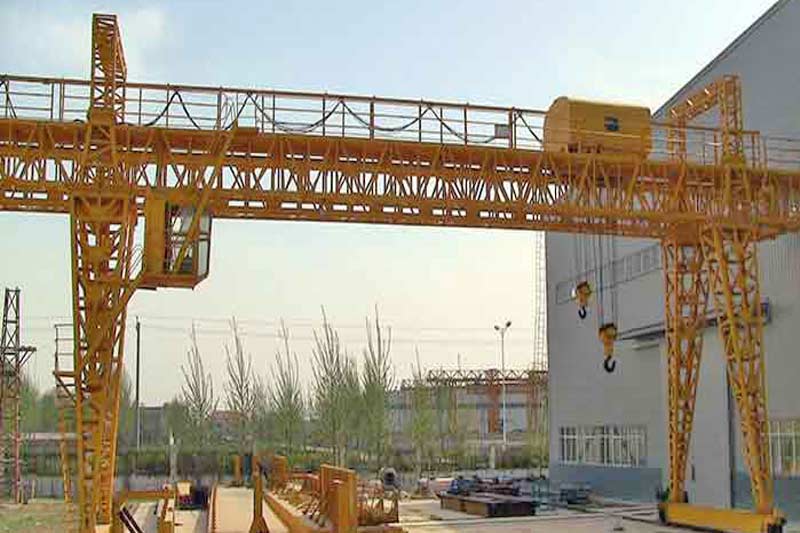
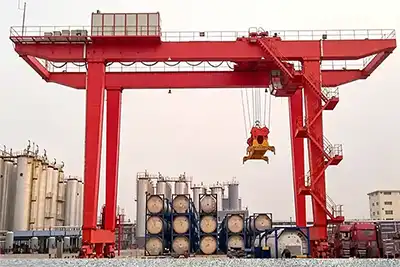
double girder truss gantry crane 5 ton to 100 ton
High Wind Resistance: Why Outdoor Gantry Cranes Need It
Outdoor industrial yards are rarely calm. Coastal steel yards, desert construction sites, and open concrete plants often face strong gusts, sudden storms, or seasonal winds. That’s why a crane’s wind resistance isn’t just a nice-to-have—it’s a critical factor for safe and reliable operation.
The truss design of these gantry cranes plays a key role in handling wind. Unlike solid box girders, a truss structure has an open lattice framework. This allows wind to pass through the crane, reducing pressure on the main girders and end carriages. By distributing the force across multiple points instead of taking it all on a single surface, the crane experiences less stress, stays stable, and maintains smooth operation even during gusty conditions.
Typical wind resistance for outdoor truss gantry cranes:
- Designed for Beaufort level 10 winds, which translates to gusts up to 90 km/h.
- In some coastal or desert applications, custom designs can withstand even higher wind speeds with added braces or anchors.
Practical performance benefits:
- Stability: The crane remains steady, reducing sway and vibration during operation.
- Safety: Lower risk of structural damage or accidents caused by sudden gusts.
- Longevity: Less stress on components means the crane lasts longer, reducing repair and replacement costs.
These features make the crane a wind-resistant gantry crane, a high wind outdoor crane, and in effect, a storm-proof gantry crane for yards where unpredictable weather is a constant challenge. For buyers, this translates into reliable material handling, fewer interruptions, and safer operations, whether you are moving steel beams, precast concrete slabs, or heavy equipment across a wide open yard.
High-Wind Countries & Industrial Sectors
Why Truss Girder Gantry Cranes Are Popular in These Regions
Certain countries and industrial sectors face consistent high winds or harsh outdoor conditions, making truss girder gantry cranes the preferred choice. Their lightweight, wind-resistant design and long-span capabilities make them ideal for large outdoor yards, open storage areas, and coastal or desert environments. Let's look at the key regions and sectors:
Countries: Saudi Arabia, UAE, Oman, Qatar, Kuwait
Why truss cranes are popular:
- Strong desert winds and open industrial zones demand cranes that stay stable under gusts.
- Light yet strong truss construction reduces foundation stress and adapts well to wide, exposed yards.
Typical industrial sectors:
- Steel fabrication yards
- Precast concrete plants
- Shipyards and dockside operations
- Oil & gas equipment storage yards
Countries: China, Japan, South Korea, Taiwan
Why truss cranes are popular:
- Coastal regions often face typhoons and high humidity, so a crane must resist corrosion and strong winds.
- Truss designs allow for long spans over docks and storage areas without excessive weight.
Typical industrial sectors:
- Shipyards and port maintenance
- Wind turbine component assembly yards
- Steel coil and heavy material handling
Countries: India, Vietnam, Philippines, Indonesia
Why truss cranes are popular:
- Monsoon winds and tropical storms require cranes with wind-proof structures.
- Large outdoor storage and bridge fabrication areas benefit from long-span truss girders.
Typical industrial sectors:
- Precast infrastructure and construction yards
- Bridge fabrication and assembly plants
- Port repair and maintenance yards
Countries: South Africa, Egypt, Kenya, Nigeria, Morocco
Why truss cranes are popular:
- Open mining and rail yards are exposed to strong coastal and desert winds.
- Lightweight truss structures reduce the load on rails while providing stability for heavy lifting.
Typical industrial sectors:
- Mining equipment handling yards
- Rail freight yards and container depots
- Steel fabrication and storage yards
Countries: UK, Netherlands, Denmark, Spain, Portugal
Why truss cranes are popular:
- Coastal and offshore winds can be strong; truss designs minimize wind pressure on the structure.
- Useful in ports and wind energy projects where long spans are necessary.
Typical industrial sectors:
- Offshore engineering and wind turbine assembly
- Shipbuilding and dockside maintenance
- Steel plate and pipe storage yards
Countries: USA, Canada, Brazil, Chile
Why truss cranes are popular:
- Coastal states and prairie regions experience high wind exposure, making wind-resistant cranes essential.
- Large outdoor yards benefit from lightweight cranes with long-span capabilities.
Typical industrial sectors:
- Heavy fabrication and steel plants
- Oil & gas logistics yards
- Port terminals and container handling facilities
Structural Components of a Truss Gantry Crane
The key components of a truss gantry crane helps buyers make informed decisions for outdoor yard operations. Each part is designed with practical functionality, durability, and wind resistance in mind. Here's a closer look:
The main girders are the backbone of the crane. In a truss gantry crane, these are double truss beams, which combine lightweight construction with high-strength support. The open lattice design allows wind to pass through, reducing wind pressure on the crane, while still supporting heavy loads over long spans.
- Lightweight yet strong
- Supports long-span outdoor operations
- Reduces structural stress on rails and foundations
End carriages connect the crane to its rails and ensure smooth, stable movement. For truss cranes, welded box-type end carriages are standard. They provide rigidity and stability, allowing the crane to operate safely even under high wind conditions.
- Stable rail travel
- Handles lateral forces from wind
- Low maintenance with robust welded design
The legs of a truss gantry crane can be A-frame or portal type, often reinforced with wind bracing. This ensures that the crane remains upright and stable during outdoor operation, even when lifting heavy materials.
- Supports long spans and heavy loads
- Provides extra wind resistance
- Adaptable for different yard layouts
For outdoor lifting, truss gantry cranes use wire rope hoists or European-style hoists. These are robust and reliable, capable of handling a variety of materials, from steel beams to precast concrete elements.
- Smooth lifting and lowering of heavy loads
- Resistant to harsh outdoor conditions
- Optional dual hoist configurations for long or bulky materials
Operators can control the crane via pendant, cabin, or wireless remote systems. Wireless or cabin controls are especially useful in large yards, allowing safe operation while keeping a clear line of sight on the load.
- Flexible operation for different yard layouts
- Enhances safety and precision
- Supports modern automation options if needed
Truss gantry cranes can be powered through cable reels, busbars, or hybrid systems, depending on the yard's infrastructure. This flexibility ensures that the crane can be installed efficiently, with reliable energy supply for continuous outdoor operation.
- Adaptable to different yard power setups
- Reliable for heavy-duty outdoor operation
- Supports high-capacity lifting without interruptions
Technical Specifications & Customization Options
Every outdoor yard has its own challenges. Choosing the right truss gantry crane means matching technical specifications to your site's requirements while ensuring high wind resistance and reliable operation. Let's break down the key parameters and customization options:
Truss gantry cranes typically handle 5–50 tons, but many manufacturers offer custom lifting capacities depending on your needs. Whether you're moving heavy steel plates, precast concrete slabs, or machinery, it's important to choose a capacity that accounts for the heaviest expected load plus a safety margin.
- Standard capacity: 5–50 tons
- Customizable for heavier or lighter operations
- Always plan for maximum operational load plus 20–30% safety factor
The span of a crane is the distance between its legs or rails. For open yards, spans generally range from 10 to 40 meters. Truss design allows long spans without excessive weight, making it ideal for wide steel storage areas, shipyards, or port operations.
- Suitable for medium to very large yards
- Supports long materials without bending
- Reduces foundation and structural requirements compared to box girders
Lifting height usually falls between 6 and 12 meters, depending on yard layout and overhead clearance. Proper selection ensures safe material handling while keeping the crane's center of gravity balanced.
- Adjustable for different yard operations
- Adequate clearance for trucks, stacks, and machinery
- Works with single or dual hoist configurations
Outdoor truss gantry cranes are commonly rated A3–A5 (medium-duty). This reflects their operational frequency, load cycles, and expected wear, ensuring long-term reliability in outdoor conditions.
- Medium-duty cranes for regular yard use
- Heavy-duty customization available for intensive operations
Truss gantry cranes are engineered to withstand winds up to Level 10 (≈90 km/h). For coastal or desert sites with frequent storms, storm anchors and wind bracing can be added for extra stability.
- Designed for high wind outdoor operation
- Reduces downtime due to weather conditions
- Minimizes risk of structural damage during gusts
Buyers can tailor cranes to their specific yard needs with:
- Storm anchors for extreme wind areas
- Anti-sway devices for precise load control
- Corrosion-resistant coatings for coastal or humid environments
- Dual hoist options for lifting long or bulky materials
- Optional control upgrades: cabin, pendant, or wireless remote
Applications Across Industries
Truss gantry cranes are not just another piece of lifting equipment—they are practical solutions for heavy-duty outdoor operations where wind, weather, and open space are constant factors. Their lightweight, wind-resistant design and long-span capability make them suitable for a variety of industrial settings.
In steel yards, cranes must lift heavy steel plates, beams, and structural elements with precision and stability. Truss gantry cranes handle these tasks safely while resisting gusts that are common in open storage areas.
- Efficient movement of steel beams and plates
- Long spans cover wide storage areas
- Wind-proof design minimizes sway during lifting
Shipyards often operate near the coast, where strong winds and salty air are constant challenges. Truss gantry cranes provide durable, wind-resistant lifting for hull sections, ship components, and dockside cargo.
- Lifting and positioning ship sections or heavy machinery
- Wind-proof industrial crane suitable for open docks
- Corrosion-resistant options for marine environments
Handling precast elements like beams, panels, and blocks requires smooth, precise hoisting. Truss gantry cranes allow for long-span operations across large outdoor yards while keeping loads stable.
- Efficient stacking and transport of concrete components
- High wind resistance ensures safe operation
- Supports dual hoist configurations for oversized elements
Mining equipment and heavy machinery parts are bulky and heavy. Outdoor truss gantry cranes can lift these materials safely, even in exposed or remote areas.
- Lifting and transporting mining machinery or spare parts
- Reduces stress on foundations due to lightweight truss design
- Stable operation in gusty conditions
Ports and rail yards often require cranes that can span long distances and handle large loads. Truss gantry cranes are ideal for container lifting, railcar handling, and stacking operations in windy environments.
- Long-span cranes cover wide container yards
- Wind-resistant design reduces downtime
- Smooth trolley movement ensures efficient operations
Wind turbine components are tall, heavy, and sometimes awkward to lift. Truss gantry cranes provide high lifting capacity and precision, even in open outdoor spaces with high winds.
- Assembly of turbine sections or blades
- Dual hoist options for long components
- Durable structure withstands frequent outdoor operation
Safety & Maintenance in Harsh Outdoor Conditions
Operating a crane outdoors comes with unique challenges. Wind, rain, and exposure to sun or salt air can affect both performance and safety. For buyers, understanding practical safety measures and maintenance practices is essential to keep a truss gantry crane operating reliably over the long term.
High winds can push the crane along its rails or cause unwanted sway. Storm locks and rail clamps secure the crane when it's not in use, preventing damage and accidents. These are particularly important for coastal yards, desert sites, and other areas with frequent gusts.
- Prevents crane movement during storms
- Reduces stress on structural components
- Ensures safety for nearby personnel and equipment
Regular inspection is key to maintaining a crane's reliability. Checking truss connections, bolts, and end carriages helps identify wear or loosening before it becomes a problem. A structured maintenance routine also extends the crane's lifespan.
- Inspect joints and welds for signs of fatigue
- Tighten bolts and check end carriage alignment
- Monitor trolley and hoist operation for smooth performance
Outdoor cranes are exposed to moisture, humidity, and salt-laden air. Applying anti-corrosion coatings and using weather-resistant materials protects the crane structure and ensures long-term durability.
- Use galvanization, paint coatings, or corrosion-resistant steel
- Protects truss girders, legs, and hoist components
- Reduces maintenance frequency and long-term repair costs
Even the best crane design requires skilled operators. Training crews on how to handle loads in windy conditions, how to use storm locks, and when to suspend operations is essential for safety.
- Educate operators on wind speed limits for safe operation
- Teach proper use of anti-sway devices and hoist controls
- Promote situational awareness in large outdoor yards
Why Choose an Outdoor Truss Gantry Crane
When selecting a crane for outdoor operations, buyers often face a choice between different designs. A truss gantry crane stands out because it combines practical engineering, durability, and cost-efficiency, making it ideal for yards exposed to strong winds and heavy loads.
The truss design allows wind to pass through the lattice girders, reducing pressure on the structure. At the same time, the lightweight frame places less stress on rails and foundations. This combination ensures stable, safe operation, even during gusty or stormy conditions.
- Withstands winds up to Beaufort level 10 (~90 km/h)
- Reduces sway during lifting operations
- Minimizes stress on foundations and rails
Truss girders can cover wide spans without additional material weight, making them more cost-effective than solid box girders. For large yards, shipyards, or precast concrete areas, this means lower upfront costs and fewer structural requirements.
- Supports spans up to 40 meters or more
- Lighter structure reduces construction and maintenance expenses
- Perfect for wide open-air material handling operations
Because of their modular design, truss gantry cranes are simpler to transport and install. Components like main girders, end carriages, and legs can be fabricated off-site and assembled efficiently, saving time and reducing installation complexity. Maintenance is also easier because all critical components are accessible for inspection and servicing.
- Modular components allow quick installation
- Accessible design simplifies inspections and repairs
- Reduces downtime for maintenance tasks
From coastal steel yards to desert shipyards, outdoor truss gantry cranes perform reliably where wind, open space, and heavy loads pose challenges. Their combination of strength, long-span capability, and wind resistance makes them a practical choice for industrial yards that demand safety and efficiency.
- Handles heavy materials safely in exposed environments
- Reduces operational risks in high-wind areas
- Flexible enough for multiple industrial applications
Buyer's Guide for Procurement
Purchasing an outdoor truss gantry crane requires careful planning. These cranes are a significant investment, and the right choice ensures safety, efficiency, and long-term reliability. Here's a practical guide for buyers navigating procurement.
Not all cranes are designed for the same environmental conditions. Verify the crane's wind resistance rating (e.g., up to Beaufort level 10) and confirm that it meets recognized engineering standards such as ISO or FEM. This ensures the crane can handle strong winds and outdoor conditions safely.
- Assess site-specific wind conditions before selecting a crane
- Ensure compliance with international structural and load standards
- Choose cranes engineered for high wind outdoor operation
Certifications guarantee that the crane has been tested for quality, safety, and performance. Some suppliers offer third-party inspection services, providing extra assurance that the crane meets your specifications and regulatory requirements.
- Look for CE, ISO, or other recognized certifications
- Request independent inspection reports if possible
- Ensure compliance with local safety regulations
Every industrial yard is unique. Confirm that the supplier can customize the crane to match your yard dimensions, span requirements, lifting height, and local weather conditions. Custom options like storm anchors, anti-sway devices, corrosion-resistant coatings, and dual hoists can significantly improve performance and safety.
- Align crane span and lifting height with yard layout
- Consider environmental factors like coastal winds, humidity, or storms
- Explore optional features for enhanced safety and efficiency
A reputable supplier should provide detailed technical drawings, assembly instructions, and installation guidance. This helps your team prepare foundations, rails, and power supply correctly and ensures smooth installation with minimal delays.
- Review layout and dimension drawings carefully
- Confirm installation support or supervision options
- Plan for safe operation and maintenance from day one
Contact us to Get Your Tailored Truss Gantry Cranes
For industrial yards exposed to strong winds, a double girder truss gantry crane is more than just a lifting device—it’s a practical solution built for safety, stability, and long-term reliability. Its lightweight truss design, high wind resistance, and long-span capability make it ideal for steel yards, shipyards, precast concrete plants, and other open-air material handling operations.
By choosing a truss gantry crane, buyers can ensure:
- Safe lifting even during gusty or stormy conditions
- Stable operation across wide outdoor spans
- Reduced maintenance and long service life
Take action today: Contact us for a customized high wind resistant outdoor gantry crane tailored to your yard, designed to meet your specific load, span, and environmental requirements.