RTG Crane Drive Systems: Diesel, Hybrid, Electric Comparison
RTG Crane Drive Systems Compared: Diesel, Hybrid, and Electric
I. Key Takeaways (Executive Summary for Buyers)
- Diesel, hybrid, and electric RTGs have different operating costs, maintenance profiles, and emissions.
- Fuel and energy efficiency are the largest contributors to lifecycle cost.
- Hybrid and electric RTGs reduce emissions and long-term operating costs, supporting sustainability goals.
- Choosing the right drive system can improve ROI and compliance with environmental regulations.
Questions Solved Here:
- Which RTG drive type is most cost-effective over its lifecycle?
- How do emissions and sustainability goals influence drive selection?
- What are the maintenance and operational trade-offs for each drive type
Introduction to RTG Cranes and Their Drive Systems
Rubber Tyre Gantry (RTG) cranes are a key part of any busy container terminal. They lift, stack, and transport containers across the yard with speed and precision. Unlike fixed cranes, RTGs move on rubber tires, giving terminals flexibility in layout and operations. For port operators, their importance goes beyond lifting heavy loads—they are central to keeping container flows on time and reducing bottlenecks.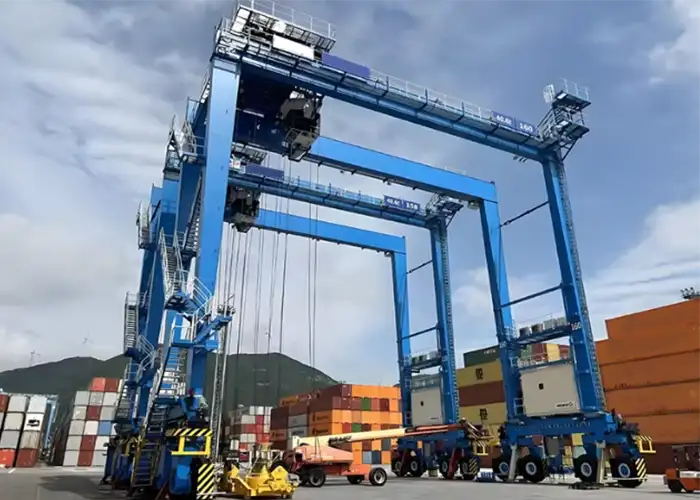
RTG Gantry Crane for Container Handling
The choice between diesel, hybrid, or electric drive systems isn't just a technical detail—it directly affects day-to-day operations and long-term costs. Here's why it matters:
- Fuel and energy consumption: Diesel engines burn a lot of fuel, which adds up over years of continuous operation. Hybrid and electric systems cut this cost dramatically.
- Maintenance requirements: Diesel RTGs need more frequent servicing, while electric components generally last longer and require less routine maintenance.
- Emissions and sustainability: Environmental regulations are tightening. Hybrid and electric RTGs help ports reduce CO₂ and particulate emissions.
- Total cost of ownership (TCO): Lower fuel use and maintenance savings can offset the higher upfront cost of hybrid and electric cranes over their lifecycle.
Ports around the world are increasingly focusing on sustainability. Hybrid and electric RTGs are gaining attention not only because of lower operational costs but also due to environmental compliance. Even terminals still using diesel are evaluating electrification as part of a long-term strategy.
- High-volume terminals benefit most from hybrid or electric RTGs because the fuel savings accumulate quickly.
- Noise reduction from electric or hybrid cranes also improves working conditions in the yard.
- Terminal infrastructure, like available power supply, plays a crucial role in deciding whether an electric RTG is feasible.
Diesel engines burn significant amounts of fuel during continuous operations. Hybrid systems combine diesel and electric drives to optimize fuel use, while fully electric RTGs virtually eliminate fuel costs.
Diesel RTGs require frequent engine servicing, oil changes, and filter replacements. Electric and hybrid RTGs, with fewer moving mechanical parts, generally demand less routine maintenance and offer longer service intervals.
Hybrid and electric RTGs reduce CO₂, NOx, and particulate emissions. Ports under strict environmental regulations benefit from adopting cleaner drive technologies, improving local air quality and meeting sustainability targets.
While hybrid and electric RTGs have higher upfront costs, savings from fuel, maintenance, and regulatory compliance often offset the investment over time. Evaluating TCO is critical for terminal budgeting and procurement decisions.
RTGs on rubber tires can be repositioned quickly to accommodate changing yard layouts. Electric and hybrid drives enhance operational flexibility with smoother starts, stops, and load handling, contributing to more efficient container stacking and transport.
RTG Drive System Types
Selecting the right drive system for your RTG crane is not just about power—it directly impacts operating cost, maintenance, emissions, and how well your terminal functions. Diesel, hybrid, and electric RTGs each serve different operational needs and terminal layouts. Here’s a detailed look at each type.
Diesel RTG
Diesel RTGs are the most traditional option and are widely used in ports around the world. They rely on diesel engines for all lifting and movement, making them highly flexible and independent of electrical infrastructure. These cranes are particularly suited to terminals that require strong, continuous lifting and where grid access may be limited.
Before we dive into the pros and cons, here's where diesel RTGs are typically used and what they can handle:
- Large container terminals with high daily throughput.
- Remote or temporary yards without permanent electrical infrastructure.
- Handling heavy or dense containers where reliability is critical.
- Lifting range: 40–65 tons per crane.
- Container stacking: typically 4–6 high for 20-ft or 40-ft containers.
- Diesel RTGs are a proven technology, with high availability and easy access to parts.
- They provide strong and reliable lifting power for continuous operations.
- Flexible operation: can move freely across the yard without dependence on power supply.
- High fuel consumption increases operational cost over time.
- Significant emissions may trigger compliance costs and environmental regulation concerns.
- Maintenance-intensive; diesel engines require regular servicing, which adds downtime.
Hybrid RTG
Hybrid RTGs combine a diesel engine with electric battery assist, offering a middle ground between traditional diesel and fully electric cranes. They are designed to reduce fuel use and emissions while maintaining much of the operational flexibility of a diesel RTG.
Before we dive into the pros and cons, here's where hybrid RTGs are typically used and what they can handle:
- Terminals with moderate to high container throughput.
- Locations with partial electrical infrastructure for battery charging or low-load operations.
- Facilities aiming to reduce fuel use and emissions while keeping crane mobility.
- Lifting range: 40–60 tons.
- Container stacking: typically 4–6 high for standard containers.
- Fuel savings of 30–50% compared to conventional diesel RTGs.
- Lower emissions and quieter operation improve worker conditions and environmental compliance.
- Can integrate with grid power during low-load periods to further reduce fuel consumption.
- Higher upfront investment than diesel RTGs.
- Batteries have a limited lifecycle, and replacement costs must be considered.
- More complex maintenance planning is needed for both diesel and electric components.
Electric RTG (e-RTG)
Fully electric RTGs operate entirely on electricity, typically supplied via conductor bars along the travel path or plug-in grid connections. They are ideal for terminals prioritizing sustainability, operational cost reduction, and near-zero emissions.
Before we look at the pros and cons, consider where electric RTGs fit best and their lifting capacity:
- High-volume terminals with reliable access to grid power or shore power systems.
- Terminals pursuing zero-emission or low-emission goals.
- Container yards with predictable crane travel paths.
- Lifting range: 40–60 tons per crane.
- Container stacking: generally 4–6 high depending on layout and model.
- Near-zero emissions at the port, supporting sustainability targets.
- Lowest operational cost per ton lifted over the crane's lifecycle.
- Reduced maintenance requirements due to fewer moving parts compared to diesel engines.
- High initial capital investment.
- Requires adequate electrical infrastructure for reliable operation.
- Limited mobility based on conductor bar or plug-in layout, which may affect yard flexibility.
Comparative Analysis: Diesel vs. Hybrid vs. Electric
When evaluating RTG drive systems, it’s important to look beyond the upfront cost. Operational efficiency, fuel use, emissions, maintenance, and flexibility all impact the total cost of ownership over the crane’s lifecycle. The table below provides a clear side-by-side comparison of diesel, hybrid, and electric RTGs, highlighting key practical considerations for buyers.
| Feature | Diesel RTG | Hybrid RTG | Electric RTG |
|---|---|---|---|
| Fuel / Energy Consumption | High | Medium | Low |
| Emissions | High | Medium | Near-zero |
| Maintenance | High | Medium | Low |
| Initial Investment | Low | Medium | High |
| Lifecycle Cost | Highest | Medium | Lowest (long-term) |
| Operational Flexibility | High | Medium | Limited to grid/electric path |
Looking at the table, it’s clear that diesel RTGs are strong in flexibility and low initial investment but incur higher fuel and maintenance costs over time. Hybrid RTGs offer a balanced approach, reducing fuel consumption and emissions while maintaining reasonable flexibility. Fully electric RTGs have the lowest operational cost and near-zero emissions, but their mobility is limited by the power supply, and upfront investment is higher.
For terminals focused on long-term ROI, sustainability, and operational cost optimization, hybrid or electric RTGs often provide the best balance. Diesel RTGs may still be suitable for smaller or remote operations, but fuel and maintenance costs over the lifecycle can outweigh the lower purchase price.
Lifecycle Cost Considerations
When evaluating RTG cranes, the sticker price is only the beginning. The real cost comes from operating the crane day in and day out over its lifetime. Fuel consumption, maintenance, and regulatory factors all influence the total cost of ownership (TCO). Understanding these elements can help ports make smarter decisions.
Fuel is often the largest portion of operational expenses. Diesel RTGs burn a lot of fuel, especially in high-throughput terminals, which drives up annual operating costs. Hybrid RTGs cut fuel usage by about 30–50%, depending on load cycles, while fully electric RTGs run mostly on grid power and have the lowest energy cost per ton moved.
- Diesel RTG: High fuel consumption; costs accumulate quickly in busy yards.
- Hybrid RTG: Reduced fuel use, particularly during low-load or intermittent operations.
- Electric RTG: Runs efficiently on electricity, with predictable and lower energy costs.
Maintenance affects both budgets and crane availability. Diesel engines require frequent servicing, including oil changes, filter replacements, and occasional engine overhauls. Hybrid systems reduce engine hours but require attention to batteries and electric components. Electric RTGs have fewer moving parts, meaning less wear and lower routine maintenance.
- Diesel RTG: High maintenance frequency; more downtime and labor costs.
- Hybrid RTG: Moderate maintenance; needs both engine and battery care.
- Electric RTG: Minimal maintenance; mostly electrical checks and safety inspections.
Environmental regulations increasingly affect crane operating costs. Many ports levy fees on high-emission equipment, while some offer incentives or rebates for low-emission or electric cranes. Choosing hybrid or electric RTGs can help terminals comply with regulations, save on penalties, and meet sustainability goals.
- Diesel RTG: High emissions may trigger fees or require mitigation measures.
- Hybrid RTG: Lower emissions; may qualify for partial incentives.
- Electric RTG: Near-zero emissions; eligible for most environmental benefits.
TCO provides a complete picture of long-term investment. While diesel RTGs have a lower upfront cost, their higher fuel and maintenance expenses can make them more expensive over time. Hybrid and electric RTGs may require higher initial investment, but fuel savings, reduced maintenance, and lower emissions often recoup the cost in 5–7 years.
- Diesel RTG: Lower purchase price, higher long-term costs.
- Hybrid RTG: Moderate upfront cost; balanced TCO with fuel and maintenance savings.
- Electric RTG: Higher upfront cost; lowest lifecycle cost in high-volume terminals with available power.
By considering fuel, maintenance, emissions, and TCO together, port operators can make decisions that optimize both operational efficiency and financial performance over the crane's lifespan.
Environmental Impact
Environmental performance is becoming a central factor when selecting RTG cranes. Ports are under increasing pressure to reduce emissions, meet regulatory standards, and improve air quality for workers and nearby communities. The choice of drive system directly affects greenhouse gas output, air pollutants, and the terminal’s ability to achieve sustainability targets.
Emissions by Drive Type:
Before diving into the implications, here’s a quick overview of typical emissions for each RTG type:
- Diesel RTG: Produces high levels of CO₂, NOx, and particulate matter. Frequent use in large terminals contributes significantly to overall port emissions and can trigger regulatory penalties.
- Hybrid RTG: Reduces fuel use and emissions substantially compared to diesel. Supports green port initiatives by lowering CO₂ and particulate emissions, while still offering operational flexibility.
- Electric RTG (e-RTG): Operates with zero emissions at the port. Ideal for terminals aiming for net-zero operations, it eliminates local air pollutants entirely and contributes to corporate sustainability goals.
Sustainability planning goes beyond compliance. Choosing hybrid or electric RTGs aligns with corporate ESG objectives, helps secure environmental incentives, and improves the terminal’s reputation among stakeholders. Ports that prioritize low-emission operations may also see long-term financial benefits from reduced fuel use, lower emissions fees, and improved worker health.
Operational Considerations
Operational factors play a big role in deciding which RTG drive system is best for a terminal. Beyond fuel and emissions, ports need to consider power infrastructure, yard layout, crane mobility, and worker conditions. Choosing the right crane for your operations ensures smooth container handling and minimizes downtime.
Key Operational Points:
Before comparing the types, here’s what to consider for each RTG in daily operations:
- Power Supply Availability: Electric RTGs rely on a consistent grid connection or conductor bar system. Terminals must ensure sufficient power capacity along the crane’s travel path to maintain uninterrupted operation.
- Hybrid RTGs: These cranes can operate on diesel when grid power is unavailable, bridging intermittent outages and providing flexibility in partially electrified terminals.
- Diesel RTGs: Fully independent of electrical infrastructure, diesel RTGs remain the most flexible option for remote locations, temporary terminals, or yards with limited power access.
- Noise Levels: Electric and hybrid RTGs are quieter than diesel models, which improves working conditions for operators and nearby port personnel, while reducing noise pollution in densely populated port areas.
Operational planning should include both infrastructure readiness and environmental impact. Terminals with strong electrical infrastructure may benefit from electric RTGs, while hybrid cranes provide a balanced approach where flexibility and sustainability must coexist. Diesel RTGs still have a role in flexible or temporary setups but carry higher noise and emissions.
Decision-Making Checklist for Buyers
Selecting the right RTG crane requires balancing operational needs, financial considerations, and environmental goals. A systematic approach helps port authorities and logistics managers avoid costly mistakes and ensures the crane matches both current and future requirements.
Key factors to evaluate before purchase:
- Port Operational Requirements: Consider your daily lift cycles, container volume, and stacking needs. The right RTG drive system should handle peak workloads efficiently without unnecessary downtime. Diesel cranes may suit highly mobile operations, while hybrid and electric cranes excel in high-throughput terminals with predictable traffic patterns.
- Budget vs. Long-Term Operating Cost: Don’t focus only on the purchase price. Fuel consumption, maintenance, and emissions penalties can make diesel RTGs more expensive over time. Hybrid and electric cranes often recover higher upfront costs through lower operational expenses within a few years.
- Sustainability Goals and Regulatory Requirements: Evaluate your terminal’s ESG targets and local emissions regulations. Hybrid or electric RTGs can help reduce CO₂ and particulate emissions, qualify for incentives, and avoid penalties. This consideration is especially important for ports planning long-term sustainability initiatives.
- Availability of Power Infrastructure: For hybrid or fully electric RTGs, ensure that sufficient power supply exists along the crane’s travel paths. Electric RTGs require a stable grid or conductor bar system, while hybrid cranes can partially bridge gaps in infrastructure.
- Maintenance Capability and Staffing: Consider your team’s technical expertise and the availability of spare parts. Diesel RTGs require regular engine maintenance, hybrid cranes need both engine and battery servicing, and electric cranes mostly require electrical inspections. Your staffing and maintenance capacity should align with the chosen RTG type.
By reviewing these factors carefully, buyers can make informed decisions that optimize operational efficiency, long-term cost savings, and sustainability performance. This checklist provides a structured way to match crane type, terminal needs, and financial goals.
FAQ for Buyers
Q1: How much fuel can I save with a hybrid RTG compared to diesel?
A: Hybrid RTGs can reduce fuel consumption by 30–50%, depending on lift cycles and operational load. Savings are highest in terminals with intermittent movement or low-load periods.
Q2: What infrastructure is required for e-RTG deployment?
A: Fully electric RTGs need a reliable power supply, typically via conductor bars along the crane path or plug-in grid connections. Terminals must ensure sufficient voltage and continuous power along the travel route.
Q3: How do maintenance costs compare across drive systems?
A: Diesel RTGs require frequent engine servicing and part replacements, leading to higher maintenance costs. Hybrid RTGs reduce engine hours but require battery care. Electric RTGs have fewer moving parts, resulting in lower maintenance and longer intervals between service.
Q4: Can hybrid RTGs operate fully on battery for short periods?
A: Yes, hybrid RTGs can run on battery alone for short durations, bridging grid outages or low-load operations. However, continuous full-battery operation is limited by battery capacity and charging schedule.
Q5: What incentives or penalties affect emissions compliance at ports?
A: Many ports impose fees for high-emission equipment and may offer rebates or incentives for low-emission cranes. Hybrid and electric RTGs help terminals reduce CO₂ and particulate emissions, improve ESG performance, and avoid regulatory penalties.
Conclusion
Selecting the right RTG drive system affects both costs and sustainability over the crane’s lifecycle.
- Diesel RTGs: Lower upfront cost and high flexibility, but fuel consumption and maintenance make long-term expenses significant.
- Hybrid RTGs: Balanced solution offering fuel savings, lower emissions, and moderate upfront investment; recoups costs in a few years.
- Electric RTGs: Highest initial investment, but lowest operational cost and near-zero emissions, ideal for high-throughput terminals with reliable power.
Recommendation: Evaluate total cost of ownership, operational requirements, and sustainability goals to choose the RTG system that best fits your terminal’s long-term strategy.