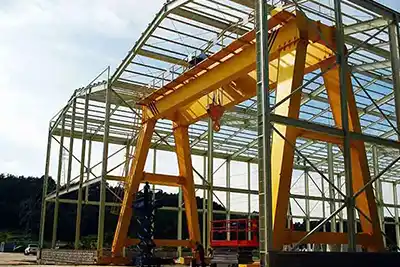
Outdoor Gantry Crane for Timber Yards: Complete Guide
Outdoor Gantry Crane Systems for Timber Storage Yards:Key Takeaway
Outdoor gantry crane systems in timber storage yards must be engineered as weather-resilient, corrosion-protected, and rail-stable lifting systems, because continuous outdoor exposure directly determines operational safety, maintenance cost, and service life.
- Outdoor timber yards require cranes designed for 24/7 open-air operation under wind, rain, and humidity
- Structural durability depends on anti-corrosion systems, rail foundation stability, and wind-load design
- Safe lifting of timber bundles requires stable long-load handling and controlled travel systems
- Rail-mounted gantry cranes must integrate storm safety locks and wind monitoring systems
- Proper foundation engineering directly affects alignment accuracy and long-term crane performance
Questions This Guide Solves
A: Outdoor gantry crane systems operate on rail tracks to move, stack, and load timber materials efficiently across large open storage yards under continuous outdoor conditions.
- rail mounted gantry crane timber yard operation process
- outdoor lumber handling crane system working principle
- timber storage yard material flow crane solution
A: A gantry crane for timber storage yards is made weather-resistant through corrosion-protected steel structures, sealed electrical systems, and wind safety controls designed for outdoor operation.
- outdoor gantry crane corrosion protection system
- timber yard crane wind load safety design
- industrial weatherproof crane electrical system
A: Rail foundations for outdoor gantry cranes should use reinforced concrete beams with precise alignment, proper drainage, and verified soil load capacity to ensure long-term stability.
- crane rail track foundation design outdoor yard
- timber storage yard soil bearing crane installation
- rail alignment control for gantry crane system
A: Wind-prone timber storage crane operations require wind monitoring, overload protection, anti-collision systems, and emergency braking mechanisms to maintain safe operation.
- outdoor gantry crane wind speed safety cutoff system
- rail mounted crane emergency braking and locking system
- timber yard multi crane collision prevention system
A: Maintenance costs can be reduced by applying preventive inspection routines, corrosion control, sealed lubrication systems, and seasonal maintenance planning.
- outdoor crane lifecycle maintenance strategy timber yard
- industrial gantry crane corrosion prevention maintenance plan
- rail mounted crane long term reliability improvement system
Outdoor Gantry Crane Systems in Timber Yards
Outdoor gantry crane systems in timber storage yards are built for one main task: moving timber materials safely and repeatedly in open storage areas. These yards usually handle logs, sawn timber, and bundled lumber that are stored in large volumes and moved in and out every day. So the crane is not working in a clean indoor space. It is working outside, in industrial yard conditions, where wind, rain, and uneven ground are part of the daily operation.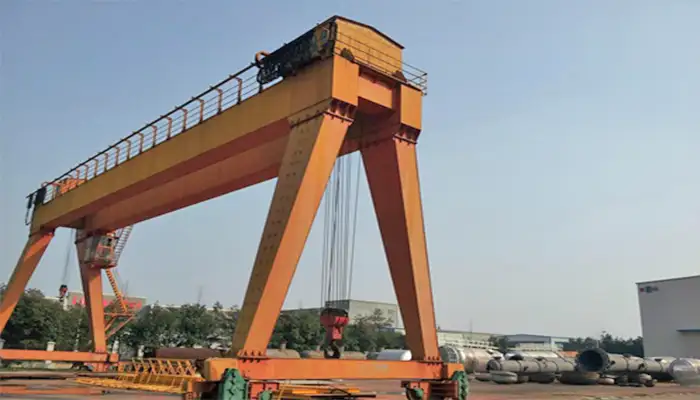
In practical timber yard crane applications, the system is normally designed as a rail mounted gantry crane (RMG) or heavy-duty outdoor gantry crane. It travels along fixed rails and covers long storage areas where timber stacks are arranged in rows. The structure is simple in movement, but the working environment is not simple at all.
- outdoor gantry crane for timber storage yards
- rail mounted gantry crane for lumber handling
- timber yard material handling crane system
- heavy duty outdoor gantry crane operation
In timber storage yards, operation rarely stops. Materials come in from sawmills, ports, or transport trucks, and they need to be unloaded, stacked, and reloaded again. This is where outdoor gantry cranes are commonly used as the main lifting equipment.
The crane travels along a fixed rail line and covers the full storage width. It lifts logs or bundled lumber using hooks, timber grabs, or C-type lifting tools depending on the material shape. The working rhythm is steady, not fast, but consistent.
- continuous timber yard crane operation 24/7
- log handling crane for outdoor storage yard
- lumber stacking gantry crane system
- timber bundle lifting equipment for industrial yards
In industrial projects, operators often say: “If the crane stops, the whole yard slows down.” That is why reliability matters more than speed here.
Unlike indoor bridge cranes, outdoor gantry crane systems must deal with weather exposure every day. Wind load is one of the most important design factors because timber loads are often long and not compact. When wind passes through stacked lumber or lifted logs, it creates side pressure and movement.
Rain and humidity also affect long-term performance. Steel surfaces, wheel assemblies, and electrical cabinets are constantly exposed. Over time, without proper protection, corrosion starts from small areas like joints and weld lines.
- wind resistant gantry crane design for timber yard
- corrosion protection for outdoor crane systems
- weatherproof crane electrical system for outdoor use
- industrial yard crane wind load safety
Because of this, outdoor cranes usually include protective design features such as sealed electrical boxes, coated steel structures, and controlled travel speeds during strong wind conditions. Nothing complicated, just practical protection that works in industrial yard environments.
The structure of an outdoor gantry crane is not only about lifting capacity. It is also about keeping balance when handling uneven timber loads. Logs and lumber bundles are not always uniform. Some are heavier on one side, some are long and flexible, and some are stacked irregularly.
That is why the crane frame is designed with reinforced beams and strong leg structures that distribute load evenly across the rail foundation. The travel system also plays a role in stability because wheel alignment and rail condition directly affect movement smoothness.
- heavy duty gantry crane structure for timber handling
- rail mounted crane load distribution design
- outdoor crane stability for long material lifting
- timber yard crane structural reinforcement system
In many industrial timber yard projects, engineers prefer box girder or reinforced truss structures because they provide better resistance to bending under long-span lifting.
An outdoor gantry crane is not installed alone. It becomes part of the whole timber storage workflow. It connects unloading areas, storage stacks, and loading zones. So the crane movement is usually planned according to yard layout.
Typical workflow integration includes:
- unloading logs from trucks or rail wagons
- stacking timber in storage zones
- transferring bundles for processing or shipment
- loading finished timber for transport
- timber yard crane workflow integration system
- gantry crane for lumber stacking and loading
- industrial material handling crane for outdoor storage yard
- rail mounted crane timber logistics operation
In many yards, operators prefer a simple rule: keep material flow straight and avoid unnecessary repositioning. The crane helps reduce handling steps, which also reduces damage to timber and improves yard efficiency.
Outdoor gantry crane systems in timber storage yards are defined by a few practical working characteristics that directly affect performance and safety.
- continuous movement along fixed rail tracks across long yard distances
- ability to handle irregular timber shapes such as logs, beams, and bundled lumber
- operation under changing weather conditions including rain, humidity, and wind
- coordination with stacking, sorting, and loading operations in timber logistics yards
- outdoor gantry crane working principle in timber yard
- rail mounted crane timber handling system design
- industrial yard crane for bulk material storage operation
- heavy duty timber stacking crane system
In industrial operation, the key expectation is simple: the crane must keep running with minimal interruption, even when conditions are not ideal. That is why design, installation, and maintenance all need to focus on long-term stability rather than short-term performance.
Environmental Challenges in Timber Storage Operations
Timber storage yards operate in open industrial environments where crane systems are constantly exposed to changing weather and heavy-duty handling cycles. In this type of outdoor timber yard crane application, environmental stress is not occasional. It is continuous, and it directly affects structural life, electrical reliability, and lifting safety over time.
Outdoor gantry crane systems, especially rail mounted gantry crane setups used for timber handling, must therefore be designed with industrial operating conditions in mind, not just rated capacity.
- outdoor gantry crane for timber storage yard operation
- rail mounted gantry crane environmental conditions
- timber yard crane corrosion and wind resistance
- heavy duty outdoor material handling crane system
Timber storage yards are fully exposed sites. Rain, sunlight, humidity, and seasonal temperature changes all act on the crane structure every day. This is not occasional weather contact; it is long-term exposure that slowly changes material condition.
Steel surfaces expand and contract. Protective coatings wear down over time. Electrical components face moisture risk if sealing is not properly maintained. In practical timber yard crane operation, this is one of the first factors that affects long-term reliability.
- outdoor gantry crane weather resistance design
- timber yard crane UV and rain exposure protection
- corrosion protection for outdoor crane structures
- weatherproof crane electrical cabinet for industrial use
In industrial projects, operators often notice that unprotected areas start showing surface rust earlier than expected. It usually begins at joints, bolt connections, and rail contact zones.
Wind is a critical factor in outdoor gantry crane systems used in timber storage yards. Unlike compact steel loads, timber bundles are long, uneven, and partially open. This shape allows wind to pass through and create lateral pressure during lifting and travel.
When a rail mounted gantry crane is moving or lifting under wind conditions, even moderate airflow can cause load sway. That sway affects positioning accuracy and increases stress on hoisting components.
- wind load effect on timber yard gantry crane
- long load lifting stability outdoor crane system
- rail mounted crane wind safety for timber handling
- timber bundle sway control crane operation
In practical operation, crane speed is often reduced during windy conditions. Some systems also include wind speed sensors and automatic shutdown functions to prevent unsafe movement.
Corrosion in timber storage yards is not only caused by rain. It is also influenced by moisture trapped in wood stacks, soil humidity, and organic residues. When these elements combine with steel structures, corrosion becomes more active and spreads faster.
For outdoor gantry crane systems, this means that both structural steel and electrical systems need protection. Without it, long-term maintenance costs increase and unexpected downtime becomes more frequent.
- corrosion resistant gantry crane for outdoor use
- timber yard crane steel structure protection system
- industrial crane anti rust coating outdoor environment
- rail mounted gantry crane electrical corrosion prevention
Typical weak points include wheel assemblies, rail contact areas, and cable routing zones. These areas require regular inspection because corrosion often starts small but spreads gradually.
Timber storage yards rarely operate in short cycles. Material flow is continuous, especially in large sawmill storage areas, ports, and distribution yards. This creates constant demand on the gantry crane system.
A timber yard crane is expected to run for long hours with minimal interruption. This requires high fatigue resistance in structural design, stable hoisting performance, and reliable travel systems. Downtime is not just a maintenance issue—it affects the entire material flow chain.
- continuous duty gantry crane for timber yard operation
- heavy duty outdoor crane fatigue resistance design
- 24/7 timber handling crane system reliability
- industrial yard crane low downtime operation
In usage, many operators prioritize simplicity and durability over complex features. A crane that keeps running steadily is more valuable than one with advanced functions that require frequent adjustment.
Structural Design of Outdoor Gantry Crane Systems
Outdoor gantry crane systems used in timber storage yards are built around one core requirement: stable lifting performance in an open environment. The structure is not only about supporting weight, but also about resisting wind load, uneven ground settlement, and continuous operational stress from timber handling cycles.
In rail mounted gantry crane systems for timber yards, every structural part is designed with long-term outdoor exposure in mind, from the main girder down to the wheel assemblies.
- outdoor gantry crane structural design for timber yard
- rail mounted gantry crane steel structure system
- heavy duty timber yard crane load stability design
- industrial outdoor gantry crane engineering structure
The main steel structure forms the backbone of the outdoor gantry crane. In timber storage yard applications, this structure is usually designed using heavy-duty box girders or reinforced truss configurations. The choice depends on span length, lifting capacity, and expected wind conditions.
Box girder designs provide strong torsional resistance, which helps maintain stability when handling long timber bundles. Truss structures, on the other hand, reduce overall weight while still maintaining strength for large yard spans.
- box girder gantry crane for timber yard use
- truss structure outdoor gantry crane system
- heavy duty crane girder design for rail mounted system
- timber handling crane structural load resistance
In practical projects, engineers often prefer box girders for high-capacity timber yards because they handle repeated loading cycles more consistently over time.
The gantry legs connect the main girder to the rail system and transfer all lifting loads down to the foundation. In outdoor timber yard crane systems, these legs are exposed to lateral wind pressure and uneven ground settlement, so reinforcement is necessary.
The structure is usually designed with internal stiffeners and strong welded joints to reduce deformation during long-term operation. Some systems also include diagonal bracing to improve lateral rigidity.
- gantry crane leg structure for outdoor yard operation
- rail mounted crane stability system design
- timber yard crane wind load resistance structure
- industrial gantry crane foundation load transfer system
In industrial operation, stability becomes especially important when lifting long timber bundles at height. Even small movement at the base can affect load control at the hook.
The lifting system in an outdoor gantry crane must match the type of timber being handled. Different materials require different lifting tools, and selecting the right configuration improves both safety and efficiency.
Common configurations include:
- Wire rope hoists for general lifting tasks, suitable for mixed timber loads and standard yard operations
- Hydraulic timber grabs for log handling, especially in raw timber storage areas where logs are not bundled
- C-hooks for bundled lumber handling, commonly used in sawmill storage and distribution yards
- timber yard crane lifting mechanism types
- gantry crane timber grab system for logs
- rail mounted crane C-hook lifting system for lumber bundles
- outdoor crane hoist configuration for material handling
In practice, many timber yards use more than one lifting tool depending on the stage of material processing.
The travel system allows the gantry crane to move along the rail tracks across the timber yard. This system plays a major role in operational stability, especially under outdoor conditions where dust, moisture, and wind are present.
Key design elements include sealed wheel bearings to prevent contamination from water and debris. This helps extend service life and reduce maintenance frequency. The travel system is also designed for controlled low-speed movement, which is important when handling long and wind-sensitive timber loads.
- rail mounted gantry crane travel system design
- outdoor crane wheel assembly sealed bearing system
- timber yard crane low speed travel safety control
- industrial gantry crane rail movement stability
In timber yard operation, operators often reduce travel speed during windy conditions to maintain better control of load swing and positioning accuracy.
Weather Resistance and Anti-Corrosion Engineering
In outdoor gantry crane systems for timber storage yards, weather resistance is not an optional feature. It is part of the core design logic. The crane is expected to stay in operation under rain, humidity, strong sunlight, and seasonal wind changes. If protection is weak, the first impact is not immediate failure, but gradual performance decline—rust, electrical instability, and higher maintenance frequency.
For rail mounted gantry crane systems used in timber yard operations, anti-corrosion engineering and weather protection directly determine service life and safety stability.
- outdoor gantry crane corrosion protection system
- timber yard crane weather resistant design
- rail mounted gantry crane anti rust engineering
- industrial outdoor crane electrical protection system
The steel structure of a timber yard gantry crane is constantly exposed to moisture, UV radiation, and airborne particles from wood handling operations. Over time, this environment can accelerate surface degradation if protective treatment is not properly applied.
To reduce this effect, multiple layers of protection are commonly used on structural steel.
- Hot-dip galvanizing provides a strong base layer of corrosion resistance, especially useful for structural components like girders and legs
- Multi-layer epoxy and polyurethane coating systems add chemical resistance and improve surface durability under rain and humidity
- UV-resistant surface treatments help reduce paint aging and surface cracking under long-term sunlight exposure
- hot dip galvanized gantry crane structure outdoor use
- epoxy coated steel crane for timber yard environment
- polyurethane coating industrial crane weather protection
- UV resistant gantry crane surface treatment system
In practical timber yard projects, coating quality often determines how long the crane can operate before major repainting or structural maintenance is required.
Electrical systems in outdoor gantry cranes are more sensitive than mechanical structures. Moisture, dust, and temperature variation can easily affect control stability if sealing is not properly designed.
For timber storage yard operations, electrical protection usually follows industrial IP-rated standards to reduce environmental exposure risk.
- IP-rated enclosures for motors and control panels help prevent water and dust entry during rainy seasons
- waterproof cable routing systems protect wiring from ground moisture and accidental mechanical damage
- sealed connectors ensure stable signal transmission even under long-term outdoor exposure
- outdoor crane electrical system protection IP rating
- timber yard gantry crane control panel waterproof design
- rail mounted crane cable protection system outdoor use
- industrial crane electrical moisture resistance solution
In industrial operation, most electrical issues in outdoor cranes are not caused by overload, but by long-term exposure to humidity and poor sealing maintenance.
Wind is one of the most direct operational risks for outdoor gantry crane systems in timber storage yards. Because timber loads are often long and uneven, wind pressure can create movement even when the crane is not actively lifting.
To manage this risk, mechanical and sensor-based protection systems are used together.
- Rail clamps secure the crane structure when it is parked, preventing unintended movement during strong storms
- Wind speed sensors monitor industrial-time conditions and can trigger automatic shutdown when wind exceeds safe operating limits
- Emergency braking systems prevent uncontrolled drift along the rail track during power loss or sudden load imbalance
- gantry crane wind safety system for timber yard operation
- rail mounted crane storm protection locking system
- outdoor crane wind speed monitoring safety device
- industrial crane emergency braking system design
In practical timber yard operation, wind protection systems are not only for extreme weather. They also help operators make safer decisions during moderate wind conditions, especially when handling long timber bundles that are more sensitive to sway.
Rail Foundation and Ground Engineering
In outdoor gantry crane systems for timber storage yards, the rail foundation is not just a support structure. It is the base that controls alignment, travel smoothness, and long-term structural stability. Even a well-designed crane will perform poorly if the rail foundation is unstable or uneven.
For rail mounted gantry crane systems used in timber yard operations, ground engineering directly affects wheel wear, lifting accuracy, and overall service life.
- rail mounted gantry crane foundation design
- outdoor gantry crane rail track installation timber yard
- timber storage yard crane ground engineering system
- industrial crane rail alignment and stability control
The most common foundation solution for timber yard gantry cranes is a reinforced concrete rail beam system. This structure distributes wheel loads evenly into the ground and provides a stable base for long-term crane travel.
Reinforced concrete beams are designed to handle repeated dynamic loads from crane movement and lifting cycles. Over time, this reduces the risk of cracking or uneven settlement compared to simple slab foundations.
- reinforced concrete rail beam for gantry crane system
- outdoor crane foundation load distribution structure
- timber yard rail mounted crane concrete track base
- industrial crane rail support foundation design
In practical timber yard projects, engineers often reinforce areas under high load zones, especially where cranes frequently start, stop, or change direction.
Rail alignment is one of the most sensitive parts of gantry crane installation. Even small deviations can lead to uneven wheel wear, vibration during travel, and increased mechanical stress on the crane structure.
During installation, rails must be aligned within strict tolerance limits. This ensures that both crane legs move smoothly without distortion or side loading.
- gantry crane rail alignment tolerance control system
- rail mounted crane travel smoothness and wheel wear reduction
- timber yard crane installation rail precision adjustment
- industrial crane track alignment engineering standard
In industrial operation, poor alignment often shows up as noise during travel or uneven wheel wear patterns. These are early warning signs that should not be ignored.
Before installing an outdoor gantry crane, soil conditions must be properly evaluated. The ground must be able to support not only static crane weight but also dynamic loads during lifting and travel.
Soil bearing capacity, compaction level, and long-term settlement behavior all affect foundation stability. In timber storage yards, where heavy loads are frequently handled, this step is critical.
- crane foundation soil bearing capacity analysis
- outdoor gantry crane ground load distribution design
- timber yard soil settlement control for rail system
- industrial crane foundation geotechnical requirement
In many cases, uneven settlement is not immediately visible. It develops slowly and eventually leads to rail misalignment if not controlled at the foundation stage.
Drainage is often underestimated in outdoor crane yard design, but it plays a direct role in foundation durability. Standing water around rail beams can weaken concrete, accelerate steel corrosion, and gradually affect rail positioning.
A proper drainage system removes rainwater quickly and prevents water accumulation along the rail line. This helps maintain both structural strength and operational safety over time.
- gantry crane yard drainage system design
- rail foundation water control for outdoor crane
- timber storage yard crane corrosion prevention drainage
- industrial crane rail track environmental protection system
In practical timber yard environments, good drainage also reduces mud buildup around wheels and rails, which helps maintain smoother crane travel and reduces maintenance effort.
Operational Safety Systems for Timber Yards
In outdoor gantry crane systems used in timber storage yards, safety is not treated as an add-on feature. It is built into daily operation logic. The reason is simple: timber handling involves long, uneven loads, frequent movement, and constant exposure to wind and weather changes. These conditions make load behavior less predictable compared to standard indoor lifting.
For rail mounted gantry crane systems in timber yard applications, operational safety systems are designed to reduce human error, control environmental risks, and maintain stable operation even under changing conditions.
- outdoor gantry crane safety system for timber yard operation
- rail mounted gantry crane protection systems industrial yard
- timber storage yard crane operational safety design
- heavy duty outdoor crane safety control system
Wind is one of the most important safety factors in outdoor crane operation. Timber loads such as logs or bundled lumber have large surface areas and can easily catch wind, even when they are properly secured.
To manage this, wind speed monitoring devices are installed on crane structures or nearby yard towers. These sensors continuously measure wind conditions and send signals to the control system.
When wind speed exceeds a preset safety limit, the system can automatically reduce crane speed or stop operation entirely. This prevents uncontrolled sway and reduces risk during lifting or travel.
- gantry crane wind speed safety monitoring system
- automatic shutdown outdoor crane wind limit control
- timber yard crane wind load operation safety device
- rail mounted crane weather condition safety system
In industrial timber yard operation, this function is especially important during sudden weather changes, where wind conditions can shift quickly within minutes.
Overload protection is a standard safety requirement in all industrial crane systems, but in timber yards it has additional importance due to irregular load shapes. Logs and lumber bundles are rarely perfectly balanced, and weight distribution can vary from lift to lift.
Overload protection systems monitor the actual lifting load in industrial time. If the load exceeds the rated capacity, the system will prevent further lifting or trigger a controlled stop.
- industrial gantry crane overload protection system
- timber handling crane load monitoring safety device
- rail mounted crane lifting capacity control system
- outdoor crane weight limit protection for timber yard
In practical use, this helps avoid structural stress on the hoisting mechanism and reduces the risk of sudden load drop caused by mechanical overload.
In large timber storage yards, it is common to operate more than one gantry crane on parallel rail tracks. When multiple cranes share the same working area, the risk of collision becomes a industrial operational concern.
Anti-collision systems use sensors to detect the distance between cranes or between crane and fixed obstacles. When the distance becomes too small, the system slows down or stops movement automatically.
- gantry crane anti collision system for timber yard
- multi crane coordination safety system rail mounted cranes
- industrial yard crane proximity detection safety device
- outdoor gantry crane travel safety control system
In industrial projects, this system helps maintain safe spacing during simultaneous loading and stacking operations, especially in high-traffic timber storage zones.
Outdoor gantry cranes must remain stable even when power is lost or emergency situations occur. Emergency braking systems are designed to stop crane movement immediately under abnormal conditions.
In addition, mechanical safety locks or rail clamps are used to prevent unintended movement along the track. This is particularly important in sloped yards or areas exposed to strong wind.
- emergency braking system for gantry crane outdoor operation
- rail mounted crane power failure safety locking system
- timber yard crane emergency stop safety control design
- industrial crane anti drift braking mechanism
In practical operation, these systems ensure that even during unexpected shutdowns, the crane remains physically secured and does not move under external forces.
Operator visibility plays a major role in safe crane operation. In timber yards, visibility can be affected by fog, rain, dust, or stacked timber blocking the line of sight.
To improve safety, operator cabins are designed with wide viewing angles, reinforced glass, and sometimes elevated positions to increase field of vision. Some systems also include auxiliary cameras for blind spot monitoring.
- outdoor gantry crane operator cabin visibility design
- timber yard crane control cabin ergonomic safety layout
- rail mounted crane video monitoring assistance system
- industrial crane operator visibility improvement system
In industrial working conditions, better visibility directly reduces positioning errors during lifting and helps operators respond faster to unexpected changes in load behavior.
Maintenance and Lifecycle Performance
In outdoor gantry crane systems used in timber storage yards, long-term performance is not determined only at the design stage. It is heavily influenced by how the equipment is maintained during daily operation. Timber yard environments are continuously exposed to moisture, dust, and temperature changes, so maintenance is not occasional work—it is part of normal operation planning.
For rail mounted gantry crane systems in timber handling yards, lifecycle performance depends on controlling corrosion, reducing mechanical wear, and keeping electrical systems stable under outdoor conditions.
- gantry crane maintenance for timber storage yard
- outdoor rail mounted crane lifecycle management system
- timber yard crane corrosion prevention maintenance
- industrial gantry crane long term reliability strategy
Corrosion does not appear everywhere at the same time. It usually starts at specific weak points such as weld joints, bolt connections, rail contact areas, and exposed structural edges. In timber storage yards, moisture from wood stacks and frequent rainfall can speed up this process.
Regular inspection focuses on identifying early surface rust and coating damage before it spreads into structural layers. Once detected early, repair is simple and cost-effective.
- outdoor gantry crane corrosion inspection checklist
- timber yard crane structural rust prevention maintenance
- rail mounted crane steel surface protection monitoring
- industrial crane anti corrosion inspection routine
In practical operations, many maintenance teams follow a simple rule: small rust spots today can become structural issues later if ignored.
Lubrication is essential for moving parts such as wheel assemblies, bearings, hoisting mechanisms, and travel gears. In outdoor environments, however, water and dust can easily wash away or contaminate standard lubricants.
Because of this, lubrication systems for timber yard gantry cranes are often designed with sealed points or centralized lubrication systems. These systems ensure consistent lubrication even in wet conditions.
- outdoor gantry crane lubrication system for wet environment
- rail mounted crane bearing grease protection system
- timber yard crane moving parts maintenance lubrication
- industrial crane sealed lubrication system design
In industrial operation, poor lubrication is one of the main causes of increased wheel wear and noisy travel systems.
Rail alignment and wheel condition directly affect crane stability and travel smoothness. In timber storage yards, uneven load distribution and continuous operation can gradually cause misalignment or uneven wear.
Regular monitoring helps identify early signs such as vibration during travel, abnormal noise, or uneven wheel contact patterns. If detected early, adjustments can be made before serious damage occurs.
- gantry crane rail alignment maintenance system
- rail mounted crane wheel wear inspection method
- timber yard crane travel stability monitoring system
- industrial crane track condition inspection routine
In practical terms, this maintenance step is important because rail and wheel issues often develop slowly but affect the entire crane operation once they become serious.
Timber storage yards experience different operating conditions across seasons. Rainy seasons increase moisture exposure, while dry seasons increase dust accumulation. Each condition affects crane systems differently.
Seasonal maintenance planning adjusts inspection frequency and focus areas based on environmental changes. For example, drainage systems and electrical sealing are prioritized during rainy periods, while dust cleaning and mechanical lubrication checks are emphasized during dry periods.
- seasonal gantry crane maintenance plan outdoor yard
- timber yard crane rainy season inspection checklist
- rail mounted crane dry season dust control maintenance
- industrial crane environmental condition maintenance strategy
In practical operation, this approach helps reduce unexpected downtime caused by predictable environmental changes.
Electrical systems are one of the most sensitive parts of an outdoor gantry crane. Even small moisture ingress can lead to control errors or system failure. Over time, rubber seals, cable glands, and enclosure joints may lose their effectiveness due to aging and exposure.
Regular sealing inspections ensure that control panels, motors, and wiring systems remain protected from water and dust. Damaged seals are replaced immediately to maintain system reliability.
- outdoor gantry crane electrical sealing inspection
- timber yard crane control system waterproof maintenance
- rail mounted crane electrical enclosure protection check
- industrial crane moisture protection system maintenance
In applications, maintaining electrical sealing integrity is often the difference between stable operation and unexpected shutdowns during rainy conditions.
Why Durability and Environmental Resistance Matter
In timber storage yards, crane performance problems are rarely caused by a single overload event. Most issues develop slowly over time. The main driver is continuous exposure to the outdoor environment—rain, wind, humidity, sunlight, and dust from timber handling. These factors work together and gradually affect steel structure, electrical systems, and ground stability.
For outdoor gantry crane systems and rail mounted gantry crane installations in timber yard operations, durability is not a design preference. It is what decides whether the crane can stay in stable service year after year without frequent shutdowns.
- outdoor gantry crane durability in timber storage yard
- rail mounted gantry crane environmental resistance design
- timber yard crane long term reliability factors
- industrial outdoor crane lifecycle performance
Corrosion is one of the most common long-term issues in timber yard crane systems. It does not usually cause sudden failure, but it gradually reduces structural strength if not controlled early.
In industrial working environments, corrosion often starts in small areas such as welded joints, bolt connections, and rail contact zones. Once it spreads, it affects load-bearing capacity and increases maintenance frequency.
- gantry crane corrosion in outdoor timber yard environment
- steel structure rust protection for industrial crane systems
- rail mounted crane anti corrosion maintenance strategy
- timber handling crane structural degradation prevention
When corrosion progresses unchecked, it also increases inspection workload and shortens the service life of key structural components.
Wind does not only affect operation during lifting. It also creates continuous stress on the crane structure over time. Timber loads, especially logs and bundled lumber, have large surface areas, which increases wind resistance during both movement and idle conditions.
Repeated exposure to wind load causes small but continuous stress cycles on the crane frame and travel system. Over time, this contributes to mechanical fatigue.
- wind load impact on outdoor gantry crane structure
- timber yard crane fatigue stress analysis wind exposure
- rail mounted crane long term structural stress behavior
- industrial crane wind resistance design requirement
In practical operation, even when the crane is not lifting, wind pressure still acts on the structure, especially on large-span gantry systems.
Electrical systems are highly sensitive to environmental moisture. In timber storage yards, humidity levels are often high due to stored wood, rainfall, and ground moisture. If sealing systems are not well maintained, water ingress can gradually affect control stability.
Common issues include sensor signal errors, control panel faults, and intermittent communication problems. These problems usually do not appear suddenly—they develop over time as sealing performance decreases.
- outdoor gantry crane electrical system moisture protection
- timber yard crane control panel waterproof reliability
- rail mounted crane electrical failure due to humidity
- industrial crane IP protection system maintenance
In industrial cases, electrical instability is one of the most frequent causes of unexpected downtime in outdoor crane operations.
Foundation settlement is a slow but important issue in timber yard crane systems. The rail foundation supports repeated heavy loads, and soil conditions may change over time due to moisture variation, drainage conditions, or compaction differences.
When settlement occurs unevenly, rail alignment shifts slightly. This leads to vibration during travel, uneven wheel wear, and reduced operational smoothness.
- gantry crane rail misalignment due to foundation settlement
- timber yard crane ground stability long term performance
- rail mounted crane track deformation prevention system
- industrial crane foundation maintenance and inspection
In practice, early detection is important. Small alignment deviations can usually be corrected easily, but delayed correction often leads to more complex structural adjustment work.
When all these factors—corrosion, wind stress, moisture, and foundation settlement—combine over time, they directly affect crane availability. The result is not just mechanical wear, but increased downtime and higher maintenance frequency.
A properly designed outdoor gantry crane system reduces these risks by focusing on environmental resistance, structural reinforcement, and regular maintenance planning. In timber storage yard operations, this directly translates into more stable material flow and fewer interruptions.
- gantry crane lifecycle performance in timber yard operation
- rail mounted crane long term reliability and maintenance planning
- outdoor industrial crane downtime reduction strategy
- timber handling crane operational stability design
In industrial use, durability is not judged in the first year. It is judged after years of continuous outdoor service.
Conclusion
Outdoor gantry crane systems for timber storage yards must be engineered as fully integrated industrial outdoor lifting solutions, not just mechanical hoisting equipment. Their long-term performance depends on the balance of structural strength, corrosion resistance, rail foundation accuracy, and wind safety systems.
When these factors are properly designed and maintained, timber yards achieve safer operations, higher handling efficiency, and significantly reduced lifecycle costs even under continuous outdoor exposure.