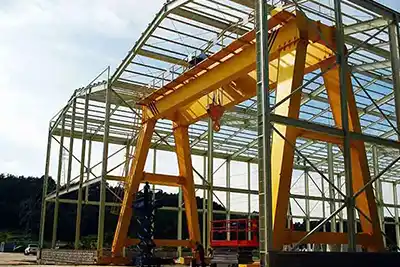
Timber Handling Gantry Crane Selection Guide 10T–32T
Most Important Takeaway
Selecting a timber handling gantry crane between 10T and 32T is not about maximum lifting alone—it is about matching industrial timber load behavior (bundled lumber, raw logs, and mixed stacks) with operational intensity to avoid both under-capacity bottlenecks and unnecessary over-investment.
- Correct crane capacity depends on actual timber bundle weight, not nominal estimates
- 10T–32T gantry crane selection is driven by load type, lifting frequency, and yard workflow
- Bundled lumber, logs, and mixed timber require different safety margins and lifting tools
- Under-sizing causes production delays and unsafe lifting conditions in timber yards
- Over-sizing increases steel structure cost, wheel load requirements, and energy consumption
- Proper selection improves loading efficiency in sawmills, timber yards, and export terminals
Questions This Guide Solves
A: The right gantry crane capacity for timber handling is determined by the maximum single-lift load, lifting method, and operational intensity rather than only average material weight.
- timber yard crane capacity selection guide
- outdoor gantry crane lifting capacity planning
- rail mounted crane load evaluation for lumber handling
A: A 10 ton gantry crane is sufficient for standard lumber bundles, light to medium sawmill output, and controlled yard operations where single-lift loads remain within predictable limits.
- 10 ton gantry crane timber yard application
- lumber bundle lifting capacity requirements
- light duty rail mounted crane sawmill operation
A: 20T–32T timber gantry cranes are typically required for heavy log handling, high-density storage yards, port timber terminals, and large-scale sawmill logistics operations.
- 20 ton gantry crane log handling yard
- 25 ton gantry crane timber storage system
- 32 ton gantry crane heavy duty lumber operation
A: Irregular timber loads and log bundles increase real lifting demand due to uneven weight distribution, requiring additional safety margin beyond nominal material weight.
- irregular timber load crane capacity adjustment
- log bundle lifting gantry crane selection factor
- outdoor crane uneven load handling safety margin
A: Under-sizing leads to overload stress and unsafe operation, while over-sizing increases investment cost, energy consumption, and structural loading on the foundation.
- gantry crane under sizing risks timber yard operation
- over sized crane cost inefficiency industrial yard
- rail mounted crane capacity mismatch consequences
A: Lifting tools such as grapples, C-hooks, and spreader beams add additional dead weight and affect load distribution, which must be included in crane capacity calculations.
- timber grapple crane load capacity impact
- spreader beam gantry crane lifting system weight factor
- rail mounted crane attachment load calculation
A: The most cost-efficient configuration is typically a rail mounted gantry crane sized for peak load demand with modular lifting tools, optimized for continuous outdoor operation rather than peak-only usage.
- cost efficient timber yard gantry crane system
- sawmill rail mounted crane configuration optimization
- outdoor crane modular lifting system cost planning
Introduction: The Role of Gantry Cranes in Timber Handling Systems
Timber handling in industrial yards is not a light-duty lifting task. It involves heavy, often irregular materials that need to be moved quickly, safely, and repeatedly across outdoor working areas. In sawmills, lumber storage yards, and timber processing terminals, lifting is part of the daily rhythm of production, not an occasional activity.
Gantry crane systems are commonly used in these environments because they can travel along ground-level rails and cover long working spans without relying on building structures. This makes them practical for open-yard timber handling, especially where overhead building cranes are not available or not economical to install. In industrial operation, operators often say it simply works better when the crane can move with the material instead of forcing the material to fit a fixed point.
- Common applications include sawmill log handling, bundled lumber stacking, and timber loading for trucks or export containers
- Rail mounted gantry crane layouts allow stable movement across long outdoor yards with uneven production zones
- Outdoor gantry crane systems are often selected where steel structures for overhead bridge cranes are not feasible or too costly
- Timber yard crane operations typically require continuous lifting cycles during peak processing hours
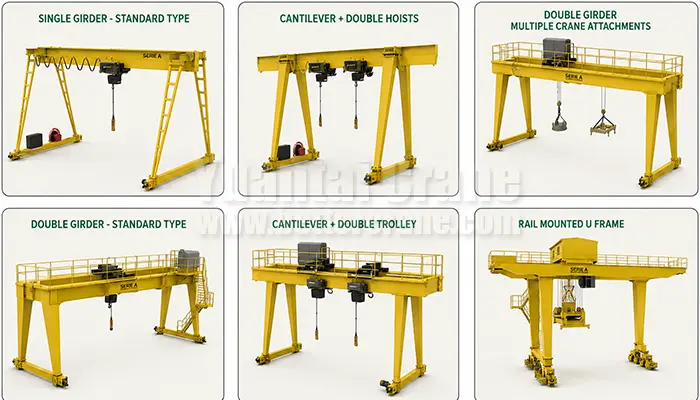
Selection in the 10 ton, 20 ton, 25 ton, and 32 ton gantry crane capacity range is not based on a simple “how heavy is the load” question. In actual timber handling projects, the better question is how the load behaves in industrial conditions—whether it is bundled lumber with consistent shape, raw logs with shifting center of gravity, or mixed timber stacks that change from one lift to another.
- 10 ton gantry crane systems are usually used in smaller sawmills or secondary processing yards handling light to medium timber bundles
- 20 ton gantry cranes are often the standard choice for general timber yard operations and truck loading areas
- 25 ton configurations are selected when timber density increases and lifting conditions become less predictable
- 32 ton gantry crane systems are applied in heavy log handling zones and high-capacity timber terminals where load variation is common
In practice, capacity selection is less about theoretical maximum lifting force and more about matching the crane to industrial working cycles, timber weight variation, and how often the crane is expected to lift at or near full load. This is where many timber handling projects either over-invest in unused capacity or create bottlenecks by underestimating peak load conditions.
Timber Load Characteristics in Industrial Applications
Timber handling in sawmills, lumber yards, and forestry terminals is not a uniform lifting task. The same gantry crane may handle light bundled lumber in one cycle and heavy irregular logs in the next. This variability is exactly why capacity selection in the 10 ton, 20 ton, 25 ton, and 32 ton range must start from industrial load behavior, not nominal assumptions.
In practical yard operation, timber loads are usually grouped into three working categories: bundled lumber, raw logs, and mixed timber stacks. Each behaves differently under lifting force, and each directly influences crane capacity choice.
Bundled Lumber Handling (Controlled but Weight-Sensitive Loads)
Bundled lumber is the most standardized timber load in industrial processing. Boards or beams are stacked in uniform layers, then secured using steel straps or heavy-duty PET banding. This allows easier stacking and transport, especially in lumber yard crane operations and export loading areas.
- Standard bundle geometry is rectangular for stable stacking in storage yards
- Bundles are often handled using hook lifting or simple spreader beams
- Used widely in sawmills, timber distribution yards, and construction material depots
Even though the shape is controlled, the weight is not always consistent.
In industrial timber yard conditions, bundled lumber weights vary more than most buyers expect:
- Light bundles (small sawmills, secondary processing): 2–5 tons per bundle
- Standard commercial bundles (common industrial handling): 5–12 tons per bundle
- Heavy dense hardwood bundles (high moisture or tight stacking): 12–18 tons per bundle
- Oversized export packs (large structural timber shipments): can approach 18–20 tons per bundle
Moisture absorption is a key factor. Fresh-cut timber stored outdoors can increase total bundle weight by 10% to 25%, depending on weather exposure and storage time.
Bundled lumber is stable in shape but sensitive to lifting dynamics. The issue is not collapse—it is strap stress and load shock.
- Sudden lifting acceleration can overload banding straps
- Uneven stacking inside bundles may create slight tilt during hoisting
- Longer bundles require more careful control to avoid swinging in gantry crane travel
In practice, this is where operators often say: "The weight is fine, but the movement is what causes trouble."
- 10 ton gantry crane: suitable for light bundles and small sawmills
- 20 ton gantry crane: standard choice for most industrial lumber yards
- 25 ton gantry crane: used when bundles regularly exceed 12–15 tons
- 32 ton gantry crane: rarely needed unless bundles are oversized or high-density hardwood is frequent
Raw Log Handling Operations (Unstable and High-Variation Loads)
Raw logs are one of the most challenging materials in timber handling systems. They are irregular, heavy, and unpredictable in balance. Unlike bundled lumber, logs do not follow a fixed stacking pattern.
- Diameter varies even within the same batch
- Moisture content differs between logs and between ends of the same log
- Natural curvature creates shifting center of gravity
This is typical in forestry yards, log storage terminals, and primary processing facilities.
Raw logs are usually not lifted individually in large-scale operations. Instead, multiple logs are lifted per cycle using grapples or clamps.
- Small softwood logs: 1–3 tons per log
- Medium industrial logs: 3–6 tons per log
- Large hardwood logs: 6–10+ tons per log
However, cranes typically lift multiple logs at once:
- Standard grapple cycle: 5–10 tons total load
- Medium forestry yard cycle: 8–15 tons per lift
- Heavy log handling cycle: 15–25 tons per lift
- High-density log bundles: can exceed 25 tons in extreme cases
- Logs can roll or shift inside grapple during hoisting
- Uneven grip points create side load on crane structure
- Load may increase suddenly when multiple logs settle into grip position
Because of this, actual working load is often higher than estimated visual weight.
- 10 ton gantry crane: not recommended for primary log handling
- 20 ton gantry crane: suitable for light or secondary log processing
- 25 ton gantry crane: common baseline for forestry and log yards
- 32 ton gantry crane: used for heavy log terminals and high-volume forestry operations
In industrial projects, many buyers choose a higher capacity here not for average load, but for load uncertainty.
Mixed Timber Yard Loads (Most Unpredictable Working Condition)
Mixed timber handling occurs in export yards, recycling yards, and multi-product storage facilities. Loads are not uniform and often include a combination of different timber types.
- Structural beams mixed with small offcuts
- Partially bundled timber stacks
- Irregular shaped leftover material packs
- Combined loads prepared for export or resale sorting
This category has the highest variability in both shape and weight.
Mixed timber loads fluctuate widely depending on yard workflow:
- Light mixed stacks (sorting yards): 3–8 tons per lift
- Medium mixed bundles (distribution yards): 8–15 tons per lift
- Heavy mixed industrial loads (export or bulk storage): 15–25 tons per lift
- Peak irregular loads in dense yards: can exceed 25 tons per lift
Unlike bundled lumber, these values are not fixed—they change daily depending on how material is stacked.
- Internal voids can shift load center after lifting begins
- Different timber types create uneven friction and grip behavior
- Operators often rely on visual judgment before each lift
This is where "calculated load" and "industrial load" often differ in practice.
- 20 ton gantry crane: suitable for light-to-medium mixed yards
- 25 ton gantry crane: preferred baseline for most industrial mixed operations
- 32 ton gantry crane: used where load variation is high and downtime is not acceptable
In mixed timber environments, safety margin is not optional—it is part of daily operation planning.
Capacity Selection Logic for 10T–32T Gantry Crane Systems
Selecting a timber handling gantry crane is not a simple “bigger is better” decision. In sawmills, lumber yards, and forestry terminals, each capacity level from 10 ton to 32 ton is tied to a very specific working condition. The industrial logic comes from matching lifting frequency, timber type, and peak load behavior with the correct crane class.
10 Ton Gantry Crane for Timber Handling -Light-Duty Yard Operations
The 10 ton gantry crane is generally used in smaller timber processing sites where loads are predictable and not excessively dense. It is common in secondary sawmills, local lumber yards, and workshop-level timber handling areas.
- Small sawmill production yards with limited daily output
- Light bundled lumber storage and sorting zones
- Internal handling between cutting, drying, and packing stations
- Low-height stacking and short-distance transfer operations
In industrial operation, 10 ton systems are used under controlled load conditions:
- Typical bundle weight: 2–6 tons per lift
- Occasional peak bundles: up to 8–10 tons (maximum limit working condition)
- Usually not used for multi-log lifting or dense hardwood stacks
This capacity works best when load variation is low and material flow is stable.
- Best suited for repetitive lifting cycles with consistent bundle sizes
- Simple hook lifting or light spreader beam configuration
- Lower structural stress on rails and wheel assemblies
- Often chosen when cost control is more important than expansion flexibility
In practice, operators describe it as a "steady working crane," not a heavy production unit.
- Not suitable for heavy log bundles or mixed irregular loads
- Limited margin for moisture-heavy timber stacks
- Reduced flexibility in export or high-throughput yards
20 Ton Gantry Crane as Standard Timber Yard Solution-Most Common Industrial Choice
The 20 ton gantry crane is widely used across industrial timber handling systems. It is often considered the baseline capacity for medium to large-scale sawmills and distribution yards.
- Main timber yard crane systems in sawmills
- Truck loading and unloading stations
- Intermediate storage and stacking yards
- Cross-yard transport and sorting operations
This capacity covers most standard industrial timber loads:
- Bundled lumber: 5–12 tons per lift (normal working range)
- Heavy bundles or dense stacking: up to 15–18 tons occasional peak
- Light log handling with grapple: 8–15 tons per cycle
It provides a comfortable margin above typical working loads without excessive overdesign.
- Balanced performance between lifting capacity and operational cost
- Suitable for continuous daily operation with medium duty cycle classification
- Compatible with hooks, timber clamps, and basic grapple systems
- Common choice for timber yard crane systems where load variation is moderate
In many industrial projects, this is the "default selection" when buyers are unsure but want safe operational flexibility.
- Handles both bundled lumber and moderate log handling
- Supports medium-span gantry crane layouts in outdoor yards
- Works well in mixed production and storage environments
25 Ton Gantry Crane for Heavy Duty Timber Logistics -High-Volume and Variable Load Operations
The 25 ton gantry crane is used in heavier and more demanding timber logistics environments where load variation and throughput are both high.
- Export timber yards with continuous loading operations
- Large sawmill production facilities
- High-volume lumber distribution centers
- Mixed material timber handling zones
This capacity is designed for heavier and less predictable lifting conditions:
- Heavy bundled lumber: 12–18 tons per lift
- Mixed timber stacks: 10–20 tons typical range
- Log grapple operations: 15–25 tons per cycle depending on load grouping
- Peak working condition: close to 25 tons maximum rated load
- Designed for higher duty cycle operation with frequent full-load lifting
- Better resistance to uneven load distribution in mixed timber yards
- Often paired with hydraulic grapples or multi-point spreaders
- More stable under dynamic load changes compared to lower capacities
In practical yard use, this level is chosen when production speed and load uncertainty both increase.
- Reduces risk of overload during peak timber stacking
- Improves operational flexibility in export handling
- Provides buffer for moisture variation and irregular timber geometry
32 Ton Gantry Crane for Heavy Log and Bulk Timber Handling -High-Capacity Industrial Use
The 32 ton gantry crane is used in the most demanding timber handling environments where both load size and operational uncertainty are high.
- Large forestry processing plants
- Port-based timber terminals and export hubs
- Heavy log storage and sorting yards
- Bulk timber handling and industrial-scale material flow systems
This capacity is intended for heavy-duty lifting scenarios:
- Large log bundles: 15–25 tons per lift
- Oversized hardwood logs: 10–20+ tons individually or grouped
- Heavy mixed industrial stacks: 20–30 tons in peak conditions
- Maximum rated lifting condition: up to 32 tons working load
- Requires reinforced steel structure and heavy-duty wheel assemblies
- Designed for high structural stability under uneven loading
- Commonly used with heavy-duty log grapples and industrial clamps
- Suitable for continuous high-intensity yard operation
- When logs are consistently large and dense
- When mixed loads frequently exceed 20–25 tons
- When operational downtime is costly and must be minimized
- When export or port handling requires fast high-volume turnover
In industrial timber systems, this level is not chosen for average load—it is chosen for peak load certainty and operational stability under pressure conditions.
Critical Factors Influencing Timber Gantry Crane Selection
Selecting a timber handling gantry crane in the 10 ton to 32 ton range is never based on a single parameter. In industrial sawmill yards, export terminals, and forestry storage sites, the final decision is usually a combination of load behavior, working rhythm, lifting tools, and yard geometry. These factors interact with each other, and ignoring any one of them often leads to either under-performance or unnecessary cost increase.
Industrial Load Weight vs. Theoretical Load
The rated lifting capacity of a gantry crane is only one part of the picture. What matters in daily timber handling is the actual weight of the load at the moment of lifting. In practice, this often differs from the theoretical or planned value.
- Maximum single-lift weight should always define the minimum crane capacity requirement
- Bundled lumber weight can vary between production batches even if dimensions look identical
- Log density and moisture variation can significantly change total lifting mass without visual warning
In timber yard operations, it is common to see "same size, different weight" situations, especially when timber is stored outdoors.
Timber is a material that continues to change after cutting. Moisture absorption and storage conditions directly affect lifting weight.
- Freshly cut timber can increase weight by 10%–25% depending on exposure time
- Wet storage conditions during rainy seasons can further increase bundle mass
- Tight stacking increases density, especially in export-ready lumber bundles
For this reason, a nominal 10-ton bundle can easily behave like 11–12 tons in industrial lifting conditions. This is one of the main reasons why many timber yard crane systems are selected with additional capacity margin instead of exact matching.
Duty Cycle and Operational Frequency
Timber handling is rarely an occasional lifting task. In sawmills and distribution yards, cranes often operate throughout the entire production shift.
- Loading and unloading trucks in continuous cycles
- Stacking and sorting timber bundles throughout the day
- Frequent movement between storage zones and processing stations
This creates a working environment where fatigue becomes a design factor, not just a theoretical calculation.
- Hoisting mechanism wear increases with repeated start-stop cycles
- Wheel assemblies and rails experience long-term load fatigue
- Motor heating becomes a limiting factor in continuous operation
In industrial projects, this is why a 20 ton gantry crane used in high-frequency operations may require a stronger design than a 20 ton crane used in intermittent lifting.
Lifting Attachments and Handling Tools
Hook lifting is commonly used for bundled lumber where loads are relatively structured.
- Load is concentrated at single or dual lifting points
- Higher stress concentration occurs at strap or lifting point areas
- Requires careful alignment to avoid bundle tilting
This method is simple but sensitive to uneven load distribution.
Grapples are widely used in raw log handling and mixed timber operations.
- Allow multiple logs to be lifted in a single cycle
- Introduce dynamic load changes during grip and release
- Load weight may increase suddenly when logs settle into position
This dynamic behavior is one of the reasons why log handling often requires 25 ton or 32 ton gantry crane systems, even when individual logs are not extremely heavy.
Spreader beams are used when load stability is more important than speed.
- Improve balance during long bundled lumber lifting
- Reduce bending stress on timber bundles
- Distribute load more evenly across lifting points
However, they also add to the total lifted weight, which must be included in capacity calculation. In practice, many operators forget this, which leads to underestimating industrial crane load.
Yard Layout and Structural Constraints
The physical layout of the timber yard has a direct influence on crane design.
- Wider span increases bending load on gantry structure
- Larger spans require stronger beams and heavier wheel systems
- Load distribution changes depending on rail spacing and support design
In practical engineering, a 20 ton gantry crane with a long span may behave structurally closer to a higher-duty system than a short-span version.
Rail design and alignment affect not only safety but also daily operational efficiency.
- Poor rail alignment increases wheel wear and vibration during movement
- Long travel distances reduce cycle efficiency in high-volume yards
- Smooth rail systems improve load stability during transport between zones
In industrial timber handling projects, rail quality is often underestimated during planning, but it directly affects long-term crane performance and maintenance cost.
In summary, timber gantry crane selection is not determined by a single specification sheet. It is the combined effect of industrial load weight, working frequency, lifting method, and yard structure. When these four factors are aligned correctly, the system operates smoothly; when they are ignored, even a properly rated 25 ton or 32 ton crane can become inefficient in daily timber handling work.
Safety, Efficiency, and Cost Optimization Considerations
In timber handling gantry crane projects, safety, productivity, and investment cost are always tied together. A decision that looks cheaper at the purchase stage can become expensive in daily operation, while a high-capacity system that looks safer on paper may end up wasting energy and reducing efficiency in industrial yard work. The balance is found in matching crane capacity with actual timber handling conditions, not assumptions.
Consequences of Under-Sizing
When a gantry crane is selected below industrial working demand, the most direct issue is overload risk during peak lifting cycles. This usually appears during busy loading hours in sawmills or export yards.
- Bundled lumber that appears within safe range may exceed rated capacity when moisture content increases
- Multiple-log grapple lifts can push load beyond safe working limits without clear visual warning
- Operators may unknowingly approach or exceed rated capacity during high-pressure production periods
In industrial timber yard operations, overload situations rarely happen during planned lifts—they happen during peak workload when speed is prioritized.
Under-sized systems force operators to slow down operations to stay within safe limits. This directly affects production flow.
- Operators may split loads into smaller batches to avoid overload
- Additional lifting cycles are required for the same amount of timber
- Yard throughput decreases during high-demand periods
In practice, the crane becomes the bottleneck of the entire timber handling process.
- Hoisting motors experience higher thermal load
- Wire ropes wear faster due to repeated near-limit tension cycles
- Gear systems and brake assemblies require more frequent inspection
Over time, this leads to higher maintenance cost and more downtime, especially in continuous operation yards.
Consequences of Over-Sizing
Increased Equipment Investment Cost
Choosing a crane that is significantly larger than required increases upfront cost in multiple areas, not only the crane itself.
- Heavier steel structure for gantry beams and legs
- Stronger hoisting system and larger motor capacity
- More robust rail foundation and wheel assemblies
In timber projects, this cost difference between a 20 ton and 32 ton system can be substantial, especially in full yard installations.
Oversized cranes consume more energy even when handling light loads, which is common in timber yards where load variation is high.
- Motor systems operate with higher power ratings than necessary
- Light loads do not utilize full efficiency range of hoisting systems
- Frequent low-load operation reduces energy efficiency per cycle
Over time, this becomes a continuous operational cost rather than a one-time investment issue.
- Oversized cranes may feel less responsive during light load handling
- Fine control during positioning becomes less efficient in some configurations
- Operators may experience slower acceleration and deceleration response
This is often described in practice as "too strong for daily work but not efficient for routine handling."
Optimization Strategy for Timber Gantry Crane Selection
Design Based on Peak Load, Not Average Load
A common mistake in timber yard planning is sizing the crane based on average load weight. In industrial practice, cranes must handle the heaviest expected lifting condition safely.
- Identify maximum bundle weight, not typical bundle weight
- Include heavy log grouping scenarios in load calculation
- Consider seasonal moisture variation in timber weight
This approach ensures the crane remains safe during worst-case lifting conditions, not just normal operation.
Safety margin is not a fixed number—it depends on how the crane is used.
- Hook lifting systems require tighter load control due to strap concentration
- Grapple-based log handling requires higher dynamic load allowance
- High-cycle operations require additional fatigue consideration
In practical timber handling projects, safety margin is usually integrated into capacity selection rather than treated as a separate adjustment.
- 10 ton gantry crane for light sawmill and secondary processing
- 20 ton gantry crane as baseline for general timber yard operations
- 25 ton gantry crane for high-volume and mixed load environments
- 32 ton gantry crane for heavy log and export terminal applications
Using standardized capacity levels helps reduce spare parts complexity, simplifies maintenance planning, and improves long-term service consistency across timber handling operations.
In industrial timber projects, the most efficient system is not the one with the highest capacity or the lowest cost. It is the one that stays stable under peak load, runs efficiently during normal cycles, and avoids unnecessary mechanical stress over time.
Application-Based Selection Scenarios in Timber Industry
In industrial timber handling projects, gantry crane capacity selection becomes much clearer when it is matched with actual working environments. Saw mills, distribution yards, and port terminals all operate differently, not only in load size but also in lifting frequency, material type, and workflow pressure. The 10T–32T range is typically used as a practical standard series, where each level fits a specific industrial scenario rather than overlapping randomly.
Small Sawmill and Secondary Processing → 10T Gantry Crane Systems
Small sawmills and secondary timber processing workshops usually deal with controlled production flow. The material is often pre-cut, sorted, and handled in smaller batches rather than bulk industrial volumes.
- Local sawmills with limited daily output
- Secondary processing plants (cutting, trimming, packaging)
- Indoor-outdoor hybrid timber storage areas
- Short-distance material transfer between production stations
In these environments, lifting is generally stable and predictable.
- Light bundled lumber: 2–5 tons per lift
- Medium bundles in peak condition: up to 8–10 tons maximum
- Rare use of log grapples or heavy irregular stacks
The load profile stays relatively consistent, which reduces uncertainty in crane selection.
- Suitable for repetitive lifting cycles with similar bundle sizes
- Lower investment cost for small-scale timber operations
- Easier installation in compact yard layouts
- Matches low-to-medium duty cycle requirements
In practical use, 10 ton gantry crane systems are often described as "workshop-level timber cranes" rather than heavy industrial equipment.
Medium Timber Distribution Yard → 20T Gantry Crane Systems
Medium-sized timber yards are the most common application area for industrial gantry cranes. These yards handle mixed customer demand and a wide range of timber sizes.
- Regional lumber distribution centers
- Truck loading and unloading stations
- Storage yards for construction timber supply
- Cross-docking timber logistics operations
The load range becomes more variable and operationally demanding.
- Standard lumber bundles: 5–12 tons per lift
- Heavy bundles or dense stacking: 12–15+ tons occasional peak
- Light log handling (with grapple): 8–15 tons per cycle
This variability is why capacity planning becomes more important in this category.
- Acts as a balanced standard for most timber yard crane systems
- Provides safe margin for moisture variation and load fluctuation
- Suitable for both hook lifting and basic grapple operations
- Supports continuous loading of trucks and storage stacking
In industrial terms, 20 ton gantry crane systems are often considered the "default working solution" for timber distribution logistics.
Export Lumber Storage and Logistics Hub → 25T Gantry Crane Systems
Export timber facilities operate under higher pressure and tighter schedules. Load consistency is lower, and throughput is higher.
- Export shipping yards and container loading zones
- Large-scale lumber storage and sorting facilities
- High-volume timber logistics hubs
- Multi-product timber handling operations
Loads are heavier and more variable compared to standard distribution yards.
- Heavy export bundles: 12–18 tons per lift
- Mixed timber stacks: 10–20 tons typical range
- Grapple-based log handling: 15–25 tons per cycle
- Peak irregular loads: approaching 25 tons
- Handles mixed timber operations with higher uncertainty
- Supports high-frequency loading without frequent overload risk
- Better suited for export deadlines and continuous yard flow
- Provides operational buffer for uneven or moisture-heavy timber
In practice, 25 ton gantry crane systems are selected when "standard capacity is not enough, but full heavy-duty 32 ton is not always required."
Heavy Log Processing and Port Timber Terminal → 32T Gantry Crane Systems
This is the most demanding category in timber handling systems. Operations are continuous, heavy, and often involve large-scale forestry supply chains.
- Port-based timber terminals and export shipping ports
- Large forestry processing plants
- Heavy log sorting and storage yards
- Bulk timber handling facilities with high throughput demand
Loads are heavy, irregular, and often unpredictable in shape and distribution.
- Large bundled logs: 15–25 tons per lift
- Oversized hardwood logs: 10–20+ tons individually or grouped
- Heavy mixed industrial stacks: 20–30 tons typical range
- Peak working load condition: up to 32 tons rated capacity
- Designed for continuous heavy-duty lifting cycles
- Handles large logs and high-density timber stacks safely
- Reduces risk during unpredictable load variations
- Supports port-level productivity and export-scale throughput
In industrial operation, 32 ton gantry crane systems are not chosen for average load—they are chosen for peak reliability under the heaviest and most uncertain lifting conditions in timber logistics.
Practical Selection Framework for Buyers
Selecting a timber handling gantry crane in industrial projects is rarely a single-decision process. Buyers in sawmills, lumber yards, and port timber terminals usually have to balance load data, handling method, and yard conditions at the same time. The goal is not only to choose a safe crane, but to match the system to daily working rhythm so it performs consistently without unnecessary cost pressure.
Start from the heaviest industrial lifting case
The first step is always to identify the maximum load that will actually be lifted in daily operation, not the average or typical weight. In timber handling, this usually comes from peak bundled lumber stacks or grouped log lifting cycles.
- Bundled lumber peak loads often reach 10–18 tons depending on stacking density and moisture content
- Log grapples in forestry yards may reach 15–25 tons per cycle when multiple logs are lifted together
- Mixed timber stacks in export yards can occasionally exceed 20 tons in irregular conditions
This maximum value becomes the baseline for crane capacity selection, especially for 20 ton, 25 ton, and 32 ton gantry crane systems.
Hook lifting for bundled lumber
Hook systems are commonly used for structured timber bundles in sawmills and distribution yards.
- Best for stable, strapped lumber packs
- Load is concentrated at lifting points
- Requires careful control during start and stop movement
Timber clamps for controlled log or beam handling
Clamps are used when grip stability is needed but full grapple flexibility is not required.
- Suitable for medium timber bundles or semi-processed logs
- Provides better balance than hook lifting in uneven stacks
- Often used in secondary processing yards
Hydraulic grapples for raw logs
Grapples are standard in forestry and heavy log handling environments.
- Designed for multi-log lifting per cycle
- Introduces dynamic load variation during grip and release
- Can significantly increase industrial working load beyond estimated weight
In practice, the lifting tool directly affects the required crane capacity. A 15-ton load handled by a grapple may require a higher rated crane than a 15-ton bundled lumber lift using hooks.
Low-duty cycle operations
- Small sawmills or secondary workshops
- Limited daily lifting frequency
- Short working shifts or intermittent use
10 ton gantry crane systems are often sufficient in these conditions.
Medium-duty cycle operations
- Standard timber distribution yards
- Regular truck loading and stacking activity
- Continuous but not extreme lifting frequency
This is where 20 ton gantry crane systems are most commonly selected.
Continuous high-duty cycle operations
- Export timber yards
- Port logistics terminals
- Forestry processing plants with nonstop material flow
In these environments, 25 ton or 32 ton gantry crane systems are preferred due to fatigue resistance and operational stability under continuous load cycles.
Span and structural load relationship
- Crane span is not just a dimension—it directly affects structural stress and wheel load distribution
- Wider spans increase bending moment on gantry beams
- Rail spacing influences stability during loaded travel
- Uneven ground or long spans require stronger structural reinforcement
Yard layout and workflow efficiency
- Long travel distances require efficient rail alignment and smooth running systems
- Multiple stacking zones require flexible crane coverage
- Narrow yards may benefit from compact span configurations
In industrial timber yard projects, poor rail planning often reduces crane efficiency more than incorrect capacity selection.
Avoid custom over-complication
In industrial timber handling systems, standard capacities are preferred because they simplify design, maintenance, and future expansion.
- 10T gantry crane → light sawmill and secondary processing
- 20T gantry crane → standard timber yard and distribution operations
- 25T gantry crane → export yards and high-variability mixed loads
- 32T gantry crane → heavy log processing and port terminals
Practical selection logic
Instead of matching exact calculated load, the final decision is usually based on:
- Peak load safety margin
- Lifting tool behavior under industrial conditions
- Daily operating frequency and duty cycle
- Yard structure and long-term expansion needs
In actual timber handling projects, the best selection is the one that stays stable during peak load, remains efficient during normal operation, and does not require constant operational compromise from the crane operator.
Conclusion: Engineering the Right Timber Gantry Crane Solution
A timber handling gantry crane only performs well when its capacity, structure, and working logic are aligned with how timber actually moves in the yard. In sawmills, lumber distribution centers, and forestry terminals, lifting is not occasional work—it is part of the production flow. That is why the 10T–32T gantry crane range is widely used across the industry, because it can cover light bundled lumber, medium distribution loads, and heavy log operations when properly matched to industrial working conditions.
In practical operation, stable performance comes from matching three things together: industrial load weight, lifting method, and daily duty cycle. When these are aligned, the crane runs smoothly through repeated cycles without forcing operators to slow down or take unnecessary safety risks. When they are not, even a correctly rated crane can become either a production bottleneck or an underutilized investment.
- A properly selected system maintains steady throughput in lumber yard crane operations without frequent lifting restrictions
- Matching capacity to peak timber bundle or log weight helps avoid overload situations during high-demand periods
- Selecting the right configuration improves long-term structural life, especially under continuous outdoor gantry crane operation
- Standard capacity levels such as 10 ton, 20 ton, 25 ton, and 32 ton simplify maintenance planning and spare parts management
In industrial timber handling projects, the goal is not to maximize crane size or minimize cost in isolation. It is to achieve consistent, predictable lifting performance across changing loads, weather conditions, and production schedules. When the crane is correctly selected, the entire yard—stacking, loading, and transport—works in a more controlled and efficient rhythm without unnecessary interruptions.