Single vs Dual Gantry Crane Systems for Timber Handling Yards
Single vs Dual Gantry Crane Systems for Timber Handling and Log Logistics Yards
Most Important Takeaway
For timber storage yards, log handling facilities, lumber distribution centers, and sawmill operations, the choice between a single timber handling gantry crane and a dual gantry crane system directly impacts material flow efficiency, truck turnaround times, timber stockyard productivity, and long-term operational costs. While a single rail mounted gantry crane can efficiently manage moderate timber volumes, dual gantry crane configurations provide substantially higher throughput, improved log handling capacity, greater operational flexibility, and the ability to perform simultaneous or tandem lifting operations for large timber bundles and long wood products.
- Single timber handling gantry crane systems provide a cost-effective solution for small and medium lumber yards.
- Dual gantry crane systems significantly increase timber loading, unloading, stacking, and dispatch capacity.
- Two cranes can simultaneously manage inbound logs and outbound lumber shipments.
- Tandem lifting operations allow safer handling of long timber packs, poles, glulam beams, and oversized wood products.
- Dual crane configurations reduce truck waiting times and improve timber yard logistics.
- Rail mounted gantry cranes improve storage density and stockyard organization.
- Log handling gantry cranes can be configured for synchronized lifting of long loads.
- Operational redundancy minimizes downtime during maintenance activities.
- Higher investment costs are often justified by increased timber throughput and faster inventory turnover.
- Future yard expansion plans should be considered when selecting between single and dual crane systems.
Questions This Guide Solves
A single timber handling gantry crane system completes all log handling and lumber movement step by step, while a dual gantry crane system splits work so both cranes can operate in parallel.
- Single timber handling gantry crane handles lifting, stacking, and loading in sequence
- Dual gantry crane system supports parallel timber handling in storage and dispatch zones
- Improves timber yard efficiency in high-volume log handling gantry crane operations
- Reduces congestion in lumber storage and timber logistics yards
- Better workflow for sawmills and timber stockyard operations
A lumber yard should upgrade when a single timber handling gantry crane can no longer maintain smooth log handling and lumber dispatch without delays.
- Truck queues form during peak timber handling gantry crane operations
- Single crane cannot support simultaneous log and lumber movement
- Increased cycle time in timber storage and dispatch areas
- High utilization in sawmill or timber logistics yard operations
- Need for dual gantry crane system for continuous timber flow
A dual gantry crane system increases timber handling throughput by enabling simultaneous log handling, lumber bundle movement, and dispatch operations.
- Parallel operation of two timber handling gantry cranes
- Faster log handling gantry crane cycle time in storage yards
- Reduced waiting time between truck loading operations
- Improved timber stockyard productivity and flow efficiency
- Better performance during peak timber logistics demand
Tandem lifting with dual gantry cranes improves stability and safety when handling long logs, lumber bundles, and engineered timber products.
- Dual gantry crane system shares load across two lifting points
- Safer handling of long timber handling gantry crane loads
- Reduced deflection in logs, glulam beams, and timber bundles
- Better control in log handling gantry crane operations
- Suitable for sawmills and engineered wood production yards
Single gantry crane systems suit moderate timber handling, while dual gantry crane systems are better for high-volume log handling and lumber transport.
- Single timber handling gantry crane for stable, low to medium workload
- Dual gantry crane system for continuous timber yard operations
- Better lumber bundle transportation efficiency in busy storage yards
- Improved log handling gantry crane performance under peak demand
- Reduced congestion in timber logistics and sawmill operations
Synchronized dual gantry crane operations improve efficiency by coordinating movements in timber handling, storage, and dispatch zones.
- Coordinated dual gantry crane system avoids workflow conflicts
- Improves timber handling gantry crane cycle efficiency
- Reduces idle time in lumber storage and log handling zones
- Supports continuous timber logistics yard operations
- Enhances precision in loading and unloading timber bundles
Single gantry crane systems have lower investment and operating cost, while dual gantry crane systems require higher investment but improve long-term timber handling efficiency.
- Single timber handling gantry crane: lower cost, simpler maintenance
- Dual gantry crane system: higher capital cost, higher throughput
- Better cost per ton in high-volume log handling gantry crane operations
- Increased efficiency in timber logistics yard workflows
- Improved productivity in sawmills and storage yards
Dual gantry crane redundancy ensures timber dispatch operations continue even if one crane is under maintenance or breakdown.
- One crane continues log handling gantry crane operations
- Reduced downtime in timber handling gantry crane systems
- Maintains lumber dispatch and storage movement
- Improves reliability in timber logistics yard operations
- Critical for high-demand sawmill and export timber yards
Large timber stockyards with multiple storage zones and high dispatch activity benefit most from dual gantry crane systems.
- Separate zones for log handling and lumber storage
- High-frequency timber handling gantry crane operations
- Efficient rail mounted gantry crane and truck loading layouts
- Reduced congestion in timber logistics yard design
- Better performance in sawmills and export timber terminals
ROI depends on how much faster and more efficiently a dual gantry crane system improves timber handling throughput and dispatch operations.
- Increased log handling gantry crane throughput per day
- Faster timber handling gantry crane cycle time
- Reduced delays in lumber dispatch and storage operations
- Improved cost efficiency per ton in timber logistics yards
- Higher productivity in sawmills and timber stockyard systems
Introduction to Timber Handling Gantry Crane Systems
The Role of Gantry Cranes in Modern Timber Logistics Yards
Timber handling operations have changed considerably over the last two decades. Many timber yards that once relied heavily on wheel loaders, forklifts, and manual sorting now use dedicated timber handling gantry cranes to move logs, lumber bundles, utility poles, engineered wood products, and packaged timber throughout the yard.
As timber volumes increase, the challenge is no longer simply lifting heavy loads. The real challenge is moving materials quickly, safely, and consistently while keeping trucks, railcars, production lines, and storage areas operating without delays. This is where rail mounted gantry crane systems have become an important part of modern timber logistics.
A well-designed timber handling gantry crane allows operators to lift, stack, sort, retrieve, and load timber with predictable cycle times. The crane travels along fixed rails, covering large outdoor storage areas while minimizing ground traffic congestion.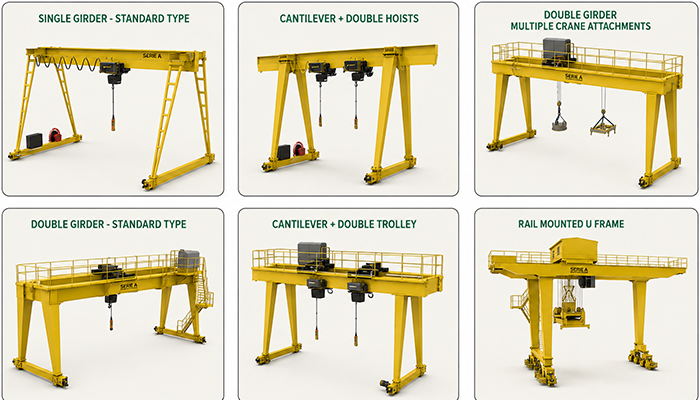
gantry crane systems for lumber, timber and log handling
Timber Handling Gantry Cranes in Lumber Storage FacilitiesLumber storage facilities often handle thousands of cubic meters of timber inventory at any given time. Materials may include sawn lumber, kiln-dried timber, laminated beams, plywood packs, cross-laminated timber panels, and other finished wood products.
In these environments, a timber yard crane serves as the primary material handling system between storage locations and shipping areas.
Typical tasks include:
- Stacking lumber bundles in organized storage rows
- Retrieving timber packages for customer orders
- Loading trucks for regional distribution
- Supplying downstream manufacturing operations
- Managing high-density outdoor timber storage
Unlike forklifts, which require access aisles between stacks, a timber handling gantry crane can lift loads directly from above. This allows tighter storage layouts and better utilization of available yard space.
For large lumber distribution centers, this often means:
- Higher storage density
- Reduced internal traffic
- Faster inventory retrieval
- Lower risk of product damage
- More efficient truck loading operations
When storage volume grows, these advantages become increasingly important.
Log handling presents a different set of challenges.
Raw logs vary in length, diameter, weight, and moisture content. Some timber species are considerably heavier than others, and freshly harvested logs often create unpredictable load conditions.
A log handling gantry crane is designed to manage these conditions while maintaining stable and controlled lifting performance.
Common applications include:
- Log unloading from trucks
- Log sorting operations
- Feeding sawmill production lines
- Temporary log storage management
- Transfer of logs between processing areas
- Export log yard operations
Many sawmills use specialized lifting attachments such as:
- Timber grabs
- Hydraulic log grabs
- Mechanical log tongs
- Multiple-point lifting beams
- Spreader beam systems
For long logs and heavy timber sections, dual gantry crane systems may be used to perform synchronized lifting or tandem lifting operations. This helps reduce load deflection while improving handling stability.
Large sawmills often rely on gantry cranes because they can continuously support production without creating traffic conflicts between loaders, trucks, and production equipment.
Most large timber storage yards operate outdoors. These facilities require equipment capable of functioning in changing weather conditions while covering wide storage areas.
Rail mounted gantry cranes are particularly suited for outdoor timber stockyards because they provide:
- Long travel distances
- Large working coverage
- High lifting capacities
- Stable operation on fixed rails
- Reliable positioning accuracy
Compared with rubber tired handling equipment, rail mounted gantry crane systems follow predetermined travel paths. This creates a more organized material flow throughout the yard.
A typical outdoor timber stockyard may use a rail mounted gantry crane for:
- Log storage management
- Lumber bundle stacking
- Pole handling
- Glulam beam handling
- Loading and unloading operations
- Railcar loading
- Container stuffing operations
The larger the storage yard becomes, the greater the operational benefits of a fixed rail-mounted crane system.
In a busy timber logistics yard, lifting capacity alone does not determine productivity.
Material flow is often the real performance indicator.
For example, a crane capable of lifting 32 tons may still create bottlenecks if travel speeds, lifting speeds, storage layout, or loading procedures are poorly designed.
High-volume timber operations typically focus on:
- Loads moved per hour
- Truck turnaround times
- Storage turnover rates
- Loading cycle efficiency
- Crane utilization rates
- Inventory accessibility
The goal is to keep timber moving without unnecessary waiting.
Common bottlenecks include:
- Truck queues at loading zones
- Delayed retrieval of timber bundles
- Limited crane coverage
- Excessive crane travel distances
- Congested storage layouts
Properly designed timber handling gantry crane systems help reduce these problems by creating predictable handling cycles and consistent material flow.
In many lumber yards, improving cycle time by only a few minutes per truck can translate into substantial annual productivity gains.
Why Single vs Dual Gantry Crane Selection Matters
Choosing between a single gantry crane system and a dual gantry crane configuration is one of the most important planning decisions in a timber handling gantry crane project for sawmills, lumber storage yards, and timber logistics facilities.
This decision is not only about equipment quantity. It directly affects timber throughput, log handling gantry crane efficiency, truck loading speed, storage organization, and long-term yard expansion potential.
Many projects start by comparing purchase cost. In real timber yard operations, however, the long-term effect on material flow, congestion, and dispatch performance often has a much larger impact than the initial investment.
Impact on Timber Throughput CapacityThroughput capacity in a timber handling gantry crane system refers to how much timber a yard can process within a specific time period.
It is commonly measured as:
- Cubic meters of timber per day
- Tons per shift in log handling gantry crane operations
- Truckloads processed per hour
- Lumber bundles handled per day
- Weekly log volume movement in timber stockyards
A single timber handling gantry crane performs all tasks in sequence:
- Log unloading from trucks
- Timber storage stacking
- Inventory retrieval
- Internal yard transfers
- Truck loading and dispatch
When timber volume increases, this sequential workflow can become a limiting factor in sawmills and timber logistics yards.
A dual gantry crane system improves throughput by dividing workload across two cranes, allowing parallel timber handling operations in different yard zones.
Truck turnaround time is a key performance indicator in timber logistics yards using rail mounted gantry crane systems.
When only one crane is available, different tasks compete for the same working time.
For example:
- Log unloading may delay lumber bundle loading operations
- Inventory retrieval may slow down truck dispatch activities
In high-traffic timber handling gantry crane operations, this creates waiting time and congestion.
A dual gantry crane system reduces these conflicts by separating workflows:
- One crane can handle inbound log handling gantry crane tasks
- The second crane can manage outbound lumber dispatch
This leads to:
- Faster truck loading and unloading cycles
- Reduced queue time in timber yards
- More stable dispatch scheduling
- Improved logistics performance in sawmills and timber stockyards
Timber inventory movement is a continuous process in every timber handling gantry crane system, not only during loading or dispatch.
Throughout daily operations, timber may need to be:
- Sorted by size or grade
- Reorganized within storage zones
- Consolidated into bundles
- Rotated for stock control (FIFO management)
- Retrieved for orders
- Restacked after inspection or processing
As inventory volume increases in timber storage yards, these movements take more crane time and affect overall log handling gantry crane efficiency.
A dual gantry crane system improves flexibility:
- One crane can focus on storage and internal movement
- The other crane can handle dispatch and loading operations
This reduces interruptions and keeps timber flow more stable across the yard.
In timber handling gantry crane projects, the lowest purchase cost does not always result in the lowest operating cost.
A single crane system typically includes:
- Lower initial investment for timber yard crane installation
- Lower maintenance and spare parts requirements
- Fewer operators needed
- Simpler control and electrical systems
However, when log handling gantry crane demand increases, delays can create hidden operating costs such as:
- Truck waiting time charges
- Reduced dispatch efficiency
- Production interruptions in sawmills
- Material handling bottlenecks in timber storage yards
A dual gantry crane system requires:
- Higher capital investment
- More complex synchronization control systems
- Additional maintenance planning
But it can reduce operational losses caused by congestion and improve overall timber logistics yard efficiency.
Timber yards rarely remain the same size over time. Most sawmills and timber logistics facilities expand as production demand grows.
A timber handling gantry crane system that works well today may become insufficient in future high-volume operations.
When planning single vs dual gantry crane systems, key future considerations include:
- Increased timber production targets
- Expansion of log storage and lumber storage areas
- Additional truck and rail loading stations
- Growth in export timber handling requirements
- New engineered wood product lines
- Higher truck traffic frequency
In many timber yard crane projects, preparing rail infrastructure for future dual gantry crane installation can reduce future upgrade cost and avoid major layout changes later.
A well-planned system supports both current log handling gantry crane operations and future timber logistics expansion without major disruption.
Single Timber Handling Gantry Crane Systems
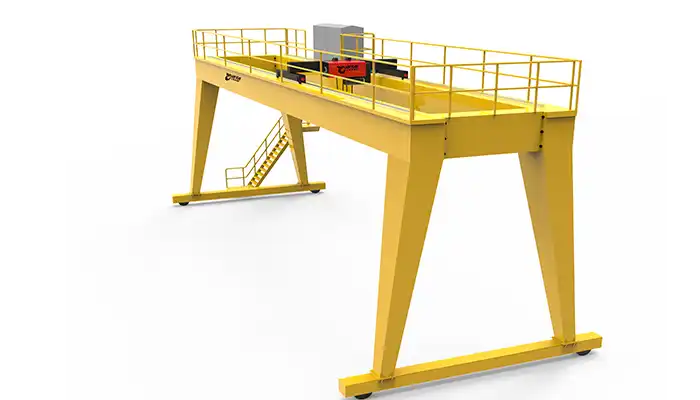
What Is a Single Gantry Crane Configuration?
A single gantry crane configuration uses one rail mounted gantry crane to perform all timber handling operations within a timber storage yard, sawmill, lumber distribution center, or wood processing facility. This includes movement of logs, lumber bundles, timber packs, poles, and engineered wood products across the yard.
This is one of the most widely used timber handling gantry crane solutions because it offers a balance between cost, simplicity, and coverage area. For many medium-scale operations, a single crane can support log handling gantry crane tasks, storage stacking, and truck loading in a controlled and predictable workflow.
The actual performance depends on crane capacity, span, travel speed, lifting speed, and timber yard layout. When storage zones and dispatch areas are properly planned, a single crane system can maintain stable material flow without major congestion.
Single Rail Mounted Gantry Crane Serving the Entire Timber YardIn a single timber handling gantry crane system, one crane is responsible for all lifting and movement operations across the entire yard.
This typically includes:
- Unloading incoming logs from trucks
- Transporting logs into storage zones
- Sorting timber by size, species, or grade
- Stacking lumber bundles in storage areas
- Retrieving inventory for dispatch orders
- Loading outbound trucks
- Loading railcars or containers
- Supporting production line supply
The crane becomes the central log handling gantry crane and lumber handling equipment for the entire timber yard.
For example, a sawmill may receive daily log deliveries while also shipping finished lumber products. One crane must coordinate both inbound and outbound timber flows based on production schedules.
This system works well when:
- Daily timber handling volume is moderate and stable
- Truck arrivals are evenly distributed
- Storage yard is well organized
- Production flow is predictable
Many timber yards continue operating with a single crane system until increased throughput requires expansion to a dual gantry crane configuration.
A key feature of a single gantry crane system is centralized timber handling.
All log handling gantry crane operations are managed through one crane, meaning all lifting tasks share the same schedule and operating capacity.
This creates a controlled but shared workflow environment.
The crane operator typically prioritizes tasks such as:
- Urgent truck loading requests
- Incoming log unloading operations
- Production line feeding
- Inventory relocation within storage zones
- General timber yard organization
This centralized structure makes it easier to monitor utilization of the timber handling gantry crane system and manage daily operations.
However, all tasks depend on a single crane, so increasing timber volume may lead to scheduling conflicts and waiting times in busy sawmill or timber logistics yard operations.
Crane travel paths have a direct impact on timber handling gantry crane productivity in storage yards and sawmill environments.
A rail mounted gantry crane moves along fixed rails covering multiple storage lanes, with trolley movement across the span and vertical lifting for load handling.
Typical movements include:
- Long travel along rail tracks across the timber yard
- Trolley movement across storage lanes
- Vertical lifting and lowering of timber loads
Common operational cycles in lumber storage and log handling gantry crane systems include:
- Storage area to truck loading station
- Log receiving zone to sorting area
- Production output to finished goods storage
- Storage rows to dispatch loading points
Efficient timber yard design focuses on reducing unnecessary crane travel distance.
Key design goals include:
- Shortening travel distance between active zones
- Reducing loading cycle time in timber handling gantry crane operations
- Improving truck loading efficiency
- Increasing accessibility of stored timber bundles
- Preventing congestion in yard traffic flow
Shorter travel cycles directly improve throughput in timber logistics yard operations.
Typical Applications
Single gantry crane systems are widely used in timber handling gantry crane projects across sawmills, lumber storage yards, and timber logistics facilities because they offer a practical balance between investment cost, operational simplicity, and material handling capability.
They are most suitable where daily log handling gantry crane workload remains within the capacity of one crane and where future expansion or dual gantry crane requirements are still uncertain.
In real timber yard operations, several facility types consistently adopt a single timber yard crane configuration due to stable and predictable material flow conditions.
Small Lumber YardsSmall lumber yards typically operate with moderate timber handling gantry crane demand and relatively predictable daily dispatch schedules.
These facilities commonly handle:
- Construction lumber and dimensional timber
- Treated wood products for building applications
- Packaged lumber bundles for wholesale distribution
- Specialty wood products for regional customers
A single rail mounted gantry crane in these environments is typically used for:
- Timber bundle stacking in storage lanes
- Inventory retrieval for customer orders
- Order preparation in dispatch areas
- Truck loading operations for regional delivery
Because storage yards are usually compact, crane travel distances remain short, which helps maintain efficient log handling gantry crane cycle times and stable workload distribution.
Many medium-capacity sawmills rely on a single timber handling gantry crane or log handling gantry crane system to manage both raw material intake and finished lumber output.
Typical operations include:
- Unloading incoming logs from trucks
- Sorting logs by size, species, or grade
- Temporary log storage management
- Lumber transfer from production lines
- Finished product stacking in storage yards
- Truck dispatch for lumber shipments
In these sawmill environments, one crane can maintain continuous material flow when production output is aligned with crane cycle time and timber handling capacity.
The key requirement is matching log handling gantry crane performance with sawmill production speed to avoid bottlenecks in either direction.
Wood treatment facilities handle timber products that pass through controlled processing stages such as drying, chemical treatment, or pressure impregnation.
Common materials include:
- Utility poles for power and telecom networks
- Fence posts and structural posts
- Pressure-treated lumber for construction use
- Structural timber components
A single timber handling gantry crane is typically used for:
- Loading timber into treatment vessels
- Removing treated products after processing
- Stacking and organizing storage areas
- Truck loading and outbound dispatch
Because treatment cycles naturally create processing downtime, a single crane can often meet operational demand without requiring a dual gantry crane system.
Wood product storage yards act as intermediate logistics hubs between production plants and end customers.
These facilities focus mainly on inventory management and dispatch operations rather than processing.
Common stored materials include:
- Lumber bundles and dimensional timber
- Glulam beams and engineered wood products
- Cross-laminated timber panels
- Wood packaging materials and pallets
A single rail mounted gantry crane provides efficient access to stored inventory while keeping operating and maintenance costs relatively low in timber handling gantry crane systems.
Regional timber distribution centers manage the flow of lumber and wood products from manufacturing plants to construction sites, wholesalers, and retail customers.
These facilities typically rely on a single timber handling gantry crane for core logistics operations such as:
- Timber inventory storage and organization
- Order picking and fulfillment
- Truck loading and dispatch operations
- Cross-docking of incoming and outgoing goods
- Seasonal inventory balancing
When shipment volume remains moderate and consistent, a single gantry crane system can maintain stable truck turnaround times and efficient timber handling gantry crane performance without requiring a dual crane configuration.
Advantages of Single Timber Yard Crane Systems
The popularity of single gantry crane systems in timber handling gantry crane projects comes from their practical simplicity. They provide reliable log handling gantry crane capability while avoiding the higher complexity and cost of dual gantry crane systems in sawmills, lumber storage yards, and timber logistics facilities.
For many medium and small timber operations, a single rail mounted gantry crane offers a balanced solution between investment cost and daily material handling requirements.
Lower Initial InvestmentThe most direct advantage of a single timber handling gantry crane system is lower capital cost compared with a dual gantry crane configuration.
A typical single crane setup includes:
- One crane structure for timber yard coverage
- One hoisting system for log handling gantry crane operations
- One trolley system for load movement
- Simplified electrical control system
- Reduced rail and power infrastructure
This reduces overall project cost and makes approval easier for sawmills, lumber storage yards, and timber logistics operators.
For operations with moderate throughput, a second crane in a dual gantry crane system may not provide enough additional return to justify the added investment.
A single rail mounted gantry crane system requires less supporting infrastructure compared with dual gantry crane layouts used in high-volume timber handling gantry crane projects.
This typically results in:
- Simplified rail runway design across the timber yard
- Fewer power supply and electrical distribution components
- Reduced control system complexity for log handling gantry crane operations
- Easier installation and commissioning process
The overall result is a more straightforward implementation from design stage through daily operation in timber storage and sawmill environments.
With fewer mechanical and electrical components, a single timber handling gantry crane system typically requires lower maintenance effort than dual crane systems.
Maintenance teams usually manage only:
- One crane structure in the timber yard
- One hoisting system for log handling gantry crane work
- One trolley assembly for load movement
- One drive and travel system
This results in:
- Lower spare parts inventory requirements
- Simpler inspection routines
- Easier maintenance scheduling
- Reduced long-term service costs
For timber logistics operations with stable workload, this simplicity improves equipment availability and reduces downtime risk.
Operator management is simpler in a single gantry crane system used for timber handling gantry crane operations.
Key advantages include:
- Fewer crane operators required in sawmill or timber yard operations
- Simplified shift scheduling for log handling gantry crane tasks
- Easier communication between yard and loading areas
- Lower training and certification requirements
This is especially useful for smaller lumber storage yards or regional timber distribution centers where workforce resources are limited.
Over the full service life of the equipment, a single timber handling gantry crane system often results in lower total operating costs compared with a dual gantry crane configuration.
Cost savings typically come from:
- Lower energy consumption in daily log handling gantry crane operations
- Reduced maintenance and repair expenses
- Fewer replacement parts over time
- Lower staffing requirements for timber yard crane operation
For facilities with moderate timber handling volumes, these savings contribute to lower total cost per ton of timber processed across sawmill, storage, and logistics operations.
Limitations of Single Log Handling Gantry Cranes
While a single gantry crane system is widely used in timber handling gantry crane applications across sawmills, lumber storage yards, and timber logistics operations, it also comes with practical limitations that become more visible as throughput demand increases.
These limitations are especially important when evaluating long-term capacity planning, log handling gantry crane workload growth, and potential future transition toward a dual gantry crane configuration.
Single Operational BottleneckThe most critical limitation of a single timber handling gantry crane system is that all log handling and material movement operations depend on one machine.
When the crane is occupied with one task, all other operations must wait in sequence.
Typical conflict situations include:
- Truck loading delayed due to ongoing log unloading operations
- Inventory retrieval postponed during active storage stacking
- Production support slowed by dispatch loading activities
As timber volume increases in sawmills and timber logistics yards, this single-crane dependency often becomes the main bottleneck in overall workflow efficiency.
A single gantry crane used in log handling gantry crane operations can only complete one lifting cycle at a time.
This means it cannot perform parallel tasks such as:
- Simultaneous truck loading and log unloading
- Concurrent inventory retrieval and production feeding
- Inbound and outbound timber handling at the same time
In busy timber handling gantry crane environments, this limitation reduces flexibility during peak workload conditions and creates scheduling pressure across the entire yard operation.
During peak timber handling periods, a single timber yard crane system may face capacity constraints even when operating at full efficiency.
Typical peak demand scenarios include:
- Seasonal log harvest surges in sawmill supply chains
- Export shipment deadlines in timber logistics operations
- Construction season demand increases for lumber products
- Large-scale customer orders requiring fast dispatch turnaround
Because all loading and unloading activities depend on one crane, truck queues and delayed dispatch cycles can occur during high-volume periods in timber storage yards.
This can limit overall throughput even when the crane itself is functioning efficiently within its designed capacity.
A single gantry crane system has no redundancy, which means there is no backup lifting equipment available during downtime.
If the timber handling gantry crane requires maintenance or inspection, operations may be partially or fully interrupted.
Typical downtime situations include:
- Scheduled preventive maintenance activities
- Mechanical repairs in hoisting or travel systems
- Electrical troubleshooting or control system faults
- Safety inspections and compliance checks
When this occurs, timber logistics operations may experience:
- Delayed truck loading and unloading schedules
- Production disruptions in sawmill workflows
- Increased truck waiting costs
- Reduced service reliability for customers
In high-volume timber handling environments, this lack of backup capacity is often a key reason operators evaluate dual gantry crane systems for improved operational continuity.
Dual Gantry Crane Systems for Timber Logistics
What Is a Dual Gantry Crane Configuration?
As timber handling gantry crane demand increases in sawmills, lumber storage yards, and timber logistics operations, many facilities reach a point where a single log handling gantry crane can no longer maintain efficient loading, unloading, storage, and dispatch flow.
A dual gantry crane configuration uses two rail mounted gantry cranes operating within the same timber yard, lumber distribution center, or log handling facility. These cranes can operate independently or work in coordinated timber handling workflows depending on yard layout and production requirements.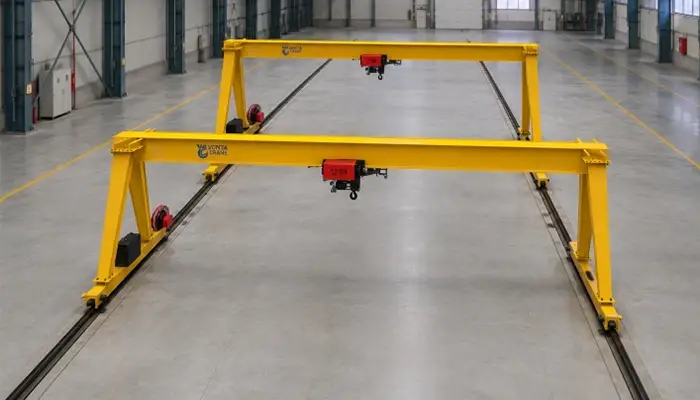
The main purpose of a dual gantry crane system is to increase timber throughput capacity while reducing operational delays caused by competing crane tasks in high-volume environments.
Compared with a single crane system, dual configurations allow simultaneous timber handling operations, improving material flow stability across the entire yard.
In many large timber handling gantry crane projects, the decision to add a second crane is driven more by material flow constraints than by lifting capacity alone.
Two Timber Handling Gantry Cranes Operating Within One YardIn a dual timber yard crane system, two cranes operate within the same site but may serve different or overlapping timber handling functions depending on operational design.
Typical installation arrangements include:
- Parallel rail mounted gantry crane runways
- Adjacent log storage and lumber storage zones
- Overlapping working areas for flexible coverage
- Separated timber stockyard blocks for load distribution
- Extended rail systems covering large timber logistics yards
A dual log handling gantry crane system supports multiple simultaneous operations such as:
- Log unloading from incoming trucks
- Timber storage stacking and organization
- Lumber bundle handling and retrieval
- Truck loading and dispatch operations
- Railcar and container loading
- Sawmill production line feeding
By dividing workload between two cranes, congestion is reduced and cycle efficiency improves across the timber handling gantry crane system.
For example, while one crane is unloading logs, the second crane can simultaneously prepare outbound lumber shipments, improving overall yard productivity without task interference.
Dual gantry crane systems in timber handling gantry crane projects are generally designed using either dedicated zones or shared operating zones depending on yard size, workflow complexity, and material flow requirements.
In dedicated-zone configurations, each crane is assigned a fixed operational area within the timber yard.
Typical examples include:
- One crane dedicated to log handling gantry crane operations in raw timber storage
- One crane assigned to finished lumber storage and dispatch
- One crane focused on inbound truck unloading
- One crane supporting outbound logistics and shipping
This structure reduces operational overlap and simplifies coordination in sawmills and timber logistics yards.
In shared-zone configurations, both cranes can access overlapping storage and handling areas.
Key advantages include:
- Greater flexibility in timber handling gantry crane deployment
- Improved workload balancing between cranes
- Faster access to high-demand inventory locations
- Reduced waiting time during peak dispatch periods
Shared zones are often used in large lumber storage yards where inventory movement patterns change frequently throughout the day.
The selection between dedicated and shared layouts depends on yard size, timber type, handling volume, and future expansion plans for the log handling gantry crane system.
One of the key advantages of a dual gantry crane system is the ability to run coordinated timber handling workflows across the entire yard.
Instead of all operations competing for a single timber handling gantry crane, tasks are distributed across two cranes, allowing parallel processing of material flow activities.
Typical coordinated workflows include:
- Simultaneous inbound log handling and outbound lumber dispatch
- Continuous support for sawmill production lines
- Parallel truck loading and inventory movement operations
- Dedicated crane assignment for priority shipments
- Dynamic redistribution of workloads between cranes
This structure improves overall material flow stability in timber logistics and sawmill operations.
When properly designed, coordinated dual crane workflows can reduce:
- Truck waiting times at loading stations
- Congestion in timber storage yards
- Delays in log handling gantry crane operations
- Production interruptions in sawmills
- Dispatch bottlenecks during peak demand periods
For high-volume timber handling facilities, these operational improvements often justify the transition from a single crane system to a dual gantry crane configuration.
Types of Dual Crane Operations
Not all dual gantry crane systems in timber handling gantry crane applications operate in the same way. The configuration depends on timber size, log handling gantry crane requirements, storage layout, and overall throughput targets in sawmills, lumber storage yards, and timber logistics facilities.
Some systems run two cranes independently, while others use coordinated or tandem lifting operations to handle long timber bundles and heavy engineered wood products.
Understanding these operating modes helps determine which dual gantry crane configuration best fits real-world timber yard conditions.
Independent Crane OperationsIndependent operation is the most common mode in dual timber handling gantry crane systems. Each crane works separately and performs assigned log handling gantry crane tasks without direct coordination with the other crane.
This setup increases overall yard capacity while keeping operating procedures relatively simple.
Separate Timber Storage ZonesMany timber yards divide storage into dedicated zones for each crane.
Typical layouts include:
- North and south timber storage blocks
- Raw log and finished lumber separation zones
- Export and domestic timber storage areas
- High-turnover and long-term storage sections
Each crane is assigned to a fixed operating area, improving predictability in timber handling gantry crane movement.
Benefits include:
- Simplified crane scheduling in sawmill operations
- Reduced coordination requirements between operators
- Lower risk of crane interference in shared yard space
- Predictable log handling gantry crane travel paths
- Improved timber storage organization
This approach is widely used in large lumber storage yards with high but stable inventory volumes.
Dedicated Loading and Unloading AreasAnother common independent configuration assigns each crane to a specific function in timber logistics workflows.
Typical setups include:
- One crane handling incoming log unloading operations
- One crane managing outbound lumber loading and dispatch
Or alternatively:
- One crane dedicated to truck operations
- One crane dedicated to railcar loading and shipping
This specialization improves workflow efficiency in timber handling gantry crane systems by reducing task switching and improving cycle consistency.
Advantages include:
- Reduced loading delays in log handling gantry crane operations
- Faster truck turnaround times
- Improved dispatch efficiency in timber yards
- Higher utilization of crane working time
As timber products become longer, heavier, and more complex, some timber handling gantry crane systems require synchronized operation between two cranes.
In synchronized dual crane operation, both cranes work together in a coordinated manner to improve load stability and handling accuracy, especially for oversized timber products.
Coordinated Movements Between CranesDuring synchronized lifting, both cranes perform controlled and matched movements across the same load.
Typical coordinated actions include:
- Simultaneous lifting in log handling gantry crane operations
- Matched lowering and positioning
- Synchronized travel along rail systems
- Controlled acceleration and braking
- Balanced positioning of long timber loads
This ensures load stability throughout the lifting cycle in timber logistics operations.
Common applications include:
- Long timber bundles in sawmills
- Utility poles and utility timber products
- Structural timber sections
- Engineered wood components
- Heavy laminated beams
Without synchronization, uneven loading can increase stress on both the timber product and the crane system.
Automated Load Sharing SystemsModern dual gantry crane systems may include automated load sharing technology to improve precision in timber handling gantry crane operations.
These systems continuously monitor load distribution and coordinate crane actions in real time.
Typical features include:
- Load balancing control systems
- Electronic synchronization between cranes
- Load cell-based monitoring systems
- Anti-skew protection for long timber loads
- Position feedback and tracking systems
Benefits include:
- Improved lifting stability in log handling gantry crane operations
- Better control of heavy timber loads
- Reduced operator workload in timber yard crane systems
- Lower risk of load imbalance
- Enhanced operational safety in sawmill environments
Tandem lifting is one of the most specialized applications in dual timber handling gantry crane systems, commonly used in large sawmills, pole yards, and timber logistics terminals.
In tandem lifting, both cranes support a single load simultaneously to ensure safe handling of oversized timber products.
This method is widely used when materials are too long or too flexible for a single lifting point in log handling gantry crane operations.
Long Timber Bundle HandlingLong timber packages require multiple support points to maintain stability.
Typical products include:
- Structural lumber bundles
- Export timber packs
- Long construction timber sections
- Industrial wood products
Dual crane lifting improves load balance and reduces bending stress during movement in timber handling gantry crane systems.
Pole and Utility Timber LiftingUtility poles can exceed extreme lengths, creating handling challenges in sawmill and timber yard operations.
Main challenges include:
- Extreme length
- Uneven weight distribution
- Material flexibility during lifting
Tandem crane lifting supports both ends of the load, improving stability and control during log handling gantry crane operations.
Engineered Wood Beam TransportationMass timber construction has increased demand for safe handling of engineered wood products in timber logistics systems.
Typical materials include:
- LVL (Laminated Veneer Lumber)
- CLT (Cross-laminated timber panels)
- Structural timber assemblies
- Heavy engineered beams
These materials require precise handling to prevent deformation and surface damage.
Large Glulam Beam HandlingGlulam beams used in commercial construction projects are often long and heavy, requiring controlled lifting methods in timber handling gantry crane systems.
Tandem lifting helps:
- Reduce beam deflection during lifting
- Maintain alignment across lifting points
- Improve stability in transport
- Protect high-value timber products
Export timber yards often handle oversized lumber packages for international shipping.
These loads may exceed single-crane safe handling limits in log handling gantry crane operations.
Tandem lifting provides:
- Improved load distribution
- Better control during movement
- Safer handling in timber logistics yards
- More accurate placement into trucks, railcars, or storage zones
As timber products become larger and more specialized, tandem lifting capability becomes an essential part of advanced timber handling gantry crane system design.
Industries Using Dual Timber Handling Cranes
Dual gantry crane systems are commonly deployed in timber handling gantry crane applications where handling volume, timber size, or operational complexity exceeds the practical capacity of a single log handling gantry crane system.
These facilities typically prioritize continuous throughput, stable material flow, and reduced downtime in sawmill and timber logistics operations.
High-Capacity SawmillsLarge-scale sawmills often process very high daily volumes of raw logs and finished lumber, requiring continuous operation of timber handling gantry crane systems.
Dual crane configurations support parallel workflows across log receiving, processing, and dispatch zones.
Typical operations include:
- Continuous log handling gantry crane unloading operations
- Feeding timber into production lines
- Stacking and organizing finished lumber storage
- Managing outbound truck and rail shipments
By separating workloads between two cranes, sawmills can reduce congestion and maintain stable production flow even during peak demand periods.
Export timber terminals operate under strict shipping schedules and require high-capacity timber handling gantry crane systems to meet vessel and container deadlines.
Dual log handling gantry crane setups support synchronized loading and staging operations across multiple export workflows.
Key applications include:
- Vessel loading preparation for bulk timber shipments
- Container stuffing and consolidation operations
- Railcar loading for inland export logistics
- Large-scale timber stockpile organization
Dual crane systems reduce waiting times and help maintain consistent export schedules in high-pressure shipping environments.
Large lumber storage yards handle high inventory volumes of sawn timber, engineered wood, and packaged lumber products requiring frequent movement and dispatch.
Dual timber handling gantry crane systems improve overall yard efficiency by enabling simultaneous storage and loading operations.
Operational improvements include:
- Faster access to stored timber inventory
- Higher inventory turnover rates
- Improved truck loading efficiency
- More responsive customer order fulfillment
As storage density and customer demand increase, dual crane configurations help maintain stable logistics performance.
Forestry logistics centers serve as central hubs between harvesting sites and downstream processing plants, relying heavily on efficient log handling gantry crane systems.
Dual crane installations support continuous material flow across sorting, storage, and transportation coordination activities.
Typical functions include:
- Log sorting by species and size classification
- Temporary storage of harvested timber
- Bulk shipment preparation for transport fleets
- Cross-docking between inbound and outbound logistics
Dual crane operation reduces bottlenecks in high-volume forestry supply chains and improves handling consistency across variable log flows.
Engineered wood manufacturing facilities produce high-value timber products that require precise and controlled lifting using timber handling gantry crane systems.
Dual crane configurations are commonly used to support safe handling of large structural components and finished assemblies.
Typical products include:
- Glulam beams used in commercial construction
- Cross-laminated timber (CLT) panels
- Laminated veneer lumber (LVL)
- Prefabricated structural timber assemblies
Dual gantry crane systems provide improved load control, reduced product damage risk, and higher handling precision for engineered wood logistics operations.
Throughput Comparison: Single vs Dual Log Handling Gantry Cranes
| Factor | Single Timber Handling Gantry Crane | Dual Timber Handling Gantry Crane System |
|---|---|---|
| Operating Method | One crane performs all tasks: • Log unloading • Lumber storage • Inventory movement • Truck loading |
Two cranes share workloads: • Independent operation • Shared work zones • Simultaneous handling |
| Material Flow | Sequential workflow. One task often waits for another to finish. |
Continuous material flow. Multiple tasks occur simultaneously. |
| Loading & Unloading | Loading and unloading compete for the same crane time. | One crane unloads logs while another loads trucks or railcars. |
| Timber Throughput | Limited by one crane's cycle time, travel speed, and lifting speed. | Higher throughput through parallel timber handling operations. |
| Logs Handled Per Hour | Suitable for low to medium log volumes. | Higher hourly log handling capacity. |
| Lumber Bundles Per Shift | Limited by available crane operating hours. | More bundles moved through simultaneous crane activity. |
| Truck Turnaround Time | Longer waiting times during busy periods. | Faster truck loading and unloading cycles. |
| Railcar Loading | Rail loading may interrupt normal yard operations. | Rail loading and yard handling can occur simultaneously. |
| Inventory Retrieval | Storage and retrieval may be delayed by loading priorities. | Inventory movement continues without affecting dispatch operations. |
| Stockyard Organization | Less time available for timber sorting and stock rotation. | Improved inventory rotation and storage management. |
| Harvest Season Demand | Greater risk of unloading queues and crane bottlenecks. | Handles increased log deliveries more efficiently. |
| Export Shipments | Large export orders may slow regular operations. | Export loading and routine handling proceed simultaneously. |
| Construction Season Peaks | Higher risk of dispatch delays. | Additional capacity supports increased lumber shipments. |
| High-Volume Dispatch | Truck queues become more common. | Faster loading improves dispatch performance. |
| Tandem Lifting Capability | Limited capability for very long loads. | Supports tandem lifting of: • Long timber bundles • Utility poles • Glulam beams • Engineered wood products |
| Operational Flexibility | Limited when multiple urgent tasks occur together. | Greater flexibility through workload sharing. |
| Maintenance Impact | Maintenance can stop most material handling activities. | One crane can continue operating during maintenance. |
| Redundancy | No backup lifting capacity. | Built-in backup improves operational reliability. |
| Scalability | Best for small and medium timber yards. | Suitable for expanding and high-volume timber logistics operations. |
| Typical Applications | • Small lumber yards • Medium sawmills • Timber treatment plants • Regional distribution centers |
• High-capacity sawmills • Export timber terminals • Large lumber yards • Forestry logistics centers • Engineered wood plants |
| Overall Performance | Cost-effective solution for moderate timber handling volumes. | Maximum throughput for high-volume timber storage and dispatch operations. |
Tandem Lifting and Synchronized Crane Operations
What Is Tandem Lifting in Timber Handling?
As timber products in modern timber handling gantry crane systems become longer, heavier, and more value-sensitive, a single lifting point is often not enough to ensure safe and controlled handling. This is especially common in log handling gantry crane applications involving utility poles, glulam beams, engineered timber assemblies, long logs, and oversized lumber bundles.
Tandem lifting is a dual crane operation where two gantry cranes work together to lift, move, and position a single timber load. Instead of one crane carrying the full weight, the load is shared between two cranes to improve stability and reduce structural stress during lifting and transport.
In timber logistics yards, sawmills, and engineered wood facilities, tandem lifting is typically performed using dual gantry crane systems designed for synchronized operation across wide storage and handling areas.
The main purpose of tandem lifting is not simply increasing lifting capacity. In real timber yard practice, it is mainly used to improve load stability, control long-span timber deformation, and ensure safer movement of large timber products.
Two Gantry Cranes Lifting a Single Load TogetherIn a tandem lifting operation within a timber handling gantry crane system, both cranes are connected to the same load using multiple lifting points and coordinated lifting gear.
A typical setup includes:
- Two rail mounted gantry cranes operating in synchronization
- Multiple lifting slings or chain sets
- Spreader beams for load distribution
- Lifting frames or timber support structures
- Load balancing and safety devices
This arrangement allows weight to be distributed along the full length of the timber product instead of concentrating stress at a single lifting point.
It is commonly used in log handling gantry crane operations for:
- Long timber bundles in sawmills and storage yards
- Utility poles used in power and infrastructure projects
- Heavy logs with uneven weight distribution
- Large glulam beams and engineered timber components
- Laminated structural timber sections
Without multiple lifting points, long timber loads may bend, twist, or become unstable during lifting and transport across timber yards.
Load distribution is one of the most critical aspects of tandem lifting in timber handling gantry crane operations.
Both cranes must share the timber load in a controlled and planned way to avoid overload on either side of the system.
In practical log handling gantry crane applications, load balance depends on several real working factors:
- Actual timber length and geometry
- Shifting center of gravity in raw or wet logs
- Lifting point positioning along the load
- Sling or spreader beam configuration
- Flexibility of timber materials under load
- Precise positioning of both cranes on runway systems
For example, a long utility pole used in forestry logistics may not have uniform weight distribution. If one crane moves faster or shifts position, load sharing between cranes can change during lifting.
Proper load distribution helps ensure:
- Stable lifting conditions in timber yard crane operations
- Reduced bending stress on long timber products
- Improved utilization of dual gantry crane systems
- Better control during transport and stacking
- Lower risk of overload on lifting equipment
For this reason, tandem lifting in log handling gantry crane systems must always be planned before execution, especially in high-value timber handling operations.
Successful tandem lifting in timber handling gantry crane systems depends heavily on precise and coordinated movement between both cranes throughout the entire lifting cycle.
In real timber logistics operations, both cranes must act as a synchronized system rather than independent machines.
Coordinated movement includes:
- Matched lifting speeds to maintain load balance
- Synchronized lowering during placement operations
- Controlled acceleration and deceleration during travel
- Maintaining alignment across rail mounted gantry crane systems
- Accurate positioning during stacking and loading
When coordination is poor, several operational risks can appear in log handling gantry crane work:
- Uneven load sharing between cranes
- Twisting or rotation of long timber loads
- Excessive bending in flexible timber materials
- Unstable sling tension and movement
- Sudden load shifts during travel
Modern dual gantry crane systems used in timber yards may include synchronization support systems to assist operators during tandem lifting operations.
Depending on system design and automation level, coordination can be:
- Operator-controlled synchronization
- Semi-automated load balancing assistance
- Fully automated dual crane coordination systems
The longer, heavier, and more flexible the timber product, the more critical synchronized movement becomes in safe timber handling gantry crane operation.
Benefits of Tandem Lifting Timber Loads
Tandem lifting in timber handling gantry crane and log handling gantry crane operations provides several practical advantages when dealing with long, heavy, or flexible timber products in sawmills, lumber yards, and timber logistics facilities.
These benefits become especially clear when materials exceed the safe single-point lifting range of a standard timber yard crane system.
Safer Handling of Long Timber BundlesLong timber bundles in timber handling gantry crane operations can become unstable when lifted from a single point, especially in high-volume sawmill and lumber storage yard environments.
Using dual gantry crane systems allows the load to be supported at multiple points, typically closer to both ends of the timber bundle.
This improves control during lifting, travel, and placement in log handling gantry crane workflows.
Key benefits include:
- Improved load balance in timber yard crane operations
- Better control of long timber movement
- Reduced swinging during transport
- More stable lifting behavior across rail mounted gantry crane systems
This is especially important for export timber packs and structural lumber bundles handled in distribution centers.
Load deflection refers to bending or flexing that occurs when long timber products are lifted in log handling gantry crane operations.
Materials such as long logs, utility poles, glulam beams, and laminated timber products naturally bend under their own weight when supported at only one point.
In a single crane system, unsupported sections of the load may experience significant deformation during lifting.
Tandem lifting reduces this effect by introducing multiple support points along the timber length.
Benefits include:
- Lower bending stress in timber handling gantry crane operations
- Reduced deformation of long timber products
- Improved protection of high-value materials
- Safer handling conditions in sawmills and timber yards
This becomes more critical as timber length and flexibility increase in modern timber logistics operations.
Load stability is a key performance factor in timber handling gantry crane systems, especially when operating in congested storage yards or high-speed dispatch environments.
Supporting timber loads from two lifting points significantly improves stability during lifting, travel, and placement operations.
Operators benefit from more controlled and predictable movement behavior in log handling gantry crane workflows.
Key operational improvements include:
- Reduced load sway during crane travel
- Improved positioning accuracy in timber yard operations
- Better control during stacking and unloading
- Lower risk of collision with stored timber or structures
This stability is particularly valuable in high-density lumber storage yards where space constraints require precise crane operation.
Timber products in modern timber handling gantry crane systems often represent high inventory value, particularly in engineered wood and construction-grade materials.
Examples include glulam beams, LVL, CLT panels, utility poles, and laminated structural timber products.
Improper lifting can lead to bending, cracking, or surface damage that affects product quality and commercial value.
Tandem lifting helps reduce these risks in log handling gantry crane operations by improving load distribution and reducing stress concentration.
Key protection benefits include:
- Reduced structural stress on timber products
- Better load support during transport
- Minimized impact forces during handling
- Improved preservation of product quality
For high-value timber logistics operations, this reduction in damage risk can directly impact profitability and customer satisfaction.
Timber Products Commonly Lifted in Tandem
Tandem lifting in timber handling gantry crane and log handling gantry crane operations is not required for every load. It is mainly used in sawmills, lumber yards, and timber logistics facilities when product length, weight distribution, or structural flexibility makes single-point lifting less stable.
In real timber yard practice, this method is applied selectively to improve safety and control during handling of oversized or high-value timber products.
Long LogsLong logs are commonly handled in forestry operations and log handling gantry crane systems where standard lifting methods are not sufficient for stable transport.
Due to their length and natural variability, long logs often require multiple lifting points across the timber handling gantry crane system.
Typical handling requirements include:
- Multi-point lifting along the log length
- Controlled crane coordination during movement
- Balanced support to prevent rolling or shifting
Tandem lifting improves stability when transporting long logs across storage yards, reducing the risk of uncontrolled movement in timber logistics operations.
Utility poles are one of the most frequent applications for tandem lifting in timber handling gantry crane systems.
These products often feature extreme length, varying diameter, and uneven weight distribution, which makes single-point lifting unstable in log handling gantry crane operations.
Key handling challenges include:
- Long span requiring multiple support points
- Irregular mass distribution along the pole
- Flexibility during lifting and travel
Tandem crane lifting provides support at both ends or multiple positions, improving stability and reducing bending stress during handling in timber yard crane operations.
Laminated timber beams are widely used in modern construction projects and are frequently handled using timber handling gantry crane systems.
These beams are typically long, heavy, and high-value, requiring careful lifting procedures in sawmills and distribution yards.
Tandem lifting helps reduce stress during movement and protects structural integrity by distributing load forces more evenly.
Benefits include:
- Reduced handling stress on beam structure
- Improved load balance in log handling gantry crane operations
- Better protection of surface finish and edges
Glulam structures used in commercial and industrial construction projects often exceed 20 to 30 meters in length, requiring precise handling in timber handling gantry crane operations.
Because these are engineered components, maintaining dimensional accuracy during lifting is critical in log handling gantry crane systems.
Dual crane tandem lifting helps achieve:
- Improved structural alignment during transport
- Reduced risk of deformation
- Higher placement accuracy in storage or installation areas
Engineered wood products in timber handling gantry crane systems include a wide range of large-format, high-value materials requiring controlled lifting.
Common examples include:
- Cross-laminated timber (CLT) panels
- Laminated veneer lumber (LVL)
- Structural timber assemblies
- Mass timber construction components
These products require careful handling in log handling gantry crane operations due to their size, weight, and sensitivity to deformation.
Tandem lifting provides stable support and reduces handling risks during transport and stacking in timber logistics yards.
Large lumber packs in export timber yards and commercial distribution centers often contain heavy and long bundled materials.
These loads can exceed safe single-point lifting limits in timber handling gantry crane operations, especially when stacking density increases.
Tandem lifting allows more controlled handling by distributing load weight across multiple support points.
Key advantages include:
- Reduced load deformation during lifting
- Improved stability in log handling gantry crane systems
- Safer transport within timber yard crane operations
- More accurate placement into trucks, railcars, or storage zones
Safety Considerations for Tandem Gantry Crane Operations
Tandem lifting in a timber logistics yard using dual gantry crane systems or rail mounted gantry crane equipment requires more control than standard single crane lifting. When two cranes operate together in a timber handling gantry crane environment, safety depends on coordination, load stability, and clear operating procedures.
Load synchronization is the core safety requirement in tandem lifting operations for log handling gantry crane and timber handling gantry crane systems. Both cranes must share load forces evenly during lifting and travel.
- Electronic synchronization controls to align crane movement
- Variable frequency drive coordination for smooth lifting speed matching
- Automatic load balancing systems to reduce uneven force distribution
- Real-time position monitoring to keep both cranes aligned
These systems help maintain stable load behavior when handling long timber bundles, glulam beams, or utility poles.
Clear communication is required during all tandem lifting operations in a timber yard crane system. When two cranes are working on a single load, even small delays in instruction can affect load balance.
- Defined lift leader responsible for coordination
- Standard radio communication protocols for crane operators
- Emergency stop procedures clearly assigned before lifting starts
- Visual signaling for ground coordination teams
Operators must confirm load readiness before any synchronized movement begins.
In dual gantry crane configurations, cranes often operate within overlapping zones of a timber storage yard. Anti-collision systems reduce the risk of crane-to-crane contact during coordinated movement.
- Real-time position sensors for both cranes
- Travel limit switches to control operating boundaries
- Automatic speed reduction near proximity zones
- Collision avoidance logic integrated into control systems
This is especially important in high-density lumber storage yards where crane paths intersect frequently.
Load monitoring plays an important role in both single and dual log handling gantry crane operations, but becomes critical during tandem lifting of long timber products.
- Continuous load weight measurement during lifting
- Load distribution tracking between two cranes
- Overload detection and alarm functions
- Real-time safety feedback to operators
This helps prevent overload situations when handling engineered wood products or oversized timber bundles.
Outdoor timber handling gantry crane operations are strongly affected by environmental conditions. In tandem lifting, long loads increase wind exposure, making stability control even more important.
- Wind speed monitoring before and during lifting
- Wind direction impact on long timber bundles
- Rain, ice, and visibility conditions in yard operations
- Ground stability near loading and storage zones
Many timber yards set operational limits for wind speed when performing tandem lifting with dual gantry crane systems, especially for utility poles and long structural beams.
Cost Analysis: Single vs Dual Timber Yard Crane Systems
Initial Capital Investment Comparison
When planning a timber handling gantry crane project in a timber logistics yard, the initial capital cost difference between a single system and a dual gantry crane configuration is usually the first point of evaluation. In practice, the decision is not only about purchase price, but also how the rail mounted gantry crane system supports long-term timber throughput, yard layout efficiency, and log handling gantry crane workflow requirements.
A single crane setup is generally simpler, with one lifting unit covering the full storage area. A dual crane system introduces additional equipment, coordination requirements, and a more developed timber yard crane infrastructure to support higher handling capacity and parallel operations.
A single timber handling gantry crane system is typically designed around one main lifting unit operating across the entire lumber storage yard or sawmill area. It is widely used where handling volume can still be managed without creating a bottleneck in daily timber flow.
- Crane structure: One rail mounted gantry crane covering log yard, lumber storage, and dispatch zones
- Rail installation: Single runway system with foundation and track along storage lanes
- Power supply infrastructure: Basic electrical system including cables, busbar, and control cabinet setup
This configuration is commonly selected for small to medium timber yards, regional lumber distribution centers, and medium-capacity sawmills where material flow remains stable.
- Moderate timber throughput requirements
- Predictable truck loading and unloading schedules
- Organized storage layout with defined travel paths
- Lower complexity in crane operation and maintenance
In these conditions, one log handling gantry crane can still support acceptable cycle times for loading, storage, and dispatch operations without major congestion.
A dual gantry crane system requires higher initial investment because two timber handling gantry crane units must be integrated into a shared or coordinated timber yard environment. This setup is often selected when a single crane system can no longer maintain required throughput or when tandem lifting operations are needed for long timber products.
- Additional crane investment: Second fully equipped gantry crane with hoisting, trolley, and travel system
- Extended runway systems: Parallel or expanded rail structures for dual operating zones
- Advanced control systems: Coordinated operator stations for synchronized workflow control
- Synchronization technology: Systems for load balancing, tandem lifting, and coordinated crane movement
This configuration is commonly used in high-capacity sawmills, export timber terminals, forestry logistics hubs, and large-scale lumber storage yards where continuous material flow is required.
- High-volume log and lumber handling demand
- Continuous inbound and outbound truck traffic
- Frequent storage repositioning and inventory rotation
- Requirement for parallel crane operations or shared zones
The investment is not limited to the second crane alone. Supporting infrastructure often includes stronger runway foundations, upgraded electrical systems, and integrated control logic for dual crane coordination in timber yard crane operations.
In some layouts, yard redesign is also required to ensure both cranes can operate without interference, especially where shared operating zones or synchronized log handling gantry crane workflows are implemented.
Operating Cost Comparison
After installation, the real economics of a timber handling gantry crane system in a timber logistics yard are defined by operating cost rather than purchase price. These costs are directly influenced by utilization rate, cycle efficiency, and how well the rail mounted gantry crane system matches actual log handling gantry crane and timber yard crane workflows.
Energy consumption depends on operating hours, load frequency, and how work is distributed between cranes in single or dual gantry crane systems.
- Single gantry crane system: Energy use is concentrated in one crane. During peak operation, the crane runs at higher utilization levels, which can increase short-term power demand, but total system energy consumption remains relatively controlled.
- Dual gantry crane system: Two cranes consume more total energy, especially when both operate at the same time in parallel timber handling tasks. However, workload sharing reduces peak stress on individual machines and supports smoother timber flow.
In practical timber yard operations, energy differences are usually less critical than throughput improvement and reduced waiting time in high-volume log handling gantry crane environments.
Maintenance workload increases with system complexity and number of operating components in timber handling gantry crane systems.
- Single crane system: One hoisting unit, one trolley system, and one control system. Inspection work is simpler, with fewer maintenance points and more predictable scheduling.
- Dual crane system: Two complete crane units with duplicated mechanical and electrical systems, resulting in more inspection points and more complex maintenance coordination.
Although maintenance effort is higher in dual gantry crane systems, operational redundancy is a key advantage. One crane can remain active while the other is under maintenance, reducing downtime risk in timber yard crane operations.
Spare parts planning affects long-term operating cost and maintenance readiness in rail mounted gantry crane systems used in timber logistics yards.
- Single crane system: Requires a smaller spare parts inventory with lower storage and procurement complexity for key components such as motors, brakes, and gearboxes.
- Dual crane system: Requires duplicate critical components, increasing inventory value and management complexity, especially in high-capacity log handling gantry crane operations.
Standardized crane design can reduce this complexity by using interchangeable components across both cranes in a dual timber handling gantry crane system.
Labor cost is closely linked to operating structure and level of automation in timber yard crane systems.
- Single crane system: Typically requires one operator per shift with simpler coordination and straightforward workflow management across the timber handling gantry crane area.
- Dual crane system: May require additional operators, coordinated shift planning, and sometimes a dispatch coordinator to manage parallel log handling gantry crane and lumber handling operations.
In practice, dual crane systems can also improve labor efficiency by reducing idle time during peak loading periods and supporting simultaneous inbound and outbound operations in timber logistics yards.
Cost per Ton of Timber Handled
In timber logistics, the most practical way to evaluate crane economics is not just total cost, but cost per ton of timber handled over time. This includes both capital cost distribution and operational efficiency.
A single gantry crane system typically has lower upfront investment, but its cost per ton can increase if throughput is limited by crane capacity during peak demand.
A dual gantry crane system has higher initial cost, but the increased handling capacity often reduces cost per ton in high-volume operations.
Key factors influencing cost per ton include:
- Total annual timber volume handled
- Average crane cycle time
- Loading and unloading efficiency
- Storage retrieval speed
- Dispatch performance
In simple terms, higher throughput spreads fixed investment across more material movement.
Utilization rate plays a key role in cost efficiency.
Single crane system:
- High utilization during peak hours
- Risk of overload bottlenecks
- Idle time during low demand periods
Dual crane system:
- Balanced utilization across two machines
- Reduced peak overload stress
- More consistent operating rhythm
Better utilization often translates into more stable cost performance over time.
Crane systems do not generate revenue directly, but they determine how much material a yard can process and dispatch.
Single crane system limitations:
- Restricted throughput during high demand
- Potential delays in shipment schedules
- Reduced ability to handle surge orders
Dual crane system advantages:
- Higher daily dispatch capacity
- Faster order fulfillment
- Better support for export schedules and bulk shipments
- Improved ability to handle simultaneous inbound and outbound flows
In timber logistics operations, the ability to move more tons per day often has a stronger financial impact than small differences in operating cost.
In practical timber yard operations, a single gantry crane system generally delivers lower initial cost and simpler operation, while a dual gantry crane system shifts the value toward higher throughput, better workflow balance, and lower cost per ton in high-volume environments where timber movement is continuous and demand peaks are frequent.
Timber Yard Layout and Storage Optimization
Timber Stockyard Design Considerations
A timber handling gantry crane system is only as efficient as the yard layout it operates in. In many timber logistics yards, delays are not caused by crane capacity itself, but by poor storage planning, long travel distances, and unclear material flow between log receiving, storage, and dispatch areas.
When designing a timber stockyard for either a single or dual gantry crane system, the main goal is to keep material movement direct, predictable, and easy to manage under real operating conditions.
Storage lane layout directly affects how efficiently a rail mounted gantry crane can access timber bundles, logs, and lumber packs.
Typical configurations include:
- Parallel storage lanes for lumber bundles
- Longitudinal log stacking rows for log handling gantry cranes
- Dedicated lanes for export timber and domestic stock
- Separate zones for raw logs and processed lumber
A well-planned storage lane system reduces unnecessary crane repositioning and allows faster retrieval of timber products during loading operations.
In many high-volume timber yards, lane width and spacing are designed based on:
- Forklift access (if used as auxiliary equipment)
- Crane hook clearance
- Timber bundle size
- Safety buffer zones
Poor lane planning often leads to blocked access points, which slows down both single and dual crane operations.
Crane travel distance is one of the most important factors affecting productivity in a timber handling gantry crane system.
Even when crane lifting capacity is sufficient, long travel distances between storage and loading zones reduce effective throughput.
Key considerations include:
- Distance between log receiving area and storage zones
- Separation between storage and truck loading stations
- Position of railcar loading points
- Layout of high-frequency dispatch zones
In practice, reducing average crane travel distance by even a small margin can improve overall cycle time efficiency significantly.
For example, a timber yard where logs and lumber are frequently moved across the entire span of the yard will typically experience:
- Longer cycle times
- Higher energy use
- Increased operator workload
A compact, well-zoned layout reduces these inefficiencies.
In sawmills and forestry logistics centers, log sorting is a critical part of material flow.
A log handling gantry crane is often used to separate incoming logs based on:
- Diameter
- Length
- Wood species
- Quality grade
- Processing destination
Dedicated sorting zones help maintain continuous production flow by ensuring that logs are quickly categorized and moved into appropriate storage areas.
Typical log sorting layouts include:
- Primary unloading zone for incoming trucks
- Central sorting area for classification
- Secondary storage zones for organized stacking
- Direct feed zones for sawmill input
Clear separation between sorting and storage areas reduces congestion and prevents workflow interruptions during peak delivery periods.
Lumber staging areas act as temporary holding zones between storage and dispatch.
These areas are used for:
- Order consolidation
- Truck loading preparation
- Export shipment bundling
- Customer-specific order assembly
In a timber handling gantry crane system, staging areas must be positioned close enough to loading stations to minimize travel time, but large enough to prevent congestion during peak dispatch periods.
Common staging practices include:
- Dedicated export staging zones
- Fast-moving product lanes
- Bulk order preparation zones
- Priority dispatch areas for urgent shipments
Well-designed staging areas improve loading efficiency and reduce truck waiting times, especially during high-demand construction seasons.
Dual Crane Coverage Planning
When a timber yard uses a dual gantry crane system, layout planning becomes more important because two cranes must operate within the same physical environment without interfering with each other.
The objective is to balance coverage, reduce overlap conflicts, and ensure smooth material flow across all storage and dispatch zones.
In some timber yards, both cranes are designed to access shared areas.
This is useful when:
- Inventory is frequently moved between zones
- Storage locations change often
- High flexibility is required for dispatch operations
Overlapping zones allow both cranes to assist each other during peak demand periods.
However, this arrangement requires careful coordination to avoid:
- Crane interference
- Load handling conflicts
- Reduced working speed due to caution zones
Proper scheduling and operator communication become essential in these layouts.
In many large timber logistics yards, each gantry crane is assigned its own corridor or operating region.
Typical separation strategies include:
- North and south yard division
- Raw log vs finished lumber separation
- Export vs domestic inventory zones
- High-frequency vs long-term storage areas
Independent corridors reduce operational complexity and allow each crane to work with minimal interruption.
This structure is often preferred in:
- High-capacity sawmills
- Large lumber distribution centers
- Export timber terminals
The main benefit is predictable movement patterns, which improves cycle time consistency.
Some timber yards operate with shared truck loading or rail loading stations served by both cranes.
This setup is common when:
- Dispatch volume is very high
- Truck arrival schedules are unpredictable
- Rapid order processing is required
In shared stations:
- One crane may prepare loads
- The second crane may handle final loading or repositioning
This improves flexibility but requires:
- Clear priority rules
- Traffic control procedures
- Defined crane task allocation
Shared stations often deliver higher throughput but require stronger operational discipline.
Optimizing Rail Mounted Gantry Crane Travel Paths
Optimizing crane travel paths is one of the most effective ways to improve performance in both single and dual timber handling gantry crane systems.
Even small improvements in travel efficiency can reduce cycle time and increase daily throughput.
Non-productive travel refers to crane movement that does not directly contribute to lifting or placing timber.
Examples include:
- Moving empty hooks between distant zones
- Repositioning without a load
- Returning to loading areas after long travel distances
To reduce this, timber yard design often focuses on:
- Placing high-frequency storage near dispatch zones
- Grouping similar materials together
- Reducing unnecessary cross-yard movement
In practice, better zoning can significantly reduce wasted crane movement and improve overall efficiency.
A complete crane cycle includes lifting, traveling, positioning, and lowering.
Efficiency improves when:
- Loads are picked and placed within short distances
- Crane paths are direct and unobstructed
- Storage areas are logically arranged
In timber logistics operations, improving cycle efficiency often involves:
- Aligning storage lanes with crane travel direction
- Minimizing turning and cross travel
- Positioning staging areas near high-use zones
Faster cycle times directly increase logs handled per hour and reduce truck waiting times.
Congestion points occur when multiple handling activities compete for the same crane or yard space.
Common congestion areas include:
- Truck loading stations
- Log receiving zones
- Central storage intersections
- Export shipment preparation areas
In dual gantry crane systems, congestion can also occur if both cranes attempt to access the same zone at the same time.
To reduce congestion, planners often:
- Separate inbound and outbound flows
- Assign dedicated crane zones
- Stagger loading schedules
- Use buffer storage areas between active zones
A well-planned layout reduces operational conflicts and allows timber handling gantry cranes to operate at stable, predictable cycle rates across the entire yard.
Reliability, Redundancy, and Risk Management in Timber Handling Gantry Crane Systems
Downtime Risks with Single Crane Systems
In timber logistics yards, downtime risk is closely tied to how many cranes are available to support continuous material flow. A single timber handling gantry crane system, while cost-efficient and simple to operate, inherently carries a higher operational risk because all yard activities depend on one machine.
When that crane stops, the entire workflow is affected. This includes log receiving, lumber storage, truck loading, railcar dispatch, and inventory movement.
Typical downtime causes include:
- Scheduled maintenance and inspection
- Electrical faults in the control system
- Mechanical wear in hoisting or travel mechanisms
- Emergency breakdowns during heavy loading cycles
- Environmental interruptions affecting crane operation
Even short interruptions can create immediate operational consequences:
- Truck queues forming at loading stations
- Delayed shipments to customers
- Production interruptions in sawmills or processing lines
- Congestion in storage zones due to halted movement
In high-volume timber yards, this dependency on a single log handling gantry crane becomes a critical planning factor, especially during peak harvest or export seasons when material flow cannot easily be paused.
A dual gantry crane system introduces redundancy into timber yard operations. Instead of relying on one crane, the workload is distributed across two timber handling gantry cranes, which significantly improves operational resilience.
If one crane is unavailable, the second crane can continue handling essential tasks, depending on yard layout and workflow design.
Key backup benefits include:
- Continued truck loading and unloading during partial system downtime
- Ability to maintain inventory movement and stock management
- Reduced risk of complete operational shutdown
- Flexible redistribution of handling tasks between cranes
In many timber logistics facilities, this redundancy is not only about emergency response but also about planned operational continuity. One crane may handle high-priority dispatch activities while the other continues routine storage management or log processing.
This structure is particularly useful in:
- Export timber terminals with fixed shipment schedules
- High-capacity sawmills with continuous production flow
- Large lumber storage yards with frequent dispatch requirements
By having a secondary lifting system available, dual crane configurations reduce operational vulnerability and provide more stable daily performance.
Maintenance planning plays a central role in ensuring long-term reliability of both single and dual gantry crane systems. However, the approach differs significantly depending on system configuration.
Single Crane Maintenance Planning
In a single crane setup, maintenance must be carefully scheduled to avoid disrupting core operations. Since there is no backup crane, downtime planning becomes highly sensitive.
Key maintenance considerations include:
- Scheduled preventive maintenance during low-demand periods
- Careful inspection of hoisting systems, brakes, and travel drives
- Electrical system testing and control panel diagnostics
- Spare parts readiness to reduce repair time
Even with strong planning, any unexpected failure can lead to full yard stoppage, making preventive maintenance essential.
Dual Crane Maintenance Planning
In a dual crane system, maintenance flexibility is significantly improved. One crane can remain in operation while the other is under service.
Advantages include:
- Reduced operational disruption during maintenance cycles
- Ability to rotate crane workloads for balanced wear
- Improved scheduling flexibility for inspections and repairs
- Lower pressure on emergency repair response
This allows timber yards to maintain stable throughput even during planned maintenance periods, which is especially important for continuous production environments.
Business continuity in timber logistics depends on how quickly operations can recover from equipment failure and whether material flow can be maintained during unexpected disruptions.
In single crane systems, equipment failure often leads to immediate operational stoppage. This can affect:
- Daily dispatch schedules
- Customer delivery commitments
- Production line feeding in sawmills
- Inventory turnover cycles
Recovery time becomes critical, and even short delays can accumulate into significant backlog across the yard.
In contrast, dual gantry crane systems provide a stronger continuity framework. If one crane fails, the second crane can continue operating, although at reduced capacity.
Continuity benefits include:
- Partial continuation of loading and unloading operations
- Ability to maintain essential dispatch activities
- Reduced backlog accumulation during repair periods
- Improved resilience during peak demand seasons
Additional risk management strategies often used in timber handling gantry crane systems include:
- Emergency response protocols for crane failure
- Backup power supply systems where applicable
- Spare parts inventory planning for critical components
- Operator training for emergency operational adjustments
- Clear zoning plans to reassign crane workload during disruption
In real timber yard operations, reliability is not only about preventing failure but also about ensuring that when issues occur, the system can continue functioning at an acceptable level. Dual crane configurations generally provide a more stable operational foundation for long-term timber logistics performance.
ROI Analysis for Timber Handling Gantry Crane Investments
When a Single Timber Handling Gantry Crane Is the Best Choice
A single timber handling gantry crane system delivers the strongest return on investment in operations where material flow is stable, moderate in volume, and not expected to expand rapidly. In these environments, the goal is not maximum throughput but controlled, predictable handling of logs, lumber bundles, and general timber storage movement.
A single log handling gantry crane works best when the yard does not experience constant pressure from simultaneous inbound and outbound logistics.
Typical conditions where a single crane provides optimal ROI include:
- Moderate timber volume with steady daily intake and dispatch
- Limited expansion plans for yard capacity or production scale
- Budget-sensitive operations where capital expenditure must be controlled
- Regional timber yards with predictable truck arrival schedules
- Small to mid-sized sawmills with balanced production and storage flow
In practical terms, a single crane system performs well when:
- Truck queues are minimal or manageable
- Storage movement does not interfere heavily with dispatch
- Peak demand periods are short and infrequent
- One crane can complete full cycle operations without frequent congestion
For many operators, this configuration provides a reasonable balance between investment cost and operational capability, especially when future scaling is not an immediate requirement.
A single timber handling gantry crane system delivers the strongest return on investment in operations where material flow is stable, moderate in volume, and not expected to expand rapidly. In these environments, the goal is not maximum throughput but controlled, predictable handling of logs, lumber bundles, and general timber storage movement.
A single log handling gantry crane works best when the yard does not experience constant pressure from simultaneous inbound and outbound logistics.
Typical conditions where a single crane provides optimal ROI include:
- Moderate timber volume with steady daily intake and dispatch
- Limited expansion plans for yard capacity or production scale
- Budget-sensitive operations where capital expenditure must be controlled
- Regional timber yards with predictable truck arrival schedules
- Small to mid-sized sawmills with balanced production and storage flow
In practical terms, a single crane system performs well when:
- Truck queues are minimal or manageable
- Storage movement does not interfere heavily with dispatch
- Peak demand periods are short and infrequent
- One crane can complete full cycle operations without frequent congestion
For many operators, this configuration provides a reasonable balance between investment cost and operational capability, especially when future scaling is not an immediate requirement.
When a Dual Gantry Crane System Delivers Maximum ROI
A dual gantry crane system becomes more economically efficient when throughput demand consistently exceeds the practical capacity of a single crane. In these cases, ROI is driven not by equipment cost alone but by how much additional timber volume can be processed, stored, and dispatched each day.
In high-intensity timber logistics environments, the ability to run parallel operations directly impacts revenue potential and delivery performance.
A dual timber handling gantry crane system typically delivers maximum ROI in:
- High-volume timber logistics centers handling continuous material flow
- Continuous sawmill production environments with steady output streams
- Export-oriented timber terminals with strict shipping schedules
- Heavy truck traffic yards with frequent inbound and outbound movement
- Large storage facilities managing multiple timber product categories
In these operations, two cranes allow:
- Simultaneous log unloading and lumber loading
- Continuous stockyard organization without interrupting dispatch
- Faster truck turnaround times during peak demand
- Reduced congestion at loading and staging areas
The financial return is not only based on cost reduction but also on increased handling capacity. When more tons of timber can be processed per day, the same yard space generates higher operational value.
In practice, dual crane systems often justify their higher initial investment through improved throughput stability and better ability to handle seasonal or export-driven demand spikes.
A dual gantry crane system becomes more economically efficient when throughput demand consistently exceeds the practical capacity of a single crane. In these cases, ROI is driven not by equipment cost alone but by how much additional timber volume can be processed, stored, and dispatched each day.
In high-intensity timber logistics environments, the ability to run parallel operations directly impacts revenue potential and delivery performance.
A dual timber handling gantry crane system typically delivers maximum ROI in:
- High-volume timber logistics centers handling continuous material flow
- Continuous sawmill production environments with steady output streams
- Export-oriented timber terminals with strict shipping schedules
- Heavy truck traffic yards with frequent inbound and outbound movement
- Large storage facilities managing multiple timber product categories
In these operations, two cranes allow:
- Simultaneous log unloading and lumber loading
- Continuous stockyard organization without interrupting dispatch
- Faster truck turnaround times during peak demand
- Reduced congestion at loading and staging areas
The financial return is not only based on cost reduction but also on increased handling capacity. When more tons of timber can be processed per day, the same yard space generates higher operational value.
In practice, dual crane systems often justify their higher initial investment through improved throughput stability and better ability to handle seasonal or export-driven demand spikes.
Throughput-Based Investment Evaluation
Each crane cycle includes lifting, traveling, positioning, and unloading. The cost of each cycle depends on:
- Crane operating time
- Energy consumption
- Maintenance frequency
- Operator labor input
- Equipment utilization rate
A single crane system may have lower fixed cost, but if congestion increases cycle time, the effective cost per cycle rises.
In a dual gantry crane system, cycles are distributed between two machines, often improving consistency and reducing delays during peak operations.
Faster dispatch performance has a direct influence on revenue generation in timber logistics operations.
When truck loading and railcar dispatch are faster:
- More shipments can be completed per day
- Customer order fulfillment improves
- Export deadlines are easier to meet
- Storage space turns over more efficiently
In single crane systems, dispatch speed is often limited by queue formation during peak hours. In dual crane systems, parallel loading operations reduce waiting time and improve delivery flow.
Even small improvements in truck turnaround time can translate into significant annual revenue impact in high-volume timber yards.
Long-term ROI is strongly influenced by how well the crane system supports future growth and changing operational demand.
A single gantry crane system may offer strong initial value, but its productivity ceiling is defined by one machine's capacity. Once demand approaches that limit, additional operational delays begin to reduce efficiency.
A dual gantry crane system provides:
- Higher sustained throughput over time
- Better handling of seasonal demand increases
- Reduced risk of operational bottlenecks
- Improved adaptability to new product types and larger timber dimensions
- Greater resilience during maintenance or unexpected downtime
Over the long term, productivity gains from dual crane systems often come from improved flow consistency rather than just peak capacity increases.
Summary Insight
From an ROI perspective, single timber handling gantry crane systems are best suited for controlled, moderate-volume operations where simplicity and lower capital cost are priorities. Dual gantry crane systems, however, provide stronger long-term returns in high-volume timber logistics environments where throughput, dispatch speed, and operational continuity directly determine business performance.
Buyer Specification Checklist for Single or Dual Gantry Crane Projects
Please fill in your project details below. Examples are provided to help you understand what kind of information is normally required for a timber handling gantry crane or dual gantry crane system in real timber yard operations.
1. Timber and Log Information
Log dimensions (length / diameter range):
Example: 4m–12m length, Ø200–600mm logs
______________________________________________
Timber bundle sizes (width × height × length):
Example: 1.2m × 1.2m × 6m lumber bundles
______________________________________________
Maximum load weight (tons per lift):
Example: 8–25 tons per lift (log bundle or glulam beam)
______________________________________________
Daily timber handling volume (logs or bundles per day):
Example: 120–300 log bundles / day or 80–150 truck loads / day
______________________________________________
2. Crane Requirements
Required crane capacity (tons):
Example: 10 ton / 16 ton / 20 ton / 32 ton timber handling gantry crane
______________________________________________
Crane span (rail center to rail center, meters):
Example: 18m / 22m / 30m depending on yard width
______________________________________________
Lifting height (meters):
Example: 8m for lumber yard / 12m–15m for log stacking yard
______________________________________________
Gantry travel speed (m/min):
Example: 20–40 m/min for standard timber yard operation
______________________________________________
Hoist lifting speed (m/min):
Example: 5–10 m/min heavy duty log handling gantry crane
______________________________________________
3. Operational Requirements
Number of working shifts per day:
Example: 1 shift (8h) / 2 shifts / 24-hour continuous operation
______________________________________________
Peak throughput requirement (high season / max demand):
Example: 200–400 tons/day during harvest season or export peak
______________________________________________
Tandem lifting required? (Yes / No / Occasionally):
Example: Yes – required for 20m+ glulam beams and long utility poles
______________________________________________
Simultaneous loading and unloading required? (Yes / No):
Example: Yes – inbound log trucks and outbound lumber dispatch at same time
______________________________________________
4. Yard Information
Storage yard dimensions (length × width):
Example: 120m × 60m timber stockyard with multiple storage lanes
______________________________________________
Railcar loading requirement (Yes / No / Optional):
Example: Yes – export timber loading into rail wagons and containers
______________________________________________
Number of truck loading stations:
Example: 2–4 truck loading bays for continuous dispatch operations
______________________________________________
Future expansion plans (describe briefly):
Example: Expand storage yard by +50% within 3 years for export growth
______________________________________________
This checklist helps determine whether a single timber handling gantry crane system is sufficient or whether a dual gantry crane system is required for higher throughput, tandem lifting capability, and continuous timber logistics operations in sawmills, lumber yards, and forestry storage centers.
Conclusion: Selecting the Right Timber Handling Gantry Crane Configuration
Choosing between a single timber handling gantry crane and a dual gantry crane system comes down to one key point: how smoothly timber must move through the yard under real operating pressure. Not just design capacity, but day-to-day flow in logs, lumber, storage, and dispatch.
The starting point is actual handling volume.
Single timber handling gantry crane works well when:
- Timber flow is moderate and stable
- Truck arrivals are spread out
- Loading and storage do not clash often
- Peak demand is occasional
Dual gantry crane system is better when:
- Log intake and lumber dispatch run at the same time
- High daily throughput is continuous
- Storage movement is frequent
- Truck queues start forming during peak hours
In simple terms: one crane is enough for steady flow, but two cranes are needed when operations overlap all the time.
Cost should always be linked to performance, not just purchase price.
Single crane system
- Lower investment
- Simpler installation and control
- Lower maintenance and staffing
- Suitable for controlled operations
Dual crane system
- Higher upfront cost
- More complex setup
- Much better handling flexibility
- Higher daily throughput potential
When timber volume is high, dual cranes often reduce delays and improve overall cost per ton handled.
Dual crane systems add flexibility beyond capacity increase.
- Parallel handling of logs and lumber
- Less congestion in storage and loading zones
- Continuous yard operations during peak demand
- Better dispatch speed and truck turnaround
For long or heavy timber, tandem lifting becomes important.
- Long logs
- Utility poles
- Glulam beams
- Engineered wood products
- Oversized timber bundles
This improves stability, reduces bending, and lowers damage risk.
Timber operations usually expand over time.
- Future increase in timber volume
- Expansion of storage yard space
- More truck or rail loading points
- New product types (engineered wood, export bundles)
- Single crane fits stable, limited-growth yards
- Dual cranes support expansion and higher future demand
- Use a single gantry crane for medium, steady, budget-controlled timber yards
- Use a dual gantry crane system for high-volume, continuous flow, and busy dispatch operations
- Add tandem lifting capability when handling long, heavy, or engineered timber products
In real timber yard operations, the best system is the one that keeps logs, lumber, storage, and dispatch moving without delays—even during peak demand.