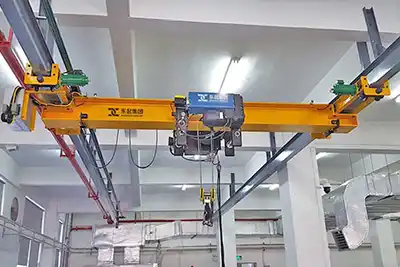
Top-Running vs. Underhung Overhead Cranes: Key Structural Differences
Most Important Takeaways
When selecting an overhead crane for your workshop, the primary structural differences between top-running and underhung cranes determine cost, load capacity, installation complexity, and building compatibility. Choosing the wrong type can lead to expensive rework, reduced operational efficiency, and safety risks.
Key Takeaways
- Top-running overhead cranes are ideal for heavy-duty lifting, long spans, and high-capacity workshop operations.
- Underhung cranes are lighter, easier to install, and save floor space, making them suitable for light to medium loads.
- The building structure (columns, roof, or girders) directly affects crane type selection.
- Bridge girder size, trolley configuration, and load distribution differ significantly between the two types.
- Maintenance, future upgrades, and safety compliance should influence your decision.
Introduction
Workshops depend on overhead cranes every day to keep operations moving smoothly. From lifting heavy steel plates to moving machinery parts across the workshop, the right crane makes a real difference in productivity and safety. But not every overhead crane fits every building. Choosing between a top-running overhead crane and an underhung overhead crane is more than just a preference—it’s about understanding your workshop layout, load requirements, and long-term needs.
Top-running cranes usually handle heavier loads and longer spans, but they require a stronger building structure. Underhung cranes are lighter, easier to install, and save valuable floor space, but they’re better suited for medium or light loads.
In this guide, we’ll focus on the key structural differences between these two crane types. Workshop managers, engineers, and crane buyers will get practical insights to make a choice that works—not just today, but for years to come.
Basics of Workshop Overhead Cranes
At their core, overhead cranes are all about moving materials safely and efficiently. The main difference between top-running and underhung cranes comes down to how they are supported and how they distribute weight.
- Top-running cranes run on rails mounted on strong columns or walls. The crane’s weight, plus the load it carries, is transferred directly to the floor structure. This setup allows top-running cranes to handle heavier loads, longer spans, and larger workshops.
- Underhung cranes hang from roof beams or girders. This means the crane doesn’t need as much floor space and is generally easier to install in buildings where the floor or support columns are not designed for heavy loads. These cranes are usually ideal for smaller workshops or medium-duty lifting tasks.
Common workshop applications include:
- Material handling in light to heavy industries – Moving raw materials, sheets, or heavy components from one workstation to another.
- Loading and unloading workstations – For example, transferring machined parts to assembly lines or storage racks.
- Assembly line support – Moving tools, molds, or dies efficiently along a production line.
- Steel fabrication and machinery plants – Handling heavy steel beams, plates, or industrial machinery components safely.
Structural Components of Top-Running Cranes
Top-running overhead cranes are designed for heavy-duty lifting in workshops where loads are substantial and spans are long. Their structure is robust and built to handle both the crane's own weight and the weight of the materials being lifted. Understanding each component is essential for buyers and engineers who want reliable performance and safe operation. European style top running overhead cranes
Runway rails guide the crane along the length of the workshop.
Proper alignment of rails is critical; even slight deviations can affect smooth operation and increase wear.
The building structure must be able to support the weight of the crane plus the materials it lifts, so careful planning is needed before installation.
Double girder cranes support heavy-duty lifting and provide stability over long spans.
Girder selection impacts the overall height of the workshop and lifting clearance.
Top-running cranes can be single girder or double girder. Double girder cranes are preferred for heavier loads or longer spans because they distribute weight more evenly and allow larger lifting heights.
Trolley speed and control affect overall workflow efficiency.
Modern designs often include wire rope or electric hoists for precise handling.
The trolley moves along the bridge girder and carries the hoist. In top-running cranes, the hoist is positioned on top of the bridge girder, which allows maximum lifting capacity and more efficient load handling.
Bearings and wheel material must be selected for durability under heavy use.
Regular inspection prevents operational issues and reduces downtime.
Top-running cranes have robust wheel assemblies designed to carry heavy loads safely and smoothly.
The building's floor and columns must handle repeated lifting cycles.
Improper load distribution can lead to structural damage or unsafe operation.
One of the defining features of top-running cranes is how they transfer load. The weight of the crane and its lifted load is transferred directly to the building structure. This requires strong foundations and careful structural planning.
Structural Components of Underhung Cranes
Underhung cranes are popular in workshops where floor space is limited or where heavy-duty lifting is not required. Unlike top-running cranes, they hang from roof beams or girders, which makes installation simpler and the crane lighter overall. Understanding their structure helps buyers and workshop engineers plan for safe, efficient lifting operations. Underhung overhead cranes
Suspended runways are easier to retrofit into existing buildings.
Alignment is crucial to ensure smooth trolley movement and reduce wear on wheels.
The runway system of an underhung crane is suspended from the building's roof girders or beams. This setup eliminates the need for heavy columns or floor-mounted runways, saving valuable workspace.
Typically sufficient for medium or light-duty lifting tasks.
Simpler design lowers manufacturing and installation costs.
The bridge girder in underhung cranes is typically smaller and lighter than in top-running cranes. Because the load is carried from above, the bridge doesn't need to be as heavy-duty, making the crane more flexible and less demanding on the building structure.
Electric hoists or wire rope hoists are commonly used for consistent and controlled lifting.
Hanging design allows operators to work around the crane without obstruction.
In underhung cranes, the trolley and hoist hang below the bridge girder, maximizing the available lifting height while keeping the floor area clear.
Bearings and materials are chosen for durability under repeated use.
Easy access for inspection and maintenance is a practical advantage.
Wheels run under the runway beams, which minimizes the crane's footprint on the workshop floor. This design is ideal for smaller spaces where floor-mounted runways would get in the way of other equipment or processes.
Load distribution is more centralized compared to top-running cranes, which reduces stress on the building floor.
Ideal for light to medium-duty lifting without modifying columns or walls.
Load is transferred to the roof structure, meaning the roof beams must be carefully evaluated before installation. Improper support can lead to sagging, vibrations, or even structural failure.
Key Structural Differences
When deciding between a top-running and an underhung overhead crane, it helps to look at the structural differences side by side. These differences affect not only how much weight the crane can lift, but also how it interacts with your building, how much space it occupies, and how easy it is to maintain. Understanding these points can save time, money, and frustration during installation and operation.
| Feature | Top-Running Crane | Underhung Crane | Notes |
|---|---|---|---|
| Runway support | Columns or walls | Roof beams or girders | Building strength dictates type |
| Bridge girder size | Larger, heavier | Smaller, lighter | Impacts lifting height and cost |
| Load capacity | Higher (heavy-duty) | Moderate (light to medium) | Choose based on workshop material weight |
| Span length | Long spans possible | Shorter to moderate spans | Top-running better for large workshops |
| Installation complexity | More complex | Simpler | Underhung easier for existing buildings |
| Floor space usage | Requires clearance | Saves floor space | Important in compact workshops |
| Maintenance | Moderate to high | Moderate | Depends on crane design and accessibility |
| Cost | Higher upfront | Lower upfront | Top-running cranes have longer lifespan for heavy loads |
Looking at the table, you can see that top-running cranes are best suited for heavy-duty, long-span workshops, while underhung cranes fit smaller, medium-duty operations where floor space is limited. This comparison also highlights other practical factors: installation difficulty, ongoing maintenance, and the impact on your building's structure. Practical takeaway for workshop crane buyers: Before deciding, evaluate your workshop's ceiling height, structural strength, and floor layout. Consider how often the crane will be used, what loads it will carry, and whether future expansion might be needed. Making the right choice at this stage prevents unnecessary downtime, structural adjustments, and additional costs.
Practical Considerations for Workshop Applications
Choosing the right overhead crane isn't just about whether it's top-running or underhung. You also need to look at how it fits your building, how it will be maintained, and how it affects your long-term operations. Let's break down the main points every workshop crane buyer should consider.
Underhung cranes hang from roof beams or girders, which makes them easier to install in smaller workshops or buildings where the floor can't handle heavy loads.
Always have a structural engineer evaluate your building before committing. It's cheaper to plan ahead than to deal with costly modifications later.
Underhung cranes are often easier to inspect since they're suspended and lighter.
Top-running cranes may require lifts or scaffolding for certain maintenance tasks, adding time and cost.
Underhung cranes are lighter and cheaper upfront, but their lifting capacity is limited. If you anticipate heavier loads in the future, you may need to replace or upgrade sooner.
Factor in energy usage, maintenance, and downtime when calculating total cost of ownership.
Make sure your crane installation meets local industrial safety regulations, including load limits and emergency stop functions.
Safety systems like limit switches, overload protection, and anti-collision devices are critical for both top-running and underhung cranes.
Underhung cranes can be added in smaller increments, but their total lifting capacity is limited by the roof structure.
Planning for multiple cranes or a future upgrade can save time, money, and downtime in the years ahead.
FAQs: Questions This Article Solves for Workshop Crane Buyers
- Top-running cranes are ideal for heavy loads, long spans, and industrial applications where maximum lifting capacity is needed. They require strong columns or walls to support the crane and its load.
- Underhung cranes are lighter, easier to install, and save floor space. They work well for light to medium loads and smaller workshops with limited structural support.
- Top-running cranes: Heavy bridge girders, trolleys on top of the bridge, and rails on strong columns allow for higher capacities. Installation is more complex and may require structural reinforcement.
- Underhung cranes: Lighter bridge girders hang from roof beams, which reduces lifting capacity but simplifies installation and preserves floor space.
- Top-running cranes require reinforced columns or walls to carry dynamic loads safely.
- Underhung cranes depend on the strength of roof beams or girders and usually need less floor support.
- Top-running cranes: Higher upfront cost due to heavier structure and installation requirements. Maintenance is moderate, but these cranes handle heavier loads and last longer if properly maintained.
- Underhung cranes: Lower initial cost and easier installation. Maintenance is generally simpler, but lifting capacity is limited. Upgrades may be required sooner if load demands increase.
- Top-running cranes: Trolley sits on top of the bridge girder, allowing maximum load capacity and smooth movement across long spans. Double girder designs are better for heavy-duty applications.
- Underhung cranes: Trolley hangs below the bridge girder, maximizing floor space and making it easier to maneuver materials in compact workshops.
Conclusion
Choosing the right overhead crane for your workshop is about more than just comparing prices. The decision affects workflow efficiency, safety, maintenance needs, and how well the crane integrates with your building.
- Top-running cranes are best for heavy-duty operations, long spans, and lifting large loads. They require a strong building structure but offer higher lifting capacity and long-term durability.
- Underhung cranes are lighter, easier to install, and save valuable floor space. They’re well-suited for light to medium loads and smaller workshops where flexibility is important.
For workshop crane buyers, the key is to plan ahead:
- Evaluate your building structure—columns, walls, or roof girders—to determine what type of crane your workshop can safely support.
- Consider your lifting requirements, both current and future. Will your loads grow heavier over time?
- Factor in maintenance access, safety compliance, and long-term operational efficiency.
A well-informed choice now avoids costly rework, reduces downtime, and ensures that your crane serves your workshop efficiently for years to come.