
Wheeled Gantry Crane – Portable & Flexible Solution for Workshops
Wheeled Gantry Cranes – Portable & Flexible Lifting Solutions for Workshops
Wheeled gantry cranes for workshops and small factories. Check mobility, wheel types, lifting capacity, safety, and uses for efficient material handling.
In many small workshops and factories, lifting heavy materials can be a daily challenge. That’s where wheeled gantry cranes come in. Unlike fixed cranes, these mobile gantries can be moved wherever you need them, giving your workspace flexibility without major modifications.
Mobility is more than just convenience—it directly impacts efficiency. With a wheeled gantry crane, you can relocate loads across your workshop quickly, adjust production layouts on the fly, and avoid the need for expensive permanent installations. For operations that handle varying types of materials or frequently rearrange workstations, these cranes are particularly useful.
A key factor that makes wheeled gantry cranes reliable is their wheels. The wheels aren’t just for rolling—they determine how much weight the crane can carry safely, how smoothly it moves, and how stable it remains under load. Choosing the right type of wheel can make a big difference in both safety and performance.
Why Wheeled Gantry Cranes Matter:
- Offer flexible, portable lifting without permanent infrastructure.
- Allow quick adjustments to workshop layouts and material flow.
- Wheels directly affect load capacity, stability, and movement efficiency.
- Suitable for small factories, warehouses, and workshop environments where space is limited.
What is a Wheeled Gantry Crane?
A wheeled gantry crane is essentially a crane on legs with wheels, designed to move freely within a workshop, factory, or warehouse. It combines lifting capability with mobility, making it a practical choice for spaces where installing a fixed overhead crane isn’t possible or cost-effective.
A heavy-duty crane made from rigid steel, designed for stability and strength.
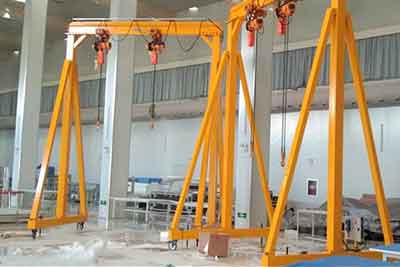
Key Features:
- Strong steel frame suitable for medium to heavy loads.
- Durable for indoor and outdoor industrial use.
- Usually comes with heavy-duty welded construction and robust wheels.
Common Uses:
- Metal workshops and factories
- Maintenance yards
- Heavy-duty lifting operations
A lightweight crane made from aluminum, easy to move and corrosion-resistant.
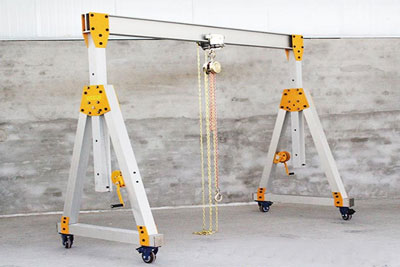
Key Features:
- Lightweight frame for easy manual mobility.
- Corrosion-resistant; ideal for indoor or light-duty operations.
- Supports light to medium load capacities.
Common Uses:
- Electronics assembly workshops
- Small factories and garages
- Laboratories and clean environments
Adjustable Height Wheeled Gantry Crane
A versatile crane with telescopic or sectional legs for changing lift heights.
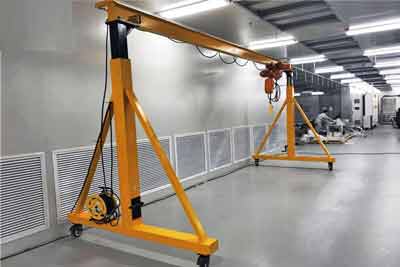
Key Features:
- Height can be adjusted to suit different load sizes.
- Compatible with steel or aluminum frames.
- Wheels allow smooth repositioning within the workshop.
Common Uses:
- Maintenance and repair workshops
- Assembly lines with variable load sizes
- Multi-purpose lifting areas
A compact, portable crane with collapsible or hinged legs for easy storage.
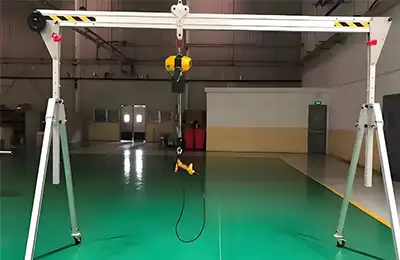
Key Features:
- Legs fold inward; some designs allow width adjustments.
- Easy to transport between sites.
- Available in steel or aluminum depending on load requirements.
Common Uses:
- Temporary lifting setups
- Field maintenance or multi-site operations
- Small workshops or rental fleets
Comparison with Fixed Gantry Cranes:
- Mobility: Wheeled gantry cranes can be relocated easily, whereas fixed cranes are stationary and limited to one area.
- Installation: Portable cranes require minimal setup, avoiding costly runway beams or foundation work.
- Flexibility: Ideal for workshops with changing layouts or multiple workstations; fixed cranes are better for high-volume, repetitive operations in a dedicated area.
In short, a wheeled gantry crane gives you the freedom to lift, move, and place materials wherever you need them, without the constraints of a permanent installation. It’s a practical solution for small factories and workshops that need both lifting power and flexibility.
Gantry Crane Wheels: Types and Features
The wheels are one of the most important parts of a wheeled gantry crane. They don’t just let the crane roll—they determine how much weight it can safely carry, how smoothly it moves, and how stable it stays during lifting operations. Choosing the right type of wheel depends on your workshop floor, the weight of your loads, and how often you plan to move the crane.
Types of Gantry Crane Wheels
- Steel Wheels Steel wheels are the classic choice for heavy-duty lifting. They are extremely durable and can handle high loads without deforming. However, they work best on smooth concrete or rail-guided surfaces. Using them on uneven or soft floors can cause damage or reduce stability.
- Polyurethane Wheels Polyurethane wheels are gentler on floors and produce less noise than steel. They have moderate load capacity, making them suitable for workshops where floor protection and quiet operation are priorities. These wheels are a good middle ground between steel and rubber.
- Rubber Wheels Rubber wheels provide excellent shock absorption, which helps when moving a load across uneven floors or delicate surfaces. They are quieter and reduce vibration but generally have lower load capacity than steel or polyurethane. Ideal for workshops with sensitive flooring or irregular surfaces.
Bearing Wheels Bearing wheels are designed for heavier loads and smoother movement. They include different types such as:
- Angular Bearing Wheels: Handle heavy loads with some lateral movement.
- L-Block Wheels: Compact design for medium to heavy loads, often used in confined spaces.
- Split-Bearing Box Wheels: Support very heavy loads while making maintenance easier, as bearings can be accessed without removing the wheel.
Flanged vs. Flangeless Wheels
- Flanged Wheels: Have a small rim to keep the crane on a guided track, providing extra stability. Ideal for precise movements on rails.
- Flangeless Wheels: Can move freely on flat surfaces, offering flexibility but requiring careful alignment to prevent derailment.
How Wheels Affect Crane Performance
The choice of wheel material, diameter, and bearing type affects:
- Load Capacity: Determines the maximum weight the crane can safely carry.
- Stability: Proper wheels prevent tipping or swaying during lifts.
- Maneuverability: Smooth and suitable wheels make moving the crane easier and safer.
- Floor Protection: Softer wheels reduce wear on floors and minimize vibration.
- Safety: Correct wheels reduce the risk of accidents caused by slipping, misalignment, or uneven surfaces.
Advantages of Wheeled Gantry Cranes in Workshops
Wheeled gantry cranes are popular in workshops and small factories because they combine lifting capability with mobility. Unlike stationary cranes, they can be moved to where the work actually happens, making daily operations faster and more efficient. Choosing a wheeled gantry crane means you don’t have to rely on a fixed setup, which gives you more flexibility in managing space and workflow.
Some of the main advantages include:
- Portability and Easy Relocation: The crane can be rolled to different areas of the workshop without heavy machinery, making it easy to reposition loads or adapt to new workstations.
- Flexibility for Different Lifting Tasks: From handling raw materials to positioning finished products, these cranes can adjust to a variety of lifting needs without requiring additional equipment.
- Space-Saving Design: Wheeled gantry cranes take up minimal space when not in use. They can be stored along a wall or in a corner, leaving more room for other operations.
- Reduced Installation and Infrastructure Costs: Unlike overhead cranes, they don’t need permanent runway beams or foundations, which saves both money and installation time.
- Compatibility with Temporary or Changing Layouts: Ideal for workshops that frequently rearrange machinery or work areas, wheeled cranes adapt easily to evolving production layouts.
Overall, the combination of mobility, flexibility, and compact design makes wheeled gantry cranes a practical solution for small workshops and factories. They not only reduce costs and installation effort but also provide the freedom to move heavy loads safely wherever needed, helping operations run smoothly and efficiently.
Choosing the Right Wheeled Gantry Crane
Selecting the right wheeled gantry crane requires careful consideration of several factors. It’s not just about picking a crane that can lift your heaviest load; you also need to think about the workshop layout, floor conditions, and how frequently the crane will be used. Choosing wisely ensures safety, efficiency, and long-term durability.
Here are the key points to consider:
- Load Capacity, Span, and Hoist Type: Determine the maximum weight you need to lift and the span of the crane. The hoist type—manual, semi-electric, or fully electric—should match both your lifting needs and the speed required for operations.
- Floor Conditions and Wheel Compatibility: Check the floor surface in your workshop. Smooth concrete can handle steel wheels, while softer or uneven floors may require rubber or polyurethane wheels for better grip and less damage.
- Frequency of Use and Operational Environment: For occasional use, a simpler manual or semi-electric crane may suffice. Heavy-duty, frequent operations benefit from fully electric gantries with high-quality wheels and bearings.
- Height and Clearance Limitations: Make sure the crane’s height and lifting clearance fit your workshop, including overhead lights, doors, or other equipment. Low headroom areas require special attention to beam height and leg design.
- Maintenance Requirements and Wheel Durability: Consider the ease of maintaining wheels and bearings. Durable wheels reduce downtime and prevent costly repairs, especially in high-traffic areas.
Safety and Maintenance Tips
Safety and proper maintenance are critical for keeping a wheeled gantry crane reliable and long-lasting. Even small issues, like worn wheels or misaligned bearings, can lead to unsafe operation or costly downtime. Regular care not only protects your equipment but also keeps your team safe.
Key tips to follow include:
- Regular Inspection of Wheels, Bearings, and Frames: Check for wear, cracks, or loose components on a consistent schedule. Early detection of damage can prevent accidents and extend the crane’s life.
- Ensuring Proper Load Distribution: Always center loads and avoid uneven lifting, which can cause tipping or put excessive stress on specific wheels. Properly distributed loads protect both the crane and your floors.
- Lubrication and Alignment Checks: Keep bearings and moving parts well-lubricated. Check that wheels and hoists are aligned to ensure smooth, controlled movement without extra strain on the mechanism.
- Avoiding Uneven Surfaces and Overloading: Only operate the crane on surfaces suitable for the wheel type and never exceed the rated load capacity. Uneven floors or overloading can compromise safety and damage the crane.
Applications in Workshops and Small Factories
Wheeled gantry cranes are highly versatile, which makes them suitable for a wide range of tasks in small factories and workshops. Their mobility allows them to handle materials and components in spaces where installing a fixed crane would be impractical or too costly.
Common applications include:
- Assembly Lines, Fabrication Shops, and Machine Workshops: Wheeled gantry cranes help move heavy parts and assemblies along production lines. They reduce manual handling, improve workflow, and save time during fabrication or machine assembly.
- Material Handling in Warehouses and Storage Yards: These cranes can efficiently transfer materials between storage racks, loading areas, or workstations, making inventory handling faster and safer.
- Temporary Lifting Solutions in Production or Maintenance Areas: For short-term projects or maintenance work, wheeled gantry cranes provide reliable lifting without the need for permanent installation. They can be set up, used, and relocated easily.
- Small-Scale Manufacturing Requiring Flexible and Movable Lifting Equipment: Workshops producing small batches or handling variable product sizes benefit from a crane that can be moved to wherever it’s needed, keeping operations agile.
In general, wheeled gantry cranes bring lifting capability directly to where the work happens. Their flexibility makes them a practical solution for workshops and factories that need both portability and reliable lifting power, without committing to permanent infrastructure.
Cost and Supplier Considerations
When investing in a wheeled gantry crane, cost is an important factor—but it’s not just the initial price that matters. Long-term reliability, maintenance, and service support can make a big difference in overall value. Understanding the factors that affect price and choosing the right supplier ensures you get a crane that meets your needs without unexpected problems.
Key considerations include:
- Price Ranges Based on Capacity, Span, and Wheel Type: Heavier lifting capacities, longer spans, and specialized wheels (like bearing or polyurethane types) can increase cost. Smaller, manual cranes are generally more affordable, while fully electric, large-span cranes are at the higher end. Knowing your requirements helps avoid overpaying for features you don’t need.
- Warranty, After-Sales Service, and Parts Availability: A reliable supplier should provide clear warranty terms and accessible spare parts. After-sales support is critical for maintenance, repairs, and troubleshooting issues quickly, minimizing downtime in your workshop.
- Choosing Reputable Suppliers: Look for manufacturers or suppliers with proven experience in producing durable crane wheels and complete mobile gantry systems. Verified certifications, client references, and the ability to customize based on your floor conditions and lifting needs are all signs of a trustworthy supplier.
Balancing cost with quality, service, and durability ensures your wheeled gantry crane delivers long-term value. Investing in a crane from a reputable supplier may cost slightly more upfront, but it saves time, money, and headaches over its operational life.
Conclusion
Wheeled gantry cranes provide a practical and flexible lifting solution for workshops, small factories, and warehouses. Their mobility, ease of use, and ability to adapt to different tasks make them a smart choice for facilities that need both lifting power and flexibility without permanent infrastructure.
When selecting a crane, it’s important to pay close attention to wheel type, load capacity, and mobility requirements. The right combination ensures safe operation, smooth movement, and long-term durability, while avoiding unnecessary costs or operational challenges.
Key points to keep in mind:
- Summary of Benefits: Wheeled gantry cranes offer portability, flexibility, space-saving design, and cost-effectiveness, making them ideal for small and dynamic work environments.
- Evaluate Wheel Type and Mobility Needs: Choose wheels that match your floor conditions, load requirements, and frequency of use to ensure stability and smooth operation.
- Request Detailed Quotations and Supplier Consultation: Work with reputable suppliers to confirm crane specifications, wheel options, and customization possibilities to meet your exact workshop needs.
- Supporting Resources: Check product catalogs, buyer guides, and related articles to make an informed decision and compare different models before purchase.
In short, investing in a wheeled gantry crane is about matching the right equipment to your workspace and lifting needs. Careful planning, attention to detail, and consultation with experienced suppliers will help you get a reliable, safe, and efficient lifting solution for your workshop.