Low Headroom Gantry Cranes for Underground Construction
Yuantai Solution
Low Headroom Gantry Cranes for Material Handling in Underground Construction/h3>
Most Important Takeaway
Low headroom gantry cranes are critical for underground construction because they maximize vertical space, enhance safety, and streamline material handling in confined tunnels and shafts.
- Efficient lifting in restricted vertical spaces without compromising load capacity
- Supports TBM segment handling, spoil removal, and material transport
- Customizable designs: single or double girder, rail-mounted or mobile
- Enhances workflow integration and safety in tight tunnel environments
- Reduces risk of collisions and equipment damage in low-clearance projects
Quick FAQ: Questions Solved Here
A: Use a low headroom gantry crane sized for the segment weight and tunnel height. Position the hoist carefully and move slowly to avoid collisions.
- Compact crane frames allow operation in tight tunnels
- Reinforced hoists ensure stability even in confined areas
- Coordinating with TBM operations prevents workflow interruptions
A: It depends on the load and tunnel geometry. Single girder cranes are ideal for lighter loads and narrow tunnels, while double girder cranes handle heavier segments or continuous lifting cycles.
- Single girder: easier installation, lower headroom, suitable for light to medium loads
- Double girder: higher capacity and stability for heavy or oversized loads
- Mobile or modular designs add flexibility where space changes along the tunnel
A: Plan crane integration with excavation, spoil removal, and segment installation. Use rail-mounted or mobile low headroom cranes for smooth material flow.
- Align crane movement with TBM or NATM workflow
- Optimize spoil transfer to storage or conveyors
- Minimize manual handling and reduce congestion in work zones
A: Compact structural height, high lifting capacity, precise positioning, and environmental adaptations are key.
- Anti-corrosion and dust-proof coatings for long-term reliability
- Explosion-proof hoists in gas-prone or mining tunnels
- Modular or mobile options for flexible installation as tunnel excavation progresses
A: Assess the actual tunnel dimensions, load types, and lifting cycles before selecting the crane. Add safety margins, but avoid unnecessary oversizing that increases cost and reduces efficiency.
- Calculate maximum load, frequency, and clearance requirements
- Choose single or double girder design based on project demand
- Include environmental and operational adaptations to avoid future modifications
Underground Construction Challenges
Underground construction projects, such as metro tunnels, mining shafts, or hydropower tunnels, operate in highly confined environments. These sites present unique challenges that affect equipment selection and workflow:
- Limited vertical and horizontal space: Tunnels and shafts often have strict headroom restrictions, leaving little room for standard lifting equipment. Low headroom cranes are necessary to navigate these confined spaces while still handling heavy loads safely.
- Complex material and spoil logistics: Transporting precast tunnel segments, construction materials, or excavated spoil requires precise coordination. Without the right crane system, delays, double handling, or unsafe lifting conditions can occur, affecting overall project efficiency.
- Safety considerations in tight spaces: Workers and equipment must operate together in close proximity. Low headroom gantry cranes reduce collision risks, ensure stable load handling, and maintain safe clearance for personnel and machinery.
Practical insight: Selecting a crane designed specifically for underground environments ensures both efficiency and safety, reducing downtime and project costs.
Types of Low Headroom Gantry Cranes for Underground Construction Projects
Underground construction work is rarely the same from one project to another. A metro tunnel, a mining drift, and a hydropower cavern all have different space limits, load demands, and lifting cycles. Because of this, low headroom gantry cranes are not a single fixed design. They are built in several configurations to match industrail tunnel conditions, especially where low clearance gantry crane operation and underground material handling crane systems are required.
Single Girder Low Headroom Gantry Cranes
A single girder low headroom gantry crane uses one main beam with the hoist trolley running underneath or alongside the girder. The structure is simple, and that simplicity matters in tight underground environments where installation space is already limited.
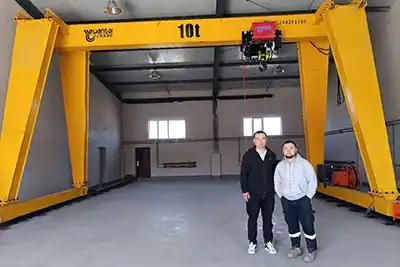
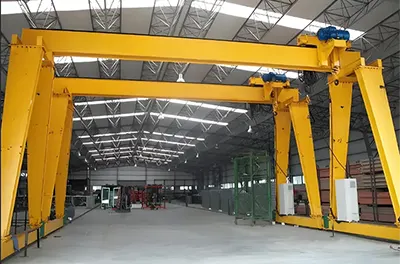
It is often chosen when the project is focused on light to medium lifting inside a narrow tunnel section. Think of segment handling in smaller metro tunnels or routine material transfer inside a confined construction shaft.
- Compact structure designed for low tunnel headroom conditions
- Easier installation in confined underground construction zones
- Lower self-weight, which helps when ground support is limited
- Suitable for lighter precast segments, tools, and general tunnel material handling
In practice, contractors often choose this type when they want a basic underground gantry crane solution without adding too much structural complexity. It keeps things manageable, especially in early-stage tunneling work.
Double Girder Low Headroom Gantry Cranes
A double girder low headroom gantry crane uses two parallel beams to support the hoist system. The design takes more space, but it provides a higher lifting capacity and more stable performance when handling heavy loads.
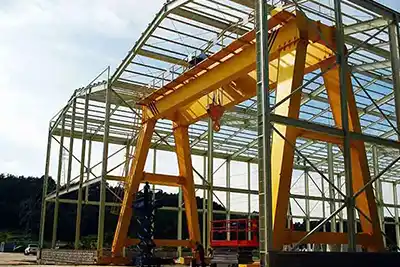

In underground construction projects, this type is commonly used when lifting tunnel segments, TBM backup equipment, or large spoil containers that cannot be handled safely by lighter systems.
- Higher lifting capacity for heavy underground loads
- Better load stability during lifting and positioning
- Suitable for continuous tunneling operations with frequent lifting cycles
- Common in TBM tunnel construction and large-diameter metro projects
This type is usually selected when the project cannot afford downtime from lifting limitations. In industrail tunneling work, it is often the “main working crane” inside the tunnel section.
Mobile Low Headroom Gantry Cranes
A mobile low headroom gantry crane is designed for flexibility. Instead of fixed rails, it uses a self-propelled or wheeled structure, allowing it to move as the tunnel work progresses.
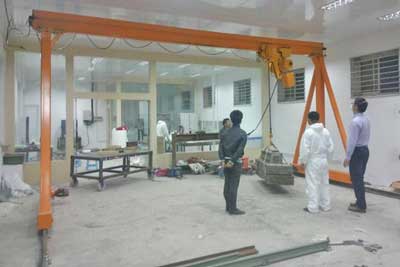
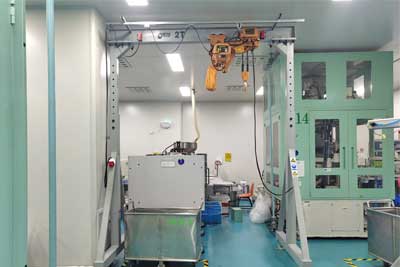 Aluminum gantry crane with low headroom chain hoist with capacity up to 10 ton for light loads and light duty material handling
 This is useful in construction environments where the working face keeps shifting, and the crane must follow the excavation progress.
- No fixed rail installation required
- Can be relocated along tunnel sections as needed
- Suitable for temporary lifting tasks and maintenance work
- Works well in variable underground construction layouts
In practical terms, contractors often use this type during transitional stages of tunnel excavation. It is not always the main lifting system, but it fills gaps where mobility is more important than continuous lifting speed.
Specialized Adaptations for Underground Conditions
Underground environments are harsh. Dust, moisture, limited ventilation, and sometimes gas exposure all affect crane performance. Because of this, low headroom gantry cranes are often customized with specific adaptations depending on the project.
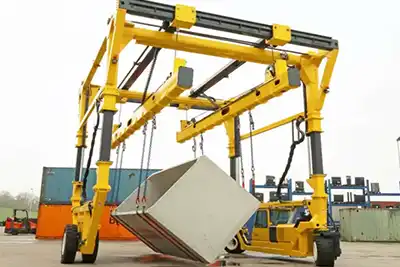
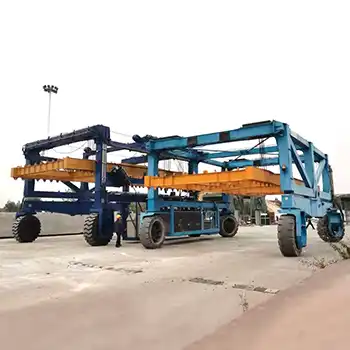 straddle carrier with low headroom design for confined space
 These adaptations are not optional in many cases—they are required for safe underground crane operation.
- Anti-corrosion coating for humid tunnel and mining environments
- Dust-proof sealing for high particulate conditions in excavation zones
- Explosion-proof hoist systems for coal mining or gas-sensitive tunnels
- Compact hoist design to maximize lifting height under strict headroom limits
These configurations are usually defined during the early planning stage of underground material handling systems, especially in TBM tunnel projects or mining excavation works.
Selecting a low headroom gantry crane for underground construction is not just about lifting capacity. It depends on tunnel geometry, working cycle frequency, installation constraints, and how the crane integrates with TBM systems or spoil transport workflows.
In industrail engineering practice, the most efficient setup often comes from combining the right crane type with the right adaptation—rather than relying on a single “standard model.”
What Makes Low Headroom Gantry Cranes Special
Low headroom gantry cranes are not your typical lifting equipment. In underground construction, where tunnel heights are limited and every centimeter counts, these cranes are designed to fit where standard overhead cranes just won't. They deliver the lifting performance needed without taking up unnecessary space. Let's break down what makes them unique.
The most obvious feature is the low profile. These cranes are designed to maximize lifting space while keeping the structure as short as possible. That means even in narrow tunnels, shafts, or confined mining drifts, the crane can operate safely without hitting tunnel ceilings or other equipment.
- Designed for tunnels, metro projects, and underground shafts with restricted vertical clearance
- Reduces the need for excavation adjustments just to fit the crane
- Supports lifting of precast segments, materials, and equipment where headroom is limited
- Makes it easier to work in partially excavated tunnels, keeping operations moving
Even with a compact frame, these cranes don't compromise on strength. The hoists and trolleys are engineered to handle heavy loads in tight spaces. This is important in underground construction where every lift can be critical—whether it's moving TBM backup equipment or handling muck buckets.
- Optimized hoist placement preserves lifting capacity under low-clearance conditions
- Reinforced girder structures handle dynamic loads safely
- Efficient electric or wire rope hoists allow smooth operation without increasing crane height
- Enables reliable material handling in tunnel projects, from precast segments to spoil removal
Underground sites are rarely static. Excavation progresses, tunnels change shape, and work zones shift. Low headroom gantry cranes are often modular or mobile, allowing installation and repositioning as needed. This flexibility is crucial for ongoing tunneling operations.
- Modular assembly lets teams put cranes together in tight spaces quickly
- Mobile designs allow moving the crane along the tunnel as excavation continues
- Reduces downtime from crane relocation or reinstallation
- Practical for projects with staged tunneling or temporary lifting needs
Many underground projects use rail systems to transport segments, spoil, and materials along the tunnel axis. Low headroom gantry cranes can integrate directly with these rails, making lifting and moving materials more predictable and efficient. This also helps TBM operations run smoothly.
- Rail-mounted cranes provide guided, repeatable movement over long tunnels
- Aligns material handling with TBM or NATM excavation workflow
- Reduces cycle time by limiting crane repositioning
- Keeps operations safe by ensuring predictable crane travel in confined tunnels
Typical Applications of Low Headroom Gantry Cranes in Underground Construction
Low headroom gantry cranes are designed for the realities of working underground. In tunnels, shafts, and confined construction sites, moving heavy loads isn't just about lifting—it's about precision, timing, and safety. Here are the most common ways these cranes are used in industrial tunneling projects.
Precast segments form the lining of tunnels in metro, water, or hydropower projects. Installing them requires accurate positioning in restricted spaces. Low headroom gantry cranes allow operators to lift and move these heavy segments safely, even where overhead clearance is limited.
- Lifting and rotating tunnel segments into position without hitting the ceiling
- Moving structural supports and formwork inside tight shafts
- Synchronizing with TBM installation workflows for continuous tunnel lining
In practical project work, choosing the right crane with enough span and lifting capacity makes segment installation faster and reduces rework or damage.
Excavated material—or muck—must be moved efficiently to keep tunneling progress on schedule. Low headroom cranes can lift buckets, containers, or hoppers of spoil from the tunnel face to temporary storage or transport vehicles.
- Lifting spoil containers or muck buckets safely from excavation zones
- Moving material to conveyor systems or rail carts for transport
- Reducing manual handling and improving site safety
For TBM or NATM tunneling, this operation happens multiple times per day, so using a low headroom crane specifically suited for confined tunnels keeps workflow steady.
Beyond heavy segments and spoil, tunnels require constant movement of tools, formwork, reinforcement bars, and auxiliary materials. Low headroom cranes keep these items moving without disrupting work zones.
- Moving scaffolding, shoring frames, and construction tools
- Delivering reinforcement and concrete buckets along the tunnel axis
- Supporting multiple crews working simultaneously in tight spaces
In industrial projects, this reduces downtime and ensures that crews always have materials where they are needed, avoiding bottlenecks.
Tunnel Boring Machines (TBMs) require a constant supply of parts, backup systems, and support equipment. Low headroom gantry cranes assist in lifting and positioning these components, often in areas with very limited space.
- Installing or replacing TBM components, such as cutter heads or conveyors
- Lifting auxiliary pumps, electrical panels, and ventilation units
- Enabling safe maintenance and adjustments during ongoing tunneling
This application is particularly critical in continuous tunneling projects, where delays in moving equipment can halt the entire operation.
Design and Capacity Considerations for Low Headroom Gantry Cranes in Underground Construction
Choosing a low headroom gantry crane for underground construction is usually not a simple "tonnage decision." In tunnel projects, the industrail situation is a mix of limited headroom, unstable working conditions, and changing lifting demands. A crane that works well in a metro tunnel segment might not fit a mining shaft or TBM backup zone. So the design and capacity need to match the actual underground material handling requirements, not just a catalog specification.
The first step is always the load profile. In underground construction, the main lifting tasks usually revolve around precast tunnel segments, spoil containers, and auxiliary equipment. Each of these has different weight patterns, and they can change depending on project stage.
- Precast tunnel segments often range from a few tons to over 10 tons per piece depending on tunnel diameter
- Spoil or muck buckets may seem lighter individually, but high-frequency lifting increases load stress on the crane system
- TBM support equipment and steel structures can introduce occasional heavy lifting peaks
In industrail projects, it is not unusual to add a safety margin above calculated loads because underground conditions are not stable or perfectly predictable. A properly selected low headroom gantry crane should match both maximum load and lifting frequency, not just one or the other.
The choice between single girder and double girder low headroom gantry cranes depends on how heavy the work is and how much space is available in the tunnel.
- Single girder configuration:
Better for lighter lifting tasks, small tunnel sections, and projects with strict headroom limitations. It is easier to install and usually preferred in early-stage excavation or auxiliary working zones. - Double girder configuration:
Used when lifting heavier precast segments, TBM components, or when continuous heavy-duty operation is required. It provides better stability and load distribution, especially in longer tunnel sections.
In practice, many contractors start with single girder systems in early excavation and shift to double girder cranes once tunnel diameter increases or workload becomes more demanding.
Underground construction is not static. As tunneling progresses, working zones move forward. This makes mobility a key design factor for any tunnel gantry crane system.
- Rail-mounted low headroom gantry cranes:
Suitable for long-distance, continuous material handling along tunnel alignment. They are often used in TBM-driven tunnels where segment delivery and spoil removal follow a fixed path. - Mobile gantry crane systems:
Used in temporary zones, short tunnel sections, or maintenance areas where rail installation is not practical. These cranes can be repositioned as excavation progresses.
The selection often depends on whether the project prioritizes continuous workflow or flexible repositioning. Rail-mounted systems are more stable for long operations, while mobile systems are more adaptable in changing environments.
Underground environments are harsh on equipment. Moisture, fine dust, poor ventilation, and sometimes gas exposure can all affect crane reliability. Because of this, low headroom gantry cranes used in tunnels often require specific environmental adaptations.
- Anti-corrosion protection:
Essential for hydropower tunnels, wet rock formations, or high-humidity environments where steel structures are exposed to constant moisture. - Dust-proof design:
Important in TBM excavation zones where fine particles are continuously present and can affect hoist mechanisms and electrical systems. - Explosion-proof configurations:
Required in coal mining tunnels or gas-prone underground environments where ignition risk must be strictly controlled.
In industrail industrial practice, these adaptations are not optional upgrades—they are part of basic safety planning for underground lifting operations.
Practical Insight:
A well-designed low headroom gantry crane for underground construction is not defined by a single parameter. Capacity, structure type, mobility, and environmental protection all work together. The best choice is always the one that fits the tunnel conditions, lifting cycle, and TBM or excavation workflow, rather than a standard specification on paper.
Operational Integration of Low Headroom Gantry Cranes in Underground Construction
In underground construction, a low headroom gantry crane is not operating alone. It is part of a wider system that includes TBM excavation, segment supply, spoil removal, and tunnel logistics. When the crane is properly integrated into this workflow, it reduces waiting time, improves material flow, and keeps the tunneling cycle stable. When it is not, delays tend to appear very quickly, especially in continuous TBM tunneling projects.
In TBM-driven tunnels, excavation and segment installation follow a strict cycle. The crane must match this rhythm. It is usually responsible for lifting and positioning precast segments right after excavation advances.
- Synchronizes with TBM advance rate to avoid idle time at the tunnel face
- Supports continuous segment installation to maintain tunnel lining progress
- Works alongside segment feeders, erectors, and backup systems in a coordinated sequence
- Reduces interruptions caused by manual handling or misaligned lifting timing
In practical terms, if the crane cannot keep up with TBM progress, the entire excavation chain slows down. That is why low headroom gantry cranes are often selected not just for capacity, but for cycle compatibility with tunneling operations.
Spoil management is one of the most frequent lifting tasks in underground construction. The way a low headroom gantry crane handles muck removal directly affects tunnel cleanliness and work continuity.
- Lifts muck buckets, containers, or hoppers from excavation points
- Transfers spoil to rail carts, conveyors, or temporary storage zones
- Reduces congestion near the tunnel face by keeping material flow organized
- Helps maintain a clear working area for TBM and support crews
In industrail projects, spoil handling is a repetitive cycle. If lifting and transfer are not well coordinated, material quickly builds up and affects both safety and productivity.
Underground environments are tight, with limited visibility and constant movement of workers and equipment. Controlled lifting becomes more important than raw speed. Low headroom gantry cranes are designed to operate with stable, precise movements in these conditions.
- Smooth lifting and lowering reduces swinging loads in narrow tunnels
- Precise positioning helps avoid contact with tunnel walls, supports, or equipment
- Controlled travel reduces collision risks in shared working zones
- Supports safer interaction between crane operations and manual installation tasks
In practice, most underground accidents related to lifting come from poor coordination rather than equipment failure. A properly operated low headroom crane system helps reduce that risk by keeping movement predictable and well-controlled.
Practical Insight:
Operational integration is where a low headroom gantry crane shows its industrail value in underground construction. It is not only about lifting capacity, but about how well it fits into the TBM cycle, spoil logistics, and site safety structure. When integrated properly, the crane becomes part of a continuous tunneling workflow instead of a standalone piece of equipment
Practical Buyer Tips for Selecting Low Headroom Gantry Cranes
Buying a low headroom gantry crane for underground construction isn't just about picking a model off a catalog. In industrail projects, the crane has to match the tunnel dimensions, lifting cycles, and environmental conditions. Making the right choice upfront saves time, reduces risks, and ensures smoother project execution.
Before you even start looking at suppliers, measure the actual tunnel height and working clearances. Then, determine the heaviest loads the crane will lift—including precast segments, spoil containers, and TBM auxiliary equipment.
- Confirm maximum tunnel headroom and width available for crane installation
- Identify the heaviest and most frequent loads to set lifting capacity
- Include a safety margin to account for dynamic loads or uneven surfaces
- Evaluate how lifting frequency affects the crane's duty cycle
Practical advice: Even a small miscalculation in headroom can make a crane unusable or require expensive modifications later.
Every tunnel is different. Even projects in the same city can have slight differences in diameter, curvature, or shaft layout. Customizable crane options ensure the system fits the specific site rather than forcing the tunnel to adapt.
- Modular beam lengths and adjustable leg heights for tight tunnels
- Single or double girder configurations depending on load and space
- Option for mobile or rail-mounted movement based on workflow needs
In practice, contractors often prefer modular cranes because they can be adapted as excavation progresses, minimizing downtime.
Low headroom gantry cranes are part of a larger workflow. Make sure your supplier provides details on how the crane will fit into tunnel operations.
- Maximum lifting and lowering speed for segment installation cycles
- Travel speed and rail compatibility for continuous tunneling
- Integration with TBM backup systems, spoil transport, and material feeders
- Available automation or remote control features for improved safety
Practical insight: A crane with high lifting capacity but slow movement can still bottleneck tunnel operations. Consider operational workflow, not just specs.
Underground environments are harsh. Dust, moisture, and sometimes explosive gases affect crane life and reliability. Plan for long-term operation, not just initial installation.
- Anti-corrosion coatings for wet tunnels or high-humidity shafts
- Dust-proof designs for TBM excavation zones
- Explosion-proof hoists where flammable gases or coal dust are present
- Maintenance accessibility in confined spaces to reduce downtime
In practical terms, these adaptations often determine whether a crane can operate reliably for the full project duration without frequent interruptions.
Practical Insight:
A low headroom gantry crane is more than a lifting device. Its success depends on careful planning: matching tunnel dimensions, load requirements, environmental conditions, and workflow integration. Choosing the right system from the start can prevent costly delays and safety hazards in underground construction.
Send Us An Inquiry to Save Your Space, Cost and Time
Low headroom gantry cranes are indispensable for underground construction projects, providing safe, efficient, and space-optimized lifting solutions. Selecting the right design and capacity ensures smooth tunnel operations, maximizes workflow efficiency, and reduces risks. For confined construction environments, choosing a crane that fits the tunnel dimensions and project requirements is the key to success.