Precision 2 Ton Overhead Cranes for Semiconductor & Electronics
Smooth, precise overhead cranes for semiconductor and electronics production, ensuring safe handling of wafers, PCB stacks, and sensitive components.
In semiconductor and electronics production, moving materials isn’t just about lifting and placing them. It’s about handling them with care. A tiny vibration, a slight tilt, or a sudden stop can ruin silicon wafers, PCB stacks, or other sensitive components. That’s why the right overhead crane matters.
High-precision, small-capacity overhead cranes are built for this kind of delicate work. They aren’t the big, heavy cranes you see in a warehouse. Instead, they are compact, smooth, and designed for cleanrooms or other controlled environments. Their job is simple in words but critical in practice: lift materials safely, move them accurately, and place them exactly where they’re needed without any damage.
Think of it this way—these cranes are the “hands” of your production line. They allow operators to handle fragile loads reliably, without worrying about mistakes that can cost time, materials, or yield.
Why these cranes are essential:
- Precise Load Handling: Moves wafers, silicon plates, and PCB stacks with minimal vibration.
- Small Capacity, Big Accuracy: Ideal for loads from 0.5 to 2 tons in sensitive environments.
- Cleanroom Compatibility: Compact designs fit restricted spaces and meet contamination standards.
- Controlled Movements: Micro-speed and inching functions ensure exact placement every time.
- Reduced Risk of Defects: Protects valuable materials, improves yield, and lowers scrap rates.
Industrial Sectors Served
High-precision overhead cranes aren’t just a luxury—they’re a necessity in industries where even a small mistake can cost thousands of dollars in damaged materials or lost production time. These cranes are specially designed for sectors that handle sensitive, fragile, or high-value materials.
In semiconductor fabs, materials like silicon wafers and sensitive substrates require extremely careful handling. Overhead cranes in this environment ensure that these delicate items move between processing stations without vibration, tilt, or shock that could cause micro-cracks or misalignment. Precision cranes also help maintain cleanroom standards, preventing contamination from dust or particles.
Typical handling in semiconductor plants:
- Transporting silicon wafers between fabrication and testing areas.
- Moving delicate substrates without damaging the surface.
- Supporting production lines where load placement accuracy is measured in millimeters.
PCB stacks, microelectronic components, and assembled circuit boards are highly sensitive to movement. Even a small jolt during lifting or placement can bend, scratch, or misalign these components. Precision overhead cranes ensure smooth, controlled movement to keep production efficient and reduce scrap.
Typical handling in electronics manufacturing:
- Lifting and positioning PCB stacks between assembly stages.
- Moving microelectronic components safely for testing or packaging.
- Handling assembled boards without vibration or shock that could damage circuits.
Medical devices often contain fragile instruments or sensitive electronic systems. Overhead cranes help transport these materials safely within production areas or cleanrooms, ensuring they arrive without damage or contamination.
Typical handling in medical device facilities:
- Moving delicate equipment and assemblies between workstations.
- Ensuring zero-contact transport in sterile or controlled environments.
- Reducing risk of contamination during movement.
Typical Loads
High-precision overhead cranes are designed to handle more than just weight—they handle sensitivity. In semiconductor, electronics, and medical device production, the loads themselves are fragile, valuable, and often prone to damage from the slightest movement. Choosing a crane that matches the load characteristics is critical for maintaining quality and efficiency.
Silicon wafers and plates are extremely delicate. Even minor vibration or tilt can lead to micro-cracks or surface defects, which can ruin entire batches. Precision cranes provide smooth, controlled lifting and placement to avoid any disturbance to the material.
Typical load characteristics:
- Weight range: 50–500 kg per wafer or plate stack
- Extremely sensitive to vibration and tilt
- Often handled in cleanroom conditions requiring minimal exposure to particles
Printed circuit boards and electronic assemblies are fragile, especially when stacked or partially assembled. A sudden stop or rough movement can damage components or solder joints. Precision cranes allow operators to position these loads gently and accurately.
Typical load characteristics:
- Weight range: 50 kg up to 1 ton
- Requires smooth acceleration, deceleration, and travel
- Sensitive to shock, bending, or misalignment during transport
Beyond wafers and PCBs, many production materials require careful handling to maintain quality. These can include thin glass panels, medical components, or specialty substrates. The crane must minimize vibration, tilt, and shock while moving these loads safely across the production line.
Handling considerations:
- Loads may be irregularly shaped or fragile
- Often require precise positioning for downstream processes
- May need cleanroom-compatible cranes or vibration-damping systems
Why Precision Matters
In semiconductor and electronics manufacturing, precision isn’t just a technical term—it’s a necessity. Even a minor misalignment or a small vibration can lead to defects, wasted materials, and production delays. High-precision overhead cranes play a critical role in preventing these issues by ensuring that every movement is controlled, smooth, and accurate.
Precision matters at every stage. When wafers, PCB stacks, or delicate assemblies are lifted and placed, even slight tilting or abrupt stops can damage the material, leading to microscopic cracks or misaligned components. These small errors can escalate into bigger problems, affecting the overall yield and quality of the production batch.
Investing in a precision crane isn’t just about protecting materials; it’s about keeping your production line running efficiently. By minimizing scrap and reducing the need for rework, manufacturers save both time and money while maintaining consistent product quality.
Key benefits of precision handling:
- Prevent Defects: Smooth movements prevent vibration, tilt, and sudden stops that could damage sensitive materials.
- Maintain Quality and Yield: Accurate placement ensures consistent production standards and higher yield rates.
- Reduce Scrap and Downtime: Fewer damaged components mean less waste and less interruption in the production process.
- Protect High-Value Materials: Sensitive wafers, PCBs, and medical components are preserved, avoiding costly losses.
- Support Cleanroom Standards: Precision handling reduces unnecessary contact and potential contamination.
Crane Type and Configuration
When it comes to handling delicate wafers, PCBs, or medical components, the type of crane you choose makes a huge difference. You can’t just pick any overhead crane; you need one that’s designed for smooth, precise, and careful operation in sensitive environments.
Small-Top Running and Underhung Bridge Cranes
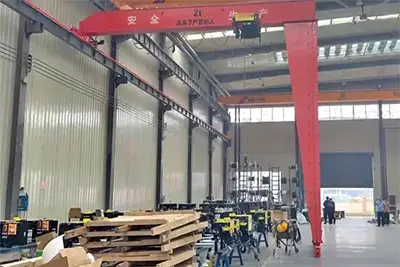
For cleanroom or tight production spaces, small-top running overhead cranes and underhung bridge cranes are the most common choices. They are compact but strong, able to travel smoothly across production lines without taking up unnecessary space. The underhung design, in particular, keeps the crane structure off the floor, which is ideal for areas where contamination control is important.
top running overhead crane single girder for sale
Precision Electric Hoists
At the heart of these cranes is the hoist. Precision electric hoists with micro-speed and inching capabilities let operators move loads gently and place them exactly where needed. This prevents jolts or vibrations that can easily damage fragile wafers or electronic assemblies.
Capacity for Sensitive Loads
These cranes typically handle 0.5–2 tons. That may seem small compared to standard industrial cranes, but it’s perfect for delicate production materials. The goal here isn’t brute strength—it’s careful, controlled handling.
Design Highlights
- Compact Design: Fits cleanrooms and areas with limited space.
- Vibration Reduction: Minimizes sway and prevents material damage.
- Corrosion-Resistant Coatings: Protects the crane and sensitive components in controlled environments.
- Smooth Operation: Micro-speed and inching functions allow precise load placement.
- Cleanroom Compatibility: Materials and finishes meet contamination control standards.

Customized Features for High-Precision Handling
High-precision overhead cranes are designed to handle delicate materials safely and accurately. In semiconductor, electronics, and medical device production, these customized features help prevent damage, improve positioning, and keep operations running smoothly.
When moving fragile loads, controlling the speed of the crane is critical. Smooth acceleration and deceleration prevent sudden jolts that could damage wafers, PCB stacks, or sensitive medical components.
- Micro-speed operation: Allows gradual acceleration and deceleration for smooth, controlled lifting and movement.
Precise placement of delicate materials often requires very small adjustments. Standard crane movement can be too rough for these fine tasks.
- Inching mode: Enables operators to move loads in tiny increments for exact positioning in tight or critical spaces.
Even with careful handling, vibration and sway can still affect sensitive materials. Specialized damping systems help absorb shocks and minimize movement during transport.
- Vibration-damping hoists and suspension systems: Reduce sway and vibration to protect fragile components.
Space is often limited in cleanrooms and controlled production environments. Compact, modular designs make it easier to install cranes without compromising performance.
- Compact and modular crane designs: Optimized for restricted spaces while remaining highly functional and easy to maintain.
In some production lines, repeatable precision is essential. Automating crane movements or integrating them with line control systems can improve consistency and reduce operator error.
- Optional automation or integration with production line control systems: Ensures precise, repeatable movements for sensitive loads.
Benefits for Semiconductor and Electronics Production
High-precision overhead cranes offer more than just lifting capability—they directly impact production quality, efficiency, and safety. By handling fragile materials carefully, these cranes help manufacturers maintain consistent operations and reduce costly mistakes.
Protecting delicate wafers, PCBs, and medical components is critical in production environments. Precision cranes reduce the chance of accidents or mishandling.
- Increased safety and reliability: Operators can move sensitive loads confidently, minimizing the risk of material damage or workplace incidents.
Maintaining product quality is essential for high-yield production. Even small defects can cause entire batches to fail, leading to wasted materials and time.
- Higher product yield and reduced defect rates: Smooth, accurate crane operation ensures that materials are placed correctly, preserving product integrity.
Space in cleanrooms or production lines is often limited, and workflow efficiency is critical. Compact, precise cranes help optimize both space and operations.
- Efficient use of cleanroom space and workflow optimization: Small, modular crane designs allow better layout and smoother movement along production lines.
Operators need confidence that they can handle sensitive loads without error. Precision cranes provide control features that reduce the likelihood of mistakes.
- Enhanced operator control and reduced risk of material damage: Micro-speed operation, inching mode, and vibration-damping systems give operators the control needed to handle fragile materials safely.
Buyer Considerations
Choosing the right high-precision overhead crane requires careful evaluation of both your materials and production environment. Every detail—from load type to cleanroom compatibility—can affect performance, safety, and product quality.
Understanding the weight and sensitivity of the loads you will handle is essential. This ensures the crane you select can move materials safely without risk of damage.
- Evaluate load types, weight range, and precision requirements: Consider wafers, PCB stacks, or medical components and make sure the crane can handle them within the required accuracy.
The physical layout of your production area matters as well. Crane span, travel speed, and compatibility with cleanroom conditions all influence both safety and workflow efficiency.
- Assess crane span, travel speed, and compatibility with cleanroom standards: Ensure the crane can cover the required area smoothly and meet contamination control requirements.
Long-term performance depends on reliable components and maintenance. Proper vibration control and hoist accuracy are essential for consistent, safe handling over time.
- Consider long-term maintenance, vibration control, and hoist accuracy: Check that the crane is durable, easy to maintain, and able to provide precise movements over its lifespan.
Finally, the right supplier can make a big difference. Customization and support for micro-speed operation and other high-precision features ensure the crane meets your exact production needs.
- Ensure supplier offers customization and support for micro-speed and high-precision operations: Choose a partner who can tailor the crane to your specific requirements and provide ongoing technical support.
Conclusion
High-precision 2-ton overhead cranes play a crucial role in semiconductor, electronics, and medical device production. They do more than lift materials—they ensure delicate wafers, PCB stacks, and sensitive components are moved safely and accurately.
Investing in cranes with specialized features protects both your materials and your production yield. Key capabilities like micro-speed operation, vibration-damping systems, and precise positioning make a real difference on the production line.
What buyers should focus on:
- Customization: Make sure the crane is tailored to your production needs and load types.
- Cleanroom Compatibility: Choose cranes designed for restricted or contamination-controlled spaces.
- Precision Performance: Micro-speed, inching, and vibration control are essential for handling sensitive materials.
By selecting a crane with these features, manufacturers can reduce the risk of material damage, improve efficiency, and maintain consistent product quality throughout their production processes.