Selecting a 40 Ton Container Crane for Ports & Logistics
Selecting a 40 Ton Container Crane for Ports & Logistics
Guide to choosing a 40 ton container crane for efficient, safe container handling in ports, logistics hubs, and heavy material yards.
Selecting a 40 Ton Container Crane for Container Handling in Ports, Logistics Hubs, and Material Yards
Introduction
Selecting the right 40 ton container crane can make a real difference in the day-to-day operations of ports, logistics hubs, and heavy material yards. These cranes are not just for lifting—they are the backbone of container handling workflows, moving heavy loads safely and efficiently across yards and warehouses.
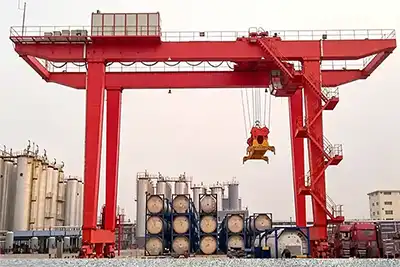
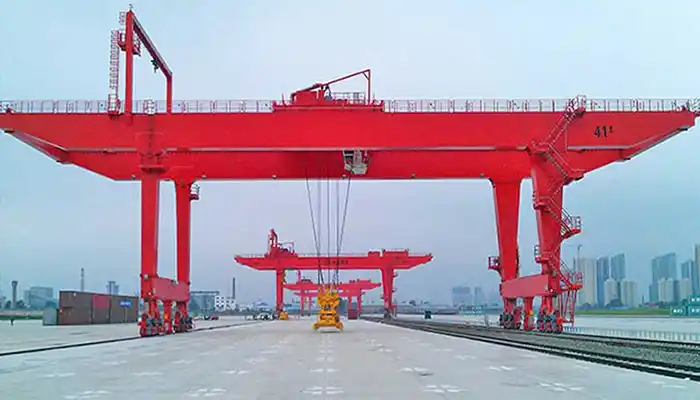 Rail travelling double girder gantry crane with container spreader for container handling
This guide focuses on practical considerations that matter to buyers:
- Container lifting capacity: Can the crane handle standard 20–40 ton ISO containers reliably?
- Yard layout compatibility: Does the crane fit your existing space and workflow?
- Environmental durability: Can it withstand coastal conditions, dust, or temperature extremes?
- Operational efficiency: Does it improve cycle times and reduce handling delays?
Selecting the right 40 ton container crane is critical for safe and efficient container handling. This section explains why crane capacity, yard layout compatibility, environmental durability, and operational efficiency are essential factors for buyers to consider.
Ports rely on cranes that can lift heavy containers quickly and safely while covering large outdoor areas. A 40 ton container crane is ideal for:
- Handling 20–40 ton ISO containers and bulk cargo efficiently
- Long-span travel with high-speed trolley motion for fast container movement
- Corrosion-resistant materials and coatings to withstand coastal or marine environments
- Integration with terminal management systems and container tracking solutions
These cranes are designed to keep operations moving smoothly, even in high-traffic terminals.
Inside warehouses and distribution hubs, containers, pallets, and crates need precise handling. Key requirements for a 40 ton container crane include:
- Safe lifting and positioning of heavy containers and crates
- Space-efficient layouts that maximize storage density without slowing operations
- Reliable operation for frequent cycles, minimizing downtime during peak handling
These cranes allow warehouse managers to move heavy loads efficiently while maintaining operational flow.
Industrial yards often handle oversized or bulky loads that require strong, versatile cranes. A 40 ton container crane in these environments must provide:
- Lifting and handling of large containers, crates, and bulk materials
- Wide span coverage for outdoor yards and open spaces
- Corrosion protection and safety systems, including load monitoring and anti-sway devices
With these features, cranes can operate safely in outdoor, high-demand conditions without compromising performance.
A 40 ton container crane is a balanced solution for most container handling needs. Choosing the right crane ensures that your operations remain efficient and safe:
- Provides sufficient lifting capacity for standard and oversized containers
- Improves operational efficiency, reducing loading and unloading time
- Offers flexibility for future heavier loads or yard expansion
- Durable design lowers maintenance costs and downtime
Investing in the right container handling crane isn't just about the weight it can lift—it's about improving safety, efficiency, and long-term reliability for your facility.
Understanding the needs of ports, logistics hubs, and heavy material yards helps buyers select the right 40 ton container crane. By focusing on lifting capacity, layout compatibility, environmental durability, and operational efficiency, your crane investment will deliver reliable and safe container handling for years.
Types of Container Cranes for Heavy-Duty Container Handling
Gantry cranes are the go-to solution for outdoor container terminals and large material yards. They are designed to cover long distances and lift heavy containers efficiently. These cranes run on rails and can span wide areas without requiring additional overhead structures, making them perfect for container yards with high traffic.
Key benefits of 40 ton container handling gantry cranes include:
- High lifting capacity: Handles containers, bulk cargo, and oversized crates up to 40 tons safely
- Wide span coverage: Efficiently moves containers across large yards without obstructing ground operations
- Corrosion-resistant construction: Marine-grade steel and protective coatings withstand coastal and humid environments
- Flexible operation options: Available with remote control or cab operation depending on workflow and operator preference
Gantry cranes allow terminal operators to keep containers moving quickly, reduce bottlenecks, and maintain safe yard operations, even in challenging outdoor conditions.
Bridge cranes, also called overhead cranes, are commonly used in warehouses and covered logistics hubs. These cranes run on overhead rails, which keeps the floor space clear for storage and movement of containers, crates, and heavy pallets.
Benefits for container handling include:
- Precision lifting: Ideal for delicate or irregular containers, crates, and pallets
- Space-efficient design: Overhead tracks free up floor space and allow tight indoor layouts
- Customizable hoists and attachments: Can handle different container types or palletized cargo
- Controlled trolley and bridge speeds: Supports high-frequency operations without sacrificing safety
Bridge cranes are best suited for indoor container operations where precision, repeatability, and efficient space use are critical.
Selecting the right crane for your facility requires balancing multiple factors:
- Layout and space constraints: Outdoor yards with open space favor gantry cranes; indoor warehouses with limited ceiling height or narrow aisles favor bridge cranes
- Load type: Heavy containers and bulk cargo for outdoor storage are best handled by gantries; precision indoor container handling benefits from bridge cranes
- Travel distance and workflow: Consider how far containers must move—gantries cover long outdoor distances efficiently, while bridges optimize indoor travel paths
- Environmental conditions: Gantries are built for exposure to weather, salt, and humidity; bridge cranes are easier to maintain indoors
- Operator preference: Both types offer cab or remote control options; the choice depends on visibility, safety, and handling requirements
Choosing the right type of 40 ton container crane ensures smooth container flow, improves efficiency, and reduces operational risks. Properly matching crane type to your facility layout and container handling needs is the foundation of a productive yard or warehouse.
This section naturally integrates SEO and long-tail keywords:
- Primary keywords: 40 ton container crane, container handling crane, gantry crane, bridge crane
- Long-tail keywords: 40 ton container crane for container yards, container handling crane for logistics hubs, heavy-duty container crane for ports
- Semantic keywords: ISO container crane, bulk material crane, indoor container crane, outdoor container crane, high-speed trolley
Site Conditions and Layout for Container Cranes
Before installing a 40 ton container crane, understanding your facility layout is essential. Even the strongest crane can underperform if it doesn't fit your yard or warehouse workflow.
Key considerations include:
- Clearance, span, and travel path: Ensure the crane can reach all container storage and loading/unloading areas without obstructions from buildings, storage racks, or other equipment. Check height clearance for cab operation or container stacks.
- Workflow integration: Map container movements from trucks, trains, or storage areas. Proper alignment minimizes unnecessary lifting or repositioning.
- Turnaround time optimization: Plan the crane path and travel distances to reduce idle time and speed up container handling cycles.
A carefully designed layout ensures the crane can operate efficiently, safely, and without disrupting other yard or warehouse operations.
Heavy container cranes exert substantial loads on rails and foundations. Proper ground preparation is critical for safe, reliable operations.
Practical steps include:
- Load distribution: Verify that crane rails and foundations can handle the crane's weight plus the maximum 40-ton container load evenly. Uneven support can lead to structural stress or rail misalignment.
- Soil and pavement evaluation: Conduct geotechnical testing to confirm the ground or concrete slab can bear the combined load of crane and containers. Reinforced concrete pads or steel beams may be required for outdoor gantry cranes.
- Foundation design: Ensure the foundation meets engineering and safety standards. Poor foundation design increases the risk of misalignment, vibration, or long-term wear.
Proper ground and foundation work reduces maintenance needs, operational downtime, and safety risks for container handling cranes.
For container yards and outdoor logistics hubs, environmental conditions can heavily impact crane longevity and performance.
Critical points to consider:
- Weather and climate exposure: Rain, wind, salt spray, and temperature extremes affect crane structure, electrical systems, and moving components.
- Drainage planning: Ensure rails and crane pathways remain dry. Accumulated water can damage foundations, rails, and electrical systems.
- Corrosion protection: Use marine-grade steel, protective coatings, galvanization, or stainless components to extend crane life in coastal or humid areas.
- Regular inspection and maintenance: Schedule routine checks for structural wear, lubrication, rust, and electrical systems to maintain long-term reliability.
Accounting for environmental conditions ensures that your 40 ton container crane remains operational, safe, and efficient, even under harsh outdoor conditions.
Corrosion Resistance and Environmental Durability for Container Cranes
Container cranes, especially those in ports and coastal logistics hubs, face constant exposure to harsh elements. Salt spray, high humidity, strong winds, and rain can accelerate rust and degrade crane components over time. Choosing a crane that is built to withstand these conditions is critical to maintaining operational reliability and safety.
Key considerations include:
- Salt spray and humidity: Coastal container yards require cranes with materials and coatings that resist corrosion.
- Wind and temperature extremes: Structural stability and moving components must endure gusts and thermal expansion without warping or misalignment.
- General outdoor exposure: UV radiation, dust, and rain can affect paint, electrical enclosures, and steel surfaces.
Selecting the right materials for structural and moving parts extends the service life of a container crane. For 40 ton cranes handling heavy containers outdoors, material choice is as important as lifting capacity.
Practical options include:
- Corrosion-resistant steel: Marine-grade steel for main girders and trolley structures
- Stainless steel components: For electrical housings, hoist drums, and fasteners
- Protective coatings: Epoxy, polyurethane, or zinc-rich primers on exposed steel
Surface treatments create a barrier against corrosion and wear, improving durability and reducing maintenance frequency.
Common options for container cranes include:
- ISO-standard paint systems: Multi-layer industrial coatings designed for heavy-duty outdoor applications
- Hot-dip galvanizing: Provides long-lasting protection against rust for steel components
- Specialized coatings: Applied to motors, gearboxes, and electrical enclosures for high-humidity or salt-laden environments
Even the best corrosion protection requires regular upkeep. Preventive maintenance ensures your container crane remains safe and efficient for years.
Practical maintenance measures include:
- Routine inspections: Check structural components, rails, and hoists for rust or corrosion
- Lubrication and cleaning: Regularly clean and lubricate moving parts to prevent wear and salt accumulation
- Replacement of high-wear components: Plan for periodic replacement of hooks, wires, rollers, and electrical seals
Load Handling Capabilities for Container Cranes
Handling ISO containers efficiently and safely is the primary function of a 40 ton container crane. Precision is key, especially when dealing with stacked containers or busy port operations.
Practical considerations include:
- Spreaders: Adjustable spreaders allow secure lifting of different container sizes (20 ft, 40 ft, or high-cube containers).
- Twist-lock mechanisms: Ensure containers are locked securely during lifting and transport, preventing accidents or load shifts.
- Precise alignment: Accurate positioning reduces the risk of collisions with other containers or structures, improving workflow efficiency.
Well-designed container handling systems help reduce loading/unloading time while maintaining operational safety.
Container cranes often handle more than just standard ISO containers. Heavy crates, machinery, or bulk materials require specialized attachments and lifting methods.
Key options include:
- Custom lifting attachments: Adaptable hooks, clamps, or frames for irregularly shaped loads.
- Slings and spreader beams: Distribute weight evenly for heavy crates or machinery.
- Magnet or clam shell grabs: Ideal for bulk materials like scrap metal, sand, or gravel.
Using the correct attachments ensures stability, prevents damage to cargo, and improves overall crane efficiency.
Safe load handling is critical for both operators and equipment. Modern 40 ton container cranes incorporate systems that actively monitor and manage lifting operations.
Important features include:
- Load Moment Indicators (LMIs): Monitor weight and boom position to prevent overloading.
- Overload protection systems: Automatically stop lifting if the load exceeds safe limits.
- Anti-sway and active load stabilization: Reduces swinging during travel or lifting, minimizing risk to cargo and nearby personnel.
These safety systems make container handling operations smoother, faster, and more reliable, especially in busy ports or logistics hubs.
Travel and Hoist Performance for Container Handling
In container yards and port terminals, travel speed can make a big difference in operational efficiency. A 40 ton container crane needs to move containers quickly across long distances without compromising safety.
Key considerations include:
- Long-span travel: The crane should cover the full length of the yard or terminal efficiently, minimizing idle time.
- Smooth acceleration and deceleration: Reduces wear on rails and mechanical components while keeping loads stable.
- Optimized cycle times: Faster travel directly improves container handling throughput, helping reduce congestion and turnaround times.
High-speed travel ensures that container cranes keep up with the fast pace of modern logistics operations.
Efficient container handling depends on smooth coordination between the trolley and hoist systems.
Practical features include:
- Synchronized motion: Allows the hoist to lift while the trolley moves, reducing overall handling time.
- Path planning: Helps avoid collisions with containers, vehicles, or structures.
- Smooth load transfer: Minimizes swinging or sudden movements, which protects cargo and equipment.
Coordinated motion ensures that containers are moved precisely and efficiently, even in busy terminals.
Not all container operations require maximum speed. Some loads, particularly irregular or fragile cargo, need precise positioning.
Options to consider:
- Variable speed control: Allows operators to switch between high-speed travel and slow, precise movement.
- Fine control for container alignment: Essential for stacking, truck loading, or integration with automated systems.
- Operator preference: Remote control or cab operation can further improve handling accuracy.
Adjustable speeds balance efficiency with safety, letting operators handle containers carefully when required.
The choice of drive systems impacts performance, energy efficiency, and maintenance requirements.
Key points include:
- AC drives: Reliable and robust for long-term heavy-duty operation.
- DC drives: Offer precise control, particularly useful for delicate container placement.
- Variable Frequency Drives (VFDs): Provide smooth acceleration, speed control, and energy savings while reducing mechanical stress.
- Power redundancy: Ensures crane operation continues safely in case of minor power fluctuations.
Selecting the right drive system ensures that a 40 ton container crane can handle containers efficiently, safely, and reliably over long distances.
Operator Options for Container Cranes
Remote control operation has become a standard for modern container yards, especially when handling heavy 40 ton loads in busy or outdoor environments. By allowing the operator to work at a safe distance, these systems improve visibility and reduce risks.
Key advantages include:
- Enhanced visibility: Operators can position themselves where they see the load and surroundings clearly.
- Improved safety: Reduces exposure to hazards such as moving containers, trucks, or machinery.
- Reduced fatigue: Operators can stand or move freely, avoiding the strain of cab-based operation during long shifts.
- Flexibility: Easy to switch control points depending on workflow needs.
Remote operation is particularly useful in large outdoor yards or coastal terminals where weather or space makes cab operation less practical.
Cab-operated cranes are still widely used, particularly in indoor warehouses or areas requiring precise container placement. They give operators full control and a stable environment for delicate operations.
Key benefits include:
- Operator comfort: Air-conditioned and ergonomically designed cabins reduce fatigue during long shifts.
- Full control: Direct operation of hoist, trolley, and bridge systems allows for fine adjustments.
- Elevated viewpoint: Provides better depth perception and positioning accuracy when stacking or loading containers.
- Ideal for precision tasks: Useful in covered warehouses or distribution centers with limited space.
Cab operation is best suited for indoor facilities or situations where precision is more important than speed over long distances.
Many modern container cranes now offer hybrid or semi-automated control, combining the best of cab and remote operation with automation technology.
Practical features include:
- Switchable operation modes: Operators can toggle between cab and remote control depending on task requirements.
- Integration with automation systems: Can connect to container tracking, yard management, or automated loading systems.
- Improved productivity: Reduces human error and optimizes cycle times while maintaining operator oversight.
Hybrid systems provide maximum flexibility, allowing crane operations to adapt to changing workloads, safety requirements, and container types.
Electrical, Control, and Safety Systems for Container Cranes
Modern 40 ton container cranes rely on robust electrical and control systems to ensure precise and reliable container handling. Programmable logic controllers (PLCs) and smart logic controllers are standard for managing hoist, trolley, and bridge operations.
Key considerations include:
- PLCs and smart controllers: Provide automated coordination of crane movements, reducing operator workload and improving accuracy.
- Human-Machine Interface (HMI): Displays real-time data such as load weight, trolley position, and system status, allowing operators to make informed decisions quickly.
- Integration with yard management systems: Facilitates container tracking, workflow optimization, and improved throughput.
Effective control systems ensure that container cranes operate smoothly, even in complex yard layouts or high-volume terminals.
Safety is critical for container cranes handling heavy loads in busy ports or logistics hubs. Advanced safety systems protect both operators and cargo.
Essential features include:
- Anti-collision systems: Prevent cranes from striking structures, other cranes, or vehicles in the yard.
- Zone limiting: Defines safe operating areas, restricting crane movement to designated paths.
- Emergency stops: Instantly halts crane movement in case of hazards, preventing accidents.
- Load monitoring: Includes overload protection and load moment indicators to ensure containers are lifted within safe limits.
Safety systems reduce the risk of accidents, protect cargo, and help maintain operational continuity in container handling operations.
Container cranes must meet regional and international safety and operational standards to ensure reliability and legal compliance.
Standards to consider:
- OSHA: Occupational safety and health requirements for crane operation in the workplace.
- ANSI: Crane design, testing, and operational safety guidelines.
- ISO: International standards for container handling, crane performance, and safety.
Adhering to these standards ensures that a 40 ton container crane operates safely and reliably while meeting regulatory requirements.
Procurement Considerations for Container Handling Cranes
When buying a 40 ton container crane, it's important to look beyond the initial purchase price. The true cost includes installation, operation, maintenance, and potential downtime.
Factors to evaluate:
- Initial purchase cost: Compare pricing for different crane types (gantry vs bridge) and specifications.
- Lifetime operational costs: Consider energy consumption, wear parts, and maintenance intervals.
- Maintenance and downtime: Frequent or costly maintenance can significantly affect total cost over the crane's lifespan.
Evaluating TCO ensures you invest in a container handling crane that delivers long-term value rather than just a low upfront price.
Choosing a trusted supplier is just as critical as the crane itself. Reliable vendors provide more than just equipment—they support smooth, long-term operations.
Key points to consider:
- Industry reputation and references: Look for suppliers with proven experience in ports, logistics hubs, or heavy material yards.
- After-sales support: Ensure technical assistance is available locally or via remote support.
- Spare parts availability: Quick access to critical components reduces downtime and keeps your crane operational.
A dependable supplier reduces operational risk and ensures that the container crane remains productive for years.
Every container yard or logistics facility has unique requirements. Customizing your 40 ton container crane ensures it meets your specific operational needs.
Practical options include:
- Container spreaders: Adjustable spreaders for different container sizes (20 ft, 40 ft, high-cube) or specialized bulk containers.
- Weatherproofing: Protective coatings, galvanization, or stainless components for outdoor use, especially in coastal yards.
- Control system customization: Remote operation, cab control, semi-automated modes, or integration with yard management systems.
Tailored cranes improve efficiency, safety, and adaptability to future operational changes.
Conclusion
Recap of Key Selection Factors
Selecting the right 40 ton container crane requires careful evaluation of multiple practical factors. These include:
- Crane type: Gantry cranes for outdoor yards and ports; bridge cranes for indoor warehouses or covered logistics hubs.
- Load handling capabilities: Ability to lift standard ISO containers, large crates, or bulk materials safely and efficiently.
- Travel and hoist performance: High-speed trolley and bridge motion with precise positioning and adjustable speeds.
- Operator options: Remote control, cab operation, or hybrid systems depending on workflow and safety requirements.
- Electrical, control, and safety systems: PLCs, HMIs, anti-collision, load monitoring, and compliance with OSHA, ANSI, and ISO standards.
- Environmental durability: Corrosion-resistant materials, surface treatments, and maintenance planning for outdoor or coastal deployment.
- Procurement considerations: Total cost of ownership, supplier reliability, after-sales support, spare parts availability, and customization options.
Aligning Crane Features with Operational Needs
The ultimate goal is to match crane features with your container handling requirements:
- Ports: Fast container movement, long-span travel, corrosion resistance for coastal conditions.
- Logistics hubs: Precision handling, indoor space optimization, frequent lifting cycles.
- Material yards: Robust construction, wide coverage for outdoor operations, heavy bulk load handling.
Proper alignment ensures safety, efficiency, and long-term productivity.
Send Us An Inquiry: Vendor Evaluation and Specification Comparison
Once the operational requirements are clear:
- Evaluate vendors: Check reputation, experience with container cranes, after-sales support, and spare parts availability.
- Compare specifications: Assess crane capacity, span, hoist and trolley speeds, operator options, and environmental suitability.
- Request quotations and customization options: Ensure spreaders, weatherproofing, and control systems meet your facility’s specific needs.