Why Crane Handling Systems Define Precast Plant Productivity
Why Handling Systems Define the Productivity of Precast Concrete Plants
Most Important Takeaway
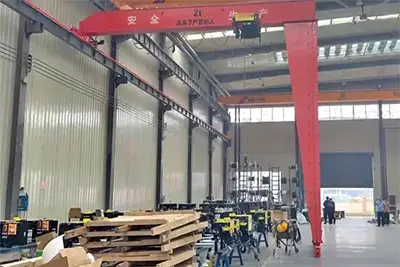
Efficient material handling cranes, including overhead cranes, gantry cranes, and Goliath gantry cranes, are the backbone of high-performing precast concrete plants. Without the right lifting and movement systems, plants experience bottlenecks, longer cycle times, higher labor costs, and increased risk of damage to precast elements.
Key Takeaways
- Material handling cranes directly impact cycle time, labor productivity, and overall plant output.
- Advanced overhead cranes and gantry cranes streamline transport of molds, cured elements, and raw materials across production stages.
- Proper integration of handling systems into plant layouts eliminates bottlenecks and enhances workflow efficiency.
- Goliath gantry cranes and automated solutions improve safety, ensure compliance, and reduce operational risk.
- Emerging technologies such as IoT, robotics, and predictive maintenance are reshaping precast plant material handling.
Introduction: Handling Systems as the Core of Precast Plant Efficiency
Precast plants face pressure to produce higher volumes faster, while maintaining precision. At the heart of efficient operations is the handling system. How precast elements are moved—from casting to curing to storage—can make or break plant productivity.
The right combination of material handling cranes, overhead cranes, gantry cranes, Goliath gantry cranes, conveyors, and AGVs ensures smooth, safe, and scalable operations.
Key functions of handling systems include:
- Moving molds, beams, panels, and slabs efficiently.
- Reducing manual labor and physical strain on workers.
- Minimizing material damage during transport and stacking.
- Supporting consistent workflow for higher output.
Types of Handling Systems in Precast Manufacturing
Material handling cranes and related systems are not one-size-fits-all. Different equipment serves different stages and load requirements.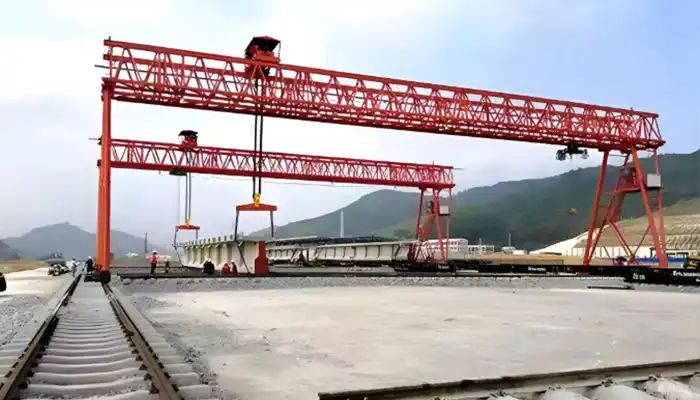 Gantry crane for precasting yards
- Single-girder cranes: Best for lighter loads and smaller workshops.
- Double-girder cranes: Handle heavier or oversized elements with stability.
- Bridge cranes: Span wide production bays for flexible material placement.
- Mobile and fixed gantry cranes: Ideal for moving large elements in open yards.
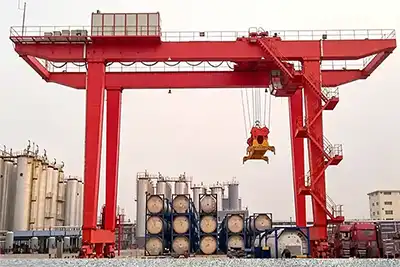
- Goliath gantry cranes: Designed for extremely heavy loads and high stacking capacity in outdoor storage areas.
- Provide continuous transport of molds and finished elements.
- Reduce dependency on forklifts or manual handling.
- Transport precast elements between casting, curing, and storage areas.
- Allow semi-automatic or fully automated movement with minimal labor.
- Vacuum lifters, magnetic clamps, and beam tongs.
- Protect delicate or irregularly shaped elements from cracking or surface damage.
Why Handling Systems Matter
Proper handling systems are more than equipment—they shape how the plant operates.
- Faster movement between production stages reduces waiting times.
- Continuous transport keeps curing and casting schedules on track.
- Integrated systems prevent bottlenecks.
- Material moves predictably, reducing congestion in work areas.
- Automation reduces reliance on manual lifting.
- Workers can focus on supervision, assembly, and quality control instead of moving heavy loads.
- Minimizes accidental damage caused by manual handling.
- Maintains alignment and surface finish of precast elements.
- Plants with overhead cranes in casting bays see faster load transfers than manual methods.
- Goliath gantry cranes enable stacking and retrieval of large beams without blocking storage yards.
- AGVs and conveyor systems allow a steady, uninterrupted workflow, especially for repetitive movements.
- Combining multiple handling systems improves flexibility, allowing plants to handle a variety of product shapes and sizes without slowing down operations.
How Handling Systems Drive Productivity in Precast Plants
In a precast concrete plant, productivity is not just about the speed of casting—it’s about how efficiently materials move from one stage to another. The right handling systems—including overhead cranes, gantry cranes, Goliath gantry cranes, and AGVs—directly shape throughput, labor efficiency, and workflow management.
One of the most immediate benefits of modern handling systems is faster movement of precast elements. By using overhead and gantry cranes to transport molds, panels, and cured elements, plants can significantly reduce idle time between production stages.
- Panels move straight from curing to storage or delivery without waiting.
- Multiple elements can be handled simultaneously, keeping production lines continuously active.
- Faster cycles allow plants to meet tight deadlines and manage larger project volumes.
Handling systems don’t just move concrete—they organize the workflow. When cranes and AGVs are integrated into the plant layout, material congestion is minimized, and space is used more efficiently.
- Overhead cranes and gantry cranes create clear movement paths for heavy elements.
- Storage and retrieval areas become predictable and efficient.
- Multiple projects or product types can be managed simultaneously without disrupting operations.
Manual lifting of heavy elements is slow, costly, and risky. Automated handling systems free workers from repetitive or dangerous tasks.
- Reduces dependency on forklifts and manual labor.
- Cuts labor costs while allowing staff to focus on supervision, assembly, and quality control.
- Enhances safety by minimizing exposure to heavy loads, repetitive strain, and potential accidents.
Modern precast plants handle a variety of shapes, sizes, and weights. Handling systems allow that variety without slowing production.
- Cranes and Goliath gantry cranes can lift heavy or irregularly shaped elements safely.
- Custom designs can be integrated into production without requiring manual adjustments or workflow changes.
- Flexible handling solutions support both standard and specialized precast elements.
Finally, careful handling preserves the integrity of every element produced. Damage from manual movement can lead to costly rework.
- Minimizes cracks, misalignment, or surface damage.
- Maintains dimensional accuracy of panels, beams, and slabs.
- Reduces waste and associated labor costs.
Practical Comparisons and Use Cases of Handling Systems in Precast Plants
Choosing the right handling system depends on the plant layout, the weight of precast elements, and the production workflow. Different cranes and automation solutions serve different purposes, and knowing their strengths helps managers make informed decisions.
Single-girder overhead cranes are simple, cost-effective, and ideal for smaller plants. They are best suited for lighter precast elements where space is limited.
- Efficient for lifting molds, panels, and small beams.
- Easier to install and maintain than double-girder systems.
- Fits well in compact production bays without complex infrastructure.
When plants handle heavy or oversized elements, double-girder overhead cranes are the preferred choice. Their robust design provides stability and allows for smooth, safe lifting.
- Supports heavy beams, slabs, and large panels.
- Reduces sway during lifting, protecting product quality.
- Ideal for medium to large indoor production bays.
Gantry cranes are typically used in large outdoor storage yards, where heavy elements need to be moved or stacked over wide areas.
- Efficient for loading, unloading, and organizing precast elements.
- Can cover long distances without the need for extensive overhead tracks.
- Flexible setup for outdoor operations where indoor cranes cannot reach.
For the heaviest precast elements, Goliath gantry cranes provide maximum lifting capacity and stacking efficiency. These massive cranes are crucial for large-scale projects.
- Handles extremely heavy beams, columns, and slabs safely.
- Enables high stacking density without compromising safety.
- Supports large precast storage yards and heavy transport operations.
Automation solutions like AGVs and transfer lines reduce reliance on manual labor and forklifts while keeping production continuous.
- Move molds, panels, and cured elements between production stages automatically.
- Maintain steady workflow with minimal human intervention.
- Reduce the risk of material damage and improve overall efficiency.
Cost, ROI, and Maintenance of Handling Systems in Precast Plants
Investing in modern material handling cranes, overhead cranes, gantry cranes, and Goliath gantry cranes may seem expensive upfront. But the productivity gains, labor savings, and reduced damage often outweigh the initial costs. Understanding the balance between investment, maintenance, and returns is crucial for plant managers.
The upfront cost of installing advanced handling systems can be significant, but faster throughput and leaner operations quickly justify the expense.
- High-capacity overhead cranes and gantry cranes allow multiple loads to move simultaneously, reducing idle time.
- Automated systems and AGVs decrease dependency on manual labor, freeing staff for other value-added tasks.
- Plants with well-designed handling infrastructure can produce more elements per shift without adding additional personnel.
Proper maintenance ensures that handling systems deliver reliable performance for years.
- Regular inspections of cranes, hoists, and gantry rails prevent breakdowns and costly downtime.
- Goliath gantry cranes, when maintained correctly, can operate efficiently for decades, making them a long-term investment.
- Lubrication, safety checks, and timely replacement of worn components keep production smooth and safe.
Real-world experience shows that investing in automated overhead cranes and gantry systems yields measurable benefits.
- Plants using these systems often see productivity gains of 30–50%.
- Labor costs can drop by up to 40%, since less manual lifting is required.
- Reduced damage to precast elements lowers scrap rates and saves on rework, further improving ROI.
- Faster cycle times allow plants to take on more projects without expanding the workforce or physical space.
In short, spending on advanced material handling cranes, including overhead cranes, gantry cranes, and Goliath gantry cranes, is not just about equipment—it’s about creating a more productive, safer, and cost-efficient precast plant.
Integrating Handling Systems into Precast Plant Design
Installing material handling cranes, overhead cranes, gantry cranes, or Goliath gantry cranes is only part of the equation. How these systems are integrated into the plant layout has a direct impact on productivity, safety, and scalability. Thoughtful planning ensures that handling systems operate efficiently and support the entire production workflow.
A well-designed layout reduces unnecessary movement and maximizes the efficiency of handling systems.
- Minimize the travel distance between casting, curing, and storage areas to save time and reduce wear on cranes.
- Align crane tracks and gantry rails with the main production flow to prevent bottlenecks.
- Position storage yards strategically to allow easy stacking and retrieval using Goliath gantry cranes or other gantry systems.
Handling systems must work in sync with production schedules to avoid downtime and delays.
- Schedule crane operations according to mold preparation, curing cycles, and delivery requirements.
- Use overhead cranes, AGVs, or automated transfer systems to move elements just-in-time between stages.
- Integrate handling system operations with plant management software for real-time visibility and control.
A flexible design ensures that the plant can grow without major infrastructure changes.
- Plan for modular expansion of crane systems and material handling routes.
- Ensure that new gantry cranes or overhead cranes can be added without disrupting existing production.
- Future-proof layouts for higher capacity or new precast element types, reducing the need for costly retrofits.
Safety, Risk Reduction, and Compliance in Precast Plants
Safety is a key consideration in any precast facility. Properly designed and maintained material handling cranes, overhead cranes, gantry cranes, and Goliath gantry cranes not only move heavy loads efficiently but also protect workers and reduce operational risks.
Manual lifting of precast elements is physically demanding and prone to accidents. Handling systems minimize these risks.
- Reduce reliance on manual lifting, lowering the risk of strain injuries.
- Decrease forklift traffic and congestion in production and storage areas.
- Allow operators to manage crane or AGV systems from safe control points, away from heavy loads.
Meeting industry standards is essential for legal compliance and safe operations.
- Handling systems help ensure adherence to workplace safety regulations, including ISO standards and OSHA guidelines.
- Properly configured cranes and gantry systems reduce the risk of accidents, supporting compliance with local safety codes.
- Routine inspections and maintenance of equipment maintain certification and operational safety standards.
Fewer accidents mean lower liability and insurance costs.
- Minimize workplace injuries and equipment-related incidents.
- Keep detailed maintenance and operation records for insurance and auditing purposes.
- Reduce legal exposure while improving confidence for staff and clients.
Future Trends in Material Handling Systems for Precast Plants
The precast industry is evolving rapidly, and modern handling systems are at the center of this transformation. From smart cranes to energy-efficient designs, plants that adopt these innovations gain higher productivity, safety, and sustainability.
Automation is no longer just an option—it’s becoming standard in high-volume precast facilities.
- Smart overhead cranes and robotic transfer systems can operate around the clock with minimal human intervention.
- Automated systems maintain consistent speed and precision, reducing human error.
- Supports continuous production, particularly for large-scale or high-frequency operations.
Digital technologies are helping plant managers track and optimize material handling operations.
- Sensors on overhead cranes, gantry cranes, and Goliath gantry cranes monitor usage, load limits, and performance in real time.
- Predictive maintenance alerts reduce unplanned downtime and extend equipment life.
- Data-driven insights allow managers to fine-tune workflow, improving efficiency and reducing operational costs.
Modern handling systems are designed with sustainability in mind, reducing both energy consumption and environmental impact.
- Energy-saving motors and regenerative braking in gantry and Goliath gantry cranes lower electricity costs.
- Optimized movements reduce wasted energy during lifting and transport.
- Sustainable handling practices support green building initiatives and align with corporate responsibility goals.
Conclusion: Handling Systems as a Key to Precast Plant Success
Efficient material handling cranes, including overhead cranes, gantry cranes, and Goliath gantry cranes, are more than equipment—they define how productive a precast plant can be. The right handling systems streamline movement of molds, panels, and cured elements, reduce cycle times, and improve overall workflow.
Beyond speed, they enhance safety by reducing manual lifting and congestion, lower labor costs through automation, and support scalable operations that grow with your plant’s needs.
Investing in well-planned handling infrastructure is not just about moving concrete from point A to point B. It’s about creating a reliable, efficient, and sustainable workflow that allows your precast business to operate at peak performance, deliver consistent quality, and respond to growing market demands.
This guide answers common questions about material handling cranes, overhead cranes, gantry cranes, and Goliath gantry cranes in precast plants.
Cranes and other handling systems move molds, panels, and cured elements safely and quickly.
- Cut production time by moving elements faster.
- Reduce manual labor and strain on workers.
- Keep the workflow smooth and prevent delays.
- Protect precast elements from cracks or damage.
Different cranes serve different purposes:
- Single-girder overhead cranes: Light loads, small indoor plants.
- Double-girder overhead cranes: Heavy or large elements, more stability.
- Gantry cranes: Move and stack elements in outdoor yards.
- Goliath gantry cranes: Lift the heaviest beams and slabs safely.
- AGVs and conveyors: Move elements automatically between stages.
They keep production moving and improve safety:
- Handle heavy loads quickly without delays.
- Reduce forklift traffic and manual lifting.
- Lower risk of accidents and material damage.
- Ensure production stays on schedule.
Investing in cranes and automation pays off quickly:
- Productivity can increase 30–50%.
- Labor costs may drop up to 40%.
- Less damage means fewer reworks and lower scrap rates.
- Faster cycle times allow more projects without extra staff or space.
A good layout makes cranes more effective:
- Keep travel distances short between casting, curing, and storage.
- Schedule crane operations with production stages.
- Plan for future expansion without major changes.
- Align crane tracks and storage areas to reduce congestion.
New tools make plants faster, safer, and greener:
- Automation and robotics: Cranes and transfer systems can run 24/7.
- IoT monitoring: Track crane usage, loads, and maintenance to prevent downtime.
- Energy-efficient designs: Modern cranes save energy and use regenerative braking.