Overhead & Gantry Cranes 2–15 t for Sheet Metal & Kitchen Fabrication
Overhead & Gantry Cranes (2–15 t) for Sheet Metal Fabrication / Kitchen & Bath: Buyer’s Guide
Most Important Takeaway
Efficient and precise handling of sheet metal, sinks, and components in kitchen & bath fabrication requires 2–15 t overhead or gantry cranes equipped with vacuum lifters, lifting beams, and trolley automation. Choosing the right crane protects delicate materials, reduces scrap, improves throughput, and supports multi-station laser cutting and welding operations.
Key Takeaways
- Protect delicate surfaces: Vacuum lifters and lifting beams prevent scratches, dents, and bending on thin sheet metal and sinks.
- Reduce scrap and rework: Precise crane positioning avoids material deformation that compromises laser cutting or welding quality.
- Improve workflow efficiency: Automated trolleys enable faster and safer movement across multiple fabrication stations.
- Support multi-station laser lines: Overhead and gantry cranes optimize production for high-volume kitchen & bath fabrication.
- Customize for specific applications: Adjustable trolleys, lifting beams, and optional sensors ensure crane compatibility with various sheet sizes and laser/welding stations.
Handling Sheet Metal in Kitchen & Bath Fabrication
Working with kitchen and bath components means dealing with large metal sheets, sinks, countertops, and custom parts. These items are often heavy but delicate at the same time. Thin sheets bend easily, edges can get scratched, and small errors in handling can lead to costly scrap.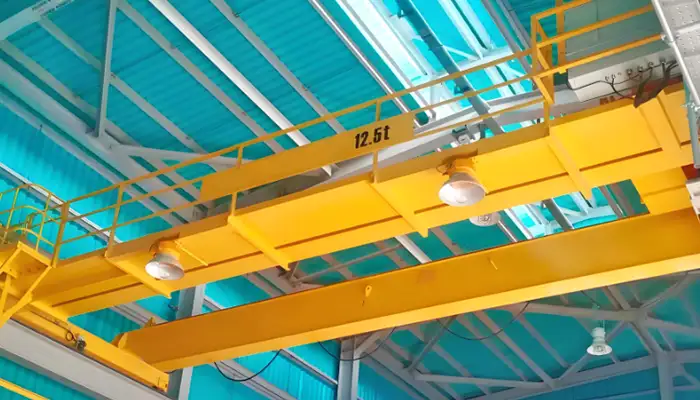
- Large sheets require stable lifting to avoid warping.
- Sinks and finished pieces must be handled carefully to prevent dents or scratches.
- Even minor misalignment can cause problems during laser cutting or welding.
Many shops still rely on forklifts or manual lifting, but this introduces risks: material can bend, edges can get damaged, and workflow slows down. Accuracy suffers, especially in laser cutting, where even a slightly tilted sheet can cause wasted material or rework.
- Manual lifting increases the chance of bent or scratched sheets.
- Forklifts are less precise for exact placement at laser or welding stations.
- Mistakes in sheet placement lead to scrap and delays.
Cranes in the 2–15 t range provide reliable lifting and precise positioning. They allow operators to move materials safely across multiple production stages—from storage to laser cutting, welding, or assembly—while protecting the product and improving workflow efficiency.
- Ensure safe handling of delicate materials with vacuum lifters or lifting beams.
- Provide precise positioning for laser cutting and welding operations.
- Reduce labor and risk of injuries by minimizing manual lifting.
- Support multi-station production lines, moving sheets and components efficiently.
Applications in Sheet Metal Fabrication
In a typical kitchen and bath fabrication shop, moving large metal sheets, sinks, countertops, and delicate components safely is critical for quality and efficiency. Overhead and gantry cranes help protect materials while keeping production flowing.
Large metal sheets don't move themselves. Getting them safely from storage to a laser cutting station is a challenge. Overhead and gantry cranes allow you to lift sheets evenly with spreader beams or vacuum lifters, keeping them flat and reducing the risk of bending.
- Lifts sheets without warping edges or corners.
- Ensures consistent placement for precise laser cutting.
- Reduces manual handling and potential operator fatigue.
Finished sinks, countertops, and thin sheet components are heavy but fragile. Dropping or scratching them during movement can lead to expensive scrap. Cranes with adjustable trolleys or vacuum lifters let operators safely position these items for welding or assembly.
- Protects finished surfaces from dents or scratches.
- Supports exact placement at welding or assembly stations.
- Speeds up handling compared to forklifts or manual lifting.
Some fabrication lines have multiple laser cutting or welding stations in one area. A single crane can service several stations, moving sheets or components efficiently across the line without repeated manual lifting. This improves throughput and keeps production flowing smoothly.
- Moves materials between stations quickly and safely.
- Reduces downtime waiting for manual handling.
- Allows one crane to serve multiple processes.
Overhead and gantry cranes provide flexibility in layout. Unlike fixed workstations or forklifts, cranes can reach across wide spans and long distances. This makes it easier to rearrange production lines or add new stations without major equipment changes.
- Supports changing production demands and line reconfiguration.
- Eliminates bottlenecks caused by limited forklift access.
- Improves overall workflow efficiency in the shop.
Typical Crane Features for 2–15 t Applications
For sheet metal and kitchen/bath fabrication, cranes in the 2–15 t range require specialized features to handle delicate materials safely while maintaining workflow efficiency. Key components include vacuum lifters, lifting beams, automated trolleys, adjustable hooks, and optional sensors.
Thin sheet metal, sinks, and delicate kitchen components can be easily damaged during lifting. Vacuum lifters hold materials securely without leaving scratches or dents. They are especially useful for handling fragile surfaces where even minor bending or edge marks can ruin a part.
- Lifts sheets and sinks without physical clamps or hooks.
- Reduces the risk of warping, bending, or surface damage.
- Makes single-operator handling possible for heavy or awkward items.
Large metal sheets or assemblies can bend if lifted at a single point. Lifting beams or spreader bars distribute weight evenly across the load. This keeps sheets flat during movement, preventing permanent deformation that can affect laser cutting quality or assembly fit.
- Prevents bending or warping of large sheets.
- Allows simultaneous lifting of multiple items for faster workflow.
- Can be custom-sized for specific sheet or sink dimensions.
Automated trolleys make it possible to move sheets or components with precise control. For laser cutting or welding operations, even slight misalignment can create scrap. Trolley automation ensures that materials arrive exactly where they're needed every time.
- Enables repeatable, precise positioning across stations.
- Reduces operator error and material waste.
- Can integrate with production software for multi-station operations.
Not all sheets, sinks, or components are the same size. Adjustable hooks and trolleys allow one crane to handle multiple dimensions and load types without swapping equipment. This flexibility improves workflow and reduces downtime.
- Adapts to different sheet sizes or component shapes.
- Supports quick changes between production tasks.
- Minimizes the need for multiple cranes or lifting devices.
For high-traffic production lines, sensors and end stops help prevent collisions and ensure exact placement. They add a layer of protection for both operators and materials. Cranes with these features are especially useful in multi-station setups where materials are moving continuously.
- Avoids accidental collisions with other equipment or workstations.
- Ensures consistent placement for laser cutting and welding accuracy.
- Improves safety and reduces costly material damage.
Why Proper Crane Selection Matters
Selecting the right crane is crucial for protecting delicate materials, maintaining laser cutting quality, improving workflow, and ensuring safety in kitchen and bath fabrication shops.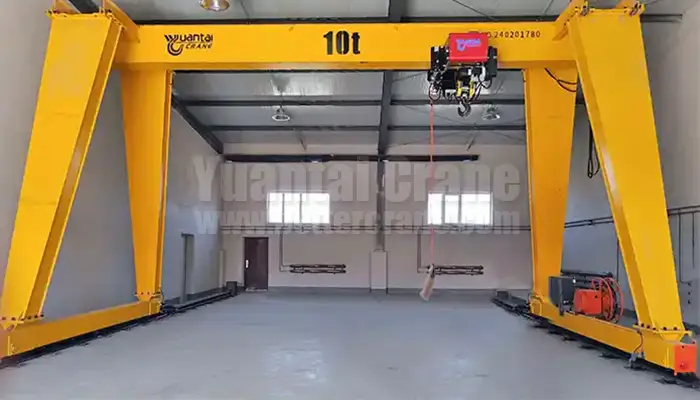
Thin sheet metal is surprisingly delicate. Even a small misplacement during lifting or movement can bend the sheet or leave marks that ruin the part. Choosing the right crane ensures that sheets, sinks, and countertops are handled gently and stay flat.
- Minimizes bending, warping, and surface scratches.
- Reduces the amount of scrap or rework needed.
- Protects high-value components like stainless steel sinks and countertops.
Laser cutting requires sheets to be perfectly flat and stable. Any tilt or uneven support can result in imprecise cuts, wasted material, or production delays. Cranes with proper lifting features keep sheets level from storage to cutting stations.
- Ensures accurate cuts on each sheet.
- Improves repeatability in multi-station laser lines.
- Supports high-quality finished products without rework.
Incorrect crane selection can slow down workflows, especially in busy fabrication shops. A crane that doesn't match your load weight or workspace can cause bottlenecks, increase labor costs, and reduce overall throughput.
- Speeds up material movement across laser, welding, and assembly stations.
- Reduces downtime caused by switching or adjusting equipment.
- Allows operators to focus on production rather than struggling with materials.
The right crane isn't just about efficiency—it's about safety. Properly selected overhead or gantry cranes reduce the risk of accidents, protect operators, and prevent damage to finished surfaces.
- Protects employees from heavy or awkward loads.
- Prevents collisions and accidental drops.
- Maintains the integrity of finished metal sheets, sinks, and components.
Benefits of Using 2–15 t Overhead & Gantry Cranes
Overhead and gantry cranes in the 2–15 t range offer numerous advantages for kitchen and bath fabrication shops. They protect delicate materials, reduce waste, improve workflow, and enhance safety across multiple production stations.
Metal sheets, sinks, and countertops can be easily scratched, dented, or bent during movement. Overhead and gantry cranes equipped with vacuum lifters, spreader beams, and adjustable trolleys handle these materials gently. This means finished surfaces remain intact, reducing the risk of costly scrap.
- Lifts thin sheets without leaving marks or bending edges.
- Safely moves sinks, countertops, and custom metal components.
- Maintains high-quality finishes from storage to assembly.
Misplaced sheets or components often lead to rework, which costs both time and money. Using the right crane ensures consistent, precise placement, which minimizes errors and material waste.
- Decreases the amount of damaged or unusable material.
- Reduces labor hours spent on correcting mistakes.
- Helps shops stay on schedule and maintain production targets.
Cranes in the 2–15 t range move materials efficiently across multiple stations, keeping laser cutting and welding lines running smoothly. Faster, more precise handling translates directly to higher throughput.
- Moves large sheets or multiple components at once.
- Supports multi-station operations without bottlenecks.
- Streamlines workflow for higher daily output.
A single overhead or gantry crane can serve multiple laser cutting and welding stations. This flexibility allows for better layout planning and reduces the need for multiple lifting devices, keeping the production floor cleaner and more organized.
- Handles materials across several workstations efficiently.
- Allows for flexible line configurations or expansion.
- Reduces equipment redundancy and overall shop clutter.
Manual lifting of heavy sheets and sinks is risky. Using cranes reduces the strain on operators, lowers the risk of accidents, and ensures safer material handling.
- Minimizes operator injuries from lifting or moving heavy items.
- Keeps work areas safer by controlling the movement of large components.
- Provides controlled, predictable handling in busy fabrication environments.
Choosing the Right Crane for Your Facility
Selecting the correct overhead or gantry crane ensures safe, efficient handling of delicate sheets, sinks, and countertops. Consider capacity, lifting options, automation, physical fit, and workflow integration when choosing your crane.
Before investing in an overhead or gantry crane, it's essential to know the weight of the heaviest sheets, sinks, or components you'll handle. Cranes in the 2–15 t range cover most kitchen and bath fabrication needs, but selecting the right capacity ensures safety and long-term reliability.
- Confirm maximum sheet weight and component dimensions.
- Include a safety margin of 10–20% to prevent overloading.
- Avoid undersized cranes that strain motors and hoists, reducing lifespan.
Different lifting attachments work best for different materials. Vacuum lifters, spreader beams, or adjustable hooks allow precise, safe handling of fragile sheets, sinks, and custom components. Choosing the right configuration reduces damage and increases efficiency.
- Vacuum lifters for delicate or smooth surfaces.
- Spreader beams to lift large sheets evenly.
- Adjustable trolleys to handle varying shapes and sizes.
Laser cutting and welding require exact positioning. Cranes with automated trolleys or programmable stops help place sheets perfectly every time, reducing scrap and rework. Automation also allows operators to focus on production rather than manually adjusting heavy loads.
- Automated trolleys for repeatable, precise placement.
- Sensors and end stops to prevent collisions and misalignment.
- Integration with multi-station lines for smooth workflow.
Cranes must fit your workspace. Verify span, hoist travel, and ceiling clearance to ensure smooth operation. A crane that is too large or too small can disrupt production rather than improve it.
- Measure total span required between support beams.
- Confirm hoist travel matches production line length.
- Ensure adequate ceiling height for safe lifting of tall stacks or components.
Your crane should complement your production line, not complicate it. Ensure it can move materials across multiple stations efficiently and adapt to future changes in layout. Flexibility is key for growing or multi-station operations.
- Supports several laser or welding stations without reconfiguration.
- Allows easy addition of new stations or lines.
- Keeps production flow smooth and reduces handling bottlenecks.
Why Choose Our Cranes
Our overhead and gantry cranes are designed specifically for kitchen and bath fabrication, providing customizable, precise, and durable lifting solutions that protect delicate materials and improve workflow efficiency.
Every fabrication shop has unique needs. Our cranes come with customizable vacuum lifters and adjustable trolleys, so you can handle thin sheets, sinks, countertops, and other delicate components safely and efficiently. This flexibility ensures that every part is lifted without damage, regardless of size or shape.
- Vacuum lifters prevent scratches and dents on finished surfaces.
- Adjustable trolleys adapt to varying sheet sizes and component shapes.
- Configurable setups allow quick changes between different production tasks.
Our cranes are designed with workflow in mind. The high-efficiency design ensures smooth, precise movement across laser cutting and welding stations, helping maintain quality while keeping production moving. Operators can place sheets exactly where they need to be without slowing the line.
- Automated trolley systems allow repeatable, precise positioning.
- Smooth, controlled lifts reduce the risk of material shifting during handling.
- Supports multi-station fabrication lines for consistent throughput.
Cranes in busy metal fabrication shops must endure daily use. Our cranes are built to last, with robust components suitable for frequent operation across multiple stations. This durability minimizes maintenance downtime and ensures long-term reliability.
- Heavy-duty steel construction for repeated lifts.
- Components tested for continuous operation in industrial environments.
- Low-maintenance design keeps your workflow uninterrupted.
Using the right crane directly impacts production quality. Our cranes have a proven track record of reducing scrap, protecting surfaces, and improving throughput in metal fabrication facilities, especially in kitchen and bath production lines.
- Maintains flat, stable positioning for laser cutting accuracy.
- Minimizes material waste and rework.
- Increases production efficiency while keeping operators safe.
FAQ: Sheet Metal Handling with Overhead & Gantry Cranes
Frequently asked questions about safely handling sheet metal, sinks, and components in kitchen and bath fabrication using overhead and gantry cranes.
Moving thin sheets or sinks by hand or with forklifts often causes scratches, dents, or bending. Overhead and gantry cranes equipped with vacuum lifters, spreader beams, and adjustable trolleys lift materials evenly and securely. This prevents damage and maintains the flatness of sheets, which is crucial for downstream processes like laser cutting and welding.
- Vacuum lifters hold sheets gently without clamps.
- Spreader beams distribute weight evenly across large sheets.
- Adjustable trolleys allow precise placement without bending or scratching.
Laser cutting and welding require exact placement and stable support. The right crane features ensure that materials remain level and positioned accurately for high-quality cuts.
Essential features include:
- Trolley automation for repeatable, precise positioning.
- Sensors and end stops to prevent collisions and maintain safety.
- Adjustable hooks and lifting attachments for handling sheets, sinks, or custom components of different sizes.
Cranes move materials quickly and safely across multiple stations, reducing manual handling delays. Instead of waiting for workers to lift, position, or move sheets and sinks, a crane can transport them from storage to laser cutting, welding, or assembly in one smooth operation.
- Supports multi-station production lines without bottlenecks.
- Reduces downtime caused by switching or repositioning equipment.
- Allows operators to focus on production rather than heavy lifting.
Most kitchen and bath fabrication requires cranes in the 2–15 t range. Choosing the right capacity ensures that large sheets, sinks, and custom metal components are lifted safely without straining the crane or risking damage.
- Include a safety margin of 10–20% above the maximum load.
- Select a crane that can accommodate both current and future production requirements.
- Consider lifting attachments that can handle a variety of sizes and weights efficiently.
Laser cutting machines require sheets to be flat and stable. Even slight misalignment can result in inaccurate cuts, wasted material, and costly rework. Cranes with automated trolleys and precise lifting systems ensure that each sheet is positioned exactly where it needs to be.
- Maintains flatness and alignment for consistent cutting quality.
- Reduces scrap and material waste.
- Supports high-volume production with repeatable accuracy.
Conclusion
Why the Right Crane Matters
Investing in a 2–15 t overhead or gantry crane is more than just buying lifting equipment. In kitchen and bath fabrication, it’s about keeping sheets, sinks, and components safe, flat, and ready for precise laser cutting or welding. The right crane reduces scrap, prevents damage, and keeps production moving efficiently.
Key Benefits Recap
- Protects delicate materials: Sheets, sinks, and countertops stay free from dents, scratches, or bending.
- Reduces waste and rework: Precise handling minimizes scrap and keeps production costs under control.
- Improves throughput: Supports multi-station laser cutting, welding, and assembly lines with consistent speed and accuracy.
- Enhances workplace safety: Minimizes manual lifting and potential operator injuries.
Next Steps for Your Facility
Selecting the best crane means matching capacity, lifting attachments, and automation features to your workflow. A consultation with a crane supplier can help identify the ideal setup for your production line, ensuring maximum efficiency, safety, and reliability.