Electric Straddle Carrier | 35T–80T Container Handling Solution for Ports & Terminals
Electric Straddle Carrier
Electric straddle carrier as a container handling solution is designed for modern yard operations where containers need to be lifted, transported, and stacked in a continuous and efficient workflow without relying on separate handling equipment.
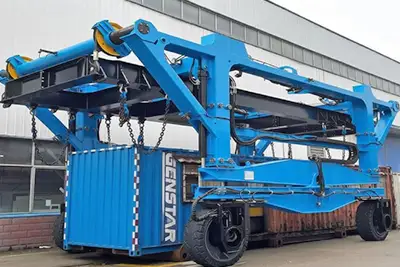
An electric straddle carrier is a yard machine used to lift, carry, and stack shipping containers. It moves containers directly inside the terminal without needing separate lifting and transport equipment. In practical operations, it handles both tasks in one continuous cycle.
It is powered by a lithium battery system instead of a diesel engine. In daily use, this means the machine runs quietly, produces no exhaust on site, and relies on electric charging rather than fuel supply.
In modern container terminals, the main requirement is not just lifting containers, but keeping container flow smooth and predictable. This machine is designed for that purpose.
It is commonly used to:
- Move containers between quay, yard, and truck areas
- Stack containers in storage blocks
- Support continuous loading and unloading cycles
- Reduce the number of handling steps in yard operations
In real projects, it is usually selected when container volume increases and yard efficiency becomes a priority.
In many terminals, diesel straddle carriers or reach stackers are still in use. However, as operating costs and environmental requirements increase, electric equipment is being introduced step by step.
The main reasons for replacement are practical:
- Fuel cost becomes high in continuous daily operation
- Diesel engines require more frequent maintenance over time
- Emission limits are stricter in port and coastal areas
- Noise control is required in terminals near cities or residential zones
The shift is not only about environment. It is also about keeping long-term operating costs under control.
Electric straddle carriers are used in different types of container handling sites where movement is frequent and continuous.
- Container terminals: Used for loading, unloading, stacking, and internal yard transport
- Intermodal rail yards: Used for transferring containers between trains and yard storage areas
- Logistics and distribution hubs: Used for internal container movement and sorting operations
- Container depots and stacking yards: Used for storing, stacking, and retrieving empty or loaded containers
Each environment has one common requirement: containers must keep moving without unnecessary delays.
From a buyer's point of view, the decision is usually based on operational pressure, not just equipment type.
In real use, the electric straddle carrier helps solve several key problems:
- High fuel consumption during continuous yard operation
- Increasing emissions pressure in regulated port environments
- Yard congestion caused by inefficient container flow
- Difficulty preparing for automated or semi-automated terminal systems
In practice, it supports a more stable working pattern. Containers move in a controlled flow, operating costs become more predictable, and the yard becomes easier to plan and manage over time.
Why Choose Electric Straddle Carrier
In daily yard operation, fuel is one of the biggest running costs. Diesel machines need constant refueling, especially in high-frequency container handling. Over time, this becomes a steady expense that is difficult to reduce.
An electric straddle carrier replaces fuel with electricity. In practical terms, this usually means lower energy cost per operating hour and more stable budgeting for long-term projects.
- No diesel fuel consumption during operation
- Lower energy cost per container move in many terminal conditions
- Less cost fluctuation compared to fuel price changes
Diesel-powered equipment has many moving engine components that require regular servicing. This includes oil changes, filters, and engine-related repairs. In continuous yard work, maintenance intervals become frequent.
Electric drive systems are simpler in structure. Fewer mechanical parts are involved in the power system, which helps reduce routine maintenance tasks.
- No engine oil system maintenance
- Fewer mechanical wear parts in the drive system
- Reduced downtime for scheduled servicing
- More stable daily availability in continuous operation
Modern ports are under increasing pressure to reduce emissions. In some regions, diesel equipment use is already restricted or heavily controlled.
Electric straddle carriers produce no direct exhaust emissions during operation. This makes them suitable for terminals that need to meet environmental standards without changing yard layout or workflow too often.
- No exhaust emissions in working zones
- Suitable for low-emission and green port policies
- Helps meet environmental compliance requirements
- Improves working environment for operators
Modern container terminals are moving toward digital control and semi-automated operations. Equipment is no longer just mechanical; it is also part of a data-driven system.
Electric straddle carriers are easier to connect with terminal management systems compared to traditional diesel units. This supports more coordinated yard operations.
- Compatible with smart terminal dispatch systems
- Supports real-time monitoring and scheduling
- Easier integration with fleet management platforms
- Suitable for future automation upgrades
In real projects, not every terminal is built from scratch. Most yards need to upgrade step by step without stopping operations.
Electric straddle carriers can be introduced into existing layouts with minimal disruption. They can operate alongside other handling equipment during transition periods.
- Can work with existing container handling equipment
- Suitable for phased electrification of yard fleets
- Adaptable to different yard sizes and layouts
- No need for complete terminal redesign
What Operators Should Consider Before Switching
Before choosing electric straddle carriers, operators usually evaluate a few practical conditions. These points affect real performance more than specifications alone.
Electric equipment depends on stable charging systems. Without proper planning, downtime can affect productivity.
Key considerations include:
- Availability of charging stations in the yard
- Charging time vs. operating shift planning
- Fast charging or opportunity charging options
- Space allocation for charging infrastructure
Different terminals have different working intensity levels. Some run continuously, while others operate in shifts.
Operators need to evaluate:
- Daily container volume
- Peak operation periods
- Required operating hours per charge cycle
- Backup equipment availability during charging
Yard design directly affects machine efficiency. Tight spaces or unclear traffic routes can reduce productivity.
Important factors include:
- Turning radius and aisle width
- Container stacking height and spacing
- Traffic separation between machines and trucks
- Workflow from quay to yard to dispatch
Electric systems require stable power infrastructure. This is especially important in high-load terminals.
Key points to check:
- Grid capacity of the terminal
- Load balancing during peak charging periods
- Backup power options if needed
- Future expansion capability of power system
In real projects, these factors are usually evaluated together. When properly planned, electric straddle carriers can operate smoothly within existing yard systems while reducing long-term operating pressure.
Product Introduction
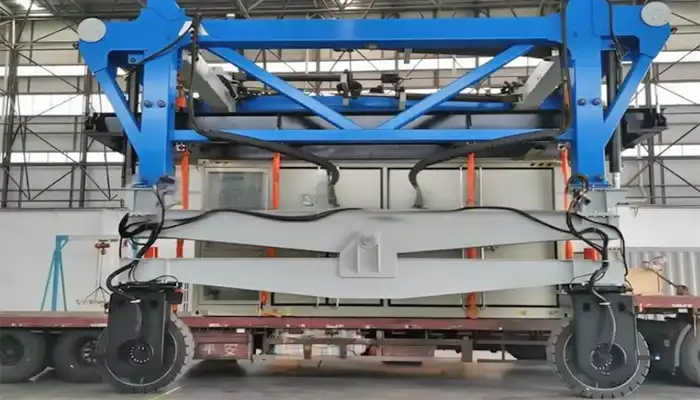
An electric straddle carrier is a yard machine used to lift, carry, and stack shipping containers. It moves containers directly inside the terminal without needing separate lifting and transport equipment. In practical operations, it handles both tasks in one continuous cycle.
It is powered by a lithium battery system instead of a diesel engine. In daily use, this means the machine runs quietly, produces no exhaust on site, and relies on electric charging rather than fuel supply.
An electric straddle carrier is a yard machine used to lift, carry, and stack shipping containers. It moves containers directly inside the terminal without needing separate lifting and transport equipment. In practical operations, it handles both tasks in one continuous cycle.
It is powered by a lithium battery system instead of a diesel engine. In daily use, this means the machine runs quietly, produces no exhaust on site, and relies on electric charging rather than fuel supply.
In modern container terminals, the main requirement is not just lifting containers, but keeping container flow smooth and predictable. This machine is designed for that purpose.
It is commonly used to:
- Move containers between quay, yard, and truck areas
- Stack containers in storage blocks
- Support continuous loading and unloading cycles
- Reduce the number of handling steps in yard operations
In real projects, it is usually selected when container volume increases and yard efficiency becomes a priority.
In many terminals, diesel straddle carriers or reach stackers are still in use. However, as operating costs and environmental requirements increase, electric equipment is being introduced step by step.
The main reasons for replacement are practical:
- Fuel cost becomes high in continuous daily operation
- Diesel engines require more frequent maintenance over time
- Emission limits are stricter in port and coastal areas
- Noise control is required in terminals near cities or residential zones
The shift is not only about environment. It is also about keeping long-term operating costs under control.
Electric straddle carriers are used in different types of container handling sites where movement is frequent and continuous.
- Container terminals: Used for loading, unloading, stacking, and internal yard transport
- Intermodal rail yards: Used for transferring containers between trains and yard storage areas
- Logistics and distribution hubs: Used for internal container movement and sorting operations
- Container depots and stacking yards: Used for storing, stacking, and retrieving empty or loaded containers
Each environment has one common requirement: containers must keep moving without unnecessary delays.
From a buyer's point of view, the decision is usually based on operational pressure, not just equipment type.
In real use, the electric straddle carrier helps solve several key problems:
- High fuel consumption during continuous yard operation
- Increasing emissions pressure in regulated port environments
- Yard congestion caused by inefficient container flow
- Difficulty preparing for automated or semi-automated terminal systems
In practice, it supports a more stable working pattern. Containers move in a controlled flow, operating costs become more predictable, and the yard becomes easier to plan and manage over time.
Technical Specifications Overview
| Model | Electric Straddle Carrier-35 | Electric Straddle Carrier-60 | Electric Straddle Carrier-80 |
| Capacity | 35t | 60t | 80t |
| Length×Width×Height | 7110×5100×6100mm | 9250×5700×6350mm | 1250×6000×6350mm |
| Effective Inner Width | 3100mm | 3750mm | 3750mm |
| Wheel Base | 6010mm | 6600mm | 7400mm |
| Level 2 Lift Height | 1550mm | 1750mm | 1750mm |
| Max.Lifting Height(Below spreader) | 6150mm | 6300mm | 6300mm |
| Min.Ground Clearance | 230mm | 310mm | 310mm |
| Tire Qty | 4 | 4 | 8 |
| Dead weight(not containspreader) | 21T | 35T | 45T |
| Permanent Magnet Synchronous Motor | 85KW | 105KW | 125KW |
| Lithium Battery | Lithium Iron Phosphate | ||
| Closed Travel Pump | Hytek/Danfoss/PMP | ||
| Empty-load max.speed | 115m/min | 80m/min | 80m/min |
| full toad max.speed | 80m/min | 50m/min | 50m/min |
| Turning Radius | 6950mm | 8900mm | 13000mm |
| Empty-load/full-load Gradeability | 6%/3% | ||
| Control mode | Cab(remote control optional) | ||
| Tires | Solid tire | ||
| Lifting Tools | Automatic Spreader | Oversized Load Spreader | |
| Remarks: Optional accessory brands. | |||
Technical Specifications Overview
The structural design of an electric straddle carrier directly affects how it performs in real yard conditions. In practice, factors like turning space, container clearance, and ground conditions are more important than numbers alone.
- Overall dimensions (L × W × H): Each model has a different size depending on its capacity. Larger models are built longer and wider to maintain stability when handling heavy containers. In real operations, this affects how much space is needed in the yard lanes.
- Inner width for container clearance: This is the working space inside the frame where the container passes through. It must match standard ISO container sizes. If the clearance is too tight, it will affect safe movement during stacking and transport.
- Wheelbase for stability and turning performance: The wheelbase determines how stable the machine is during lifting and how smoothly it turns in narrow yard lanes. A longer wheelbase improves stability, but it also requires more turning space.
- Ground clearance for yard conditions: Ground clearance is important for uneven surfaces, potholes, or container yard debris. Higher clearance helps prevent contact with ground obstacles during operation.
Load capacity defines the core working limit of the machine. In real terminal use, it is not only about lifting weight, but also about stability during movement.
- Rated lifting capacity per model: Each model is designed for a specific working load range, from 35 tons up to 80 tons. This rating is based on safe lifting under standard operating conditions.
- Stability under full-load conditions: When fully loaded, the machine must remain stable during travel, turning, and stacking. In practical operation, this is critical for safety and smooth yard flow, especially in high-frequency terminals.
The structural build of the machine affects durability, energy use, and ground pressure in daily operation.
Machine dead weight: The total weight of the equipment without load. Heavier structure usually means better stability, especially when handling heavy containers at higher stacking positions.
Tire configuration (4-wheel / 8-wheel structure for stability): Different models use different wheel arrangements. Smaller models often use a 4-wheel structure, while higher capacity units may use 8 wheels for better load distribution.
In practical yard conditions:
- 4-wheel setup → simpler structure, suitable for lighter workloads
- 8-wheel setup → better ground pressure distribution and higher stability under heavy loads
In real operation, these specifications work together. Dimensions affect maneuvering space, load capacity affects daily productivity, and structural design determines how stable the machine feels during continuous container handling.
Lifting System & Container Handling Capability
The lifting system of an electric straddle carrier is built around an automatic container spreader. In real operation, this is the part that connects directly to the container and makes lifting possible without manual hook work.
The spreader automatically locks onto standard ISO container corner castings. Once engaged, the machine can lift, carry, and stack containers in one continuous movement. In daily yard work, this reduces handling time and improves consistency during repetitive operations.
- Automatic locking and unlocking for standard containers
- Designed for fast cycle time in container terminals
- Reduces manual intervention during lifting operations
- Suitable for continuous yard operation environments
In some projects, containers are not always standard size. Heavy equipment, steel structures, or special cargo may require wider or customized lifting tools.
For this reason, an oversized load spreader can be added as an optional configuration. It allows the machine to handle non-standard loads when required.
- Used for oversized or special cargo handling
- Supports non-standard lifting points
- Suitable for industrial logistics and heavy cargo yards
- Optional depending on project requirements
The lifting system is designed with different height stages to support stacking and transport tasks. In real operation, the important point is not only how high it lifts, but how stable it remains during lifting and lowering.
There are generally two working levels:
- Working lift height – used for normal container pick-up and placement
- Maximum lift height (below spreader) – used for stacking containers in higher yard positions
In practical use, this allows the machine to support multi-layer stacking in container yards without changing equipment.
In real terminal operations, container handling is not limited to one size. A flexible lifting system is required to match different logistics demands.
This equipment is designed to handle standard and common container types used in global shipping operations:
- 20ft containers for general cargo and short-haul logistics
- 40ft containers for standard international shipping
- 45ft containers for high-capacity freight
- Standard ISO containers used in global container transport systems
- Oversized cargo containers (optional configuration required)
In daily yard work, most operations focus on 20ft and 40ft units, but flexibility is important when cargo types change.
From a buyer's perspective, the lifting system should always be matched with real yard requirements, not only theoretical capacity.
In practical evaluation, operators usually focus on:
- What container sizes are handled most frequently in the yard
- Whether 20ft and 40ft containers dominate daily operations
- Required stacking height in storage blocks
- Stability during full-load lifting and stacking cycles
Performance & Working Efficiency
In real container yard operation, travel speed affects how many container cycles can be completed in a shift. But it is not only about maximum speed. What matters more is how stable the machine performs under different load conditions.
- Empty load speed performance: When the machine is not carrying a container, it can move faster between stacking areas, truck lanes, and quay zones. This helps reduce waiting time between jobs and improves overall yard circulation.
- Full load speed performance: When carrying a container, the speed is reduced for safety and stability. In daily operation, this is normal and expected. The machine is designed to maintain control under full load conditions rather than focusing only on speed.
In practical use, operators usually balance speed with safety and traffic flow inside the yard.
Container yards are often narrow, busy, and full of moving equipment. Because of this, turning performance becomes an important part of daily operation.
- Turning radius per model: Each model has a different turning radius based on its size. Smaller models turn more easily in tight spaces, while larger models require wider turning lanes due to their longer wheelbase.
- Yard space requirement considerations: In real planning, turning space must match lane width and stacking block layout. If the yard is too tight, turning efficiency will be affected and movement speed will slow down.
In simple terms, better yard design allows smoother movement, not just better machine performance.
Gradeability refers to how well the machine can move on slopes or uneven ground. In container yards, this matters more than many buyers expect, especially in outdoor terminals or older port areas.
- Empty load slope performance: When not carrying a container, the machine can handle steeper slopes more easily. This is useful when moving between different yard levels or empty return trips.
- Full load slope performance: When carrying a full container, slope capability becomes more limited. The machine is designed to maintain safe movement without losing traction or stability.
In real operation, operators avoid steep movement paths when fully loaded to maintain safety and efficiency.
In real projects, performance is not determined by the machine alone. Yard layout plays a major role in how efficiently the equipment works every day.
- In tight yards, space is limited, so turning radius and lane width directly affect productivity. Machines may need more careful movement, which can reduce cycle speed.
- In open terminals, wider lanes and better traffic flow allow smoother operation. Equipment can move faster between zones with fewer interruptions.
Other practical factors also matter:
- Distance between stacking blocks and loading areas
- Traffic separation between trucks and handling equipment
- Container flow direction and dispatch planning
In real terms, a well-planned yard can improve productivity more than increasing machine speed. The equipment works best when the layout supports its movement instead of restricting it.
Power System & Energy Solution
The electric drive system is the core power source of the straddle carrier. In real yard operation, it replaces the diesel engine and provides direct, controlled power for both travel and lifting functions.
The system uses a Permanent Magnet Synchronous Motor (PMSM). This type of motor is widely used in industrial equipment because it delivers stable torque and efficient energy use during continuous operation.
- PMSM motor provides steady power output during start, stop, and load changes
- Each model is matched with a different power level based on lifting capacity
- Power output is designed to support both empty travel and full-load handling
In daily use, the key point is not only power, but smooth response during frequent container movements.
The energy storage system uses Lithium Iron Phosphate (LiFePO₄) batteries. In practical applications, this type of battery is selected because it performs well under heavy industrial duty cycles.
Compared with traditional battery types, LiFePO₄ is more stable during long working hours and frequent charging cycles.
- High safety performance under continuous loading conditions
- Long cycle life suitable for daily port operations
- Stable output even during high-intensity yard work
- Lower risk of overheating in demanding environments
In real projects, this stability is important because straddle carriers often run multiple shifts per day.
Energy capacity determines how long the machine can operate before recharging. In practical yard use, this is closely related to shift planning and charging strategy.
There are two key values:
- Nominal energy capacity – total stored energy in the battery system
- Usable energy capacity – the actual energy available for daily operation
Not all stored energy is used directly. A portion is reserved to protect battery life and ensure stable operation over time.
The operating duration per charge cycle depends on:
- Container handling intensity
- Travel distance inside the yard
- Load conditions (empty vs full operation cycles)
- Charging strategy used during the day
In real operation, the machine is designed to support continuous yard work with planned charging breaks rather than one long uninterrupted cycle.
In actual terminal operation, the power system is designed to follow a simple working rhythm:
- Charge the battery during planned intervals
- Operate continuously during active yard periods
- Repeat cycles based on shift schedule and container flow
There is no fuel handling, no engine idling, and fewer mechanical interruptions. Over time, this helps the yard maintain a more stable operating pattern, especially in high-volume container terminals.
Charging Systems & Infrastructure Requirements
The electric straddle carrier uses a CCS plug-in charging system as the standard solution. In real yard operation, this is the most common and basic charging method.
It works in a straightforward way. The machine is parked at the charging point, the cable is connected, and the battery is charged based on planned downtime.
- CCS plug-in system is widely used in industrial electric equipment
- Suitable for overnight charging or long rest periods
- Simple operation with stable and controlled charging process
- Easy to integrate into existing yard infrastructure
In practice, this system is often used when the machine is not in active operation, such as shift breaks or end-of-day charging.
For terminals with continuous container flow, faster charging methods are often required. These systems reduce downtime and help maintain operating cycles.
- FastCharge (pantograph system): This is an automated overhead charging system. The machine connects automatically without manual cable handling. It is commonly used in high-frequency operations where quick turnaround is required.
- Megawatt Charging System (MCS): MCS is designed for high-power charging in a very short time. In real use, it supports rapid energy recovery during short breaks in operation.
Both systems are used in environments where equipment cannot stay idle for long periods.
Charging strategy is not only about technology. In real projects, it is closely linked to how the yard is operated every day.
- Standard charging cycle considerations: Usually planned during long breaks, shift changes, or overnight downtime. This allows full or near-full battery recovery without affecting operations.
- Fast charging for shift-based operations: Used in terminals with multiple shifts per day. Equipment can be partially charged between working cycles to extend operating time.
- Opportunity charging during idle time: In real yard conditions, short waiting periods are used for quick charging sessions. This helps maintain continuous availability without full downtime.
Before selecting an electric straddle carrier system, infrastructure planning is just as important as the equipment itself. In real projects, this is often the key factor that affects performance.
- Power grid capacity: The terminal must have enough electrical capacity to support multiple charging units at the same time, especially in high-volume yards.
- Charging station layout: Charging points should be placed close to operational zones, but without blocking container traffic or yard circulation paths.
- Fleet charging scheduling strategy: Charging must be planned like part of the operation. Without scheduling, multiple machines charging at the same time can affect yard efficiency.
Smart Control & Digital Management Systems
In real terminal operation, equipment is not only about lifting containers. It is also about knowing what each machine is doing at any moment. The fleet monitoring system helps operators keep this under control.
It provides basic but important operational data that supports daily decision-making.
- Real-time battery status shows remaining power during operation
- Energy consumption tracking helps understand how each machine is being used
- Operational performance monitoring records working hours, travel activity, and usage patterns
In practical use, this information helps supervisors avoid unexpected downtime and plan the next shift more accurately.
Container yards often face one common problem: too many machines, too many tasks, and not enough coordination. Dispatch systems are used to organize this flow.
Instead of manual instructions, the system helps assign tasks based on real-time conditions.
- Automated scheduling support reduces manual coordination between operators and planners
- Equipment assignment optimization ensures each machine is used in the right place at the right time
- Reduced idle time improves overall yard efficiency by avoiding unnecessary waiting periods
Charging is not only a technical process. In busy terminals, it must be coordinated just like container movement.
Smart charging systems help manage this automatically.
- Automated charging task assignment ensures machines are charged when needed, not randomly
- Charging coordination across fleet prevents multiple machines charging at the same time in one area
- Improved uptime helps keep more machines available for active work during peak hours
Operational Performance in Real Conditions
In real port and terminal work, equipment rarely stops. It runs through long shifts, often under changing workload conditions. The electric straddle carrier is designed for this kind of continuous use.
It can operate across full working shifts with planned charging intervals. In practice, the machine moves between quay, yard stacks, and truck lanes without breaking the container flow.
- Suitable for long-hour daily operation in container terminals
- Works in shift-based or near-continuous yard schedules
- Maintains stable performance with planned charging breaks
In simple terms, it is built for steady work, not short or occasional use.
Container handling is not a single lift-and-move task. It is repeated lifting under different load conditions throughout the day. Stability becomes more important than speed alone.
The structure and electric drive system are designed to maintain control during repeated full-load cycles.
- Stable lifting and traveling under full container weight
- Controlled movement during frequent start-stop operations
- Consistent performance during long working cycles
In real operation, stability helps reduce handling risks and improves overall yard safety.
Some terminals operate with very high container turnover. Machines must respond quickly, but also repeat the same movement thousands of times per day.
The electric system supports fast response and smooth cycle repetition.
- Quick acceleration and deceleration during container moves
- Suitable for repetitive loading and unloading tasks
- Maintains consistent cycle time across shifts
In practice, this helps keep container flow moving without bottlenecks.
Not all containers are handled in the same way. Yards often deal with different container types and changing work demands throughout the day.
This equipment is designed to handle mixed operation conditions.
- Works with different container sizes such as 20ft, 40ft, and 45ft units
- Supports both empty and loaded container handling
- Handles standard and varied yard workflows
In real projects, flexibility is important because container types often change without warning.
Modern terminals rely on coordinated systems rather than isolated machines. Equipment must fit into the overall workflow.
The electric straddle carrier can be integrated into terminal management systems to support organized operations.
- Connects with yard planning and dispatch systems
- Supports coordinated container movement planning
- Works alongside other handling equipment in structured workflows
Safety & Reliability Features
In real yard conditions, the ground is not always smooth. There are potholes, uneven surfaces, and constant heavy movement. Solid industrial tires are used to handle these conditions without frequent failure.
They are designed for long working hours and heavy load support.
- Strong resistance to puncture and damage
- Stable performance on rough yard surfaces
- Suitable for continuous container yard operation
In daily use, this reduces unexpected downtime caused by tire issues.
The main structure of the machine carries heavy containers repeatedly throughout the day. Strength and rigidity are important for long-term reliability.
The frame is built to handle continuous loading cycles without deformation.
- Reinforced steel structure for heavy-duty operation
- Designed for repeated lifting and transport cycles
- Maintains stability under full-load working conditions
In practice, this ensures the machine remains reliable even under long-term intensive use.
In real operations, safety systems are required to respond quickly when something unexpected happens. Emergency controls are built into the operating system.
- Emergency stop function for immediate shutdown
- Safety interlocks during lifting and travel
- Operator-controlled response systems for abnormal conditions
These systems are not used daily, but they are important for safe operation in busy terminals.
Hydraulic and travel systems control lifting and movement. If they are unstable, the whole operation is affected.
These systems are designed for smooth and predictable performance.
- Stable lifting control during container handling
- Smooth travel response during load changes
- Reliable operation under continuous working cycles
In real use, stability helps reduce operational interruptions.
Operators spend long hours inside the cabin. Safety and comfort are important for consistent performance.
- Protected cabin structure for operator safety
- Clear visibility for container handling operations
- Ergonomic layout for long working shifts
In practice, better cabin design helps reduce operator fatigue and improve control accuracy.
Maintenance & Lifecycle Considerations
One of the practical advantages of electric systems is lower maintenance demand compared to diesel engines.
There are fewer mechanical parts involved in the power system.
- No engine oil changes or fuel system servicing
- Fewer moving parts in the drive system
- Reduced routine maintenance downtime
In daily operation, this helps keep machines available for longer working hours.
The battery system is a key part of long-term operation planning. It does not require daily maintenance, but its lifecycle must be managed properly.
- Designed for long cycle life under industrial use
- Requires planned replacement after long-term operation
- Performance depends on charging habits and workload intensity
In real projects, battery management is part of long-term cost planning.
Hydraulic systems still play an important role in lifting and movement. Regular checks are needed to maintain performance.
- Periodic inspection of hydraulic pressure and seals
- Monitoring of oil condition and system response
- Scheduled maintenance based on operating hours
In practice, this helps avoid sudden performance loss during operation.
Even solid tires experience wear over time due to heavy load and continuous movement.
- Regular inspection of tire surface condition
- Replacement planning based on yard workload
- Monitoring uneven wear patterns
Proper tire management helps maintain stability and safety during operation.
Modern systems include diagnostic functions that help monitor machine condition in real time.
- Fault detection and alert systems
- Performance monitoring through onboard software
- Maintenance planning based on usage data
Buyer Selection Guide -How to Choose the Right Electric Straddle Carrier
When selecting an electric straddle carrier, the decision is not only about lifting capacity. In real container terminal, logistics yard, and industrial material handling operations, performance depends on how well the machine matches yard conditions, container flow, and long-term operating planning.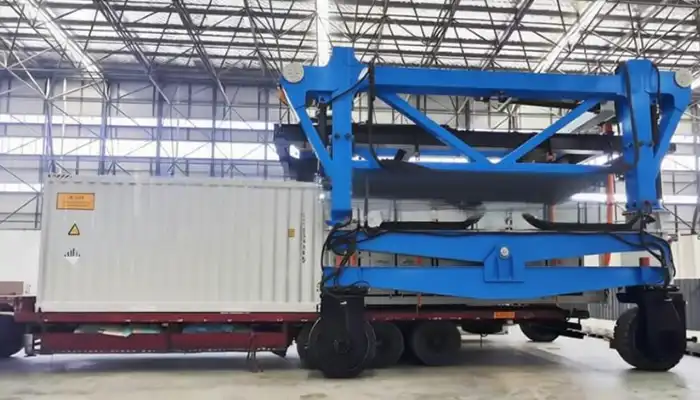
A correct selection ensures smooth daily operation, while a poor match often leads to bottlenecks, higher cost, or underused equipment.
When selecting an electric straddle carrier, the first thing to check is the yard layout. In real operation, space decides how smoothly the machine can move, turn, and position containers.
If the yard is narrow, turning radius becomes critical. Larger models need more space to turn, while smaller layouts may limit movement efficiency.
- Tight yards require smaller turning radius and more compact models
- Wide terminals allow higher-capacity machines with longer wheelbases
- Lane width and stacking block spacing directly affect daily efficiency
In practice, poor match between machine size and yard layout often leads to slower container flow.
Container volume is one of the most important factors in model selection. It determines how many working cycles the machine must complete in a day.
Electric straddle carriers are usually selected based on workload intensity rather than just lifting capacity.
- Low volume yards may operate efficiently with lighter models
- Medium to high volume terminals require balanced speed and capacity
- Continuous high-volume operations need higher-capacity and faster cycle machines
In real projects, underestimating container volume often leads to equipment bottlenecks.
Stacking height affects both yard design and machine stability during lifting. It is not only about how high the machine can lift, but also how safely it operates at that height.
- Higher stacking requirements need stronger lifting stability
- Multi-layer stacking increases demand on structural balance
- Yard planning must match stacking height with container storage layout
In practical operation, stability during lifting is more important than maximum height alone.
Since this is an electric system, power planning is part of equipment selection. Without proper charging setup, even a well-sized machine cannot operate efficiently.
- Availability of sufficient electrical capacity in the yard
- Location and number of charging stations
- Charging time planning between shifts or during idle periods
- Fast charging vs standard charging strategy
In real terminals, charging planning is often what determines overall equipment uptime.
Many modern terminals are moving toward semi-automated or fully digital operations. Equipment selection should consider this direction early.
Electric straddle carriers are often chosen because they can integrate into future systems more easily.
- Compatibility with terminal management systems
- Support for fleet monitoring and dispatch coordination
- Readiness for automated or semi-automated operation upgrades
In practice, this helps avoid future replacement when automation is introduced.
The decision is not only about purchase price. In real projects, lifecycle cost plays a much bigger role over time.
Electric straddle carriers usually reduce operating costs compared to diesel equipment, but initial investment and infrastructure must still be considered.
- Initial equipment investment
- Charging infrastructure setup cost
- Long-term energy cost vs fuel cost comparison
- Maintenance and battery lifecycle planning
In practical terms, buyers focus on total cost over the full service life, not just upfront price.
Frequently Asked Questions
In real electric straddle carrier selection and daily operation, buyers often focus on a few practical questions. These are not only technical concerns, but also directly related to yard efficiency, operating cost, and long-term reliability in container terminal and logistics yard environments.
The main difference is lifting capacity, structure size, and working intensity. In real operation, each model is designed for a different level of yard workload.
- 35T model → used for small depots and low-volume container handling
- 60T model → standard choice for most container terminals
- 80T model → used in heavy-duty ports and high-intensity stacking operations
In practice, the choice depends on daily container flow and yard scale, not just lifting capacity.
Battery duration depends on workload conditions. There is no fixed number because real operation varies from yard to yard.
In practical use, battery performance is affected by:
- Container weight (empty vs full loads)
- Travel distance inside the yard
- Frequency of lifting and stacking cycles
- Charging strategy during the day
In general, the system is designed to support a full working shift with planned charging intervals instead of continuous nonstop operation.
The machine uses different charging options depending on terminal setup and operation speed requirements.
- CCS plug-in charging (standard) → used for regular charging during breaks or off-shift periods
- FastCharge system (pantograph type) → used for quick charging during short stops
- Megawatt Charging System (MCS) → used in high-frequency terminals for fast energy recovery
In real projects, the charging system is selected based on operating intensity and power availability.
Yes. The electric straddle carrier can be used in semi-automated or fully integrated terminal environments.
In real applications, it can connect with terminal systems for:
- Task dispatching
- Fleet coordination
- Yard movement planning
- Charging management
In practice, it is often chosen for terminals planning digital or automated upgrades.
Compared to diesel machines, maintenance requirements are generally lower because there is no combustion engine.
Key differences include:
- No engine oil changes or fuel system servicing
- Fewer mechanical wear components in the power system
- Reduced routine maintenance downtime
However, regular checks are still required for:
- Hydraulic systems
- Tires and structural components
- Electrical and battery systems
In real operation, maintenance is more predictable and less frequent.
Stacking capacity depends on model configuration and yard design. It is not only about lifting height, but also about stability during operation.
In general:
- Standard operations support multiple-layer stacking in container yards
- Higher-capacity models allow higher and heavier stacking conditions
- Actual stacking height is also affected by yard layout and safety rules
In practice, operators prioritize safe and stable stacking rather than maximum theoretical height.
Contact to Get Tailor Solutions for Your Project
Choosing the right electric straddle carrier is not only about capacity or specifications. It depends on how your yard actually works every day—container flow, space, and operating schedule. A simple discussion can help avoid wrong selection and improve long-term performance.
Get a Tailor-Made Solution
- Share your yard layout or basic project details
- Get matched model selection (35T / 60T / 80T)
- Receive advice on capacity, stacking height, and working flow
- Check charging system and power requirements
- Compare ROI and operating cost for your case
Each project is different. Some yards focus on high volume, others on limited space or specific container types. Because of this, a standard solution often does not give the best result in real operation.
A tailored plan helps make sure the equipment fits your yard, not the other way around.