European vs Conventional Overhead Cranes: True Cost Breakdown
Key Takeaway
When choosing between European design overhead cranes and conventional cranes, buyers must weigh factors like initial costs, long-term performance, energy efficiency, and safety features. European designs typically offer superior energy efficiency, customization, and durability, while conventional cranes come at a lower upfront cost but may lead to higher maintenance and energy bills in the long run.
- European design cranes are built for high performance, precision engineering, and energy efficiency, resulting in higher initial costs but lower long-term operating expenses.
- Conventional overhead cranes are more budget-friendly initially but tend to have higher maintenance costs, lower efficiency, and fewer safety features.
- Energy efficiency and durability in European design cranes contribute to significant savings over time.
- Safety features such as overload protection and remote monitoring are more advanced in European cranes, making them suitable for demanding environments.
- Customization options in European cranes make them ideal for specific industrial needs, while conventional cranes offer limited flexibility.

Introduction
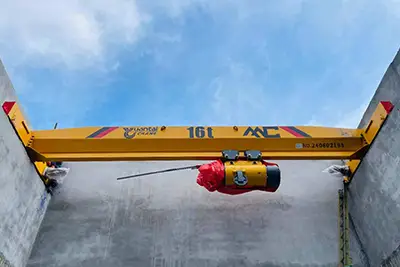
Overhead cranes—also known as bridge cranes or electric overhead travelling (EOT) cranes—are heavy-duty machines used to move materials in industrial environments. These cranes are typically installed on rails mounted on the ceiling or overhead structure, allowing them to lift and transport heavy loads across large spaces without taking up valuable floor area.
Overhead cranes are designed to improve workflow efficiency, reduce labor costs, and maximize space usage in facilities that need to handle heavy, large items on a regular basis. By operating on elevated runways, they keep the floor area clear while enabling safe and controlled material movement.
- Steel Mills: Moving bulky materials such as beams, billets, and slabs.
- Manufacturing Plants: Lifting machinery, parts, and raw materials.
- Warehouses: Handling pallets, containers, and heavy inventory.
When it comes to overhead cranes, there are two primary design categories: European design cranes and conventional cranes. The differences between these designs affect everything from performance to long-term cost, making it important to understand what each type offers.
- Built for high performance, compactness, and advanced functionality.
- Typically use lighter materials, making them more energy-efficient and space-efficient.
- Offer advanced safety features, precision controls, and integration with modern technologies like remote monitoring and predictive maintenance.
- Designed for basic lifting functions with a focus on cost-effectiveness.
- More affordable upfront, but they may require higher maintenance and higher energy usage.
- Generally lack the advanced features or customization options of European cranes.
This article breaks down the differences between European design overhead cranes and conventional cranes, giving you a clear idea of what each option offers in terms of cost, performance, and overall value.
- Understand what you're really paying for beyond the initial purchase price.
- Make an informed decision based on performance needs, maintenance expectations, and the long-term efficiency of your crane.
- Consider factors like energy consumption, safety, and durability that affect operational costs and equipment longevity.
By the end of this article, you'll have a clearer picture of which crane is the right investment for your specific business needs.
Design Philosophy
The design philosophy behind an overhead crane directly influences its performance, efficiency, operating cost, and long-term reliability. Below, we compare how European design cranes and conventional overhead cranes approach engineering and functionality.
European design cranes are built with precision engineering in mind, focusing on efficiency, performance, and compactness. These cranes are specifically tailored to meet the needs of industries that demand high standards for performance and minimal energy consumption.
European cranes are engineered to be space-saving, often using lighter materials without compromising strength. This results in cranes that are smaller yet capable of handling substantial loads with ease—an important advantage in workshops with limited headroom or tight layouts.
These cranes often incorporate high-strength steel, aluminum alloys, and other lightweight materials, reducing overall weight while enhancing durability and energy efficiency. This helps businesses lower operating costs over time by reducing the energy required to run the crane.
For environments requiring continuous operation, such as manufacturing plants or steel mills, European cranes are particularly well suited. They are designed to withstand high-frequency lifting cycles, delivering smooth operation with minimal downtime.
Conventional cranes take a more basic approach to design, prioritizing simplicity and cost-effectiveness over advanced features or high-end performance.
These cranes are typically built to handle basic lifting tasks. They often use heavier steel and fewer advanced materials, resulting in a more robust but less energy-efficient design. Over time, this can lead to higher operating costs due to increased power consumption.
Conventional overhead cranes are a practical solution for standard operations where budget is the primary concern. They are well suited for basic warehouse operations or simple manufacturing tasks that do not require advanced controls, high efficiency, or continuous-duty performance.
Performance and Efficiency
Performance and efficiency directly affect operating costs, productivity, and long-term crane reliability. Below is a structured comparison between European design cranes and conventional cranes from an operational perspective.
European design cranes stand out for their energy-efficient design, delivering measurable benefits in both operational cost control and overall performance.
These cranes are equipped with advanced motors and intelligent control systems that actively reduce energy consumption. Over time, this translates into lower electricity bills and a more sustainable operation, particularly in facilities with frequent lifting cycles.
European cranes perform exceptionally well in high-demand environments by offering fast lifting speeds and precise control. Whether handling heavy loads in a steel mill or moving delicate components in a manufacturing plant, they ensure smooth operation, higher accuracy, and improved workflow efficiency.
A key advantage of European cranes is their reliability. With integrated predictive maintenance systems and advanced monitoring features, potential issues can be identified early. This reduces unexpected failures, lowers maintenance costs, and minimizes downtime.
Conventional cranes remain a practical solution for basic lifting tasks, but they are generally less energy-efficient and may lead to higher long-term operating costs.
Conventional cranes are usually not designed with energy-saving features. As a result, they consume more electricity, leading to higher operating costs, especially in applications involving frequent or continuous lifting.
These cranes typically offer slower lifting speeds and less precise control systems. This reduced precision can affect productivity, particularly when handling heavy or sensitive loads that require careful positioning.
Due to simpler mechanical and control designs, conventional cranes are more prone to wear and tear. They often require more frequent repairs, resulting in increased downtime and higher maintenance expenses over the crane's service life.
Overall, European design cranes deliver superior energy efficiency, precision, and reliability, helping reduce long-term operational costs. Conventional cranes, while more economical initially, are typically less efficient, slower, and require more maintenance—making them less suitable for demanding applications.
Cost Implications
Cost evaluation should go beyond the purchase price. A proper comparison between European design cranes and conventional cranes requires looking at both initial investment and long-term ownership costs.
When purchasing an overhead crane, the initial purchase cost is often a deciding factor. However, understanding how this upfront expense translates into long-term value is critical for making a sound investment.
- Higher Upfront Price: European cranes typically have a higher purchase price due to advanced engineering, superior materials, and cutting-edge technology.
- Long-Term Value: The higher initial investment delivers better performance, customization options, and greater longevity, resulting in fewer repairs and higher productivity over time.
- Lower Initial Cost: Conventional cranes are more affordable upfront due to their simpler design and use of basic materials.
- Lower Upfront, Higher Long-Term: Initial savings may be offset by higher expenses related to maintenance, energy consumption, and part replacements.
- European Design Cranes: Built for durability with less frequent maintenance. Features such as predictive maintenance systems reduce unexpected failures, lowering maintenance costs and downtime.
- Conventional Cranes: Require more frequent repairs due to simpler designs and lower-quality materials, resulting in higher ongoing maintenance expenses.
- European Design Cranes: Use energy-efficient motors, smart control systems, and advanced drives, leading to lower energy consumption and reduced electricity costs.
- Conventional Cranes: Typically consume more energy due to the absence of advanced energy-saving features, increasing operating costs in high-demand environments.
- European Design Cranes: High-quality construction results in less frequent part replacement and longer component life, reducing total ownership costs.
- Conventional Cranes: More frequent replacement of components such as motors or braking systems is common, increasing long-term expenses.
While European design cranes involve a higher initial investment, they deliver stronger long-term value through lower maintenance costs, energy savings, and fewer part replacements. Conventional cranes, though less expensive at purchase, often incur higher operating costs over time.
The most cost-effective choice depends on balancing upfront budget constraints with long-term operational savings.
Safety Features
Safety is a critical consideration in crane operations. Below, we compare the advanced safety features of European design cranes with the more basic safety provisions of conventional cranes.
European design cranes prioritize safety with multiple advanced features to protect both operators and equipment, making them ideal for high-risk industrial environments.
Equipped with overload protection systems, these cranes prevent lifting beyond rated capacity. Emergency stop buttons allow operators to halt the crane immediately in case of malfunction or hazards.
In facilities with multiple cranes or constrained spaces, anti-collision systems prevent accidental collisions, protecting both personnel and equipment from damage.
Many European cranes feature remote monitoring systems that track load weight, operational conditions, and performance in real time, allowing potential issues to be addressed early.
Designed to meet or exceed international safety standards, these cranes are suitable for hazardous environments like steel mills, chemical plants, and oil rigs, providing peace of mind to operators and facility managers.
European cranes emphasize operator ergonomics with intuitive controls and user-friendly design. This reduces fatigue, lowers the risk of errors, and increases productivity.
Conventional cranes meet basic safety standards but generally lack advanced features, making them suitable for lower-risk or standard operations.
Conventional cranes typically include minimal safety features such as basic overload protection and emergency stop buttons. While functional, these systems are less advanced than European counterparts.
Most conventional cranes lack anti-collision systems and advanced monitoring, which can increase the risk of accidents in crowded or high-risk facilities.
While conventional cranes meet basic industry standards, they may not adhere to the latest international regulations, which could be a concern in hazardous or high-risk industries.
European design cranes provide a complete suite of advanced safety features—overload protection, emergency stops, anti-collision systems, remote monitoring, and ergonomic controls— ideal for high-risk environments. Conventional cranes meet basic safety needs but lack sophisticated systems required for complex or hazardous operations. Choosing the right crane requires evaluating both safety capabilities and operational risks.
Durability and Reliability
Durability and reliability are crucial factors for cranes operating in demanding industrial environments. Here's how European design cranes compare to conventional cranes in terms of long-term performance and operational dependability.
European design cranes are engineered for long-term reliability and continuous operation, withstanding harsh environments and heavy-duty applications.
Built with high-grade steel and other durable materials, European cranes handle heavy loads and endure harsh conditions, ensuring years of reliable operation.
Whether used in a steel mill, manufacturing plant, or outdoor environment, European cranes maintain continuous performance under extreme temperatures and operational demands, with minimal wear and tear.
Designed for long-term reliability, these cranes remain in optimal working condition over years of high-demand usage, minimizing performance drops and operational disruptions.
Conventional cranes are suitable for standard lifting tasks but are not engineered for continuous operation or extreme conditions, limiting their long-term reliability.
Using lower-quality materials, conventional cranes experience higher wear and tear and are generally intended for moderate use, reducing their lifespan in demanding environments.
Basic components in conventional cranes make them more prone to wear and tear, leading to increased downtime and frequent maintenance, which can disrupt operations.
Conventional cranes are best for less demanding applications. In environments requiring high-frequency lifting, they may experience fatigue and require more maintenance than European designs.
European design cranes excel in long-term, high-demand use with durable materials and robust construction, ensuring reliable operation. Conversely, conventional cranes are more prone to wear and downtime, making them less reliable under demanding conditions. Choosing the right crane depends on the operational durability and reliability required for your facility.
Customization and Flexibility
Customization and flexibility are key advantages of European design cranes, allowing them to meet a variety of industrial needs more effectively than conventional cranes.
European cranes are designed for adaptability, offering multiple options for lifting accessories, control systems, and hoists to match specific operational requirements.
Businesses can tailor European cranes with different lifting accessories, hoists, and control systems to handle varied loads and operational environments, providing versatility across industries.
Designed for specialized industries like steel mills, foundries, and automated factories, European cranes can be equipped with specialized lifting gear for handling heavy or sensitive materials.
Many European cranes can integrate with automation systems and remote controls, boosting productivity and enabling more efficient, streamlined operations.
Conventional cranes are reliable for standard operations but have limited options for customization or handling complex lifting tasks.
Conventional cranes come with basic features and offer limited adaptability to specific lifting needs, which can be a drawback for operations that require handling unique materials or conditions.
Conventional cranes are suitable for simple lifting tasks but lack flexibility for complex operations like hazardous materials handling, tight-space operations, or automated lifting processes.
European design cranes excel in customization and flexibility, allowing businesses to adapt to specialized tasks and automated processes. Conventional cranes are more rigid in design and better suited for standard lifting tasks where advanced features or customization are less critical.
Technology and Innovation
Technology and innovation differentiate European design cranes from conventional models, offering advanced features that improve performance, efficiency, and operational safety.
European design cranes incorporate advanced technologies and innovative systems that enhance efficiency and operational performance.
Equipped with IoT sensors for real-time monitoring of crane health, load capacity, and operating conditions, enabling predictive maintenance to reduce downtime and unexpected repairs.
Many European cranes feature remote control systems, allowing operators to manage functions safely from a distance, especially in hazardous or ergonomic-critical environments.
Designed to integrate with smart factories and automated operations, European cranes can connect with centralized control systems, improving productivity and minimizing downtime.
Conventional cranes are functional for standard tasks but lack advanced technological features and automation, limiting efficiency in modern industrial settings.
Conventional cranes typically use basic controls and lack advanced automation or data monitoring systems, reducing operational efficiency compared to European models.
Conventional cranes are generally incompatible with smart technologies such as IoT or remote control systems, preventing seamless integration with modern automated workflows.
European design cranes lead in technological innovation, offering features like IoT monitoring, predictive maintenance, and remote control capabilities, enhancing performance, reducing operational costs, and integrating with smart factories. Conventional cranes provide more basic functionality, with limited automation and integration, making them less suitable for high-tech operations.
Environmental Impact
Environmental considerations are increasingly important in industrial operations. European design cranes are engineered to minimize environmental impact while maintaining high performance.
European cranes are designed with environmental impact in mind, incorporating features that reduce energy usage, emissions, and noise.
European cranes use energy-efficient motors, drives, and control systems that reduce electricity consumption, lower operational costs, and decrease the carbon footprint.
Many European design cranes are built with sustainable materials, including recyclable components and eco-friendly coatings, reducing environmental impact and supporting sustainable industrial practices.
European cranes are engineered for low emissions and reduced noise levels. Their energy-efficient motors and advanced systems help meet environmental regulations and create a quieter, cleaner workspace.
Conventional cranes typically focus less on environmental impact, relying on older, less efficient technologies.
Conventional cranes often use less efficient motors and older designs, resulting in higher electricity use and greater operational costs.
Due to their older technology and inefficient design, conventional cranes generally produce higher emissions and noise pollution, which can hinder sustainability goals and regulatory compliance.
European design cranes lead in environmental responsibility, with energy-efficient systems, sustainable materials, and low emissions. Conventional cranes, while functional, have a larger environmental footprint due to higher energy use and older technologies. For companies focused on sustainability, European cranes offer a cleaner, more responsible choice.
What Questions Does This Article Solve?
This article provides valuable insights and answers to several important questions that can help guide your decision when purchasing an overhead crane.
The article compares European design cranes with conventional cranes, highlighting differences in design philosophy, performance, efficiency, safety features, durability, and customization options. European cranes are engineered for precision, high performance, and energy efficiency, while conventional cranes are more cost-effective upfront but may not provide the same level of long-term reliability or advanced features.
The article breaks down the initial purchase cost and long-term costs of each crane type. European cranes have a higher initial cost but offer lower maintenance, better energy efficiency, and a longer lifespan. Conventional cranes are more affordable upfront but often incur higher operating costs due to frequent maintenance and higher energy consumption.
European design cranes come with advanced safety features such as overload protection, emergency stop buttons, anti-collision systems, and remote monitoring. They meet or exceed international safety standards and are suitable for hazardous environments. Conventional cranes offer basic safety features that meet minimum standards but lack advanced technologies.
If high performance and energy efficiency are priorities, European design cranes are the better choice. They provide energy-efficient operation, advanced control systems, and are built for high-frequency use. Conventional cranes are generally less efficient, with slower lifting speeds and reduced precision, which may impact productivity and energy costs.
European design cranes are built for long-term reliability, using high-grade materials to withstand harsh environments and continuous operation. Their superior design reduces wear and tear. Conventional cranes experience more wear and require frequent maintenance due to simpler construction and lower-quality materials, impacting their durability and reliability over time.
Conclusion
Choosing between European design cranes and conventional cranes requires careful consideration of both the initial purchase price and the long-term benefits. While European design cranes come with a higher upfront cost, they are built for high performance, energy efficiency, and advanced safety. These features make them an excellent choice for operations that demand reliability, precision, and continuous use.
On the other hand, conventional cranes offer a more budget-friendly initial investment. However, their lower efficiency, higher maintenance costs, and less durability may lead to higher operational expenses over time, making them less cost-effective in the long run.
Ultimately, the best choice depends on your specific operational requirements, budget, and the importance you place on long-term savings and advanced features. Buyers should focus on the total cost of ownership, considering factors like performance, safety, maintenance costs, and energy consumption alongside the initial purchase price. By taking a holistic approach, you can ensure that your investment in an overhead crane will deliver the best value for your business.