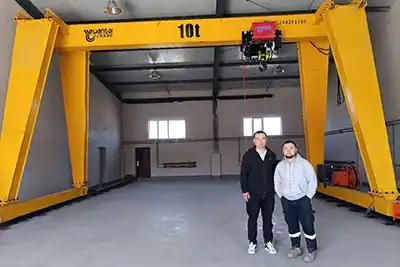
Low Headroom Gantry Crane for Older Industrial Buildings
A low headroom gantry crane allows factories and workshops with limited ceiling height to achieve efficient material handling without costly building reconstruction, making it one of the most practical lifting solutions for aging industrial facilities.
- Maximizes lifting height in low-clearance workshops.
- Solves space limitations common in older industrial buildings.
- Eliminates the need for expensive structural modifications.
- Extends the useful life of existing manufacturing facilities.
- Reduces capital investment compared with relocation or expansion.
- Supports modernization projects in aging factories.
- Provides flexible lifting solutions for manufacturing, maintenance, and warehousing operations.
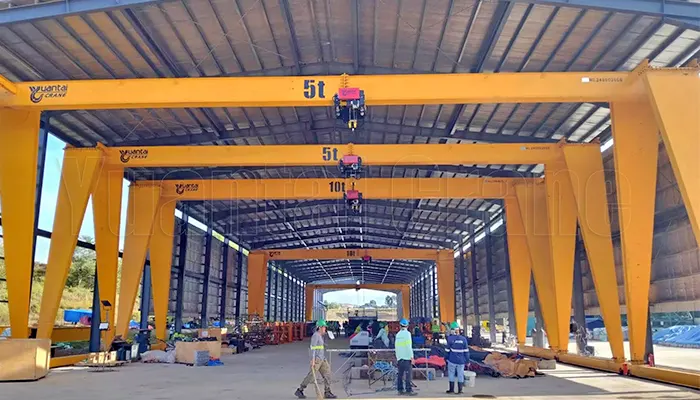
Questions Solved
Low headroom gantry cranes are designed specifically for environments where building height and structural space are limited. Older industrial buildings often have low ceilings, fixed overhead obstructions, and restricted runway space, making standard crane systems difficult to install or inefficient in operation.
By optimizing the hoist position and reducing wasted vertical space, low headroom designs allow operators to maximize usable lifting height within existing structures without major reconstruction.
The increase in lifting height comes from minimizing the distance between the hoist and the girder. In low headroom designs, the hoist is configured to run closer to the beam structure, reducing the lost hook space typically seen in standard systems.
This configuration improves hook travel efficiency and allows more vertical clearance for lifting operations, which is critical in workshops with restricted ceiling height.
Yes, in many cases a low headroom gantry crane can be installed without significant structural modification. These systems are often engineered to adapt to existing building constraints such as ceiling height, column spacing, and overhead obstructions.
This makes them particularly suitable for retrofit projects where downtime, construction cost, and operational disruption must be minimized.
In most industrial cases, upgrading to a low headroom gantry crane is significantly more economical than relocating a facility. Factory relocation involves high costs such as new property acquisition, equipment transfer, installation downtime, and regulatory approvals.
A crane upgrade, by contrast, improves material handling performance within the existing facility, avoiding these major capital and operational disruptions.
Industries operating in space-constrained environments benefit the most, especially those working in older industrial facilities.
Typical sectors include metal fabrication, steel processing, machinery maintenance workshops, general manufacturing plants, and warehousing/logistics centers where overhead clearance is limited but lifting demand remains high.
Aging workshops can modernize material handling by upgrading lifting equipment rather than modifying the building structure. Low headroom gantry cranes provide higher lifting efficiency and improved workflow within existing space limitations.
This allows facilities to increase productivity, reduce manual handling, and support modern production requirements without costly structural reconstruction or facility expansion.
Low headroom gantry cranes differ primarily in their structural and hoist configuration. The hoist is designed to operate closer to the girder, reducing wasted vertical space and maximizing hook height.
They are optimized for environments with limited clearance, making them more suitable for older buildings or retrofit applications compared to standard gantry crane systems that require more headroom.
The Growing Challenge of Aging Industrial Infrastructure
Many Industrial Buildings Were Never Designed for Modern Lifting Requirements
Across Europe and other established manufacturing regions, many factories, warehouses, and maintenance workshops were built decades ago. While these facilities remain operational, they were not designed for today's lifting demands, larger machinery, or modern material handling systems.
As production equipment becomes larger and heavier, many companies discover that their existing buildings limit crane installation and lifting performance.
Common challenges include:
- Low roof height and limited lifting clearance
- Narrow workshop layouts
- Existing machinery occupying valuable floor space
- Pipes, ventilation ducts, lighting, and cable trays reducing overhead space
- Aging structures with limited capacity for additional loads
- Buildings not designed for overhead crane runways
In many cases, the building itself becomes the main limitation rather than the crane.
Manufacturers often need to increase output without moving to a new facility. This creates demand for lifting systems that can:
- Handle heavier loads
- Improve material flow
- Support machine maintenance
- Reduce manual handling
- Increase workshop efficiency
However, expanding the building, raising the roof, or relocating operations can be expensive and disruptive.
For many industrial businesses, the practical solution is not rebuilding the workshop but making better use of the available space.
This is why low headroom gantry cranes are becoming increasingly popular in older industrial buildings. They help maximize lifting height within restricted spaces while avoiding major structural modifications.
Benefits include:
- Better use of limited headroom
- Improved lifting capability
- Lower installation costs
- Minimal disruption to production
- Extended service life of existing facilities
For aging workshops, the challenge is often not floor space but vertical space. Choosing the right low headroom crane design allows companies to modernize material handling operations while continuing to use their existing building.
2. What Is a Low Headroom Gantry Crane?
A Crane Designed to Maximize Available Vertical Space
A low headroom gantry crane is a type of gantry crane specifically designed for buildings where ceiling height is limited. Instead of using a standard hoist arrangement, it incorporates a low headroom electric wire rope hoist and an optimized girder design that allows the hook to travel closer to the beam.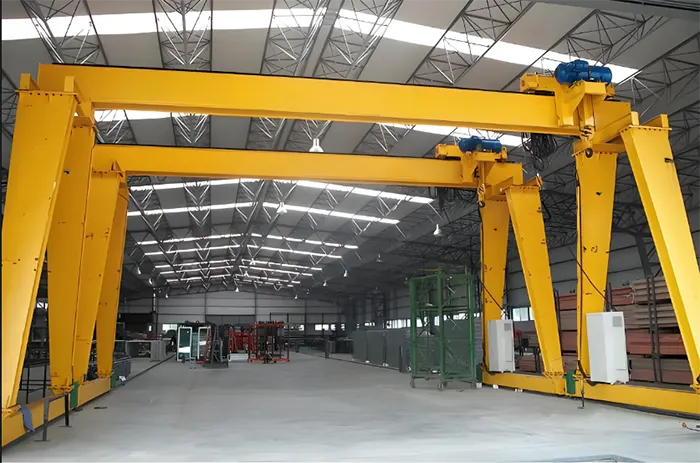 Single Girder Gantry Crane with Low Headroom Eccentric Hoist Trolley
The goal is simple: achieve the maximum possible lifting height within the existing building structure.
This design is particularly useful in older factories, maintenance workshops, warehouses, steel fabrication plants, and manufacturing facilities where every centimeter of lifting clearance matters.
Compared with a standard gantry crane, a low headroom gantry crane offers several practical advantages:
- Greater hook travel height within the same building
- Improved lifting clearance for tall loads and equipment
- Better utilization of available vertical space
- Easier handling of machinery, molds, steel structures, and production components
- Reduced risk of lifting restrictions caused by low roofs or overhead obstacles
In many workshops, the difference between a standard hoist and a low headroom hoist may only be a few hundred millimeters. However, that extra lifting height can determine whether a machine can be installed, a component can be rotated safely, or maintenance work can be completed without additional lifting equipment.
For facilities with low ceilings, roof beams, ventilation ducts, or other overhead obstructions, a low headroom gantry crane often provides a practical way to increase lifting performance without modifying the building structure.
Simply put, it helps operators get more usable lifting height from the space they already have.
Solving Space Limitations in Older Workshops
Limited ceiling height is one of the most common challenges in older factories, maintenance workshops, and industrial buildings. Many facilities were constructed long before modern lifting requirements became a priority, leaving little room for standard crane systems.
A low headroom gantry crane helps maximize the available lifting height without changing the building structure. By positioning the hoist closer to the girder, more vertical space becomes available for load handling.
This allows operators to:
- Lift loads higher within the same workshop
- Handle tall machinery and equipment more safely
- Improve material movement between production areas
- Increase usable hook travel height
- Reduce lifting limitations caused by low roofs
In many workshops, a small increase in hook height can make daily lifting operations much easier. It may allow larger machines to be installed, maintenance work to be completed more efficiently, or oversized components to be moved without additional lifting equipment.
Older industrial buildings often contain fixed structures that reduce available crane clearance. These obstacles can make crane installation challenging, especially when space is already limited.
Common overhead obstructions include:
- Ventilation ducts and air handling systems
- Lighting fixtures
- Heating and cooling equipment
- Electrical cable trays
- Compressed air pipelines
- Roof support beams and structural members
A properly designed low headroom gantry crane can be configured to work within these constraints. Instead of requiring costly building modifications, the crane is engineered around the existing workshop layout.
This approach helps companies improve material handling efficiency while avoiding disruptions to production, structural reconstruction, or facility relocation. For many older industrial workshops, it is one of the most practical ways to add lifting capacity while making full use of the available space.
Avoiding Expensive Building Reconstruction
When an existing workshop no longer provides enough lifting height, many business owners initially look at building modifications. However, structural upgrades can quickly become more expensive than the crane project itself.
Common solutions considered include:
- Raising the roof structure
- Reinforcing columns and support beams
- Expanding the workshop footprint
- Constructing a new production building
- Relocating equipment to a larger facility
While these options may increase available space, they often require significant investment, lengthy construction schedules, permit approvals, and production interruptions.
In many cases, the real issue is not the building size but the inefficient use of the available headroom.
A low headroom gantry crane offers a more practical solution. Instead of modifying the building to accommodate the crane, the crane is designed to fit the existing building. This allows companies to improve lifting performance while avoiding major structural work.
Compared with large-scale renovation projects, installing a low headroom gantry crane is typically faster, simpler, and easier to manage.
Key advantages include:
- Reduced engineering and construction requirements
- Minimal modification to the existing facility
- Less disruption to daily production activities
- Faster installation and commissioning
- Lower overall project costs
- Reduced risk of unexpected construction expenses
For workshops operating on tight production schedules, avoiding long shutdown periods can be just as important as reducing capital costs.
A well-designed low headroom gantry crane helps businesses increase lifting capacity, improve material handling efficiency, and make better use of existing facilities without the cost and complexity of building reconstruction. For many older industrial buildings, it is one of the most economical paths to modernization.
Extending the Life of Existing Industrial Facilities
Many factories, fabrication shops, repair centers, and production facilities continue to operate from buildings that were constructed decades ago. While the buildings remain structurally sound, their original designs often do not match today's production requirements.
Rather than replacing the entire facility, many companies choose to upgrade their material handling equipment to improve productivity and support future growth.
A low headroom gantry crane helps modernize operations by providing:
- Higher lifting performance within limited space
- Safer handling of machinery and heavy components
- Improved workflow between workstations
- Reduced manual material handling
- Better support for modern manufacturing equipment
- Increased capacity for heavier and larger loads
This allows businesses to continue using existing workshops while improving operational efficiency and workplace safety.
For many manufacturers, the building itself is not the problem. The challenge is finding a crane system that can work effectively within the available space.
When production expands, relocating to a larger facility may seem like the only option. However, moving an industrial operation can be a complex and expensive process.
Typical relocation costs may include:
- Purchasing or leasing a new facility
- Transporting machinery and production equipment
- Utility installation and infrastructure upgrades
- Production downtime during the move
- Employee commuting and workforce adjustments
- New permits and regulatory approvals
These costs can quickly exceed the investment required for a customized crane solution.
By maximizing available lifting height and improving material handling within the existing building, a low headroom gantry crane can often postpone or completely eliminate the need for relocation. Companies can continue operating in a familiar facility while gaining the lifting capacity needed to support future production requirements.
For many older industrial buildings, upgrading the crane system is a far more practical and cost-effective solution than moving to a new location.
Industries That Benefit Most from Low Headroom Gantry Cranes
Metal fabrication workshops often operate inside older industrial buildings where lifting height is limited but heavy materials still need to be handled safely. A low headroom gantry crane helps maximize available clearance while supporting daily production activities.
Typical applications include:
- Handling steel plates and metal sheets
- Moving fabricated steel structures
- Positioning welding assemblies
- Loading and unloading cutting machines
- Transporting heavy components between workstations
- Supporting fabrication and assembly operations
For steel processing facilities, additional hook height can make it easier to rotate, position, and transport large fabricated parts within confined spaces.
Maintenance workshops frequently face space constraints, especially in facilities built many years ago. At the same time, technicians must lift and remove heavy equipment for inspection, repair, and replacement.
Common lifting tasks include:
- Electric motor servicing
- Pump installation and maintenance
- Gearbox removal and replacement
- Industrial equipment overhaul
- Machine component handling
- Maintenance of production machinery
A low headroom gantry crane provides the lifting capacity needed while fitting within workshops where standard crane systems may struggle to achieve sufficient hook travel height.
Many manufacturing plants need reliable lifting equipment for daily production but have limited space for crane installation. Low headroom gantry cranes help improve workflow without requiring major building modifications.
Typical uses include:
- Machine loading and unloading
- Production line maintenance
- Component transportation
- Assembly and sub-assembly operations
- Mold and tooling handling
- Equipment installation projects
By improving material movement within the facility, manufacturers can reduce handling time and increase overall operational efficiency.
Warehouses and logistics centers often need lifting solutions for bulky or heavy items while working within existing building constraints. A low headroom gantry crane allows operators to maximize storage and handling space without sacrificing lifting performance.
Common applications include:
- Inventory handling
- Equipment positioning
- Loading and unloading operations
- Internal material transportation
- Maintenance of warehouse equipment
- Handling oversized or irregular loads
For facilities where storage capacity and vertical space are both valuable, a low headroom gantry crane helps improve material handling efficiency while making better use of the existing building.
Key Design Features to Consider
Low headroom gantry crane design is closely linked to real workshop conditions, especially in older industrial buildings where ceiling height, structural layout, and available lifting space are limited. Each design choice directly affects lifting height, safety, and daily operation efficiency.
Economic Benefits of Low Headroom Gantry Crane Installation
In many older industrial buildings, upgrading lifting capacity through structural renovation can be expensive and time-consuming. A low headroom gantry crane provides a more practical investment by working with the existing workshop layout instead of requiring major building changes. This helps companies control cost while improving daily material handling performance.
Conclusion
Low headroom gantry cranes are one of the most effective solutions for factories and workshops operating in older industrial buildings. By maximizing lifting height, overcoming space limitations, and eliminating the need for extensive structural modifications, these crane systems allow businesses to modernize material handling operations while preserving existing infrastructure. For manufacturers seeking to improve efficiency without the cost of relocation or reconstruction, a low headroom gantry crane offers a practical, economical, and long-term investment.