
Monorail Overhead Crane for Sale – 1 to 20 Ton
Explore reliable monorail bridge cranes from 1–20 tons. Perfect for workshops, warehouses, and assembly lines. Safe, efficient, and customizable solutions.
Monorail Overhead Crane for Sale: 1 Ton to 20 Ton Monorail Bridge Cranes
Monorail bridge cranes1–20 tons for sale. Perfect for workshops, warehouses & assembly lines. Safe, efficient, and customizable overhead crane solutions.
Monorail bridge cranes are an essential part of modern material handling. They allow you to move heavy loads efficiently along a fixed path, making them ideal for workshops, warehouses, and production lines. Unlike more complex overhead crane systems, monorail cranes are simple, cost-effective, and easy to install in spaces with limited room.
Whether you’re lifting small components or large machinery parts, monorail bridge cranes provide reliable support and precise control. They are designed to handle a wide range of weights safely, which makes them a popular choice for industrial operations of all sizes.
Capacity Range: 1 Ton to 20 Tons
Monorail bridge cranes come in capacities from 1 ton up to 20 tons, giving you flexibility depending on your needs:
- 1–5 tons: Suitable for light assembly lines, small workshops, or maintenance areas.
- 5–10 tons: Ideal for medium-duty operations, such as handling machinery parts, steel plates, or bundled materials.
- 10–20 tons: Heavy-duty lifting in industrial facilities like warehouses, fabrication shops, or small steel mills.
This range ensures that whether your facility handles light or heavy loads, there’s a monorail crane that fits both the application and your budget.
Purpose of This Guide
The goal of this guide is simple: to help you choose the right monorail bridge crane without guessing or overspending. By understanding load capacities, lifting frequency, and installation considerations, you can:
- Avoid oversizing, which leads to higher costs and unnecessary energy use.
- Avoid undersizing, which can create safety risks and frequent downtime.
- Make a well-informed purchase that balances safety, efficiency, and cost.
Practical takeaway: Investing a little time in planning and calculation now saves you headaches, downtime, and extra expenses in the future.
Why Choose a Monorail Bridge Crane
Monorail bridge cranes stand out for their simplicity and practicality. They don’t require complicated installation like some overhead crane systems, which means lower upfront costs and faster setup. Their design also allows them to occupy minimal floor space, so you can maximize your workshop or warehouse area.
Advantages Over Other Crane Types
- Simplicity: Fewer components and straightforward installation make them easy to operate and maintain.
- Cost-effective: Lower purchase and maintenance costs compared with double girder or gantry cranes.
- Small footprint: Ideal for facilities with limited ceiling height or narrow aisles.
- Flexibility: Can handle various lifting needs without large-scale modifications to your building.
Ideal Applications
Monorail bridge cranes work well in environments where precise, repeated lifting along a fixed path is needed:
- Workshops: Moving machinery parts or components between assembly stations.
- Warehouses: Loading and unloading materials efficiently, especially in confined spaces.
- Assembly lines: Transporting products along the production line without disrupting workflow.
- Storage areas: Lifting and stacking inventory safely and accurately.
Top-Running vs. Underhung Monorail Designs
Choosing the right monorail type depends on your building layout and lifting needs:
Top running monorail overhead cranes 1 ton to 20 ton
Top-Running Monorail:
- Runs on rails installed on top of the runway beams.
- Ideal for heavy loads and longer spans.
- Easier to maintain since components are more accessible.

underhung monorail overhead crane 1 ton to 10 ton
Underhung Monorail:
- Suspended from the underside of the runway or ceiling structure.
- Saves floor space and works in low-ceiling areas.
- Typically used for lighter loads or compact workshops.
Practical takeaway: Understanding the advantages of each type helps you select a crane that matches your space, load, and operational needs, ensuring efficiency and safety.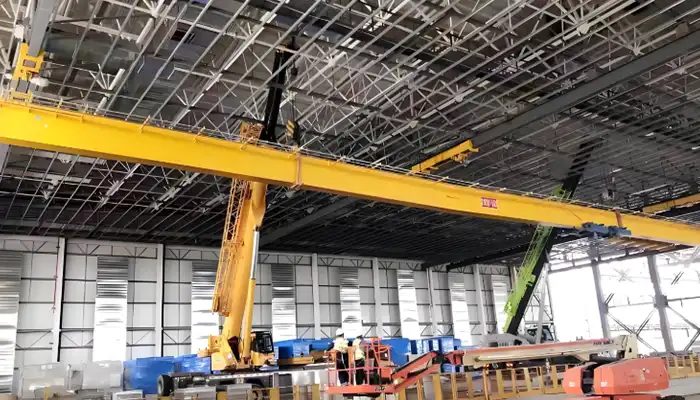
multipoint under hung monorail cranes
Key Features of Monorail Cranes
When choosing a monorail bridge crane, understanding the key features is critical. These features determine not only how much the crane can lift but also how efficiently and safely it will operate in your facility.
Load Capacities
Monorail cranes are available in a wide range of capacities, allowing you to match the crane to your exact lifting needs:
- 1–2 tons: Ideal for light-duty workshops, small machinery, or maintenance tasks.
- 5–10 tons: Suitable for medium-duty applications such as steel plates, machinery parts, or bundled materials.
- 15–20 tons: Perfect for heavy-duty operations in warehouses, fabrication shops, or small steel mills.
Practical tip: Always account for attachments, lifting accessories, or future production increases when selecting capacity.
Hoist Types
The hoist is the heart of any monorail crane. Choosing the right type affects lifting efficiency, precision, and durability:
- Electric wire rope hoist: Handles medium to heavy loads; suitable for precise positioning and frequent lifting cycles.
- Electric Chain hoist: Compact, cost-effective, ideal for lighter loads or low-ceiling spaces.
- Customized hoists: Designed for special loads or environmental conditions, such as outdoor use or corrosive atmospheres.
Practical tip: Match the hoist type to both load weight and operational frequency for maximum safety and performance.
Span and Runway Options
Monorail cranes come with different girder designs depending on your facility layout:
- Single girder: Cost-effective, easier to install, suitable for short spans and lighter loads.
- Double girder: Offers higher lifting capacity and longer spans; more stable under heavy loads, but slightly more expensive.
Practical tip: Consider the available ceiling height, runway length, and load requirements when choosing between single and double girder cranes.
Safety Features
Safety is non-negotiable when handling heavy loads. Modern monorail cranes include features such as:
- Limit switches: Prevent the hoist from traveling beyond safe limits.
- Overload protection: Ensures the crane doesn’t lift beyond its rated capacity.
- Emergency stop systems: Allows operators to stop all crane movements instantly in case of an emergency.
Practical tip: Always verify that safety devices are tested and certified. Regular inspection is essential for long-term safe operation.
How to Determine the Right Capacity
Selecting the correct capacity for your monorail bridge crane is one of the most important steps. Getting it wrong—either too small or too big—can lead to safety issues, increased maintenance, or wasted money. Here's a practical approach to make sure your crane is right-sized for your needs.
The first step is to determine the heaviest item or bundle your crane will lift. Don't forget to include:
- Attachments such as hooks, slings, or lifting beams.
- Packaging, pallets, or containers that add to the total weight.
- Any foreseeable future production changes that might increase load.
Practical tip: Always measure and verify the actual load weight; never assume nominal weight is exact.
How often the crane lifts a load affects motor sizing, fatigue life, and component wear:
- Count the number of lifts per hour, shift, or day.
- Classify duty according to standards (e.g., FEM, CMAA) as light, medium, heavy, or very heavy.
- Higher frequency lifts may require more robust motors or hoists.
Practical tip: Document real operating cycles rather than relying on estimates; this helps your supplier recommend the correct duty rating.
Crane loads aren't static—movement, acceleration, and sudden stops can increase effective load:
- Dynamic factor: Accounts for forces created during lifting and movement.
- Impact factor: Allows for sudden jerks or bumps during handling.
Practical tip: Including these factors in your calculations ensures the crane can handle real-world conditions safely.
A safety factor adds a margin to protect against unexpected stress or wear:
- Light manufacturing: Typically 1.25–1.3.
- Heavy industry (steel, foundries): Often 1.4–1.5.
- Consider regulations, insurance requirements, and local codes.
Practical tip: Never skip safety factors; a well-chosen factor prevents accidents, reduces maintenance, and ensures long-term reliability.
Practical takeaway: By combining maximum load, lifting frequency, dynamic forces, and safety factors, you can determine the precise crane capacity needed. This prevents oversizing (wasting money) and undersizing (risking safety and downtime).
Installation Considerations – Monorail Overhead Cranes
Proper installation ensures safety, performance, and longevity. Poor installation can cause wear, downtime, or accidents.
Runway & Support:
- Beams must handle crane + max load.
- Check material, size, spacing, and foundation.
- Tip: Structural engineer verification prevents deflection/vibration.
Ceiling & Span:
- Single girder → low ceilings; double girder → higher capacity.
- Check vertical clearance, horizontal span, and obstacles.
- Tip: Plan for current + future operations.
Indoor vs Outdoor:
- Indoor → simpler. Outdoor/semi → weatherproof, corrosion-resistant.
- Tip: Share temperature, humidity, chemical exposure with supplier.
Power & Controls:
- Match voltage, phase, frequency.
- Controls: Pendant, Remote, or Automation.
- Tip: Choose control type to fit workflow and safety.
Careful planning keeps your monorail bridge crane safe, efficient, and long-lasting while avoiding costly modifications or hazards.
Maintenance & Longevity – Monorail Overhead Cranes
Proper maintenance is key to keeping your monorail overhead crane safe, reliable, and efficient. A proactive program prevents downtime, extends equipment life, and reduces costly repairs. Even small oversights can lead to operational delays or hazards.
Routine Inspections:
- Check hoists, trolleys, wire ropes, chains, gears for wear.
- Test brakes; inspect runway rails for alignment, wear, debris.
- Tip: Follow daily, weekly, and monthly inspection schedules.
Lubrication & Monitoring:
- Lubricate bearings, gears, and wheels regularly.
- Monitor motor/gearbox temperatures, unusual noises, and vibrations.
- Tip: Keep a log to track wear and plan replacements.
Environment-Specific Adjustments:
- High heat → heat-resistant parts, frequent inspections.
- Dust/abrasive → clean hoists/trolleys, use sealed bearings.
- Corrosive → protective coatings, stainless or corrosion-resistant materials.
- Tip: Consult your supplier for tailored environmental maintenance.
Prolong Crane Life:
- Avoid overloading.
- Train operators in safe handling and emergencies.
- Keep key spare parts on hand.
- Schedule preventive maintenance rather than waiting for breakdowns.
A consistent, well-documented maintenance routine ensures your monorail overhead crane operates at peak performance for years. Small investments in inspections, lubrication, and environment-specific care save time, money, and potential safety risks in the long run.
Cost and Value Considerations
When purchasing a monorail bridge crane, the price tag is important—but it's not the whole story. Thinking about the long-term operational costs, maintenance, and flexibility will help you get the best value for your investment.
Upfront purchase price is just one part of the equation. A cheaper crane may cost more over time if it requires frequent repairs, consumes more energy, or isn't suited to your workflow:
- Consider energy consumption of motors and hoists.
- Factor in routine maintenance and part replacements.
- Include installation and potential modification costs.
Practical tip: Sometimes paying a bit more for a higher-quality crane saves money and headaches over its lifespan.
Choosing a crane that matches your real needs is critical. Oversizing wastes money and energy, while undersizing increases wear and downtime:
- Match crane capacity to maximum load and lifting frequency.
- Consider dynamic and impact forces when calculating requirements.
- Review duty cycle classifications (light, medium, heavy, very heavy).
Practical tip: Consult with your supplier to confirm calculations; getting this right upfront avoids costly mistakes later.
Modern monorail cranes offer options that can improve efficiency and flexibility. These features may increase upfront cost but deliver long-term benefits:
- Modular designs: Allow future upgrades or relocation.
- Adjustable spans: Handle varying load widths or changing layouts.
- Automation-ready features: Prepare for remote operation or integration into production lines.
Practical tip: Evaluate which add-ons are necessary now versus those that could be added later; avoid paying for features you won't use.
Practical takeaway: Balancing initial cost, operational efficiency, and flexibility ensures you get the best value for your monorail bridge crane. Thoughtful planning saves money and keeps operations smooth.
How to Select a Reliable Supplier
Choosing the right supplier is as important as selecting the right crane. A reliable supplier ensures quality, safety, and ongoing support, reducing risk and keeping operations smooth.
Check Certifications:
- CE certification: Confirms compliance with European safety and health standards.
- ISO certification: Ensures quality management systems are in place.
- Third-party inspections: Independent verification of crane quality before shipment.
Tip: Request certification documents and inspection reports; don’t rely solely on claims.
Factory Visits & Quality Verification:
- Review manufacturing processes for hoists, girders, and trolleys.
- Observe material storage and handling practices.
- Evaluate assembly standards and testing procedures.
Tip: If a physical visit isn’t possible, request a virtual tour or detailed video documentation.
Customer Support, Spare Parts & After-Sales Service:
- Availability of spare parts for fast replacement.
- Technical support for installation, operation, and troubleshooting.
- Warranty coverage and follow-up service.
Tip: Choose a supplier with local support or reliable shipping to minimize downtime.
Takeaway: Selecting a certified, experienced, and supportive supplier ensures your monorail bridge crane performs safely, reliably, and efficiently for years.
Buyer’s Checklist
Buying a monorail bridge crane can be overwhelming with so many options and technical details. A clear checklist ensures you don’t overlook critical factors, helping you make a safe and cost-effective purchase.
| Item | Key Points | Tip |
|---|---|---|
| Load & Frequency | Max weight + attachments; Lifts per hour/day | Share exact data with supplier |
| Hoist & Safety | Choose hoist type; Check limit switches, overload, E-stop | Inspect during testing/installation |
| Structure & Installation | Runway, span, ceiling; Building load capacity | Consult engineer if unsure |
| Environment | Temperature, dust, humidity, outdoor exposure | Provide detailed conditions to supplier |
| Budget & Supplier | Costs, warranty, reputation, certifications | Invest in reliable supplier to save long-term |
Using this checklist helps ensure your monorail crane meets your operational needs safely and efficiently. Keep it handy when consulting suppliers or planning your installation.
Send Us An Inquiry to Get Customized Monorail Overhead Cranes
Choosing the right monorail bridge crane is more than just picking a lifting capacity. It’s about matching the crane to your workflow, space, and safety requirements. A well-selected crane improves efficiency, reduces maintenance, and ensures the safety of your team.
Balancing safety, cost, and operational efficiency is key. Oversizing wastes money and energy, while undersizing can lead to frequent downtime or even accidents. By carefully evaluating load, duty cycle, installation requirements, and environmental conditions, you can select a crane that serves your facility reliably for years.
Practical takeaway: Don’t make this decision alone. Reach out to certified suppliers for detailed quotations and professional guidance. They can verify load calculations, suggest suitable hoists and girder designs, and ensure your installation meets all safety standards.
Contact a trusted monorail bridge crane supplier today to discuss your lifting needs and receive a tailored solution for your facility.