Overhead & Gantry Cranes in Singapore: Trends & Buyer Guide
Explore trends, applications, and a comprehensive buyer guide for overhead and gantry cranes in Singapore. Find tips to choose the right crane for your workshop.
Introduction
Singapore has a fast-moving industrial environment where space is tight, labor is costly, and material handling must stay efficient. Because of these conditions, the need for overhead cranes and gantry cranes keeps rising. Workshops, fabrication yards, logistics hubs, and port-related facilities rely on stable lifting equipment to move materials smoothly without slowing down daily operations. In a place where every bit of space matters, the right crane setup helps reduce downtime and keeps workflows steady.
Many industries in Singapore depend on cranes to keep production and material flow on track. Some work indoors with low ceilings, others operate outdoors where rain, humidity, and sea air affect equipment. Even with these different environments, all facilities need cranes that are durable, safe, and easy to maintain. Buyers often look for systems that can handle heavy loads, fit narrow aisles, and support frequent lifting cycles without adding stress to workers or interrupting production.
Why Cranes Matter in Singapore’s Industrial Sectors
- Manufacturing
Factories producing steel structures, machinery components, electronics, and precision parts need cranes to move materials between workstations. - Logistics and Warehousing
Facilities handling pallets, molds, and heavy bundles use overhead cranes for consistent and controlled indoor lifting. - Port and Marine Operations
Marine workshops, ship repair yards, and offshore support bases depend on gantry cranes for outdoor lifting and assembling large components. - Construction and Infrastructure
Prefabrication yards, steel structure fabricators, and concrete plants rely on gantry cranes to move long beams, segments, and modular units.
As these industries upgrade their facilities, many buyers are searching for lifting solutions that match new layouts, increase lifting height, or improve safety with less manual handling.
What This Guide Helps Crane Buyers Understand
This guide gives crane buyers in Singapore a practical overview of what to consider when choosing overhead or gantry cranes. It explains which crane types work best for different environments and helps buyers understand the factors that influence performance and long-term use.
Buyers can expect insights on:
- Which crane designs suit indoor or outdoor lifting
- How lifting height, span, and duty cycle affect everyday use
- Key local operating and environmental factors to check
- Why testing, certification, and safety compliance matter
- How to plan ahead for installation, servicing, and future expansion
Overall, this introduction sets the foundation for a clear and practical guide that helps crane buyers in Singapore make informed decisions based on real working conditions and lifting needs.
Market Overview: Why Singapore Requires High-Performance Cranes
Singapore’s industrial landscape is busy and compact, with high labor costs and strict safety regulations. Because of this, companies need cranes that are not only reliable but also efficient enough to handle frequent lifting without slowing down operations. With the growth of port activities, manufacturing hubs, and construction projects, demand for high-performance overhead cranes and gantry cranes continues to rise.
Many facilities operate around the clock. They deal with heavy components, long materials, and repetitive lifting cycles. This means cranes must offer strong lifting capacity while fitting into compact layouts and ensuring safe daily use.
Industrial Sectors Driving Crane Demand
Different industries across Singapore have specific lifting requirements. Understanding these needs helps buyers select the right crane type for their operation.
Ports and shipyards handle large containers, marine equipment, and ship components. Outdoor operations demand cranes that can withstand harsh marine environments and heavy loads.
- Outdoor gantry cranes for open yards and long spans
- Corrosion-resistant coatings for salt-air conditions
- High lifting height for containers and large equipment
- Durable and reliable for frequent heavy lifting
Petrochemical and gas plants handle heavy machinery and maintenance equipment in hazardous environments. Safety and control are key considerations for crane buyers in these areas.
- Explosion-proof overhead cranes for hazardous zones
- Precise speed control for safe handling
- Heavy-duty hoists for valves, pumps, and reactors
- Strong safety interlocks and protection systems
Electronics and semiconductor facilities require cranes that operate smoothly in clean, low-vibration environments. Space is limited, so compact designs are preferred.
- Low-headroom overhead cranes for tight indoor spaces
- Smooth and precise lifting for sensitive components
- Cleanroom-compatible materials and finishes
- Single-girder cranes for lighter loads and flexibility
Prefabrication yards and construction material plants often move beams, slabs, and modular sections. Cranes must be durable for outdoor conditions and capable of high-frequency operation.
- Gantry cranes with long spans and high lifting heights
- Strong outdoor performance for steel and concrete components
- Support for repetitive loading cycles
- Heavy-duty design for construction materials
These sectors handle bulky steel components, scrap, and long machinery parts. Cranes need to be strong and capable of handling rough materials.
- Double-girder overhead cranes for heavy loads
- Gantry cranes for outdoor storage and assembly
- Robust construction for tough environments
- High-duty lifting for irregular or oversized materials
Key Characteristics of the Singapore Crane Market
Crane buyers in Singapore face unique market conditions that influence what they look for in lifting equipment. Understanding these helps make smarter purchasing decisions.
Singapore enforces strict statutory and workplace safety regulations. Buyers must ensure cranes are certified and tested for continuous, safe operation.
- Compliance with MOM and local inspection requirements
- Certified equipment for safe daily use
- Regular inspection and testing schedules
Many facilities operate long shifts, making energy efficiency and low maintenance critical. Buyers prefer cranes that reduce operating costs and downtime.
- Energy-saving motors and efficient hoist systems
- Simple maintenance to avoid production delays
- Durable components for extended service life
Singapore's industrial layouts are often dense, especially in urban areas. Buyers need cranes that fit tight workshops without compromising performance.
- Optimized headroom and short end carriages
- Customizable spans for limited floor space
- Compact designs for indoor and mixed-use areas
With high manpower costs, buyers increasingly look for cranes that reduce labor needs while improving safety and efficiency.
- Remote controls for safer operation
- Variable-speed and anti-sway features
- Digital monitoring for predictive maintenance
- Semi-automated or automated crane functions
Types of Cranes Commonly Used in Singapore
Selecting the right crane can make or break productivity in a workshop or industrial facility. In Singapore, space is limited, loads are heavy, and operational efficiency is critical. Understanding the types of cranes available—and where they work best—helps buyers make informed decisions.
Overhead Cranes: Versatile Lifting for Workshops
Overhead cranes are the backbone of many factories and maintenance facilities. They move along fixed runway beams, allowing materials to travel horizontally across a workspace. The choice of design depends on load, span, and headroom requirements.
overhead crane for sale Singapore
- Single Girder Overhead Cranes are ideal for light to medium loads. They are compact, cost-effective, and easy to install, making them popular in workshops where space is tight.
- Double Girder Overhead Cranes handle heavier loads and longer spans. They provide higher lifting heights and better stability, which is essential for steel fabrication, machinery handling, and construction materials.
- Low-Headroom and High-Lifting-Height Cranes maximize vertical space in facilities with low ceilings. These cranes allow safe, high lifts without requiring major structural modifications, making them perfect for electronics, precision manufacturing, or compact indoor workshops.
Gantry Cranes: Flexible Solutions for Indoor and Outdoor Work
Gantry cranes are supported by legs rather than solely by a runway, giving them flexibility for heavy-duty and outdoor lifting. They are common in fabrication yards, shipping areas, and mixed indoor-outdoor workshops.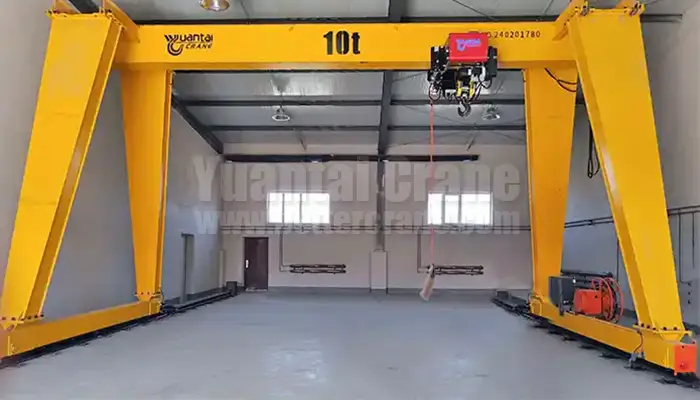
gantry crane for sale Singapore
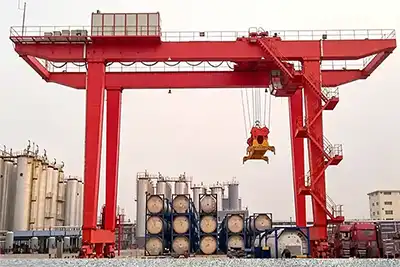
- Full Gantry Cranes with single girder and double girder designs are built for large outdoor yards, ports, and fabrication areas. They can lift steel beams, containers, or ship components, and are designed to withstand outdoor exposure.
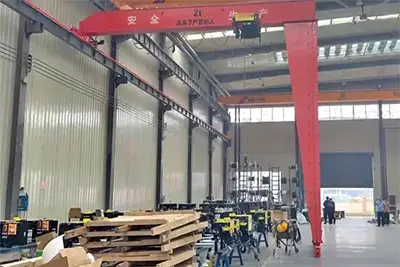
- Semi-Gantry Cranes combine a runway beam on one side with a floor-supported leg on the other. This design is ideal where full gantry installation isn’t possible, offering mobility while still handling significant loads.
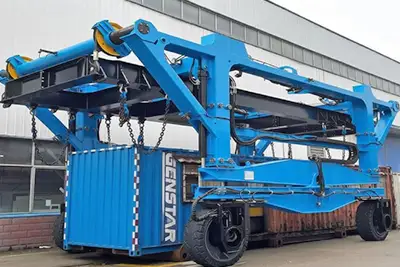
- Rubber-Tired Gantry Cranes and Portable Gantry Cranes are mobile and flexible. They work well for temporary worksites, maintenance tasks, or multi-site operations, handling medium to heavy loads without permanent foundations.
Special-Purpose Cranes: Tailored for Unique Needs
Some industries have requirements that standard overhead or gantry cranes cannot meet. Special-purpose cranes are designed to handle these challenges safely and efficiently.
- Explosion-Proof Cranes are essential for oil, gas, and petrochemical plants. They include protective enclosures and specialized hoists to prevent sparks in hazardous environments.
- Cleanroom Cranes suit electronics, biomedical, and pharmaceutical facilities. They provide low-vibration, precise lifting while maintaining hygiene standards. Stainless steel or coated materials often prevent contamination.
- Automated Cranes are common in logistics hubs and warehouses. They operate with minimal human input, ideal for repetitive tasks, dense storage, and high-throughput operations.
How to Select the Right Crane in Singapore
Selecting the right crane can feel overwhelming. In Singapore, where space is tight, labor is expensive, and regulations are strict, every decision counts. The goal is to choose a crane that meets your lifting needs, fits your facility, and minimizes long-term costs. Here's a practical guide to help buyers make the right choice.
Start by understanding exactly what your crane needs to lift and how often. Over- or underestimating can lead to wasted investment or frequent downtime.
- Rated Load & Maximum Load: Identify the heaviest item the crane will lift and plan for future growth.
- Operating Frequency & Hours: High-frequency lifting requires cranes with stronger duty cycles and durable components.
- Material Type: Steel beams, containers, molds, or assemblies may require specific hoists, grabs, or clamps. Consider surface conditions and load stability.
Space limitations in Singapore's workshops and yards are often the biggest challenge. Make sure your crane will fit and operate safely.
- Building Height & Runway Length: Low-headroom cranes are perfect for compact workshops, while long-span cranes are needed for large facilities.
- Indoor vs Outdoor vs Mixed Use: Indoor cranes need low-noise, compact designs; outdoor cranes must resist weather and corrosion; semi-gantry designs work well in mixed setups.
- Foundation & Rail Support: For gantry cranes, confirm the ground can bear leg loads. For overhead cranes, verify runway beams and structure integrity.
Crane operations in Singapore are strictly regulated. Ensuring compliance upfront avoids fines and enhances safety.
- Legal Requirements: Follow Ministry of Manpower (MOM) standards for lifting equipment.
- Inspections & Certificates: Plan for proof-load tests, annual inspections, and third-party certifications.
- Safety Standards: Check for anti-sway devices, limit switches, emergency stops, and proper operator training protocols.
Singapore's high labor costs make operational efficiency a top priority. The right controls and automation can save time and money.
- Control Options: Remote control reduces the need for cabin operators; cabin-operated cranes work well for high-speed or large-scale operations.
- Automation: Automated lifting reduces human error and increases repeatability, ideal for logistics hubs and high-volume workshops.
- Energy-Saving Features: Efficient motors, regenerative drives, and smart hoists reduce electricity costs, especially for cranes in continuous use.
A crane's performance depends on maintenance and the availability of parts. Don't overlook long-term support.
- Service Intervals: Check the recommended schedules for hoists, motors, and control systems.
- Component Compatibility: Ensure hoists and electrical parts are standard and can be sourced locally.
- Technician Availability: Access to local technicians ensures faster repairs and minimal downtime.
- Long-Term Costs: Factor in energy use, maintenance, spare parts, and potential upgrades over the crane's lifecycle.
Procurement Insights for Crane Buyers
Buying a crane is a major investment, especially in Singapore where space, regulations, and operational costs are all critical factors. Understanding the full scope of costs, import requirements, and key questions to ask can save both time and money.
Crane pricing goes beyond the initial equipment. Buyers should consider all components and services that ensure safe and reliable operation.
- Crane Structure: The type (single or double girder, overhead or gantry) and the material quality affect costs significantly.
- Hoist and Electrical Components: Motors, hoists, and control systems are a major portion of the budget. Reliability and energy efficiency also influence long-term costs.
- Installation and Commissioning: Includes assembly, alignment, and testing. Proper installation ensures safe and efficient operation.
- Compliance Testing: Proof-load tests, certifications, and regulatory approvals are mandatory in Singapore.
- Annual Inspection and Maintenance: Routine servicing, spare parts, and safety checks must be factored into operational budgets.
Many buyers source cranes from overseas. Planning ahead for shipping, approvals, and compliance ensures smooth delivery and installation.
- Shipping and Logistics Considerations: Account for container size, port handling, and crane transport to your site.
- Documentation and Equipment Testing: Certificates for design, inspection, and testing are usually required for customs clearance.
- Installation Approvals and Safety Officer Inspection: Local authorities or certified safety officers may inspect the installation before the crane can enter service.
Asking the right questions upfront helps avoid costly mistakes and ensures the crane fits your long-term operational needs.
- What is the expected remaining lifespan of the building, yard, or workshop where the crane will operate?
- Are there seasonal or environmental impacts, such as heavy rain, high humidity, or salt-air exposure, that require special coatings or outdoor designs?
- Will the crane need upgrades or automation in the future, such as adding remote controls or anti-sway systems?
- What safety features are included, such as emergency stops, overload protection, or limit switches?
Trends Influencing Future Crane Purchases in Singapore
Crane buyers in Singapore are increasingly looking beyond just lifting capacity. As technology, industrial layouts, and sustainability standards evolve, the types of cranes in demand are shifting. Understanding these trends helps buyers plan for long-term efficiency and investment.
Factories are becoming smarter, with integrated systems that connect production, logistics, and material handling. Cranes are no longer standalone equipment—they are part of a network that communicates with other machines.
- Demand for cranes that can integrate with factory automation systems.
- Increased interest in semi-automated or fully automated overhead cranes.
- Compatibility with software for workflow optimization and data tracking.
Warehouses and logistics hubs are shifting to high-density storage solutions. Automated cranes help improve speed, accuracy, and space utilization.
- AS/RS cranes reduce labor needs and improve operational safety.
- Useful for facilities handling high volumes of small to medium loads.
- Predictable lifting cycles allow for better planning of maintenance and energy usage.
Energy costs and sustainability goals are top of mind for industrial operators. Buyers are increasingly looking for cranes that save energy and reduce operating expenses.
- Regenerative braking systems return energy to the grid during lowering operations.
- Efficient motors reduce electricity consumption during frequent lifts.
- Long-term cost savings make energy-efficient cranes a preferred choice.
Space constraints in Singapore's industrial facilities are pushing buyers to seek cranes that are both compact and capable of high lifts.
- Low-headroom designs that maximize available vertical space.
- Single-girder or low-profile double-girder cranes suitable for tight workshops.
- Optimized spans to fit urban or indoor industrial layouts.
Preventive maintenance is evolving into predictive maintenance with real-time data and monitoring systems. This trend helps reduce downtime and unexpected failures.
- Sensors track load cycles, motor temperatures, and hoist performance.
- Digital dashboards alert operators to maintenance needs before breakdowns occur.
- Helps buyers plan service schedules and extend crane lifespan.
Buyer Checklist: What to Confirm Before Ordering
Before placing an order for a crane, it's essential to have a clear picture of your facility, operational needs, and long-term plans. Confirming these details upfront helps avoid delays, additional costs, and compatibility issues.
Ensure the crane can handle both your current and potential future loads safely.
- Verify the maximum and rated load of the crane.
- Confirm the duty cycle matches your operational frequency and usage hours.
- Consider possible load growth or heavier materials in the future.
Cranes must fit your workshop or yard while meeting lifting and reach needs.
- Check the required lifting height for materials or containers.
- Determine the runway or span length for horizontal travel.
- Ensure low-headroom or high-lifting-height designs fit the available space.
The working environment affects crane type, materials, and maintenance requirements.
- Decide if the crane will operate indoors, outdoors, or in a mixed setting.
- Consider exposure to rain, humidity, salt-air, or dust.
- Verify protective coatings and weatherproof features are appropriate.
Matching the crane's electrical system with your facility ensures safe and efficient operation.
- Check voltage, frequency, and phase requirements.
- Confirm compatibility with existing infrastructure to avoid costly modifications.
- Consider energy-efficient options to reduce operating costs.
Safety should never be an afterthought. Confirm the crane includes all necessary features.
- Emergency stop systems, overload protection, and anti-sway functions.
- Limit switches for lifting height, trolley travel, and bridge movement.
- Compliance with Singapore's MOM safety regulations and workplace standards.
Plan the installation to minimize disruption to operations.
- Confirm installation timeline and sequencing.
- Coordinate with facility schedules to reduce downtime.
- Ensure qualified technicians are available for setup and commissioning.
A crane is a long-term investment. Reliable support is critical for uninterrupted operations.
- Check local availability of spare parts and components.
- Confirm recommended maintenance intervals and service plans.
- Ensure access to trained technicians for troubleshooting and repairs.
Conclusion
Overhead and gantry cranes continue to be core components of Singapore’s industrial operations, from manufacturing and logistics to construction and heavy engineering. Their ability to handle heavy loads efficiently and safely makes them indispensable for both indoor workshops and outdoor yards.
When selecting a crane, buyers should carefully evaluate four key factors:
- Environment – indoor or outdoor conditions, space limitations, and load types.
- Regulation – compliance with local safety standards, inspections, and certifications.
- Efficiency – operational speed, automation, energy use, and labor optimization.
- Long-Term Operation – maintenance needs, spare parts availability, and potential for future upgrades.
Choosing a crane that aligns with local compliance requirements and future automation trends ensures not only safe and reliable lifting today but also long-term productivity and cost savings. Planning carefully and considering both current and future needs allows buyers to invest confidently in the right crane solution for their facility.
FAQ: Buying Overhead and Gantry Cranes from China to Singapore
Answers to the most common questions Singapore crane buyers have when sourcing from China. Each section covers key considerations, logistics, customization, and after-sales support.
- Load capacity and duty cycle – Ensure the crane handles your heaviest loads and expected daily usage.
- Space constraints – Check headroom, span, and workshop layout to fit your facility.
- Environment – Indoor vs outdoor use, humidity, salt-air exposure, or dust.
- Compliance – Must meet Singapore's MOM safety standards.
- After-sales support – Parts, technical support, and maintenance locally available.
- Check CE, ISO, SGS inspection certifications.
- Request proof-load tests and manufacturer references.
- Verify material quality, welding, and hoist components meet industrial standards.
- Port selection – Typically Tuas, Pasir Panjang, or Jurong Port.
- Documentation – Invoices, packing lists, test certificates, customs clearance forms.
- Transport to site – Flatbed trucks or specialized lifting for installation.
- MOM approval – Must comply with local safety standards.
- On-site inspection – Certified safety officers check installation, load tests, and control systems.
- Periodic certification – Annual inspections and proof-load testing.
- Check facility's voltage, frequency, and phase. Chinese cranes can often be customized for 400V/50Hz three-phase power.
- Consider regenerative drives and smart motors for energy efficiency.
- Adjust span, lifting height, and headroom.
- Choose single or double girder designs.
- Select hoist types – wire rope, chain, electric winch, or explosion-proof.
- Automation options – remote control, anti-sway, digital monitoring.
- Manufacturing lead time: 4–12 weeks depending on customization.
- Shipping: 1–3 weeks via sea freight to Singapore.
- On-site installation: Single-girder cranes take a few days; double-girder/gantry cranes 2–3 weeks including testing.
- Local availability of spare parts.
- Technical support for troubleshooting.
- Regular maintenance guidance and service contracts.
- Operator training for safety and daily checks.
- Shipping, customs, and port handling fees.
- Installation and commissioning costs.
- Compliance testing and certification fees.
- Maintenance and spare parts inventory.
- Work with verified manufacturers experienced in Singapore exports.
- Request detailed quotations including shipping, installation, and compliance costs.
- Verify warranty, after-sales support, and certifications.
- Consider a factory visit or third-party inspection before shipment.