Automation and Remote Controls in Modern Steel Mill Cranes
Overview of Steel Mill Crane Operations
Steel mills handle massive steel products every day. Items like slabs, billets, and coils are heavy and bulky, making crane operations crucial for moving materials safely and on time. Cranes are controlled by operators who work either from a cabin or on the shop floor. The work demands skill, focus, and constant attention to avoid accidents or damage.
Why Automation and Remote Controls Matter
Automation and remote control technologies are becoming key tools in modern steel mills. Here’s why they matter:
- Safety: Operators can control cranes from safer areas, away from heat, dust, and noise.
- Precision: Automated systems repeat movements exactly, reducing mistakes.
- Flexibility: Remote controls allow operators to move freely and get better views of the load.
- Efficiency: These technologies help speed up handling and reduce downtime.
Purpose and Scope
This article will:
- Explain the differences between semi-automated and fully automated cranes.
- Describe the main types of remote control systems available.
- Discuss anti-collision systems and how they improve safety.
- Help steel mill professionals understand the practical benefits and challenges of these technologies.
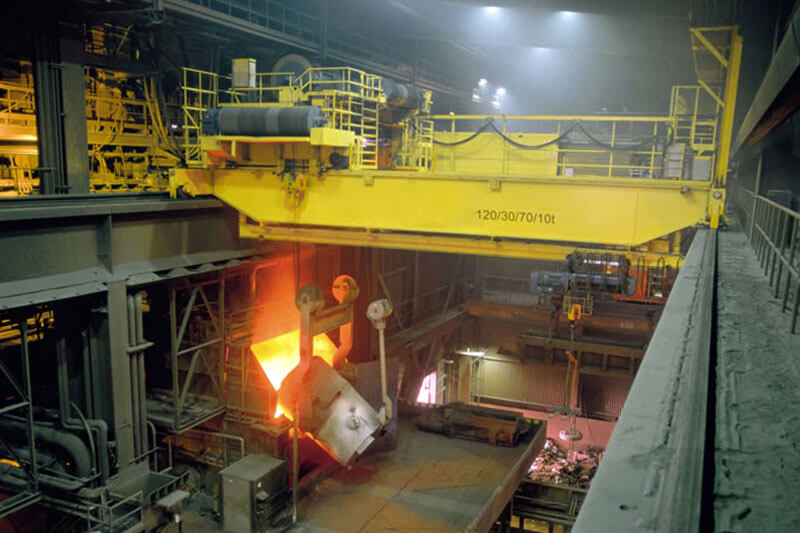
automatic operation for steel mill ladle crane - intelligent crane
Automation in Steel Mill Crane Operations
Definition and Types of Automation
Automation in crane operations means using technology to perform some or all tasks without constant manual control. In steel mills, automation can take different forms depending on how much human involvement remains.
- Semi-automated cranes still require an operator to control the crane. But some functions—like precise positioning, speed control, or safety limits—are managed automatically by the system. This helps reduce operator workload and increases accuracy. Think of it like power steering in a car: you’re still driving, but the system makes handling easier and safer.
- Fully automated cranes work with little to no human input during normal operation. These cranes follow programmed instructions, using sensors and control systems to pick up, move, and set down loads. Operators monitor the system and can intervene if needed, but the crane handles the routine tasks by itself. This level is common in highly repetitive, predictable environments where safety and precision are critical.
Both types aim to improve safety, efficiency, and consistency in crane handling, but the level of automation depends on the mill’s needs and infrastructure.
Key Technologies Enabling Automation
Several technologies work together to make automation possible in steel mill cranes:
- Sensors and Actuators
Sensors collect real-time data like position, speed, load weight, and proximity to obstacles. Actuators then carry out mechanical actions like lifting, lowering, or moving the crane. Together, they form the basic “eyes and hands” of the system. - Programmable Logic Controllers (PLCs)
PLCs are rugged computers designed to control industrial machines. They take input from sensors and execute control commands to the actuators. PLCs run the automation logic, such as stopping the crane if a safety limit is reached or slowing down when approaching a target. - Computer Vision and AI
Cameras and image processing software help cranes “see” their surroundings. AI algorithms can recognize objects, identify hazards, and guide crane movements more precisely. This technology is useful for complex tasks like stacking steel bundles or avoiding collisions in busy yards. - Data Analytics and IoT Integration
Modern cranes often connect to networks that collect operational data continuously. This information helps managers track performance, predict maintenance needs, and optimize workflows. Internet of Things (IoT) devices enable remote monitoring and control, providing a clear picture of crane health and usage in real time.
These technologies together create smarter crane systems that work safer, faster, and with fewer errors than manual operation alone.
Benefits of Semi-Automated and Fully Automated Cranes
Enhanced Safety
One of the biggest advantages of automation in steel mill cranes is improved safety. Cranes operate in harsh environments—high heat, dust, noise, and heavy loads. By using semi-automated or fully automated cranes, operators spend less time in these risky areas.
- Reduced operator exposure to hazards: Remote control and automation allow operators to work from safer locations, away from dangerous zones. This lowers the risk of injury from falling materials, heat, or accidental collisions.
- Automated emergency stops: Systems can detect unsafe conditions and stop crane movement immediately. If a load swings too much or a sensor detects an obstacle, the crane can halt automatically before an accident happens.
- Error detection: Automation systems continuously monitor operations and can alert operators or shut down cranes if something goes wrong—like overloads or mechanical failures.
Improved Precision and Efficiency
Automation helps cranes handle loads more precisely than manual control alone. Consistency matters when you’re moving tons of steel, sometimes within millimeters of a target.
- Consistent and accurate load positioning: Automated controls reduce human error and ensure loads are placed exactly where needed, avoiding damage or rework.
- Optimized speeds and cycle times: Automation balances speed with safety by adjusting how fast the crane moves depending on load weight, distance, and position. This smooth operation cuts wasted time and improves workflow.
Increased Productivity
When cranes work more reliably and safely, productivity naturally goes up. Plus, automation lets operations run longer without tiring operators.
- Longer operational hours: Automated cranes can operate continuously, including during breaks or shift changes, without losing performance. Operators don’t get fatigued or distracted, reducing errors and downtime.
- Integration with plant automation: Cranes can be linked with other automated processes, like conveyor systems or robotic loaders. This connection streamlines overall material flow, reducing bottlenecks.
Cost Savings
Although automation requires upfront investment, it helps save money over time.
- Reduced labor costs: Semi-automated and fully automated cranes need fewer operators, or let operators focus on higher-value tasks. This can cut workforce costs without reducing output.
- Lower maintenance expenses: Predictive analytics monitor equipment health and warn of potential failures before they happen. Scheduled maintenance replaces costly emergency repairs, extending crane life and reducing downtime.
Better Data Collection and Monitoring
Automation systems gather a lot of useful data during crane operation, giving mill managers valuable insights.
- Real-time performance tracking: Managers can see crane status, load cycles, and operation times instantly, enabling quicker decisions and troubleshooting.
- Maintenance scheduling and insights: Data helps predict when parts will wear out or need adjustment, allowing maintenance teams to plan ahead. This proactive approach avoids unexpected breakdowns and keeps cranes running smoothly.
Remote Control Options for Steel Mill Cranes
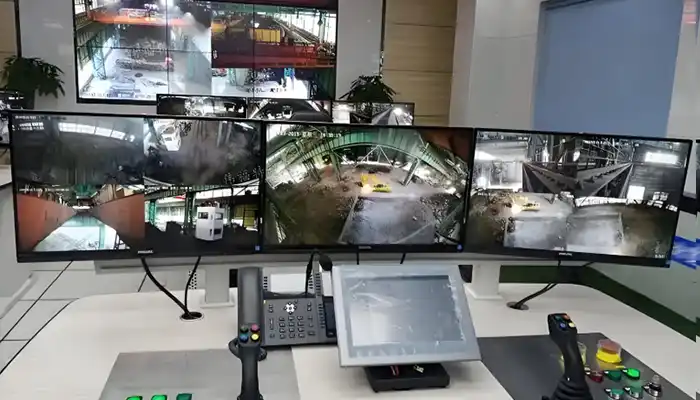
Types of Remote Control Systems
Remote control technology lets crane operators manage crane movements without being inside a cabin or right next to the equipment. There are several types available, each with its own strengths depending on the mill’s environment and needs.
- Radio remote controls
These are the most common. Operators hold a handheld transmitter that sends wireless signals to the crane receiver. Radio remotes offer freedom of movement and a decent range, letting operators move around the work area to get the best view of the load. - Wired remote controls
Less common today but still used in certain setups, wired remotes connect the controller directly to the crane with a cable. This eliminates wireless interference risks but limits operator movement to the cable length. - Wearable control devices
These include gloves with sensors, joysticks, or body-worn controls that allow operators to move and control cranes with intuitive hand or arm motions. Wearables can be useful when operators need hands-free options or quick reaction controls. - Smartphone and tablet-based controls
Advances in mobile tech now allow some cranes to be controlled via apps on smart devices. These controls can integrate with other systems, show live video feeds, or provide detailed diagnostics. They offer flexibility but depend heavily on network reliability and security.
Advantages of Remote Control Operation
Using remote controls instead of cabin operation brings several practical benefits:
- Operator flexibility and mobility
Operators can walk around the crane’s work area to get a clear view of the load, path, and obstacles. This helps avoid blind spots and reduces guesswork, making handling safer and smoother. - Enhanced visibility and situational awareness
Being on the ground or at vantage points means operators can better judge distances and watch for other workers or equipment nearby, improving overall safety. - Immediate response to operational changes
When something unexpected happens—like a sudden obstacle or load shift—operators can react quickly from wherever they are, adjusting movements without delay.
Challenges and Considerations
While remote controls offer many benefits, there are some practical challenges to keep in mind:
- Signal interference and security
Radio remote signals can be disrupted by metal structures, other wireless devices, or environmental factors. Proper frequency selection and security measures like encrypted signals are necessary to prevent signal loss or unauthorized control. - Operator training requirements
Remote control operation requires a different skill set than cabin driving. Operators need training to get used to controlling the crane from a distance, especially when dealing with delays in response or limited feedback from the crane. - Environmental factors (dust, heat, noise)
Steel mills can be harsh places. Remote control devices must be rugged enough to withstand dust, heat, moisture, and vibration. Devices that are not durable may fail quickly or become unreliable.
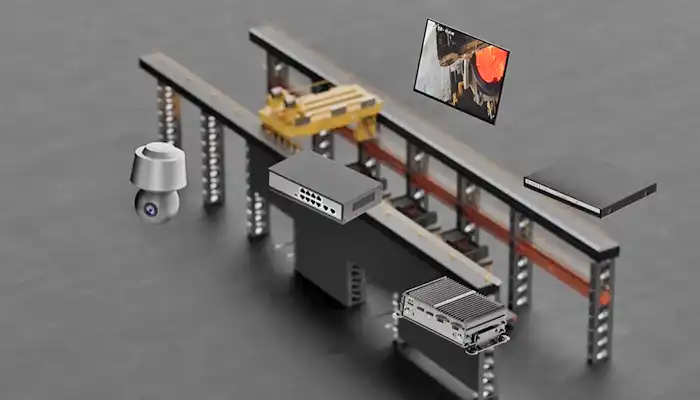
anti-collision systems for steel mill cranes
Anti-Collision Systems in Automated Crane Operations
Purpose and Importance
Collisions between cranes, other machinery, or fixed structures can cause serious damage and downtime. In busy steel mills, where several cranes often operate close to each other, the risk is even higher. Anti-collision systems are designed to prevent these accidents before they happen.
- Preventing collisions: These systems detect when cranes or equipment are too close and take action to avoid crashes. This protects the cranes from costly damage and prevents production delays caused by repairs.
- Protecting personnel and assets: Besides equipment, people working near cranes are at risk during collisions. Automated safety systems help keep operators and ground staff safe by reducing unexpected crane movements.
Key Components and Technologies
Anti-collision systems rely on a mix of sensors and smart controls to monitor crane surroundings and movements in real time.
- Proximity sensors (ultrasonic, infrared, radar): These sensors detect objects or cranes near the operating crane, measuring distance to avoid unsafe closeness. Ultrasonic and infrared work well indoors, while radar is better for tough environments or longer range detection.
- Cameras and vision systems: Cameras provide visual data to the control system, allowing it to “see” obstacles and alert operators or trigger automatic responses. Advanced systems use image recognition to identify cranes, vehicles, or people.
- Laser scanners and LIDAR: These devices create detailed 3D maps of the area around the crane. LIDAR is highly accurate and can detect even small objects in complex environments. It helps the system make precise decisions about when to slow or stop.
- Control system integration: The sensors feed data to the crane’s control unit, which interprets signals and controls crane movement accordingly. The system can slow down, stop, or even reroute the crane to avoid collisions.
Operational Modes
Anti-collision systems operate in different ways depending on the situation and setup:
- Automatic slowdown or stop: When the system detects an object or crane entering a danger zone, it can automatically reduce speed or stop the crane to prevent impact.
- Alert systems: In some cases, the system warns the operator through alarms, lights, or vibrations, allowing manual intervention before collision risk becomes critical.
- Coordination between multiple cranes: In yards where multiple cranes operate, anti-collision systems communicate crane positions with each other. This “crane-to-crane” communication ensures they don’t enter each other’s paths, coordinating movements smoothly.
Case Studies or Examples (Optional)
- In several steel mills worldwide, anti-collision systems have cut crane-related accidents significantly. For example, one facility saw a 40% reduction in crane downtime due to collisions after installing laser-based anti-collision technology.
- The improved safety not only protected equipment but also boosted worker confidence, allowing operators to work faster and with less stress, increasing overall plant productivity.
Integration of Automation, Remote Controls, and Anti-Collision Systems
In today’s steel mills, automation, remote controls, and anti-collision systems don’t operate in isolation. Instead, they work together as parts of a complete crane control ecosystem. When combined, these technologies create a safer, more efficient, and smarter crane operation.
Synergistic benefits of combining technologies
Integrating automation with remote control and anti-collision systems enhances the strengths of each. For example:
- Automation handles repetitive, precise movements, reducing operator fatigue and errors.
- Remote controls give operators the freedom to choose the best vantage point, improving visibility and control.
- Anti-collision systems continuously monitor surroundings, providing a safety net that prevents accidents even if human or automated controls slip.
Together, they reduce downtime, improve safety, and boost overall productivity.
Overview of modern crane control systems incorporating all features
Modern crane systems combine:
- Programmable Logic Controllers (PLCs) and AI for automated movement and decision-making.
- Wireless remote control interfaces for flexible human operation.
- Real-time sensor data from proximity detectors, cameras, and LIDAR feeding into a central control system that manages safety protocols and collision avoidance.
This integration allows cranes to operate semi-autonomously with operators stepping in only when necessary, supported by intelligent safety systems.
Future trends in smart crane operations
Looking ahead, smart cranes will become more connected and capable:
- Increased use of AI and machine learning to improve decision-making based on historical and real-time data.
- Greater integration with plant-wide automation systems for seamless coordination of material handling from raw steel to finished products.
- Enhanced remote operation with augmented reality (AR) and virtual reality (VR) tools to give operators immersive views and control, even from offsite locations.
- Development of fully autonomous cranes capable of operating 24/7 with minimal human oversight, backed by advanced predictive maintenance and safety systems.
By combining these technologies now and adopting emerging innovations, steel mills can improve safety, cut costs, and keep up with modern industrial demands.
Conclusion
Automation and remote control technologies have become a vital part of steel mill crane operations. They help keep operators safe by reducing their exposure to dangerous environments and improve how precisely cranes handle loads. When paired with anti-collision systems, these technologies significantly cut down the risk of accidents and equipment damage. The result is smoother workflows, fewer interruptions, and longer operating hours. For steel mills aiming to boost safety and productivity, adopting these technologies is no longer optional—it’s essential. Investing in modern crane systems means you’re not just buying equipment; you’re creating a safer workplace and a more efficient operation that can meet the demands of today’s industry.
Key Takeaways:
- Automation reduces human risk and improves load handling accuracy.
- Remote controls give operators better flexibility and situational awareness.
- Anti-collision systems prevent accidents and protect assets.
- Together, these technologies increase productivity and cut downtime.
- Upgrading crane systems is essential for modern steel mill competitiveness.