Gantry Crane Buying Guide: Key Factors for Ports & Shipyard
Overview of Gantry Cranes
A gantry crane is a type of lifting equipment that runs on rails and is supported by legs, usually installed outdoors. You’ll often see them in ports, shipyards, and heavy industrial yards—places where large or bulky loads need to be lifted, moved, or precisely positioned.
Unlike an overhead crane, which is mounted on building structures or runways inside workshops, a gantry crane stands independently. It moves along rails laid on the ground, making it more flexible for open areas or work zones without permanent building support.
This design makes gantry cranes ideal for handling heavy-duty tasks such as:
- Loading and unloading containers from ships or trailers.
- Lifting ship blocks or steel plates during vessel assembly.
- Transporting large mechanical parts across production zones.
- Supporting outdoor fabrication and construction work, where space and mobility matter.
In short, gantry cranes bridge the gap between stationary overhead cranes and mobile cranes. They’re strong, stable, and built for long hours of tough lifting work.
Why Gantry Cranes Matter in Ports and Shipyards
Ports and shipyards depend heavily on gantry cranes for their daily operations. When a ship arrives for loading or maintenance, time is money. The crane’s speed and stability directly affect how efficiently cargo or ship components are moved.
A well-selected gantry crane can make operations smoother and safer in several ways:
- Handling capacity: It lifts loads that would be impossible for forklifts or smaller cranes.
- Adaptability: Gantry cranes can cover wide dock areas or be tailored to fit narrow shipbuilding lanes.
- Durability: Designed for harsh coastal environments, they withstand wind, salt air, and long working hours.
- Precision: With advanced control systems, operators can move massive items with surprising accuracy.
In shipyards, gantry cranes are often used to assemble large hull sections, move steel structures, or position prefabricated modules. In ports, they help load and unload containers and transfer cargo between ship and shore.
Choosing the right gantry crane doesn’t just improve efficiency—it keeps your entire operation safer and more reliable for years to come. When the crane fits your site and workload, it becomes a dependable part of your daily routine, not a bottleneck or maintenance burden.
Types of Gantry Cranes for Ports and Shipyards
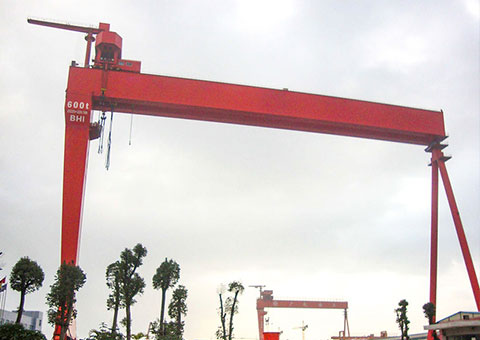
A full Goliath gantry crane runs entirely on ground rails, providing maximum stability and heavy-lift capacity.
Key Features:
- Both legs rest on rails across the full span
- Common in shipyards for heavy ship components and steel structures
- Available in single girder or double girder configurations
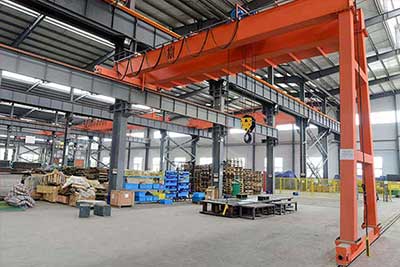
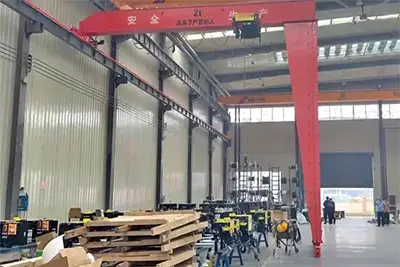
A semi-gantry crane combines ground rail support on one side with an elevated runway on the other, saving space while maintaining strength.
Key Features:
- One leg on a ground rail, the other on an elevated beam
- Ideal for ship assembly lines, prefabrication workshops, or constrained spaces
- Often used as a single girder Goliath crane in compact layouts
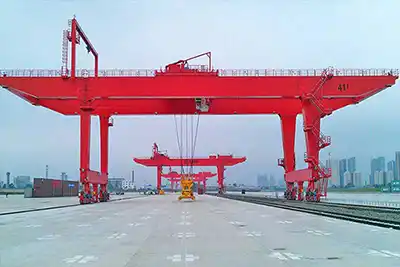
Rail-Mounted Gantry Crane (RMG)
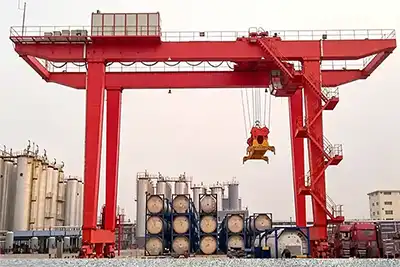
RMG cranes are specialized portal cranes designed for container handling and stacking operations at ports.
Key Features:
- Optimized for repetitive, high-frequency container handling
- Supports automation or remote operation for efficiency
- Can have single or double trolley systems depending on load requirements
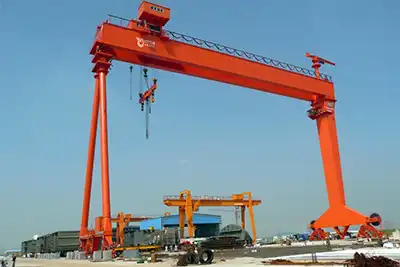
Customized Shipyard Gantry Crane
For heavy-duty shipyard operations, custom Goliath cranes lift large ship blocks, steel sections, or modular components.
Key Features:
- Can include dual trolleys, lifting beams, or spreader systems
- Designed for high-capacity and irregular loads
- Available in single or double girder designs to suit specific projects
Key Buying Factors for Ports and Shipyards
Choosing the right Goliath or portal crane for ports and shipyards requires careful consideration of load, span, environment, and operational requirements. Each factor influences safety, efficiency, and long-term performance.
Selecting the right crane starts with understanding the heaviest loads you'll handle. Shipyard gantry cranes commonly range from 100 to 600 tons, but plan for future expansion.
- Determine maximum load requirements for current and upcoming projects.
- Include safety margins for dynamic lifting and load swing.
- Choose between single girder and double girder Goliath cranes based on capacity needs.
The span—the distance between rails—dictates coverage and suitability for your site.
- Measure available rail distances and clearance areas.
- Ensure crane movement does not conflict with existing structures or operations.
- Double girder Goliath cranes often offer longer spans and better stability for wide areas.
Lifting height must accommodate vessel heights, block stacking, or container stacks while allowing clearance for obstructions.
- Verify maximum hook height versus required lifting height.
- Allow additional clearance for safety and operational flexibility.
- Single girder cranes are suitable for lower-height operations; double girder cranes handle taller lifts.
Duty class reflects workload intensity and frequency. Environmental factors like wind, corrosion, and humidity are especially important in ports and coastal yards.
- Choose a duty class (commonly A5–A8) appropriate for operational demands.
- Include protective coatings for coastal installations.
- Ensure crane structure and wind protection systems match local environmental challenges.
The crane's control system affects both efficiency and safety.
- Choose the control mode that suits operational requirements and workforce skills.
- Ensure integration with yard management systems or shipyard logistics software.
- Automation can improve speed and reduce human error for high-frequency operations.
Reliable power and stable rail systems are essential for smooth crane operation.
- Verify rail foundation quality, alignment, and grounding for stable travel.
- Select power supply type compatible with operational needs and environmental conditions.
- Proper rail maintenance prevents downtime and ensures safety.
Comprehensive safety systems protect both personnel and equipment, especially in outdoor port environments.
- Include overload limiters, anti-sway systems, emergency stops, and storm anchors.
- Windproof locking, buffer devices, and lightning protection are essential for coastal or port operations.
- Safety systems must match the crane's lifting capacity and working environment.
Regular maintenance and manufacturer support are key to long-term reliability.
- Ensure easy access for daily inspections, repairs, and preventive maintenance.
- Verify availability of spare parts and technical support from the manufacturer.
- Establish a maintenance schedule to maximize crane lifespan, especially for single and double girder Goliath cranes.
Comparing Gantry Crane Designs
When selecting a Goliath gantry crane or portal crane, understanding the differences between designs is crucial. Here’s a practical comparison based on capacity, structure, and typical applications:
| Type | Typical Capacity | Main Application | Structure | Operation |
|---|---|---|---|---|
| Full Gantry Crane | 100–600 tons | Shipyard heavy lifting | Four-leg structure | Cabin / Remote |
| Semi-Gantry Crane | 10–200 tons | Workshops & assembly | One leg + wall track | Cabin / Remote |
| Rail-Mounted Gantry Crane (RMG) | 35–65 tons | Container terminals | Box girder | Cabin / Automatic |
| Customized Shipyard Gantry Crane | 200–1000 tons | Block & hull handling | Twin-girder heavy-duty | Cabin / Remote |
Key Takeaways:
- Full Goliath gantry cranes handle heavy ship components and large steel modules
- Semi-gantry cranes save space and are ideal for workshops or assembly lines
- RMG cranes specialize in container handling with options for automation
- Customized shipyard Goliath cranes support very heavy loads and complex operations, often with dual trolleys or spreader systems
This comparison makes it easier to choose the right crane type based on your site conditions, load requirements, and operational needs, while naturally including keywords like Goliath gantry crane, portal crane, single girder Goliath crane, and double girder Goliath crane.
Cost Considerations for Goliath Gantry and Portal Cranes
When selecting a Goliath gantry or portal crane, understanding the full cost picture is essential. This includes not just the initial purchase but also operational expenses and long-term value.
The upfront investment covers the crane structure, rail system, power supply, and installation.
- Compare single girder vs double girder Goliath cranes based on budget and capacity needs.
- Include rail alignment and foundation preparation costs.
- Factor in any site-specific customization for shipyards or ports.
Operating costs include energy consumption, operator training, and routine maintenance.
- Energy-efficient motors and drive systems reduce long-term electricity costs.
- Ensure staff are trained for the selected control mode—manual, remote, or automated.
- Regular maintenance schedules prevent costly downtime and repairs.
Investing in a durable, well-maintained crane can save money over its entire lifecycle.
- Evaluate durability, corrosion resistance, and suitability for high-wind or coastal environments.
- Maximize uptime with reliable wind protection, safety systems, and preventive maintenance.
- Calculate lifecycle cost savings rather than focusing solely on initial purchase price.
Supplier Evaluation Checklist
Selecting the right supplier is as important as choosing the correct Goliath gantry crane or portal crane. A reliable manufacturer ensures safety, performance, and long-term support for both single girder and double girder Goliath cranes.
Key Evaluation Points:
- Proven Experience: Supplier should have a track record of designing and installing gantry cranes for ports, shipyards, and coastal projects.
- Certifications & Compliance: Look for CE, ISO, and third-party inspection reports to ensure adherence to international standards.
- Custom Engineering Capabilities: Ability to provide automation, anti-sway systems, dual hoists, or other project-specific solutions.
- Reference Projects & Global Support: Check past projects and ensure the supplier can provide after-sales service and spare parts internationally.
Tip: A thorough evaluation helps minimize operational risks and ensures that your single girder or double girder Goliath crane meets both capacity and environmental requirements.
Practical Tips for Gantry Crane Buyers
Buying a Goliath gantry crane or portal crane requires more than reviewing specs. A few practical steps can save time, reduce risks, and ensure the crane meets your operational needs.
Key Tips:
- Conduct a Site Inspection: Visit the site before finalizing specifications to understand space constraints, rail alignment, and environmental conditions.
- Provide Detailed Parameters: Share wind loads, temperature ranges, duty cycles, and maximum load requirements with the supplier.
- Request Layout Drawings and 3D Models: Reviewing drawings or 3D models helps visualize crane placement, clearance, and integration with existing infrastructure.
- Consider Modular or Sectional Assembly: For easier transportation, installation, and potential future relocation, modular designs can simplify logistics and reduce installation time.
Note: Following these tips ensures that your single girder or double girder Goliath crane is tailored to your site, operating safely and efficiently.
Conclusion
Selecting the right Goliath gantry crane or portal crane for ports and shipyards requires careful consideration of site conditions, load requirements, environmental factors, and operational needs. From lifting capacity and span to wind protection and safety systems, each factor plays a role in ensuring safe and efficient operations.
- Safety First: Proper crane selection reduces operational risks and protects personnel and cargo.
- Boost Productivity: Matching crane specifications to site conditions improves workflow and uptime.
- Long-Term Reliability: Investing in durable, well-supported cranes minimizes maintenance costs and extends service life.
For tailored single girder or double girder Goliath gantry cranes designed specifically for port terminals and shipyard operations, contact Yuantai Crane today. Let our experts help you choose and customize the ideal crane for your site and operational requirements.