Zero-Failure Ladle Cranes for High-Temperature Melt-Shops
Introduction: Why Zero-Failure Ladle Cranes Matter
Handling molten metal is one of the most demanding tasks in any steel mill or foundry. Standard cranes simply cannot cope with the combination of extreme heat, heavy dynamic loads, and continuous 24/7 operation. That’s where zero-failure ladle cranes come in—they’re built specifically for these conditions, with safety, precision, and reliability as the foundation.
Definition & Purpose
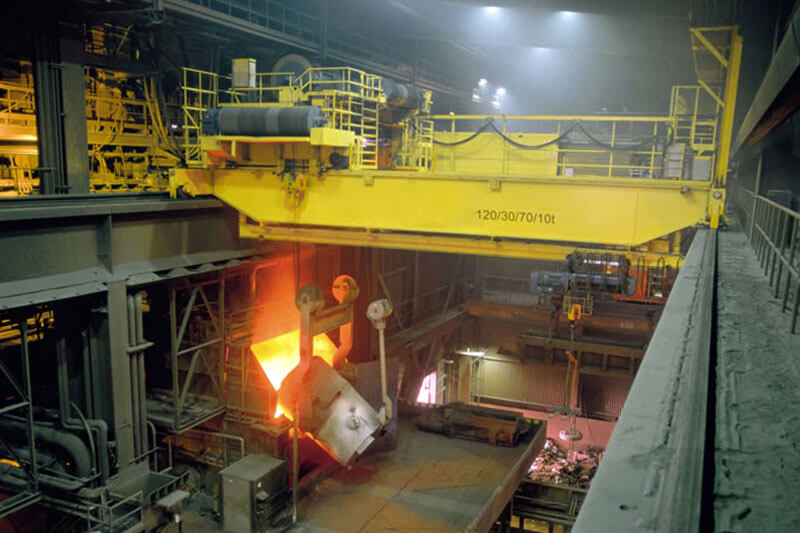
Zero-failure ladle cranes are specialized lifting systems designed to move molten metal safely from furnaces to casting areas. Unlike general-purpose cranes, they account for heat, weight, and the delicate handling required to prevent spills or accidents.
- Engineered for molten metal handling up to 1600°C.
- Handles heavy ladles and slag pots safely.
- Designed for continuous operation with minimal downtime.
Critical Role in Steel Mills and Melt-Shops
In steel production, precision and timing are everything. A ladle crane is not just a lifting tool—it’s a production-critical asset. It moves molten metal accurately to the right place at the right time, ensuring consistent quality, preventing material waste, and keeping the production line running smoothly.
- Ensures precise ladle positioning for safe pouring.
- Reduces risk of spillage and accidents.
- Supports uninterrupted melt-shop workflow.
Why Standard Cranes Cannot Handle Extreme Conditions
Typical overhead or gantry cranes are not built for extreme heat, continuous heavy loads, or dynamic stress. Molten metal creates high thermal stress and requires precise motion control. Using the wrong crane can lead to equipment failure, safety hazards, and costly downtime.
- Ordinary cranes are vulnerable to thermal expansion and component fatigue.
- Lack of specialized braking, hoisting, and thermal protection.
- Increased maintenance and higher risk of accidents.
Buyer Insight: Reduce Downtime and Improve Safety
Choosing a zero-failure ladle crane isn’t just about compliance—it’s about protecting your people, production, and profit. Investing in a crane that’s designed for extreme conditions reduces unscheduled downtime, minimizes maintenance costs, and improves overall melt-shop efficiency.
- Reduces production interruptions caused by equipment failure.
- Protects operators with built-in safety features.
- Ensures consistent, high-quality molten metal handling.
Safety-Centric Design for Extreme Heat
In a melt-shop, safety is non-negotiable. Molten metal operations are high-risk, and cranes must be designed to protect both people and expensive equipment. Zero-failure ladle cranes integrate multiple safety layers to ensure operations run smoothly even under extreme conditions.
Ladle cranes feature dual braking systems with manual release and fail-safe design. This redundancy ensures that if one system fails, the other immediately prevents uncontrolled movement of heavy molten loads. It's a critical feature to avoid accidents and protect valuable ladles.
- Dual brakes for fail-safe operation.
- Manual brake release for controlled emergency handling.
- Reduces risk of load drops and enhances operator confidence.
Heat is a constant challenge in melt-shops. Components near furnaces or ladles are exposed to extreme temperatures, which can degrade steel, cables, and electrical systems. Zero-failure cranes use heat shields, insulated trolleys, and heat-resistant cables to maintain long-term reliability.
- Heat shields protect sensitive components from radiant heat.
- Insulated trolleys and hoist systems reduce thermal damage.
- High-temperature cables and protected electrical systems ensure consistent operation.
Overloading or exceeding travel limits can cause serious accidents or equipment damage. These cranes include overload limiters and travel limits for both hoist and bridge movements. Combined with precise control systems, they minimize downtime and extend crane life.
- Overload limiters prevent unsafe lifting.
- Hoist up/down and long/cross travel limits control movement.
- Protects both operators and equipment from unexpected failure.
Heavy-Duty Continuous Operation
Melt-shop operations never stop, and neither can a ladle crane. Zero-failure cranes are built for continuous, high-cycle operation, ensuring that heavy molten loads are handled safely day in and day out. Their design focuses on durability, reliability, and performance under extreme conditions.
These cranes meet ISO M8 / FEM 4m heavy-duty classifications, meaning they are engineered for frequent, high-capacity lifting in harsh industrial environments. This classification ensures that the crane can handle 24/7 production schedules without compromising safety or performance.
- Rated for continuous heavy-load operation.
- Designed for high-cycle, demanding melt-shop environments.
- Meets international standards for industrial reliability.
All major components, including gearboxes, motors, and structural frames, are reinforced for extreme loads and high-temperature conditions. This ensures long-term reliability, reduces maintenance, and maintains precise operation under heavy-duty workloads.
- Heavy-duty gearboxes built for long life and continuous operation.
- High-performance motors handle extreme loads smoothly.
- Reinforced structure minimizes deflection and maintains load stability.
Experience matters. Manufacturers with a track record in ladle crane design understand the unique challenges of molten metal handling. Their cranes are tested in real-world conditions, ensuring consistent uptime and reducing unexpected downtime in steel mills and foundries.
- Designs validated through years of industry experience.
- Minimizes operational interruptions and downtime.
- Provides confidence that the crane will perform reliably under extreme conditions.
Precision Hoisting Solutions
In melt-shops, precision is just as important as lifting capacity. Zero-failure ladle cranes provide accurate, controlled hoisting, ensuring that molten metal is moved safely and poured exactly where it’s needed. Advanced hoist systems allow operators to handle heavy loads with confidence, minimizing spills and material waste.
The main hoist is the workhorse for heavy molten loads. Equipped with an open winch design, a high-strength drum, and low-speed creep control, it ensures smooth lifting and lowering even at full capacity. Operators can handle ladles carefully, reducing stress on both the crane and the load.
- Open winch design for easy maintenance and reliable operation.
- High-strength drum supports heavy ladle loads safely.
- Low-speed creep control allows precise, controlled lifting.
Auxiliary hoists support secondary tasks such as slag pot handling, hook replacement, or fine positioning. These hoists provide flexibility for operators, allowing simultaneous handling of smaller loads without interrupting main hoist operations.
- Handles auxiliary loads like slag pots and smaller ladles.
- Supports quick hook replacement and minor adjustments.
- Allows precise positioning for safe and efficient melt-shop operation.
The hook is the point of contact with the load, so it must be strong, safe, and heat-resistant. C-type hooks are certified, thermally protected, and reinforced, ensuring reliable performance in extreme temperatures.
- Certified materials for safe load handling.
- Thermal protection reduces heat-related wear.
- Reinforced hook blocks maintain strength under repeated use.
Lead-Generation Subtitle: “Engineered for 24/7 Melt-Shop Production — Get a Quote Now.”
Advanced Motion Control
Handling molten metal safely requires more than just lifting strength—it demands precise motion control. Zero-failure ladle cranes are equipped with advanced control systems that allow smooth, accurate movement of heavy ladles, minimizing the risk of spillage and operator fatigue.
The main hoist is the workhorse for heavy molten loads. Equipped with an open winch design, a high-strength drum, and low-speed creep control, it ensures smooth lifting and lowering even at full capacity. Operators can handle ladles carefully, reducing stress on both the crane and the load.
- Open winch design for easy maintenance and reliable operation.
- High-strength drum supports heavy ladle loads safely.
- Low-speed creep control allows precise, controlled lifting.
Auxiliary hoists support secondary tasks such as slag pot handling, hook replacement, or fine positioning. These hoists provide flexibility for operators, allowing simultaneous handling of smaller loads without interrupting main hoist operations.
- Handles auxiliary loads like slag pots and smaller ladles.
- Supports quick hook replacement and minor adjustments.
- Allows precise positioning for safe and efficient melt-shop operation.
The hook is the point of contact with the load, so it must be strong, safe, and heat-resistant. C-type hooks are certified, thermally protected, and reinforced, ensuring reliable performance in extreme temperatures.
- Certified materials for safe load handling.
- Thermal protection reduces heat-related wear.
- Reinforced hook blocks maintain strength under repeated use.
Lead-Generation Subtitle: “Engineered for 24/7 Melt-Shop Production — Get a Quote Now.”
Structural Design Built for Reliability
The structure of a ladle crane is its backbone. In melt-shops, cranes must support extremely heavy loads while withstanding thermal stress and continuous operation. Zero-failure cranes are engineered to maintain strength, stability, and precision under the harshest conditions.
Cranes use box girder construction to provide maximum strength with minimal deflection. Wheel loads are carefully calculated and distributed to reduce wear on rails and maintain smooth travel, even with full ladle loads.
- Box girder design ensures high rigidity and load capacity.
- Optimized wheel loads reduce rail wear and maintenance.
- Supports precise and safe movement across the shop floor.
All critical structural components are made from high-strength steel and reinforced where necessary to handle the repeated stresses of heavy ladle handling. This ensures long-term durability and minimizes structural fatigue.
- Reinforced steel frames for heavy-duty operation.
- Durable construction designed for continuous 24/7 use.
- Reduces risk of deformation or structural failure over time.
Maintenance and inspection are much safer with accessible walkways and platforms. Operators and service teams can reach key components without interrupting operations, reducing downtime and improving crane lifespan.
- Walkways provide safe access to hoist, trolley, and electrical systems.
- Platforms support preventive maintenance and inspection.
- Enhances overall safety for maintenance personnel.
Even small structural deflections can affect pouring accuracy. These cranes are engineered to minimize deflection, ensuring that ladles reach the exact point of delivery safely.
- Precise alignment for consistent pouring operations.
- Maintains operational accuracy even under full load.
- Protects equipment and molten metal from misalignment or accidents.
Operator Cabin Designed for Safety & Productivity
The operator is at the heart of safe melt-shop operations. A well-designed cabin not only protects the operator from heat and hazards but also improves control, visibility, and comfort, which directly impacts crane performance and safety.
In high-temperature environments, operator comfort is crucial. Air-conditioned cabins with ergonomic seating and joystick controls reduce fatigue, improve concentration, and allow precise handling of molten metal.
- Ergonomic design supports long shifts without strain.
- Joystick controls provide smooth, intuitive operation.
- Air conditioning maintains a comfortable workspace even near furnaces.
Accurate pouring requires clear visibility of the ladle and surrounding area. Cabins are positioned and designed to maximize sightlines, allowing operators to make precise adjustments without relying solely on instruments.
- Large windows or panoramic views improve safety.
- Clear line of sight for ladle positioning and pouring.
- Enhances precision, reducing spills and material waste.
Long melt-shop shifts can be exhausting. A well-designed cabin reduces physical and mental strain, helping operators stay alert and responsive. This not only improves safety and productivity but also protects your investment in equipment and personnel.
- Minimizes fatigue during extended operations.
- Supports consistent performance throughout shifts.
- Promotes safer, more confident crane operation.
Electrical System for Extreme Conditions
In a melt-shop, electrical systems are exposed to extreme heat, dust, and continuous operation. A reliable ladle crane requires a robust electrical setup that keeps all functions running safely and efficiently, even in challenging conditions.
Electrical panels are rated IP65, protecting against dust and water ingress. Combined with built-in air-conditioning, they maintain stable operating temperatures, ensuring sensitive components stay cool and reliable.
- Protects electronics from heat, dust, and environmental stress.
- Maintains safe operating conditions for critical controls.
- Reduces risk of downtime due to electrical failures.
Cables near furnaces or ladles are heat-resistant, preventing insulation degradation. Variable Frequency Drives (VFDs) protect motors and allow precise control of hoist, trolley, and bridge movements, enhancing both safety and performance.
- Heat-resistant wiring ensures long-term reliability.
- VFDs provide smooth acceleration and deceleration.
- Protects motors from overload and reduces mechanical stress.
Modern melt-shops benefit from real-time monitoring. SCADA or IoT systems track crane performance, electrical loads, and component health. This allows predictive maintenance, early problem detection, and operational optimization.
- Provides real-time insights into crane operation.
- Supports preventive and predictive maintenance.
- Helps improve safety, reliability, and production efficiency.
Before leaving the factory, each crane undergoes rigorous testing to confirm that all systems meet design specifications. This includes load tests, brake tests, and rope/hook inspections to verify performance under expected operational conditions.
- Load testing to ensure hoist capacity meets requirements.
- Brake and safety system verification.
- Rope and hook certification for secure handling.
Once delivered, the crane is aligned, calibrated, and tested on-site. This step guarantees that the crane operates precisely within your facility's layout and that all safety limits are properly configured.
- Alignment of rails and crane structure.
- Calibration of hoists, travel motions, and limit devices.
- Final load and deflection tests under real operational conditions.
After-Sales Service & Spare Parts Support
Purchasing a ladle crane is just the beginning. Reliable after-sales service and ready access to spare parts are crucial to keep your melt-shop running without interruptions. Zero-failure cranes come with comprehensive support that minimizes downtime and extends the life of your equipment.
Having trained technicians nearby means any issues can be addressed quickly and efficiently, preventing small problems from turning into production stoppages.
- On-site support for urgent repairs or troubleshooting.
- Experienced technicians familiar with melt-shop operations.
- Reduces downtime and production loss.
Regular maintenance keeps cranes operating safely and reliably. OEMs provide preventive maintenance programs and maintain stock of critical spare parts to ensure quick replacement and minimal disruption.
- Scheduled inspections to detect potential issues early.
- Availability of hoists, hooks, brakes, and electrical components.
- Helps avoid unexpected breakdowns and costly repairs.
Long-term service agreements provide peace of mind, guaranteeing that your crane stays in top condition over its full lifespan. These contracts include planned maintenance, priority support, and part replacements as needed.
- Extended support for the entire crane lifecycle.
- Reduces operational risk and unplanned downtime.
- Ensures consistent performance and safety for years.
Optional Safety & Efficiency Systems
Modern melt-shops demand more than basic lifting capability. Zero-failure ladle cranes can be equipped with optional systems that enhance safety, improve efficiency, and support predictive maintenance for continuous, reliable operation.
Anti-collision systems prevent accidental contact between cranes or with fixed structures, while remote control operation allows operators to handle loads from a safe distance when needed.
- Prevents collisions in busy melt-shop environments.
- Reduces the risk of damage to cranes, ladles, and infrastructure.
- Provides safer operation in confined or high-risk areas.
Condition monitoring via IoT sensors gives real-time insights into crane performance, electrical loads, and mechanical wear. This predictive maintenance tool helps identify issues before they become critical, reducing downtime and maintenance costs.
- Tracks critical components for early problem detection.
- Enables data-driven maintenance planning.
- Improves reliability and operational efficiency.
In high-temperature environments, fire-resistant cables provide added protection against heat and electrical hazards, ensuring the crane continues to operate safely under extreme conditions.
- Protects electrical systems from high-temperature exposure.
- Reduces risk of fire-related downtime or damage.
- Supports continuous, safe melt-shop operations.
Buyer Benefit: Optional systems not only enhance safety but also extend crane life, reduce operational risk, and make melt-shop processes more efficient.
Why Choose a Specialized Zero-Failure Ladle Crane OEM
Selecting the right crane manufacturer is just as important as selecting the crane itself. A specialized OEM brings decades of experience, a proven safety record, and components designed to withstand the harshest melt-shop conditions.
Decades of Steel and Foundry Experience
An experienced OEM understands the challenges of molten metal handling. Their designs reflect real-world lessons from steel mills and foundries worldwide, ensuring cranes perform reliably under extreme conditions.
- Expertise in high-temperature ladle handling.
- Designs tested in real melt-shop environments.
- Knowledge of industry best practices for safety and efficiency.
Proven Safety Track Record with Global References
A manufacturer with a proven safety record provides confidence that your investment is in capable hands. Their cranes have been used successfully across multiple plants and regions, demonstrating reliability and compliance.
- Global project references showcase performance in demanding conditions.
- Documented safety achievements and certifications.
- Reduced operational risk for your melt-shop.
Heavy-Duty European Components for Extreme Environment Reliability
Using high-quality, heavy-duty components, especially from European suppliers, ensures cranes can handle continuous loads and extreme temperatures without failure. These parts contribute to long-term reliability, lower maintenance costs, and safer operations.
- Robust motors, gearboxes, and electrical components.
- Designed for 24/7 high-temperature operation.
- Enhances overall crane durability and uptime.
Lead-Generation Subtitle: “Send Your Melt-Shop Specs — We Provide a Full Crane Solution.”
Buyer FAQs – Addressing Key Pain Points
When investing in a ladle crane, buyers often have specific concerns. This FAQ section addresses the most common questions, helping steel mill operators make informed decisions with confidence.
Yes. All components are designed and rated for 24/7 operation in molten metal conditions up to 1600°C, ensuring reliable performance without overheating or accelerated wear.
- Heat-resistant cables, trolleys, and hoist systems.
- Thermal shielding protects electrical and mechanical parts.
- Continuous operation without compromising safety or reliability.
Cranes are available with main hoists from 40–60 tons and auxiliary hoists from 10–20 tons. Custom capacities can also be provided to match your production requirements.
- Flexible options for different ladle sizes and loads.
- Supports both main and auxiliary lifting tasks.
- Custom solutions for unique melt-shop layouts.
Safety is built into every crane. Features include redundant braking, thermal protection, anti-sway systems, and overload/limit devices, keeping operators and molten loads safe at all times.
- Dual hoist brakes for fail-safe operation.
- Anti-sway control reduces spillage risk.
- Limiters prevent over-travel and overload.
Yes. Local service teams provide rapid response, spare parts availability, and preventive maintenance programs to minimize downtime.
- On-site technicians for urgent issues.
- Stocked critical spares to reduce repair time.
- Long-term service contracts for ongoing reliability.
Optional IoT and SCADA monitoring allow real-time tracking of crane performance, electrical loads, and mechanical wear. This supports predictive maintenance and reduces unexpected downtime.
- Early detection of potential issues.
- Data-driven maintenance planning.
- Enhances safety, reliability, and efficiency.
OEMs provide turnkey solutions, including design, delivery, installation, commissioning, and optional upgrades like anti-collision, fire-resistant cables, and remote operation.
- Full project support from planning to operation.
- Optional safety and efficiency enhancements available.
- Timely delivery tailored to your melt-shop schedule.
Send Us An Inquiry
Investing in a zero-failure ladle crane is a critical decision for any melt-shop. To ensure maximum safety, reliable 24/7 operation, and precise molten metal handling, it’s important to get a solution tailored to your facility’s exact requirements.
Take action now and request a technical proposal and layout. This allows your team to review a fully customized plan that covers crane capacity, layout, safety systems, and optional upgrades—all designed to keep your operations safe, efficient, and uninterrupted.
Buyer Benefits
- Safety First: Redundant brakes, thermal protection, anti-sway, and overload devices minimize risk.
- Zero-Failure Operation: Heavy-duty design and robust components ensure continuous performance.
- 24/7 Melt-Shop Reliability: Engineered for high-temperature, high-cycle production without downtime.
- Tailored Solutions: Layouts and capacities customized for your workflow and facility constraints.
Lead-Generation Subtitle: “Request a Technical Proposal & Layout Today.”