Comprehensive Guide: Steel Coil Handling C Hooks
Introduction
Handling steel coils in industrial settings can be tricky. These coils are heavy, often tightly wound, and come in various sizes. Without the right tools and methods, moving them can be slow, unsafe, and prone to damaging the material. That’s why proper steel coil handling is crucial for any workshop, warehouse, or manufacturing plant.
Using the right lifting solution doesn’t just make the process faster—it keeps workers safe and protects the coils from dents, scratches, or deformation. In large-scale operations, even a small mistake can cost time and money, so it’s worth investing in tools that make life easier.
Among the many tools available, C hooks have become a preferred choice for lifting and transporting steel coils. They are simple in design yet highly effective, offering stability and control when handling heavy coils.
Key points:
- Steel coils are heavy and vary in size; proper handling reduces accidents and material damage.
- Efficient lifting solutions save time and labor costs.
- C hooks are widely used for their practicality and reliability in moving coils safely.
What is a C Hook?
A C hook is a specialized lifting tool shaped like the letter “C.” Its design allows it to slide into the center of a steel coil and lift it securely from a crane or hoist. Unlike clamps or magnets, C hooks provide a stable, balanced lift, reducing the risk of the coil tipping or slipping during transport.
C hooks are straightforward but very practical. They don’t require complex adjustments and can be used repeatedly without major maintenance. Because of this, they are a staple in steel mills, warehouses, and workshops where steel coils are handled daily.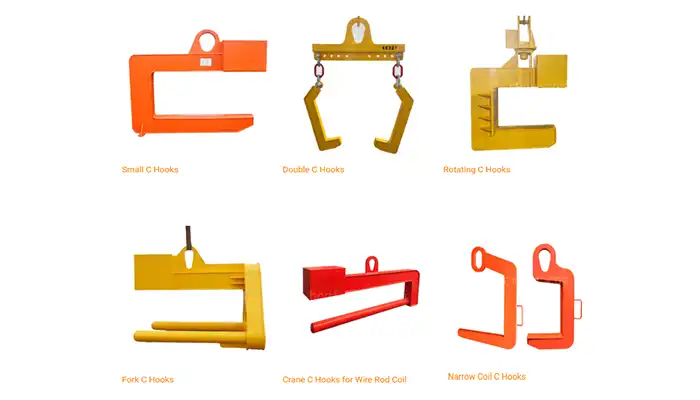
Yuantai Better crane - types of c hooks for steel coil handling, contact us to get tailored solution
Comparison with other coil handling tools:
- Coil tongs: Grab the outer edge of the coil; sometimes less stable and can damage the coil surface.
- Lifting magnets: Useful for thin or clean coils; may lose grip if surface is rusty or oily.
- C hooks: Lift from the center, minimizing surface contact, and work with most coil types.
Types of C hooks:
- Standard C hooks: Fixed size, simple design, suitable for coils with consistent diameters.
- Adjustable C hooks: Can be modified to fit different coil sizes; useful in mixed-product facilities.
- Specialized C hooks: Designed for specific applications, like extremely wide coils, heavy coils, or other materials such as aluminum or copper.
Key points:
- C hooks lift coils safely from the center, keeping them stable.
- They are low-maintenance and easy to operate.
- Different types exist to match the variety of coil sizes and materials handled in industrial operations.
Applications of Steel Coil Handling C Hooks
Steel coil handling C hooks are incredibly versatile and find use in a variety of industrial settings. Their design makes them suitable for lifting heavy, tightly wound coils safely and efficiently. Let’s take a closer look at where they are commonly used and why they are preferred in these environments.
In steel mills and fabrication plants, large coils of steel need to be moved frequently—from production lines to storage areas or into cutting and rolling machines. C hooks provide a quick and reliable way to lift these coils without causing damage. Workers can handle multiple sizes and weights using the same hook, which keeps operations flowing smoothly.
Practical uses in steel mills:
- Transporting freshly rolled steel coils to storage or processing areas
- Feeding coils into cutting, slitting, or rolling machines
- Handling hot or cold-rolled steel safely with minimal surface contact
Warehouses that store steel or metal coils need to move products in and out efficiently. A C hook allows operators to lift coils from pallets or racks without scraping or denting them. Using a C hook with a crane reduces the risk of injury compared to manual handling or less stable lifting tools.
Practical uses in warehousing:
- Loading and unloading steel coils from trucks or shipping containers
- Stacking coils safely in storage racks
- Moving coils to different processing areas within a facility
On construction sites or in industrial projects, heavy steel coils may be needed for structural components, machinery fabrication, or other purposes. C hooks help move these materials quickly and safely, even in confined spaces. They reduce downtime and make the handling process much more predictable.
Practical uses in construction and industrial sites:
- Delivering coils to on-site machinery or fabrication stations
- Lifting steel coils onto platforms, scaffolding, or work areas
- Supporting temporary storage before installation or processing
C hooks are not limited to steel alone. They can be adapted for other coil types or materials, such as aluminum, copper, or even pipe coils. Adjustable or specialized hooks allow companies to use the same equipment for multiple tasks without investing in separate lifting tools.
Practical specialty applications:
- Lifting aluminum coils for automotive or packaging industries
- Handling copper or brass coils for electrical and plumbing applications
- Moving large pipe coils safely without bending or deforming the material
Key Specifications and Design Considerations
When choosing a steel coil handling C hook, understanding its specifications and design features is essential. Selecting the right hook ensures safe lifting, reduces the risk of coil damage, and keeps operations running smoothly. Let's break down the main factors you need to consider.
The first and most critical specification is the hook's load capacity. Hooks are rated for different tonnages, commonly ranging from a few tons up to 50 tons or more. Always choose a hook that exceeds the heaviest coil you plan to lift. Overloading a C hook can lead to accidents, deformation, or permanent damage to the hook.
Tips for load capacity:
- Verify the maximum weight of coils before selecting a hook.
- Factor in any extra weight from attachments or rigging.
- Always include a safety margin—never lift at the absolute maximum rating.
The dimensions of the coil determine the size and type of C hook needed. A hook that doesn't fit the coil properly can cause imbalance or slippage. Key measurements include:
- Inner Diameter: The coil's core size affects whether the hook can slide in comfortably.
- Outer Diameter: Ensures the hook can hold the coil securely without overhanging.
- Maximum Width: Determines if the hook's opening is wide enough for the coil.
C hooks are typically made of high-strength steel to withstand heavy loads. Quality construction ensures durability and longevity. Some hooks may also be coated or treated to resist corrosion, especially if used in outdoor or humid environments.
Construction considerations:
- Forged or heat-treated steel for strength and toughness.
- Smooth finishes to prevent coil surface damage.
- Protective coatings for corrosion resistance.
Safety should never be compromised. Modern C hooks include several features designed to protect both the operator and the coil:
- Overload Protection: Prevents lifting beyond the rated capacity, avoiding accidents.
- Anti-slip Design: Ensures coils stay in place during lifting and transport.
- Rotating or Fixed Hooks: Rotating hooks can make positioning easier and reduce stress on the coil, while fixed hooks provide simple, stable lifting.
Selection Guide
Choosing the right C hook for steel coil handling isn't just about picking a tool off the shelf. It requires careful consideration of the coil's size, weight, and the operating environment. The right selection ensures safety, efficiency, and a longer service life for the hook.
Not all C hooks fit every coil. Standard hooks work well for coils with consistent dimensions, while adjustable or specialized hooks are better for varying sizes. Choosing the wrong type can lead to instability, slippage, or even accidents.
Practical tips:
- Measure the inner diameter, outer diameter, and width of the coil before selecting a hook.
- Use adjustable hooks when handling multiple coil sizes.
- Ensure the hook opening fully supports the coil without causing pressure points.
Always check the hook's rated capacity against the heaviest coil you plan to lift. Remember, the capacity should exceed the coil weight by a safe margin to account for dynamic loads during lifting.
Practical tips:
- Include extra weight from attachments or slings when calculating load.
- Avoid using a hook at its absolute maximum limit—leave at least 10–15% safety buffer.
- Inspect the hook regularly to ensure it hasn't weakened over time.
Where the hook will be used affects its performance and longevity. Factors like temperature, humidity, and exposure to chemicals or outdoor conditions can degrade the material over time.
Practical considerations:
- Indoor use: Standard steel hooks usually suffice.
- Outdoor use: Look for hooks with corrosion-resistant coatings or treated steel.
- Temperature extremes: Ensure the material can withstand hot or cold conditions without losing strength.
C hooks work in combination with overhead cranes, hoists, or lifting systems. Compatibility is crucial to ensure smooth operation and prevent accidents.
Practical tips:
- Confirm that the crane or hoist can handle the combined weight of the coil and hook.
- Check that the hook fits securely onto the lifting mechanism.
- Make sure there's enough clearance for rotating or adjustable hooks to move freely.
Safety Guidelines
Safety is the most important factor when handling steel coils. Even a small mistake can lead to serious injuries or damage to expensive materials. Following proper safety practices ensures smooth operations and protects both workers and equipment.
Using a C hook correctly starts with proper rigging. Make sure the coil is centered, the hook is fully seated, and the lifting path is clear. Never lift a coil at an angle, as this can cause slipping or tipping.
Key practices:
- Center the hook in the coil's inner diameter for balanced lifting.
- Clear the area of unnecessary personnel or obstacles.
- Lift slowly and steadily; avoid sudden jerks or swings.
Regular inspection of C hooks is essential. Check for cracks, deformation, or worn surfaces before each use. Maintenance keeps the hook in good condition and prevents accidents.
Practical checklist:
- Inspect the hook for cracks, bending, or signs of metal fatigue.
- Check for worn or damaged surfaces that may affect grip.
- Lubricate moving parts if applicable, and ensure protective coatings remain intact.
- Replace hooks that show any structural compromise.
Proper load distribution prevents coil damage and reduces the risk of accidents. The coil must sit securely on the hook and remain stable throughout the lift.
Tips for secure placement:
- Ensure the coil rests evenly in the hook's cradle.
- Avoid lifting coils that are too wide or narrow for the hook.
- Use additional supports or slings if necessary for oversized coils.
Even the best equipment can be unsafe if operators are not trained. Workers should understand how to rig, lift, and move coils safely. Compliance with industrial standards ensures consistent safety across operations.
Key points for training:
- Teach operators proper positioning, lifting, and lowering techniques.
- Make them aware of maximum load limits and environmental considerations.
- Follow local regulations and standards, such as OSHA or ISO, for crane and lifting safety.
Installation and Operation
Installing and operating a steel coil handling C hook correctly is essential for safe and efficient lifting. Even a well-designed hook can cause problems if it's not mounted or used properly. This section provides practical guidance for both installation and daily operation.
The first step is securely attaching the C hook to the crane or hoist. Proper mounting ensures stability during lifting and prevents accidents.
Practical steps:
- Verify that the crane or hoist's lifting capacity exceeds the combined weight of the hook and coil.
- Use the appropriate shackle or attachment point recommended for the hook.
- Ensure the hook moves freely without obstruction and that the lifting mechanism is correctly aligned.
- Double-check connections before the first lift.
Using a C hook is straightforward, but following a systematic procedure reduces risks and increases efficiency.
Typical operation steps:
- Inspect the hook and crane/hoist before starting.
- Position the coil so the hook can enter the inner diameter easily.
- Slowly lower the hook into the coil until it is fully seated.
- Lift the coil steadily, avoiding sudden jerks or swings.
- Move the coil to its destination, maintaining a balanced lift at all times.
- Gently lower the coil into place, ensuring it sits securely.
- Remove the hook carefully before moving on to the next lift.
Not all coils are the same, and handling variations requires attention. Small adjustments can prevent accidents and material damage.
Practical tips:
- Use adjustable or specialized hooks for coils with unusual diameters or widths.
- If lifting heavy or oversized coils, make sure the crane has enough clearance and the load is balanced.
- For smaller coils, double-check that the hook fits snugly to prevent slipping.
- Always keep the lifting path clear and communicate with coworkers during moves.
Maintenance and Lifespan
Proper maintenance is key to keeping a C hook safe and reliable over time. Regular care not only extends the lifespan of the hook but also prevents accidents and downtime.
Before each use, inspect the hook carefully for signs of wear or damage.
Checklist:
- Look for cracks, bends, or any deformation in the hook body.
- Check the surface for scratches or worn areas that could reduce grip.
- Ensure that any moving parts, if present, operate smoothly.
Maintaining the hook's surface and moving parts is essential, especially in humid or outdoor environments.
Tips:
- Apply light lubrication to joints or pivot points as recommended.
- Use anti-corrosion coatings or paint if the hook is exposed to moisture or chemicals.
- Store hooks in dry areas when not in use to prevent rust.
Even well-maintained hooks have a lifespan. Recognizing when a hook is no longer safe is critical.
Replacement indicators:
- Visible cracks or permanent bends in the hook.
- Severe wear that reduces load-bearing ability.
- Difficulty in operation or failure of safety features.
Advantages of Using C Hooks
C hooks offer practical benefits that make them a staple in industrial coil handling. Their design and usability help streamline operations and enhance safety.
- Improved Efficiency and Speed of Coil Handling :C hooks allow operators to lift and move coils quickly without complex adjustments. This saves time, reduces labor costs, and keeps production lines moving smoothly.
- Reduced Risk of Material Damage :By lifting coils from the center, C hooks minimize surface contact and prevent dents or scratches. This is particularly important for high-value steel, aluminum, or copper coils.
- Safer Lifting for Operators :C hooks reduce the need for manual handling, lowering the risk of back injuries and accidents. The stable design ensures coils remain balanced during transport.
- Versatility for Different Coil Sizes and Materials :Adjustable and specialized C hooks can handle a wide range of coil sizes and materials, from steel and aluminum to copper or pipe coils. This flexibility makes them suitable for diverse industrial applications.
Common Challenges and Solutions
Even with the right C hook, certain challenges can arise when handling steel coils. Recognizing these issues and knowing how to address them keeps operations safe and efficient.
Large or irregularly shaped coils may not fit standard hooks perfectly. Attempting to lift them incorrectly can cause imbalance or slippage.
Solutions:
- Use adjustable or custom C hooks designed for oversized coils.
- Verify coil dimensions before attempting the lift.
- Consider using additional support slings for stability if needed.
Slippage can damage the coil or create hazards for operators.
Solutions:
- Ensure the hook is fully seated in the coil's inner diameter.
- Choose hooks with anti-slip surfaces or textured grips.
- Lift slowly and avoid sudden movements.
Uneven loads can put stress on the hook and crane, and may lead to accidents.
Solutions:
- Center the coil carefully on the hook.
- Inspect the coil for uneven winding that may affect balance.
- Adjust lifting techniques for coils of varying weight or density.
Conclusion
C hooks are simple yet highly effective tools for steel coil handling. When selected and used correctly, they improve safety, efficiency, and material protection.
Key Takeaways:
- Follow proper selection guidelines, considering load, coil dimensions, and environment.
- Maintain hooks regularly and inspect before every lift.
- Train operators on safe handling practices and comply with industrial standards.
- Use adjustable or specialized hooks for varying coil sizes and materials.
With careful use, C hooks provide a practical, reliable solution for moving heavy steel coils while keeping workers and materials safe.
Appendix - Standard Dimensions and Specifications
The appendix provides additional resources and practical tools for selecting, using, and maintaining C hooks. It’s especially useful for operators, engineers, and safety managers.
Standard Dimensions and Specifications Chart
A quick reference chart helps match the right C hook to your coil dimensions and load requirements. Typical entries include:
- Coil Inner Diameter: Minimum and maximum sizes the hook can accommodate
- Coil Outer Diameter: Maximum supported diameter
- Maximum Coil Width: Width range the hook can safely lift
- Rated Load Capacity: Tonnage limits for each hook type
(Note: Always verify specific manufacturer specifications before use.)
Regulatory Standards References
Compliance with industrial standards ensures safety and legal operation. Some widely recognized standards include:
- ISO (International Organization for Standardization): Guidelines for lifting equipment and safety
- OSHA (Occupational Safety and Health Administration): U.S. safety regulations for crane and lifting operations
- FEM (European Federation of Materials Handling): Standards for hoists, cranes, and lifting devices
- CMAA (Crane Manufacturers Association of America): Best practices for overhead cranes and lifting solutions
Maintenance Checklist
A simple checklist helps ensure hooks remain safe and reliable:
- Inspect for cracks, bends, or deformation before each lift
- Check for worn or damaged surfaces affecting grip
- Lubricate any moving parts if applicable
- Apply anti-corrosion treatments for outdoor or humid use
- Replace hooks showing signs of structural compromise