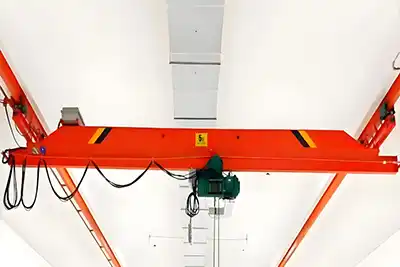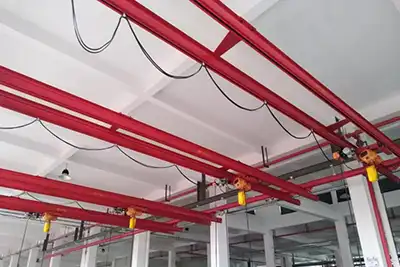
Continuous Casting Cranes for Steel Expansion Projects
Yuantai Solution
Continuous Casting Cranes for Steel Expansion Projects
Most Important Takeaway
Continuous casting cranes with synchronized CCM control, advanced speed regulation, and heavy-duty construction are essential for steel expansion projects, enabling safe, efficient, and precise handling of hot slabs, billets, and blooms while maximizing plant throughput.
Key Takeaways & Questions Solved
- Optimized CCM Synchronization: Ensures cranes move in perfect coordination with continuous casting machines, reducing slab misalignment and improving production efficiency.
- Advanced Speed Control: Smooth acceleration and deceleration, precise positioning, and variable-speed operation enhance safety and minimize thermal stress on steel products.
- Heavy-Duty Design: Engineered for high-capacity lifting, continuous operation, and harsh industrial environments, ensuring reliability and long service life.
- Integration with Expansion Projects: Continuous casting cranes are designed to fit new steel plant layouts or upgraded production lines seamlessly.
- Operational Safety & Automation: Features such as emergency braking, anti-collision systems, and real-time digital control protect personnel and equipment.
Questions Answered Here:
- How to improve coordination between cranes and continuous casting machines?
- How to handle heavy slabs and billets safely in high-temperature conditions?
- What features ensure cranes are reliable under heavy-duty, continuous operation?
- How can crane technology enhance throughput in steel expansion projects?
Introduction / Overview
Steel expansion projects are more than just adding new equipment—they require smart material handling solutions. One of the most critical pieces of equipment in this process is the continuous casting crane (CCC).
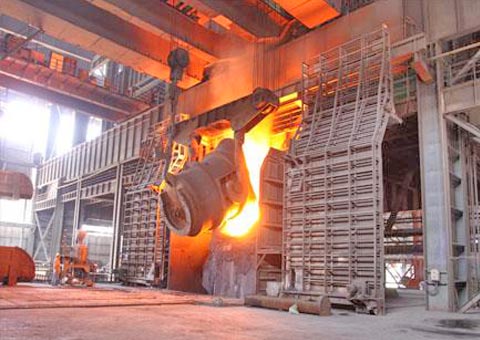
These casting ladle cranes handle freshly cast slabs, blooms, and billets, moving them safely from the continuous casting area to cooling beds, rolling lines, or storage areas. Without reliable cranes, plants risk delays, product damage, and safety hazards.
Crane Type |
Continuous Casting Overhead Crane |
Crane Structure |
Double Girder |
Working Class |
A6–A8 |
Lifting Capacity |
Customized according to ladle and casting requirements |
Span |
Customized according to the casting bay layout |
Lifting Height |
Customized according to ladle transfer and casting-machine requirements |
Hoisting System |
Main and auxiliary hoisting systems as required |
Lifting Speed |
Customized for safe molten-metal handling |
Trolley Speed |
Customized according to operating requirements |
Crane Travel Speed |
Customized according to plant layout |
Crane Control |
Operator Cabin / Remote Control / VFD Control |
Voltage |
380V / 50Hz / 3Ph or customized |
Operating Environment |
High-temperature, radiant heat, dust and fumes |
Thermal Protection |
Heat-resistant components and thermal protection for critical crane parts |
Lifting Attachment |
Ladle Hook / Specialized Hook Arrangement |
Safety Systems |
Overload Protection, Limit Switches, Emergency Stop and Anti-Collision Protection |
Typical Applications |
Molten Steel Ladle Handling, Continuous Casting, Refining and Steelmaking Operations |
Need a Continuous Casting Crane for Your Steel Plant?
Share your lifting capacity, span, lifting height, duty class and casting application with our engineering team. We can help you configure a crane suited to your steelmaking operation.
Get a Crane SolutionContinuous casting cranes are designed to keep production smooth and safe. Their key strengths include:
CCM Synchronization
- Moves in perfect timing with the continuous casting machine.
- Prevents slab misalignment and reduces thermal stress.
- Keeps the production line running efficiently.
Precise Speed Control
- Variable-speed operation allows smooth acceleration and deceleration.
- Ensures slabs are positioned accurately without sudden jerks.
- Reduces risk of damage to hot steel and improves safety for operators.
Heavy-Duty Construction
- Reinforced bridges, trolleys, and hooks handle heavy loads.
- High-temperature resistant components ensure durability.
- Supports continuous operation for high-volume steel production.
Using the right continuous casting crane improves day-to-day operations and long-term plant performance:
- Speeds up slab handling and reduces delays in production.
- Minimizes damage to hot slabs, preserving product quality.
- Enhances operator safety with reliable, predictable movements.
- Handles high-capacity operations without frequent maintenance interruptions.
In short, continuous casting cranes are not just lifting machines—they are a critical part of the production workflow. Choosing cranes with CCM synchronization, precise speed control, and heavy-duty construction is essential for any steel expansion project.
Synchronizing crane operations with continuous casting machines ensures slabs, blooms, and billets are handled safely and efficiently. Digital control systems and PLC integration allow the crane to move in precise timing with the slabs as they exit the caster, reducing misalignment and thermal stress while keeping production lines flowing smoothly.
Continuous casting cranes rely on variable-speed operation for smooth movement. Features include smooth acceleration and deceleration, fine positioning for accurate slab placement, energy-efficient VVVF or servo drives, and real-time feedback sensors for precise motion adjustments.
Designed for continuous, high-capacity lifting, these cranes include reinforced bridges and trolleys, heat-resistant hooks and wire ropes, 24/7 heavy-duty cycles, and predictive maintenance systems to reduce downtime and extend service life.
Safety features include emergency braking, anti-collision systems, limit switches, positioning sensors, operator interfaces, automation with CCMs, thermal protection, and overload detection to ensure continuous safe operation.
Continuous casting cranes improve coordination, increase throughput, enhance safety, and offer scalability for future expansion, making them essential for steel plants undergoing capacity upgrades.
Applications in Steel Expansion Projects
Steel expansion projects demand cranes that can handle heavy slabs and billets reliably. Continuous casting cranes are built to operate smoothly across high-capacity production lines, whether in new plants or upgraded facilities.
When building a new steel plant, continuous casting cranes are installed alongside continuous casting machines. They ensure slabs move immediately from the caster to storage or rolling lines without delay. This setup reduces handling errors and helps maintain a consistent production pace.
For plants expanding existing capacity, these cranes integrate with upgraded layouts and additional casting lines. They adapt to higher production volumes while keeping operations safe and controlled. Even as the plant scales up, cranes continue to deliver precise slab positioning and steady flow.
- Continuous Casting Machines (CCMs): Cranes match the speed and timing of the caster, preventing misalignment and thermal stress on slabs.
- Ladle Transfer Systems: Hot steel is moved efficiently from furnace to caster, reducing downtime and improving plant efficiency.
- Rolling Mills: Slabs are delivered accurately to rolling lines, avoiding bottlenecks and ensuring smooth downstream operations.
The main benefit is reliable, continuous material flow. Without these cranes, even small delays in slab handling can affect the entire production line. They allow steel plants to:
- Maintain high throughput under heavy workloads.
- Reduce slab damage caused by improper handling.
- Integrate seamlessly with both new and upgraded plant systems.
In short, continuous casting cranes are more than lifting machines—they coordinate the movement of steel through the entire casting process, making them essential for any expansion project.
CCM Synchronization for Maximum Efficiency
In steel production, timing is everything. Continuous casting cranes must move in sync with the casting machine to ensure slabs, blooms, or billets are handled safely and efficiently. If the crane lags or moves too quickly, it can cause misalignment, damage, or slow down the production line.
Modern cranes use digital control systems and PLC (Programmable Logic Controller) integration to match the speed and position of the continuous casting machine. This allows the crane to move precisely with the slab as it exits the caster, keeping the production line smooth and predictable.
- Reduced Misalignment: Slabs and blooms are positioned correctly, preventing collisions or improper placement.
- Minimized Thermal Stress: Hot steel is handled gently, reducing surface cracks or warping.
- Higher Productivity: Coordinated movement avoids production slowdowns, keeps rolling mills fed consistently, and reduces bottlenecks.
For plants increasing capacity, synchronization becomes even more critical. Higher casting speeds mean there's less margin for error. Cranes that can automatically adjust to CCM movements allow the plant to operate safely at higher throughput without increasing manual supervision.
In short, CCM synchronization turns the crane into an extension of the casting line, not just a lifting tool. It ensures slabs move precisely, safely, and efficiently from caster to the next process.
Speed Control and Motion Precision
Handling hot steel slabs safely requires more than just lifting power. Continuous casting cranes rely on variable-speed operation to move slabs smoothly and accurately. Without precise speed control, even small jolts or sudden stops can damage the steel or slow down production.
Modern cranes are equipped with VVVF (Variable Voltage Variable Frequency) drives or servo motor systems. These allow the crane to adjust its speed dynamically, providing smooth acceleration, steady movement, and gentle deceleration. Combined with real-time feedback sensors, the crane can fine-tune its motion based on slab weight, position, and casting speed.
- Smooth Acceleration and Deceleration: Prevents sudden jolts that can crack or warp slabs.
- Fine Positioning: Ensures slabs are accurately placed in storage areas or rolling lines, reducing manual adjustments.
- Energy Efficiency: Advanced drive systems minimize power consumption while maintaining performance.
- Real-Time Motion Adjustment: Sensors detect any deviation and adjust crane speed instantly for precise handling.
In steel expansion projects, production lines run at higher speeds and volumes. Precision speed control ensures:
- Continuous operation without bottlenecks.
- Reduced slab damage, maintaining quality standards.
- Safer working conditions for operators handling hot steel.
In essence, speed control and motion precision turn the crane into a highly responsive tool, capable of keeping pace with fast, high-capacity casting lines while protecting the product and people.
Heavy-Duty Classification for Continuous Operation
Continuous casting cranes in steel plants operate in harsh environments. They lift extremely heavy slabs and billets, often at high temperatures, around the clock. To perform reliably, these cranes are designed with heavy-duty construction and industrial-grade components.
The crane's main framework is reinforced to handle extreme loads without bending or fatigue. This includes:
- Crane Bridges and Trolleys: Built to support the full weight of slabs and blooms during continuous operation.
- Hooks and Wire Ropes: High-strength materials that resist heat, abrasion, and repeated use.
Components are selected for long service life under continuous stress:
- High-Temperature Resistance: Key parts are engineered to withstand contact with hot steel and radiant heat.
- Heavy-Duty Duty Cycles: Cranes are rated for 24/7 operation without performance degradation.
To reduce downtime and extend operational life, modern heavy-duty cranes use predictive maintenance systems:
- Sensors monitor wear and stress on critical components.
- Early warnings allow maintenance before failures occur.
- Helps maintain production schedules during expansion projects or high-volume operations.
In steel expansion projects, heavy-duty cranes ensure:
- Safe handling of large, hot steel products.
- Continuous operation even under demanding production schedules.
- Reduced unexpected downtime and maintenance interruptions.
In short, heavy-duty classification makes these cranes dependable partners for large-scale steel operations, capable of lifting, moving, and placing slabs safely and consistently day after day.
Safety Systems and Reliability
Safety is a top priority in steel plants, where cranes handle heavy, hot steel products around the clock. Modern continuous casting cranes are equipped with multiple systems to protect both operators and equipment while ensuring reliable, uninterrupted operation.
To prevent accidents, cranes are designed with:
- Emergency Braking Systems: Instantly stop crane motion if a dangerous condition is detected.
- Anti-Collision Devices: Sensors detect nearby obstacles or other cranes to avoid collisions.
Accurate slab handling is critical for both safety and product quality. Key features include:
- Limit Switches: Prevent over-travel of the crane or trolley.
- Positioning Sensors: Ensure slabs, blooms, or billets are placed exactly where needed.
Modern cranes integrate with plant control systems for smoother operation:
- Operator Interfaces: Provide real-time status and control options.
- Automation Features: Allow cranes to synchronize with continuous casting machines (CCMs) with minimal manual intervention.
- Thermal Protection: Prevents damage to crane motors and components from radiant heat.
- Overload Detection: Monitors lifting capacity to avoid strain or failure.
These safety and reliability systems ensure that cranes can operate continuously and safely, even in demanding steel plant conditions. Operators can trust the equipment to handle hot slabs accurately, while maintenance teams can address potential issues before they lead to downtime.
Benefits for Steel Expansion Projects
Continuous casting cranes don't just lift slabs—they streamline production, protect assets, and prepare your plant for growth. For steel expansion projects, these benefits are especially important.
Cranes that move in sync with continuous casting machines ensure slabs, blooms, or billets reach their next stage without delays.
- Keeps production lines flowing consistently.
- Prevents bottlenecks in rolling mills or storage areas.
- Reduces errors caused by misaligned or poorly positioned slabs.
High-precision cranes with variable-speed drives and heavy-duty construction allow plants to operate at full capacity.
- Minimizes slab damage during handling.
- Reduces unexpected downtime.
- Supports faster, more reliable operations across the plant.
Safety is built into every crane system. From emergency brakes to overload detection, these features protect operators and expensive assets.
- Anti-collision sensors prevent crane accidents.
- Thermal protection safeguards motors from heat exposure.
- Automation reduces human errors during handling.
Cranes designed for heavy-duty, continuous operation can adapt to higher production volumes and new layouts.
- Integrates seamlessly with additional casting lines.
- Handles increased slab sizes and weights.
- Future-proofs the plant for upgrades without major equipment changes.
In short: Continuous casting cranes improve efficiency, safety, and flexibility, making them a practical investment for any steel expansion project.
Frequently Asked Questions
Modern continuous casting cranes use CCM synchronization to match crane movements with the casting machine. Digital control systems and PLC integration allow the crane to move in precise timing with the slabs as they exit the caster. This reduces misalignment, prevents thermal stress, and keeps production lines running smoothly without bottlenecks.
Safety comes from a combination of design, control, and monitoring systems:
- Heavy-duty hooks, wire ropes, and trolleys are heat-resistant and reinforced.
- Variable-speed drives ensure smooth starts, stops, and positioning, reducing jerks that could damage slabs.
- Thermal protection and overload detection help prevent equipment failure and protect operators.
Continuous casting cranes are built for 24/7 operation under harsh industrial conditions. Key features include:
- Reinforced crane bridges and trolleys to support heavy loads.
- High-temperature-resistant mechanical components.
- Predictive maintenance systems that detect wear or stress before failures occur.
These features ensure cranes remain dependable even in high-volume steel production.
Advanced cranes improve throughput by:
- Moving slabs, blooms, and billets precisely and quickly along the production line.
- Reducing delays and bottlenecks with automated synchronization and fine motion control.
- Minimizing slab damage, which maintains quality and reduces rework.
- Supporting scalable operations, allowing plants to increase production capacity without replacing equipment.
Conclusion
Continuous casting cranes are more than just lifting equipment—they are key components in modern steel expansion projects. By combining:
- CCM synchronization for precise timing with the casting line,
- Advanced speed control for smooth, accurate slab handling, and
- Heavy-duty construction for continuous, high-capacity operation,
these cranes ensure steel slabs, blooms, and billets are handled safely and efficiently.
Why It Matters
- Improved Throughput: Keeps production lines moving without delays.
- Reduced Downtime: Heavy-duty design and predictive maintenance prevent unexpected interruptions.
- Enhanced Safety: Advanced sensors, thermal protection, and overload detection protect both personnel and equipment.
- Future-Ready: Scalable design supports plant expansions and higher production volumes.
In short, investing in well-engineered continuous casting cranes not only improves daily operations but also supports long-term growth and reliability for steel production facilities.