Grab Overhead Cranes for Mining & Metallurgical Plants | 10–32 Ton
Yuantai Solution
Grab Overhead Cranes for Mining and Metallurgical Plants
Grab overhead cranes are widely used in iron ore processing plants, mineral processing facilities, steel mills, foundries and other metallurgical plants. They handle loose bulk materials that need to be collected, lifted, transferred and discharged between production stages.
Typical materials include iron ore, copper ore, mineral concentrates, cooled slag, ferroalloys and other metallurgical raw materials. Some are extremely dense, while others contain large particles or sharp, abrasive edges. These conditions affect the grab bucket design, lifting capacity, hoisting mechanism and overall crane configuration.
For these applications, a heavy-duty double girder grab overhead crane is a common choice. The crane capacity and grab volume need to be matched to the actual material properties and handling cycle rather than selected independently.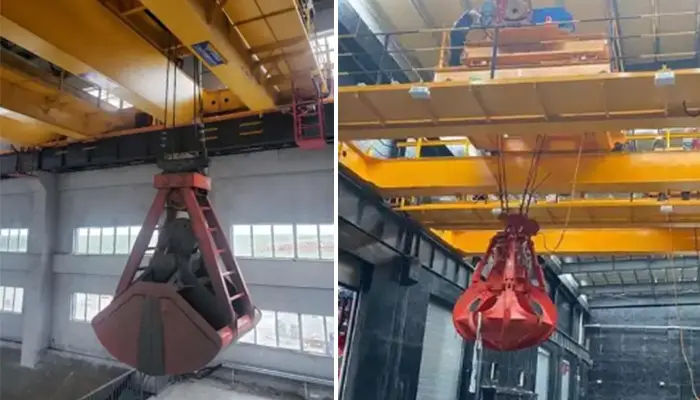
Typical Industrial Applications of Grab Overhead Cranes
Grab overhead cranes are used at different points in mining and metallurgical production, from raw material receiving to intermediate storage and material feeding. The following applications are common:
|
Industrial Application |
Materials Handled |
Typical Handling Operations |
|
Iron Ore Processing Plants |
Iron ore, crushed ore and iron ore fines |
Stockpile transfer, feeding hoppers and moving raw materials between processing areas |
|
Mineral Processing Facilities |
Copper ore, mineral concentrates and other bulk minerals |
Material collection, transfer and feeding of processing equipment |
|
Steel Mills |
Cooled slag, ferroalloys and metallurgical raw materials |
Handling bulk materials in storage, preparation and production areas |
|
Foundries |
Foundry sand, cooled slag and other loose materials |
Material transfer, storage and feeding operations |
|
Metallurgical Plants |
Metal-bearing minerals, concentrates and metallurgical by-products |
Transferring materials between stockpiles, hoppers and production processes |
Material Characteristics and Their Impact on Crane Selection
Not all bulk materials behave in the same way during grab handling. Iron ore, for example, can have a high bulk density, meaning a relatively small grab may already reach the crane's rated lifting capacity. Coarse minerals and irregular lumps can also make grab closing more difficult and increase wear on the bucket.
Before choosing a grab overhead crane for mining or metallurgical applications, consider the following material properties:
|
Material Characteristic |
What It Means for Crane Design |
|
High bulk density |
Grab volume must be limited according to material weight and the crane's available lifting capacity. |
|
Irregular particle size |
Grab jaw geometry and closing force should suit the material size and shape. |
|
Abrasive materials |
Reinforced grab shells, wear-resistant plates and replaceable cutting edges help control wear. |
|
Large ore lumps |
Grab closing and material collection may create additional impact loads on the grab and hoisting mechanism. |
|
High material temperature |
Actual material temperature must be confirmed to determine the required heat protection and component specifications. |
|
Dust and metallic particles |
Motors, brakes, sensors, electrical cabinets and cable systems may need additional environmental protection. |
Grab Overhead Crane Specifications for Mining and Metallurgical Plants
For many mining and metallurgical material handling applications, a double girder overhead crane with a heavy-duty grab is a suitable starting configuration. The following values provide a preliminary reference for discussing a customized grab crane with a manufacturer.
|
Parameter |
Preliminary Reference |
|
Crane Capacity |
10–32 tons |
|
Grab Volume |
0.5–5 m³ |
|
Grab Type |
Heavy-duty clamshell grab or orange-peel grab |
|
Crane Structure |
Double girder overhead bridge crane |
|
Control Method |
Operator cabin or radio remote control |
|
Working Duty |
Heavy to very heavy, subject to actual load spectrum and operating frequency |
|
Crane Configuration |
Customized according to material properties, plant layout and handling requirements |
Important: Crane capacity and grab volume are closely related. The total suspended load includes the material inside the grab and the grab's own weight, together with other applicable suspended equipment. For dense materials such as iron ore, a smaller grab may be necessary to stay within the crane's rated capacity.
Clamshell Grab vs. Orange-Peel Grab: Which One Should You Choose?
The choice of grab depends mainly on the material's shape, particle size and handling characteristics. A clamshell grab is generally used for loose granular materials, while an orange-peel grab is more suitable for irregular and bulky materials.
|
Comparison |
Clamshell Grab |
Orange-Peel Grab |
|
Construction |
Two opposing bucket shells |
Multiple curved jaws or tines |
|
Suitable Materials |
Loose ore, mineral concentrates and granular bulk materials |
Irregular scrap, bulky materials and certain coarse metallurgical materials |
|
Material Handling |
Encloses and collects loose materials |
Grips materials using multiple jaws |
|
Typical Applications |
Iron ore processing, mineral handling and bulk material storage |
Steel mills, scrap yards and selected metallurgical handling operations |
For example, a clamshell grab is generally a better starting point for transferring loose iron ore or copper ore. If the application involves irregular scrap or bulky ferroalloys, an orange-peel grab may be more appropriate. The actual material characteristics should be checked before finalizing the grab design.
Key Engineering Considerations for Heavy-Duty Grab Overhead Cranes
Mining and metallurgical plants can put considerable demands on grab cranes. A crane that works well in a general warehouse may not be suitable for continuous bulk material handling in a mineral processing plant or steel mill. Several design details deserve attention.
Grab Volume and Material Bulk Density
- Calculate the expected material weight using the actual bulk density and grab volume.
- Include grab dead weight when checking the total suspended load.
- Consider variations in material density and loading conditions.
- Avoid selecting a grab volume based on capacity alone, particularly when handling dense iron ore and mineral concentrates.
Wear-Resistant Grab Construction
- Use reinforced grab shells for abrasive minerals and metallurgical materials.
- Apply wear-resistant steel plates to areas exposed to repeated material contact.
- Consider replaceable cutting edges and wear components to simplify maintenance.
- Check the grab structure and closing mechanism against the expected material size and operating frequency.
Impact Loads and Mechanical Strength
- Account for additional loads caused by collecting and closing around large ore lumps.
- Check the grab support, wire ropes, sheaves and hoisting mechanism.
- Consider uneven material distribution and repeated impact during operation.
- Ensure that the crane's mechanical components are suitable for the specified duty.
High-Temperature Material Handling
- Confirm the normal and maximum material temperatures at the lifting point.
- Specify suitable motors, brakes, cables, insulation and protective components where necessary.
- Consider thermal radiation and the ambient temperature around the crane.
- Clearly distinguish between cooled slag handling and hot-material handling when requesting a crane quotation.
Dust and Harsh Industrial Environments
- Check motor and electrical enclosure protection against the actual dust conditions.
- Consider protected sensors, limit switches and cable routing.
- Evaluate the need for sealed electrical control cabinets.
- Confirm ambient temperature, humidity and exposure to metallic particles.
Crane Configuration and Control Options
A heavy-duty double girder grab overhead crane can be configured around the plant's handling process, available building space and required production capacity. The main components and control options should be selected together rather than treated as separate purchasing decisions.
- Double Girder Bridge Structure: Provides a suitable structural arrangement for heavy-duty grab handling, with the final design based on span, rated capacity and working duty.
- Grab Hoisting Mechanism: Selected according to the grab type, lifting capacity, operating cycle and required opening and closing functions.
- Traveling Mechanisms: Crane and trolley travel arrangements are matched to the plant layout and required material transfer distances.
- Electrical Control System: Includes suitable motor control, braking, limit switches and electrical protection.
- Operator Cabin: Suitable for applications requiring continuous operator supervision and a clear view of the material handling area.
- Radio Remote Control: An alternative for suitable installations where operators need more flexibility in positioning.
Cooled Slag Handling vs. Molten Slag Handling
Slag handling requires particular attention to material temperature. Cooled slag can generally be handled using a suitably designed heavy-duty grab overhead crane, with wear-resistant grab construction and appropriate environmental protection.
Hot slag and molten slag are different applications. Their temperature, thermal radiation and associated operating risks require a specialized crane and handling arrangement.
|
Material Condition |
Typical Temperature Range |
Crane Design Considerations |
|
Cooled Slag |
Ambient to roughly 200°C |
Heavy-duty grab crane, wear-resistant grab shells, suitable dust protection; standard component ratings may apply with margin |
|
Hot Slag |
Roughly 200–600°C (confirm actual) |
Temperature-resistant components, thermal protection for cables and sensors, heat shielding where needed; verify motor insulation class |
|
Molten Slag |
Above 600°C (confirm actual) |
Dedicated specialised crane design, heat-resistant grab material, comprehensive thermal and operational safety measures; outside standard grab crane scope |
A standard cooled-slag grab crane should not be used as the design basis for direct molten slag handling. The material condition and actual temperature must be confirmed before selecting the equipment.
What Information Is Needed for a Grab Overhead Crane Quotation?
If you are sourcing a grab overhead crane for an iron ore processing plant, steel mill or other metallurgical facility, providing the following information will help the manufacturer evaluate the application and prepare a suitable technical proposal.
|
Required Information |
Details to Provide |
|
Material Type |
Iron ore, copper ore, mineral concentrates, cooled slag, ferroalloys or other materials. |
|
Bulk Density |
Actual or estimated material density in t/m³. |
|
Particle Size |
Average particle size and maximum lump size. |
|
Material Temperature |
Normal and maximum temperature during handling. |
|
Required Crane Capacity |
Required lifting capacity and expected material weight per cycle. |
|
Grab Volume and Type |
Required grab volume, if known, and preferred clamshell or orange-peel configuration. |
|
Crane Span |
Distance between the runway rails. |
|
Lifting Height |
Required vertical lifting distance. |
|
Working Duty |
Operating hours per day, lifting cycles per hour and expected load spectrum. |
|
Working Environment |
Indoor or outdoor installation, dust level, humidity and ambient temperature. |
|
Power Supply |
Voltage, frequency and phase. |
|
Control Method |
Operator cabin or radio remote control. |
As a grab overhead crane manufacturer in China, Yuantai Crane can evaluate the material properties, grab capacity, crane structure and operating conditions before preparing a customized crane proposal. If you are comparing grab crane suppliers or requesting a grab overhead crane price, it is best to provide the material details and basic plant dimensions together. This makes the technical comparison and quotation more meaningful.
Send us your crane requirements, material specifications or existing plant drawings. Our engineering team can review the application and recommend a suitable grab crane configuration for your mining or metallurgical operation.
Frequently Asked Questions About Grab Overhead Cranes for Mining and Metallurgical Plants
These are the questions buyers most often bring to us when they are sourcing a grab overhead crane for iron ore processing, mineral processing, steel mills, foundries, or other metallurgical operations. The answers below are written to help you move from "I think I need a grab crane" to "I know what to specify."
Q: How do I choose the right grab volume for my iron ore or copper ore handling application?
A: Work backwards from the material, not from the crane capacity—calculate the material weight per grab using the actual bulk density, add the grab's own weight, and make sure the total stays comfortably within the crane's rated lifting capacity.
Iron ore at 3.0 t/m³ in a 5 m³ grab already weighs around 15 tonnes before you add a 2.5–3 tonne grab, which is why a 16-tonne crane cannot carry that combination—for dense materials, a smaller grab is often the only way to stay within capacity while still getting the lifting performance you need. This is the single most common sizing mistake we see in mining and metallurgical grab crane inquiries.
What to do next: Before requesting a grab overhead crane quotation, confirm your material's bulk density in t/m³ and your expected material weight per cycle, then ask the supplier to show the grab dead weight and total suspended load in their proposal. Yuantai Crane can run this calculation with you and recommend a grab volume that matches both your material and your crane capacity.
Q: Should I choose a clamshell grab or an orange-peel grab for my bulk material?
A: Match the grab type to the material shape—a clamshell grab with two opposing shells is the better starting point for loose, granular materials like iron ore, copper ore, and mineral concentrates, while an orange-peel grab with multiple curved jaws suits irregular, bulky materials such as scrap and bulky ferroalloys.
The practical test is simple: if the material flows and can be enclosed by two closing shells, go clamshell; if it comes in large lumps, irregular pieces, or intertwined shapes that two shells cannot reliably hold, go orange-peel. For cooled slag with large lumps, it is worth evaluating both types, because an orange-peel grab can reduce material dropping during lifting.
What to do next: Include your maximum lump size and typical particle size distribution in the inquiry so the supplier can recommend jaw geometry and closing force. Yuantai Crane can review your material characteristics and advise whether a heavy-duty clamshell grab or an orange-peel grab is the better fit for your mining or metallurgical handling operation.
Q: What working duty class do I need for continuous bulk material handling in a mineral processing plant?
A: For continuous plant operations, specify a crane rated for heavy or very heavy duty—at least 20 lifts per hour at or near rated capacity—rather than a light or moderate duty crane that may look cheaper on paper but will not hold up to round-the-clock grab cycling.
The difference between a crane rated for 10 lifts per hour and one rated for 20+ lifts per hour at near-rated capacity shows up in component sizing, structural design, and price, and it is the difference between a machine that lasts and one that becomes a maintenance headache. A crane that works fine in a general warehouse may not be suitable for continuous bulk material handling in a mineral processing plant or steel mill.
What to do next: Provide your operating hours per day, lifting cycles per hour, and expected load spectrum when requesting a quotation, and ask each supplier to state the working class they have assumed. Yuantai Crane can evaluate your actual load spectrum and recommend a duty class that matches your production rhythm rather than a catalogue default.
Q: Can a standard grab overhead crane handle hot slag or molten slag, or do I need something different?
A: A standard cooled-slag grab crane should never be used as the design basis for hot slag or molten slag handling—cooled slag can generally be handled with a suitably designed heavy-duty grab crane, but hot slag and molten slag require temperature-resistant components, thermal protection, and in the case of molten slag, a dedicated specialised crane design.
Temperature changes everything in slag handling: hot slag and molten slag bring thermal radiation and operating risks that a standard grab crane is simply not built for, and the material condition and actual temperature must be confirmed before selecting the equipment. This is one of the most important distinctions to get right in a metallurgical plant inquiry.
What to do next: State the normal and maximum material temperature at the lifting point clearly in your inquiry, and distinguish between cooled slag, hot slag, and molten slag handling. Yuantai Crane can confirm the required heat protection and component specifications—or point you toward a specialised solution if molten slag handling is outside standard grab crane scope.
Q: What information do I need to provide to get an accurate grab overhead crane price and technical proposal?
A: Provide the material type, bulk density, particle size and maximum lump size, material temperature, required crane capacity, grab volume and type, crane span, lifting height, working duty, working environment, power supply, and preferred control method—all together, in one inquiry.
A quotation that does not account for bulk density, lump size, and duty class is not technically meaningful for comparison, which is why suppliers who receive only a capacity figure tend to either guess or over-specify. Providing the material details and basic plant dimensions together makes the technical comparison and the grab overhead crane price far more meaningful.
What to do next: Send your crane requirements, material specifications, or existing plant drawings in one package, and ask each supplier to state the assumed bulk density, grab dead weight, total suspended load, and working class in their proposal. Yuantai Crane can review the application and prepare a customised grab crane proposal based on your actual material and operating conditions.
Q: How do I control wear and keep maintenance costs down on a heavy-duty grab crane in an abrasive mining environment?
A: Specify reinforced grab shells with wear-resistant steel plates on the areas exposed to repeated material contact, choose replaceable cutting edges and wear components, and build a preventive maintenance routine around grab suspension components, hydraulic fittings, electrical connectors, and wear parts.
Abrasive minerals and metallurgical materials wear through grab shells fast, and a crane that is easy to maintain is worth more than one that is marginally cheaper to buy—which is why the recommended wear part replacement interval and spare parts list belong in your total cost of ownership calculation, not in a footnote. Annual inspection of the grab bucket, including wear part replacement, hydraulic system overhaul, and seal replacement, should be part of the maintenance budget from day one.
What to do next: Ask each supplier for their recommended wear part replacement interval and spare parts list alongside the quotation, and confirm the wear-resistant steel grade used for shell contact areas. Yuantai Crane can recommend a wear-resistant grab construction and a preventive maintenance plan suited to your abrasive material and operating frequency.